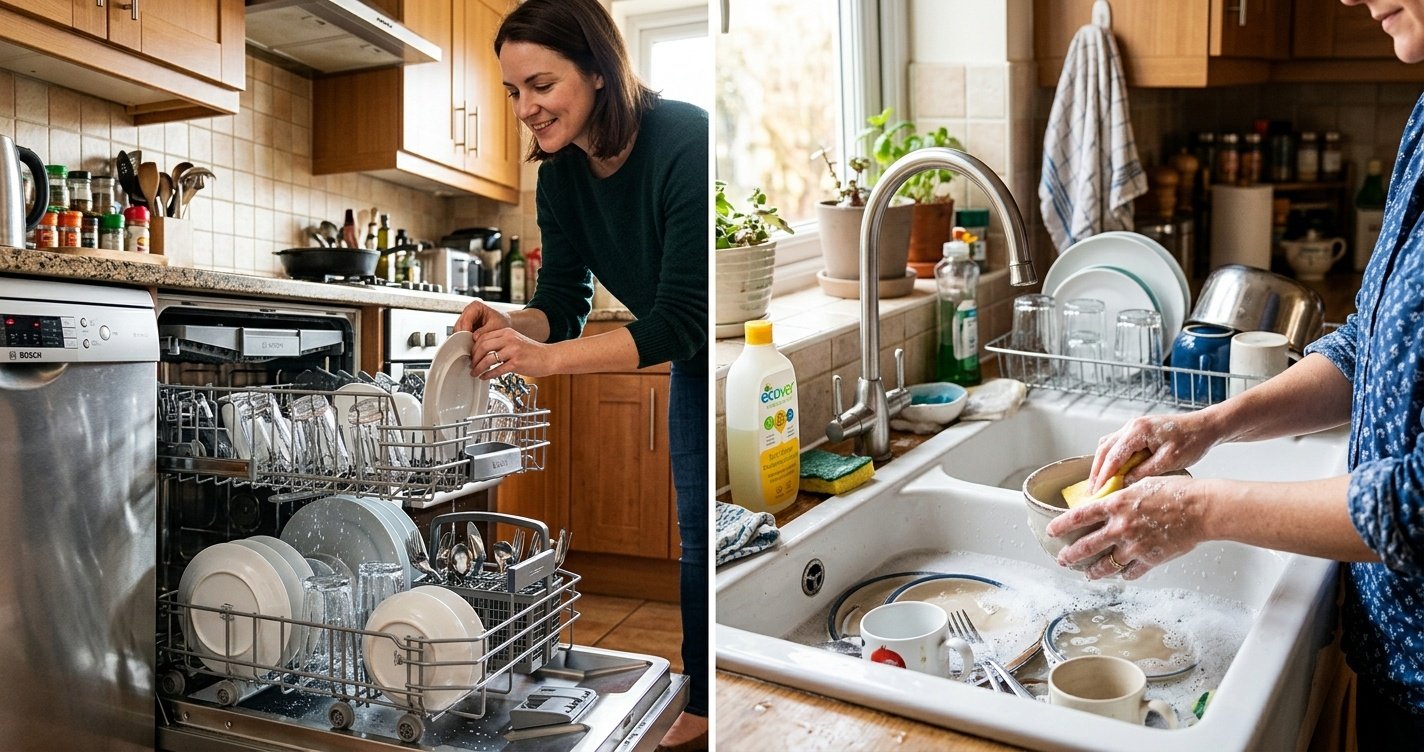
A clean filter is essential for keeping your Bosch dishwasher running efficiently. If the filter becomes clogged with food particles, grease, and debris, you may notice dirty dishes, unpleasant odors, standing water, or poor drainage.
The good news is that cleaning a Bosch dishwasher filter is usually a simple maintenance task that takes only a few minutes.
Read More: Steps to Clean Your Dishwasher Filter
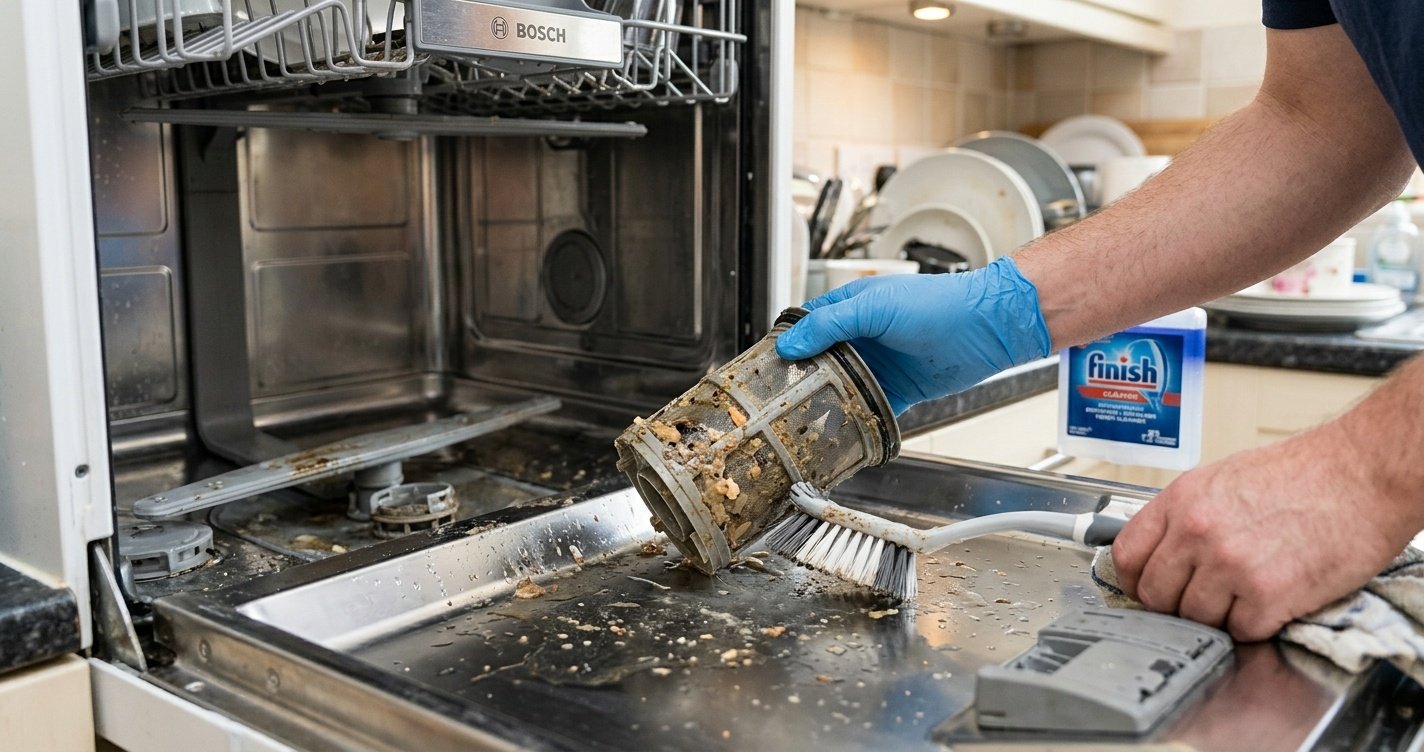
Table of contents
Why Does a Bosch Dishwasher Filter Need Cleaning?
The dishwasher filter catches food particles and other debris during the wash cycle. Over time, this material can build up and restrict water flow.
A dirty filter may contribute to:
- Food particles remaining on dishes
- Unpleasant smells inside the dishwasher
- Slow or incomplete draining
- Cloudy or dirty wash water
- Reduced cleaning performance
- Increased buildup inside the dishwasher
Regular filter cleaning helps maintain proper water circulation and dishwasher performance.
How Often Should You Clean the Filter?
For many households, checking the filter every few weeks is a good maintenance habit. If you frequently wash heavily soiled dishes or don’t scrape food from plates before loading, the filter may need attention more often.
Always check your specific Bosch dishwasher’s owner’s manual because filter designs and recommended maintenance can vary by model.
How to Clean a Bosch Dishwasher Filter
1. Turn Off the Dishwasher
Make sure the dishwasher is not running before you begin. Allow it to finish its cycle and, if necessary, let the interior cool.
2. Remove the Bottom Rack
Pull out the lower dish rack to give yourself access to the bottom of the dishwasher.
3. Locate the Filter
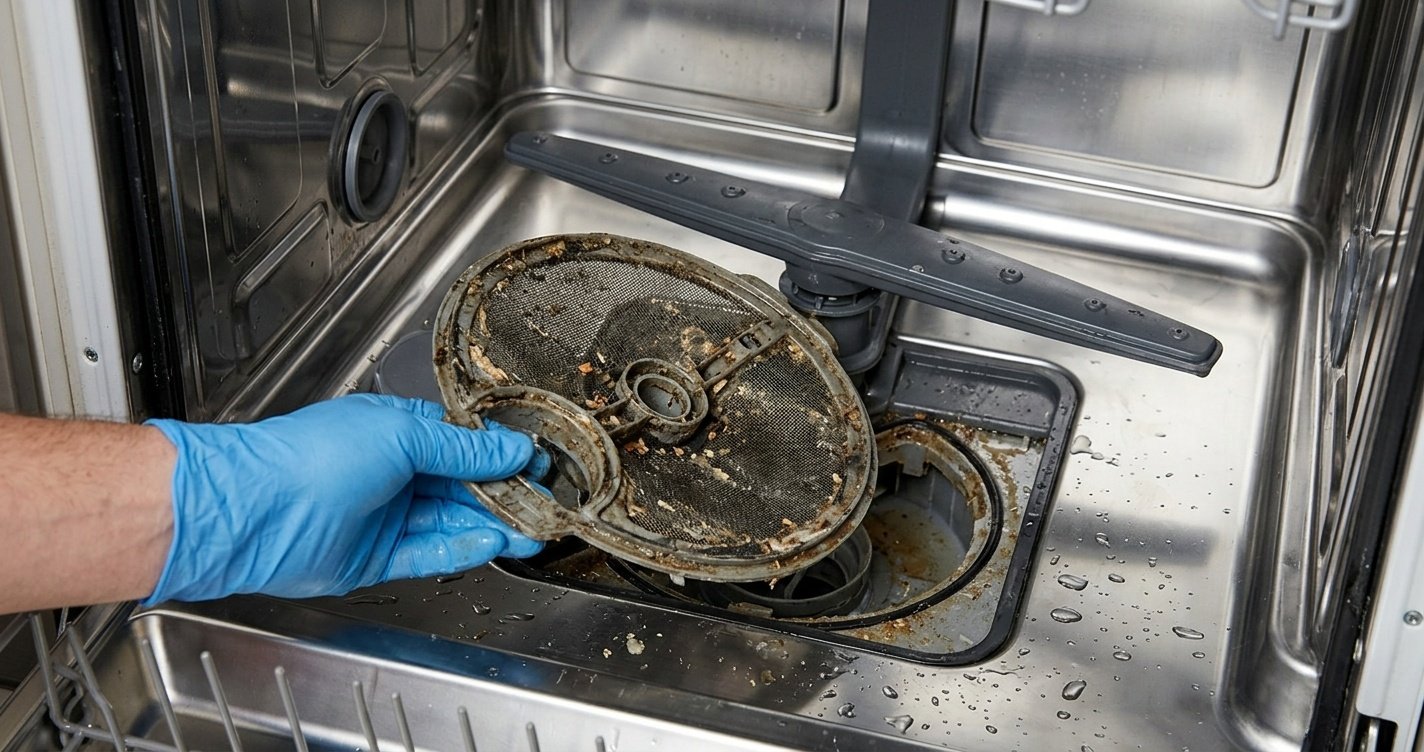
The filter assembly is generally located at the bottom of the dishwasher, beneath the lower spray arm area. Bosch models can differ, so avoid forcing or twisting components that don’t appear designed to move.
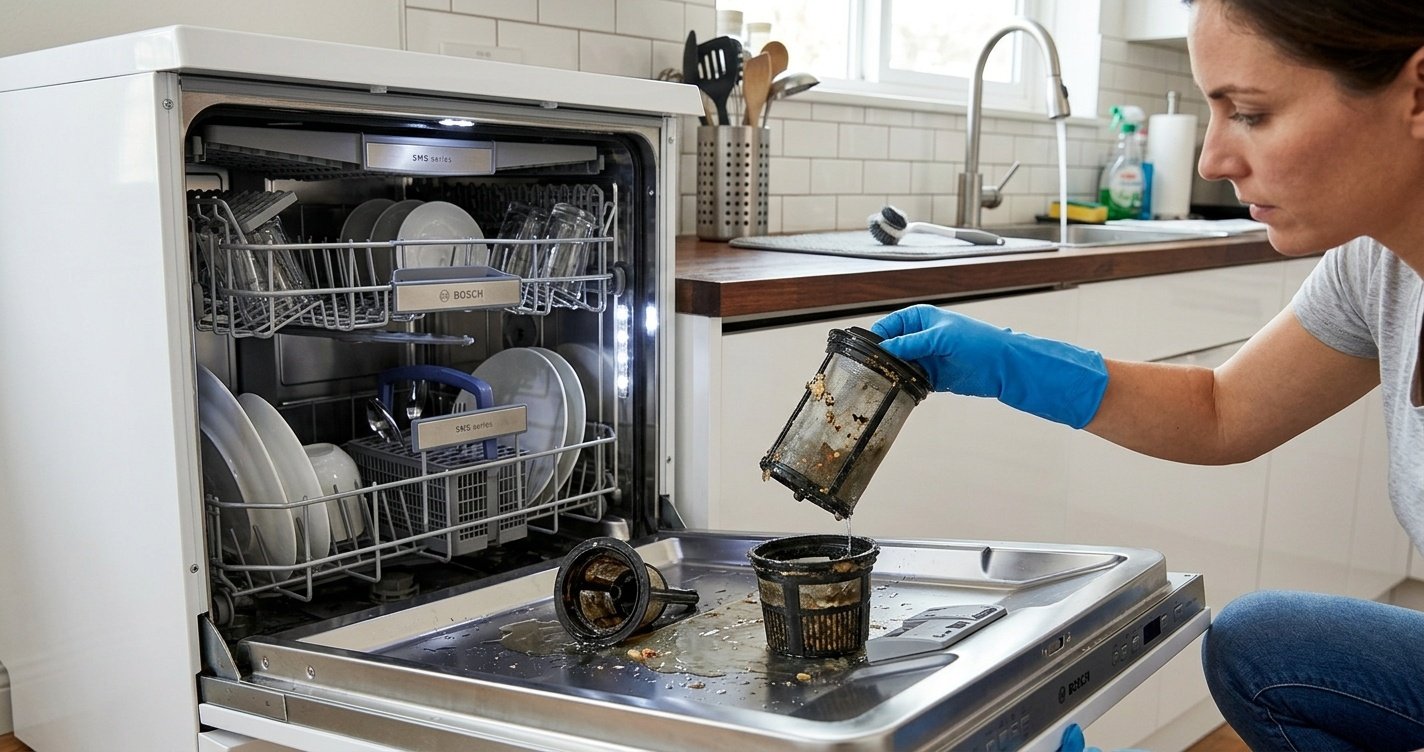
4. Remove the Filter
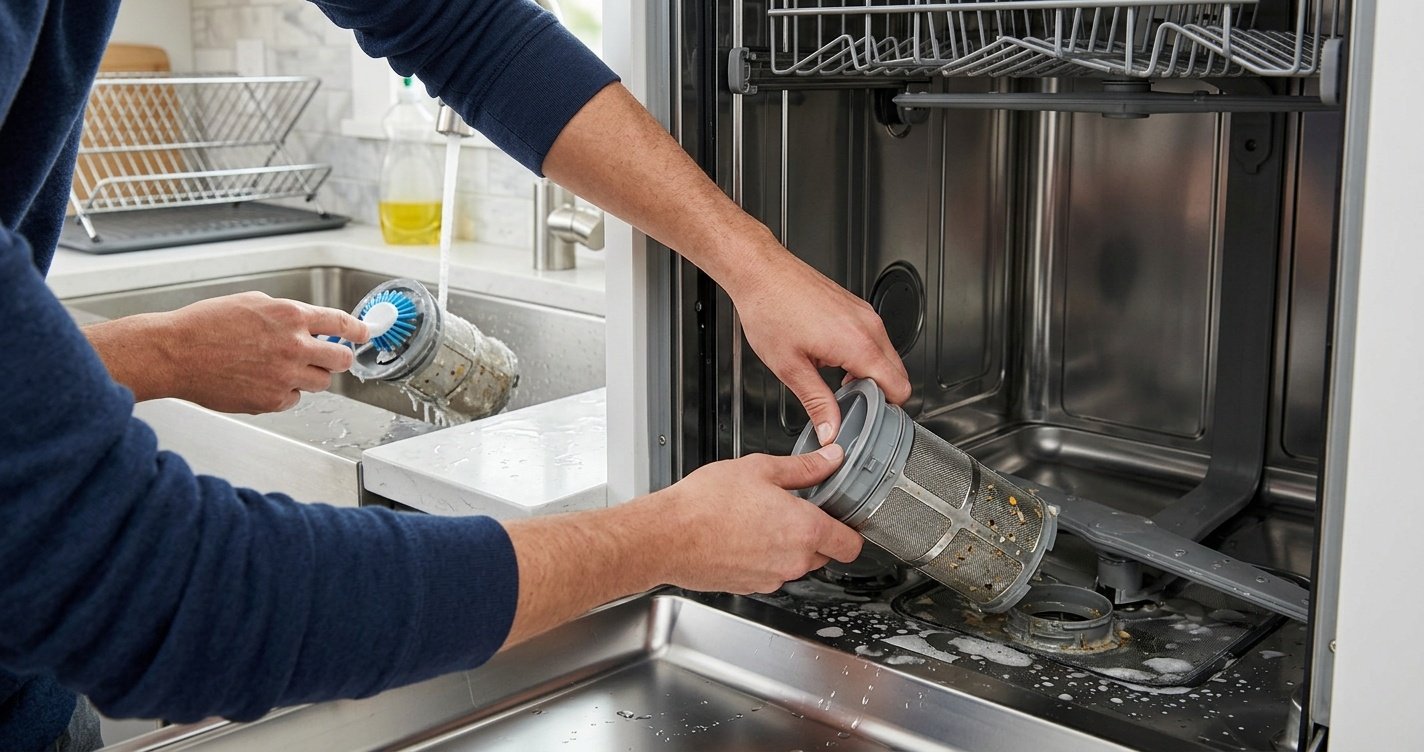
On many Bosch dishwashers, the filter can be unlocked by turning it and then lifting it out. Follow the removal instructions for your particular model.
5. Rinse the Filter
Hold the filter under warm running water. Gently remove trapped food particles and other debris. For stubborn buildup, use a soft brush and mild dishwashing detergent. Avoid using abrasive materials that could damage the filter.
6. Clean the Filter Area
Before reinstalling the filter, check the area around the filter opening for food debris or other residue. Remove loose debris carefully. Do not reach into areas you cannot safely access, and don’t disassemble dishwasher components unnecessarily.
7. Reinstall the Filter
Place the filter back into its correct position and lock it securely according to your model’s instructions. A filter that isn’t properly seated can affect dishwasher operation, so make sure it is firmly installed remains in the bottom after cleaning the filter, check your dishwasher’s owner’s manual for additional troubleshooting steps.
Possible causes can include a blocked drain path, a, clean the surrounding area, and reinstall the filter securely. Regular maintenance can help your dishwasher continue cleaning effectively and operating properly before using the appliance.
8. Replace the Bottom Rack
Slide the lower rack back into the dishwasher. The appliance is now ready for normal use.
What If the Dishwasher Still Doesn’t Drain?
Cleaning the filter can resolve drainage problems caused by accumulated debris, but it isn’t the only possible cause. If water remains in the bottom after cleaning the filter, check your dishwasher’s owner’s manual for additional troubleshooting steps. Possible causes can include a blocked drain path, a problem with the drain hose, or another component that requires service.
If the dishwasher is making unusual noises, repeatedly displaying an error code, leaking, or failing to operate normally, professional appliance service may be appropriate.
Tips to Keep the Bosch Dishwasher Filter Clean
A few simple habits can reduce filter buildup:
- Scrape large food particles from dishes before loading them.
- Check the filter regularly rather than waiting for an odor or drainage problem.
- Avoid putting excessive food debris into the dishwasher.
- Clean the dishwasher interior periodically.
- Follow the maintenance instructions in your specific Bosch owner’s manual.
Frequently Asked Questions
How often should I clean my Bosch dishwasher filter?
Clean the filter every few weeks, or more frequently if you regularly wash heavily soiled dishes.
How do I know if my Bosch dishwasher filter needs cleaning?
Common signs include dirty dishes, unpleasant odors, slow draining, standing water, or visible food debris around the filter.
Can I wash the Bosch dishwasher filter with soap?
Yes. You can generally rinse the filter with warm water and use a small amount of mild dishwashing detergent for stubborn residue. Avoid abrasive cleaners or brushes.
Where is the filter located in a Bosch dishwasher?
The filter is typically located at the bottom of the dishwasher, underneath the lower spray-arm area. The exact design can vary by model.
Why does my Bosch dishwasher smell even after cleaning?
Food debris may still be trapped in the filter, filter area, spray arms, or other parts of the dishwasher. Cleaning the filter and interior regularly can help reduce odors.
What happens if I don’t clean my Bosch dishwasher filter?
A dirty filter can restrict water flow and contribute to poor cleaning performance, unpleasant odors, and drainage problems.
Can a dirty filter cause my Bosch dishwasher not to drain?
Yes. Food debris and buildup around the filter can contribute to drainage problems. If the dishwasher still doesn’t drain after cleaning the filter, another blockage or component issue may be involved.
Final Thoughts
A Bosch dishwasher filter needs regular cleaning because it collects food particles and debris during every wash. A clogged filter can contribute to odors, poor cleaning results, and drainage problems.