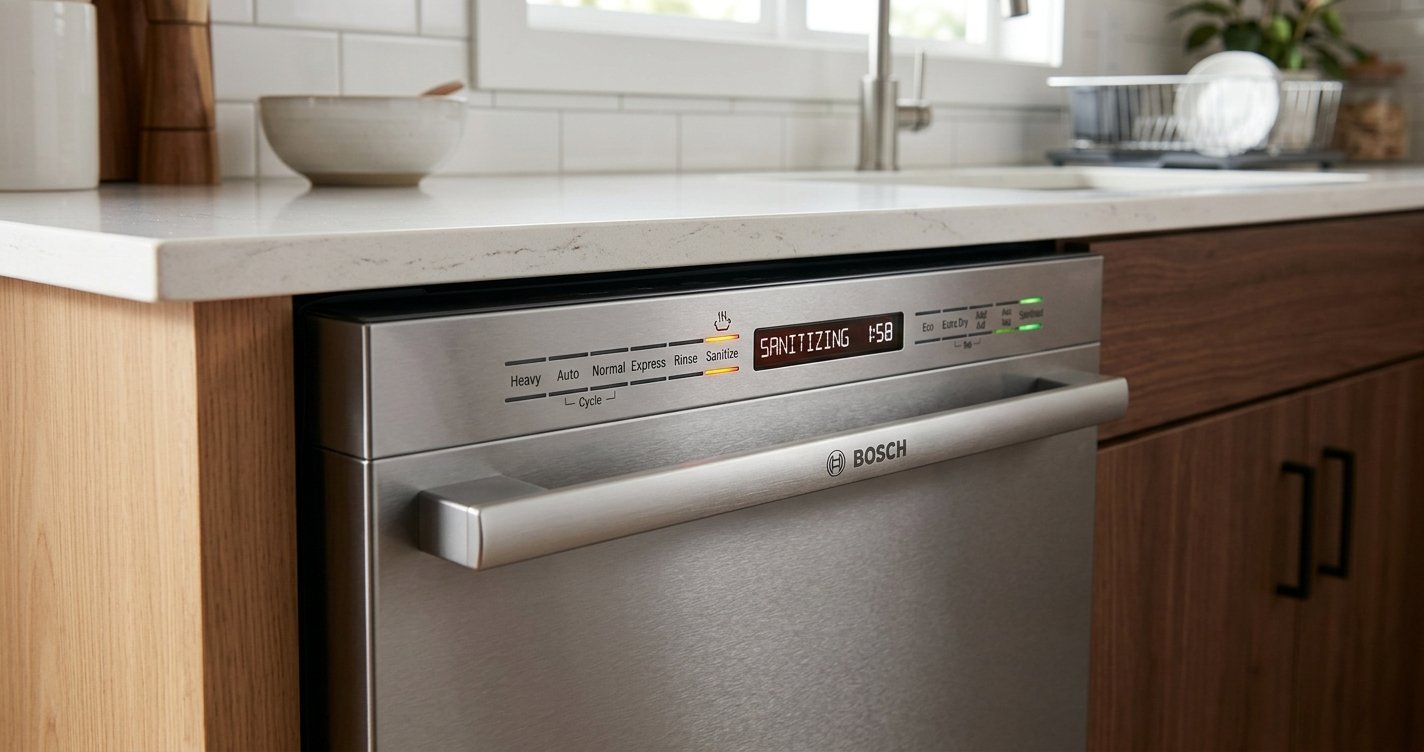
Rinse aid goes in the dispenser on the inside of the dishwasher door, next to the detergent compartment — press the latch, lift the lid, and pour until it reaches the max fill line. Bosch dishwashers ship preset to level 2 (on a 1–5 or similar scale, depending on model), and you should refill whenever the rinse-aid indicator light appears, which typically means only one to two loads of rinse aid remain. If dishes come out with rainbow streaks, you’re using too much; if they come out with water spots, increase the setting.
Read More: Bosch Dishwasher Error Code E24: Meaning & Fix
Table of contents
What Does Rinse Aid Actually Do?
Rinse aid isn’t a cleaning agent — it’s a drying and finishing agent. It’s released during the final rinse of each cycle to help water sheet off dishes instead of forming droplets that dry into spots. According to Bosch, skipping rinse aid decreases drying performance and can leave water spots on dishes, especially in homes with hard water. Bosch also specifically recommends using a separate rinse aid even if you use all-in-one detergent tablets that already contain some, since detergent and rinse aid release at different points in the cycle — with an all-in-one product, the rinse aid released during the final rinse may not be enough on its own to maximize drying.
Where Is the Rinse Aid Dispenser on a Bosch Dishwasher?
The dispenser sits on the inside of the dishwasher door, next to where you add detergent. Look for a small, round cap, usually marked with a water-droplet icon. Many models also include a small transparent window on the dispenser so you can visually check the current level before opening it.
How to Fill the Rinse Aid Dispenser
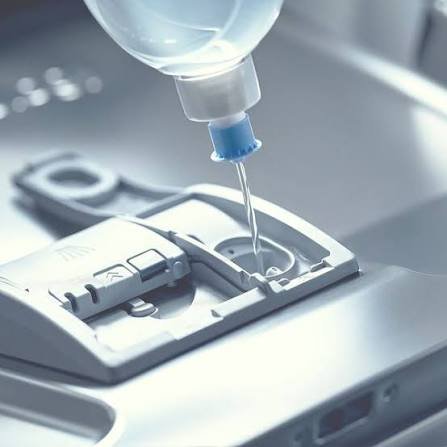
- Open the dishwasher door to access the dispenser on the inner door panel.
- Press the latch on the lid and pull it open, or twist the cap counterclockwise depending on your model.
- Pour the rinse aid slowly into the compartment until it reaches the max fill line — pouring too quickly increases the risk of spilling into the dishwasher tub.
- Avoid overfilling. Filling past the max line can cause leaking once the compartment is closed.
- Wipe away any spills before closing the lid, since residual rinse aid left on the door can cause streaking on the next cycle’s dishes.
- Close and secure the cap firmly so it doesn’t come loose during the wash.
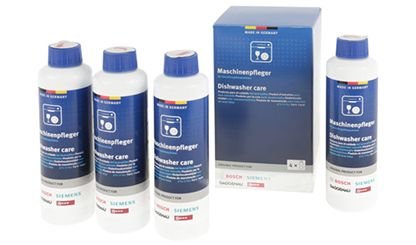
Don’t use homemade rinse aid. Bosch specifically advises against homemade substitutes, noting they can damage the appliance, pose a health hazard, and potentially void your warranty.
How Often Should You Refill Rinse Aid?
Refill whenever the rinse-aid indicator light appears on your control panel. According to Bosch, once that light comes on, the remaining rinse aid is only enough for one to two more loads — so it’s worth topping off soon after you see it rather than waiting until the dispenser runs completely dry.
How to Adjust the Rinse Aid Setting
Bosch dishwashers come preset to a middle setting (commonly level 2 or level 3, depending on model and region) that works well for most households, but you can adjust it if your results aren’t ideal:
- Press the On/Off button to access the settings menu.
- Press the “A” button (or your model’s equivalent) repeatedly until the display shows the rinse aid setting, often labeled something like “r:05” on the display.
- Press the “C” button (or the corresponding adjustment button) to cycle through the available levels — Bosch’s documented range runs from “r:00” up to “r:06” on some models, or a simpler 1–5 scale on others.
- Press Start to save your new setting.
Exact button labels and the available range vary by model, so check your specific owner’s manual if these labels don’t match your control panel.
How to Know Which Direction to Adjust
- Rainbow-colored streaks on dishes or glasses → you’re using too much rinse aid; lower the setting.
- Water spots or a filmy residue, especially with hard water → you’re using too little; raise the setting.
- Dishes still coming out wet despite a full dispenser → try increasing the setting slightly before assuming there’s a hardware issue.
Troubleshooting: Rinse Aid Dispenser Not Releasing
If the reservoir stays full after several cycles even though the indicator light suggests it should be depleting, work through these checks in order:
1. Check the Setting Dial
If the dial is set to the minimum position, very little rinse aid is released per cycle, which can make it look like the dispenser isn’t working at all when it’s actually just dispensing a small amount.
2. Inspect for Clogs
Dried or thickened rinse aid can solidify inside the dispensing port, particularly if the dishwasher isn’t run often. Remove the cap and flush the reservoir thoroughly with warm running water. A cotton swab dipped in warm water can help clear a clogged dispensing port.
3. Run an Empty Cycle With Warm Water
For more stubborn buildup, fill the reservoir with warm water and run an empty cycle to help dissolve residue that a simple flush didn’t remove.
4. Check the Dispenser Sensor
If the rinse-aid indicator light itself isn’t activating even when the reservoir is genuinely low, inspect the sensor near the dispenser for dirt or residue and clean it gently.
5. Rule Out a Failed Actuator
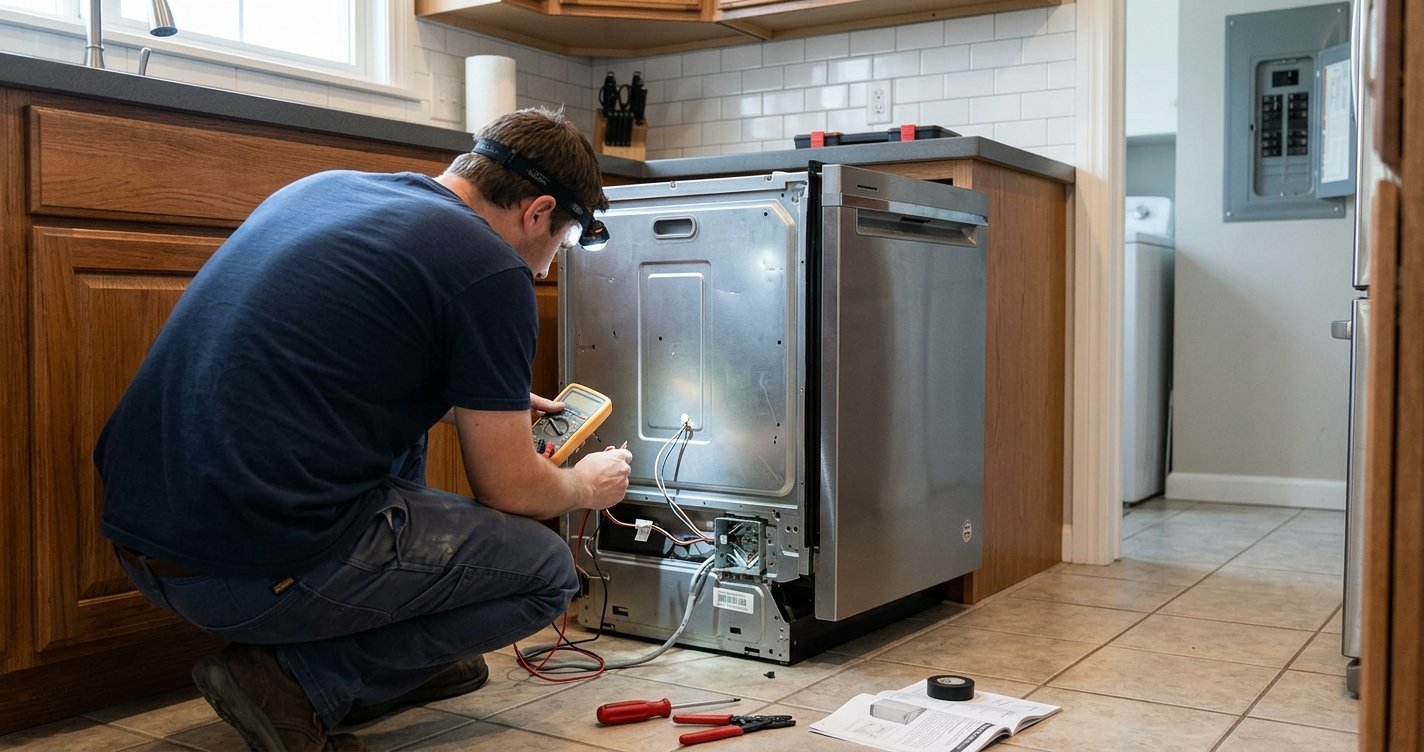
If the dispenser is clean, properly filled, and the cap is secure, but rinse aid still never releases, the actuator mechanism that physically opens the dispenser during the cycle may have failed electrically. This typically requires a technician, since it involves diagnosing the dispenser assembly or its control board signal rather than a simple cleaning fix.
Frequently Asked Questions
Where do I put rinse aid in a Bosch dishwasher?
In the dispenser on the inside of the dishwasher door, next to the detergent compartment — press the latch or twist the cap to open it, then fill to the max line.
What is the default rinse aid setting on a Bosch dishwasher?
Bosch dishwashers typically ship preset to a middle level (often labeled level 2 or level 3 depending on the model), which works well for most water conditions out of the box.
Why are there streaks on my dishes after using rinse aid?
Rainbow-colored streaks usually mean you’re using too much rinse aid. Lower the dispenser setting through your control panel to reduce the amount released per cycle.
Do I still need rinse aid if I use all-in-one detergent tablets?
Yes, according to Bosch — even all-in-one tablets that include some rinse aid may not release enough during the final rinse for optimal drying, especially with hard water, so a separate rinse aid is still recommended.
Can I use homemade rinse aid, like vinegar, in a Bosch dishwasher?
Bosch specifically advises against homemade rinse aid substitutes, noting they can potentially damage the appliance, pose a health hazard, and void your warranty.
Why isn’t the rinse aid depleting even though the indicator light says it’s low?
This usually points to a clogged dispensing port, a setting dial turned too low, or in some cases a failed dispenser actuator that isn’t releasing rinse aid during the cycle despite a full reservoir.
Conclusion
Rinse aid is a small maintenance habit with an outsized effect on how your dishes actually look coming out of the dishwasher — most water spots and lingering wetness trace back to either an empty dispenser or a setting that doesn’t match your water hardness. Fill it correctly, keep an eye on the indicator light, and adjust the level up or down based on whether you’re seeing streaks or spots. If you’ve done all of that and the reservoir simply won’t deplete, a clogged port or failed actuator is the next thing to rule out — and that’s the point where a quick cleaning fix either solves it, or tells you it’s time to call a technician.