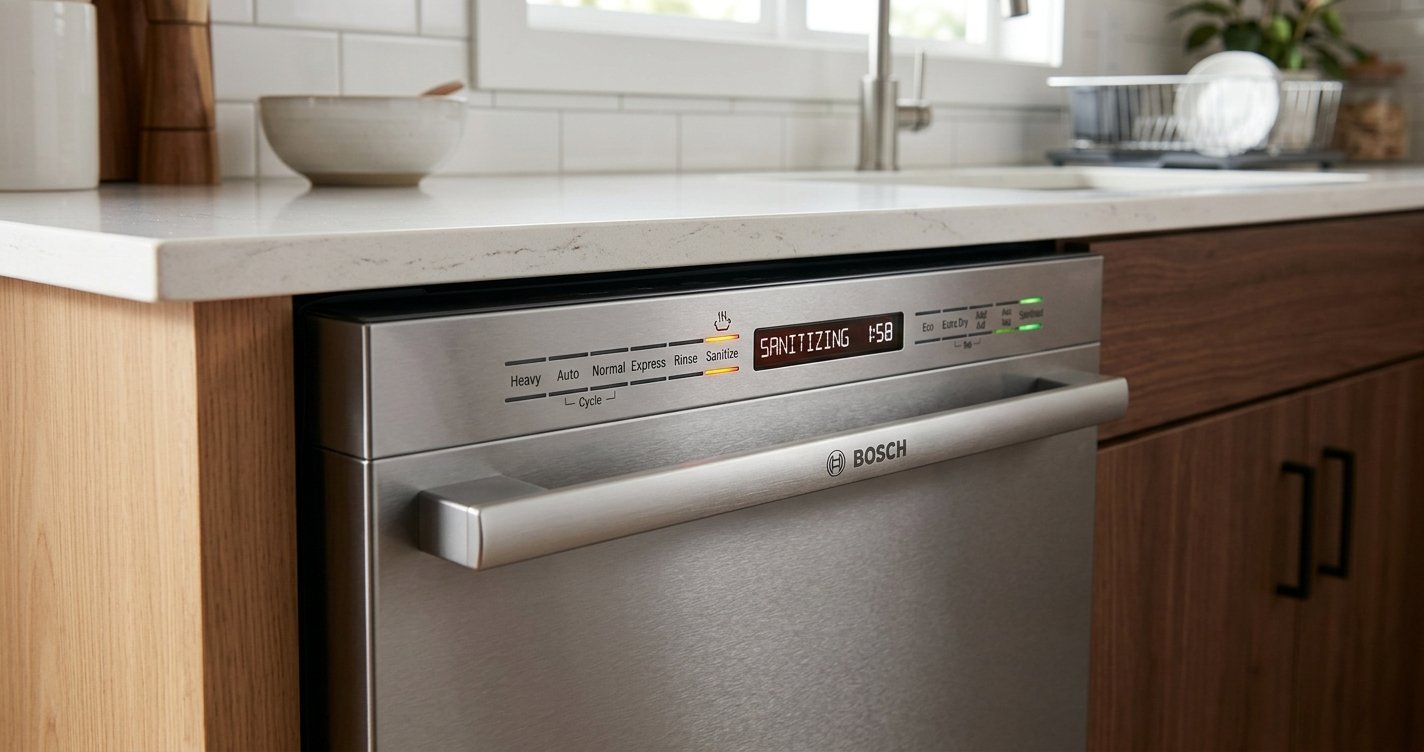
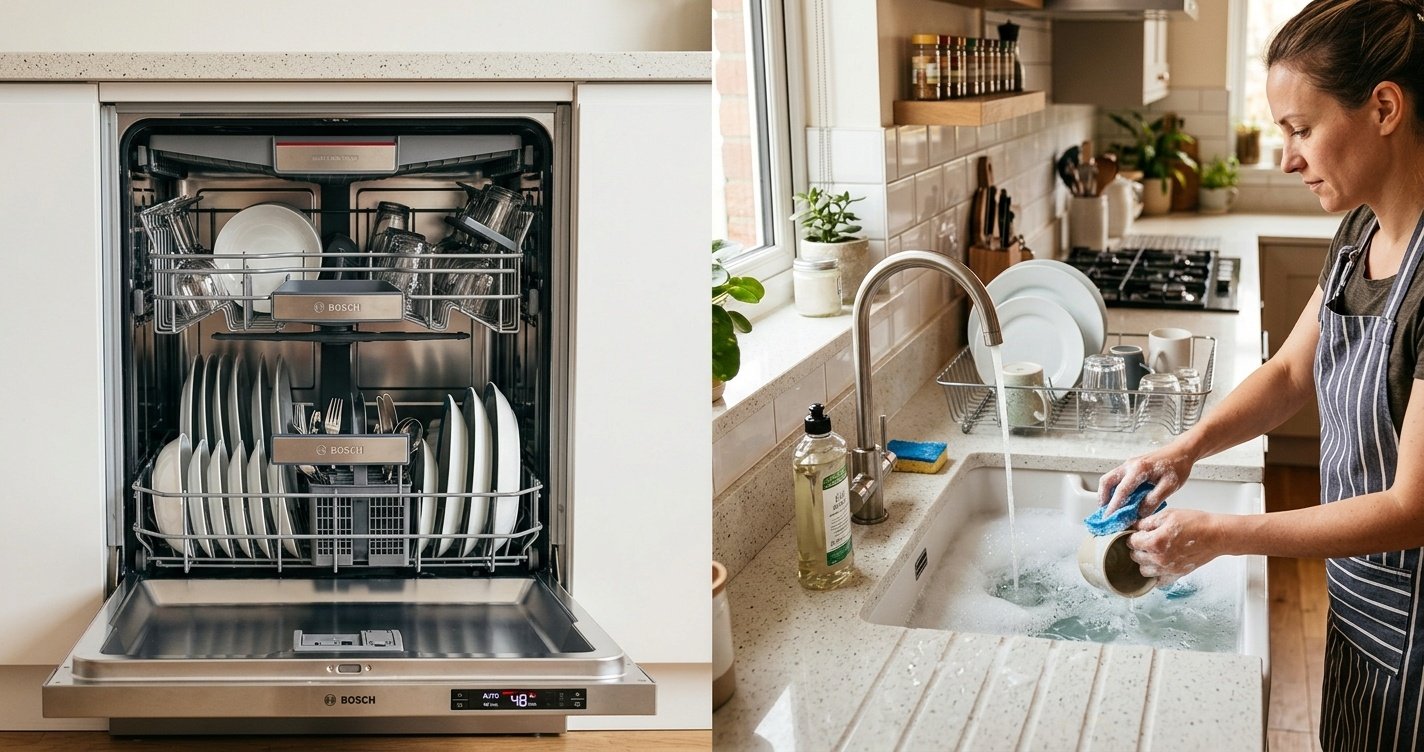
When it comes to cleaning dishes, most households rely on one of two methods: using a dishwasher or washing dishes by hand. While hand washing has been the traditional choice for decades, modern dishwashers offer greater convenience, consistent cleaning, and useful features that can make everyday kitchen chores easier. But is a dishwasher actually better than hand washing? The answer depends on your budget, kitchen space, household size, cleaning habits, and priorities.
In this guide, we compare dishwasher vs hand washing across water usage, energy consumption, cleaning performance, convenience, cost, hygiene, and environmental impact.
Read More: DIY Dishwasher Detergent: A Simple Guide
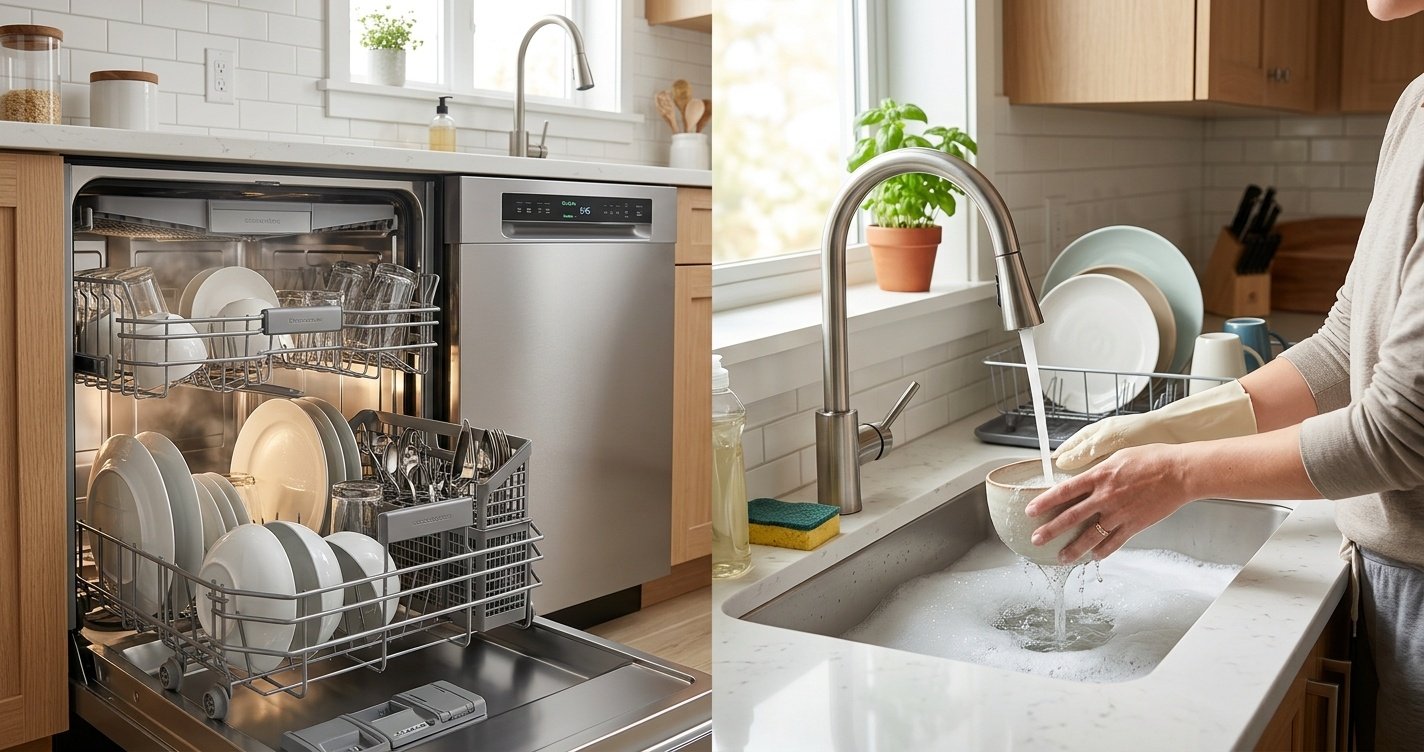
Table of contents
Dishwasher vs Hand Washing: Quick Comparison
| Feature | Dishwasher | Hand Washing |
| Cleaning consistency | Generally consistent when loaded correctly | Depends on washing technique |
| Water usage | Typically efficient for a full load | Can use significantly more water if the tap runs continuously |
| Energy usage | Uses electricity, particularly for heating water and drying | Mostly depends on how hot the water is heated |
| Convenience | Highly convenient and saves manual effort | Requires hands-on effort |
| Time required | Minimal active time | Requires active washing and rinsing |
| Upfront cost | Higher due to appliance purchase and installation | Very low |
| Ongoing costs | Electricity, water, detergent, and maintenance | Water, energy, and dish soap |
| Hygiene | High-temperature cycles can provide thorough cleaning | Depends on water temperature and washing technique |
| Large households | Convenient for frequent, large loads | Can become time-consuming |
| Small loads | May be less practical if run partially full | Convenient for a few dishes |
| Kitchen space | Requires dedicated space | No appliance space required |
| Delicate items | Some items may not be dishwasher-safe | Greater control over delicate items |
Dishwasher: Pros and Cons
A dishwasher can be a practical addition to a busy kitchen, especially for families or households that generate a large number of dishes every day.
Advantages of Using a Dishwasher
1. Less hands-on work
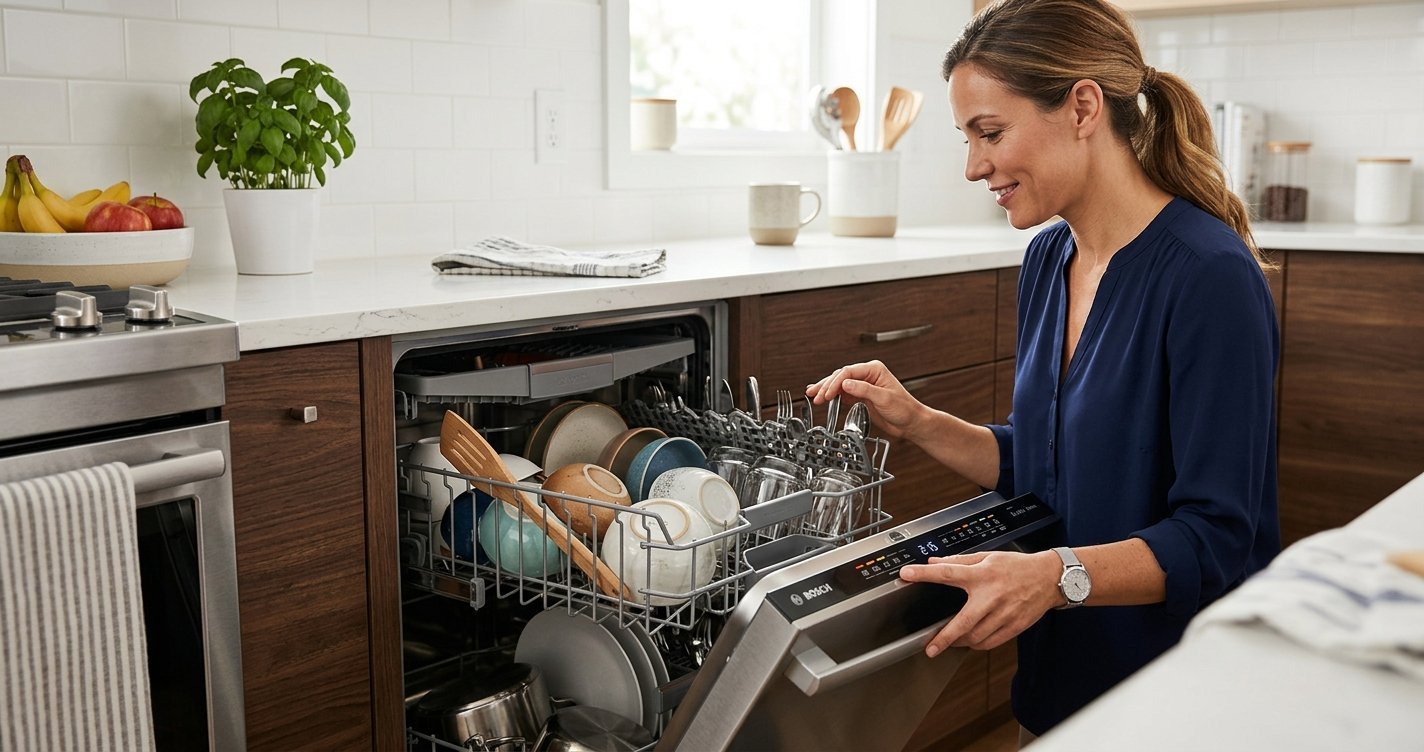
One of the biggest benefits is convenience. Instead of washing every plate, bowl, glass, and utensil at the sink, you can load the dishwasher, add detergent, select a cycle, and let the appliance do most of the work.
2. Consistent cleaning
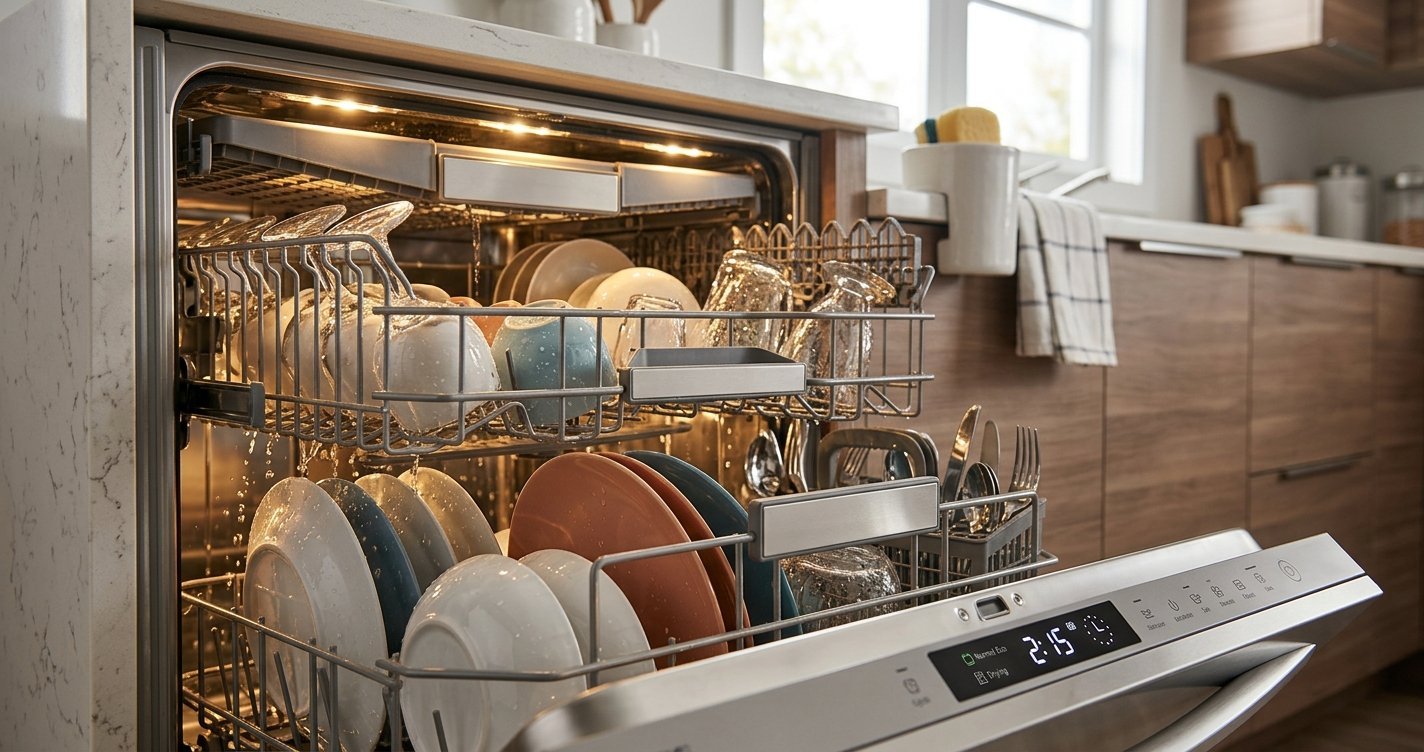
Modern dishwashers use controlled water temperatures, spray pressure, and cleaning cycles. When dishes are loaded properly and the appropriate cycle is selected, they can provide consistent results.
3. Convenient for larger households
For families and households that use many dishes throughout the day, a dishwasher can significantly reduce the amount of time spent at the sink.
4. Potentially efficient water use
Dishwashers can be designed to use a relatively controlled amount of water per cycle. However, efficiency depends on the appliance, cycle selected, load size, and how hand washing is performed.
5. Less contact with dirty dishes
Loading dishes into a dishwasher can reduce the amount of direct handling compared with manually scrubbing and rinsing every item.
Disadvantages of a Dishwasher
1. Higher upfront cost
Buying a dishwasher involves an appliance purchase and potentially installation costs. Built-in models may also require plumbing and electrical work.
2. Requires kitchen space
A dishwasher needs dedicated space, which may be difficult to accommodate in a small kitchen.
3. Operating costs
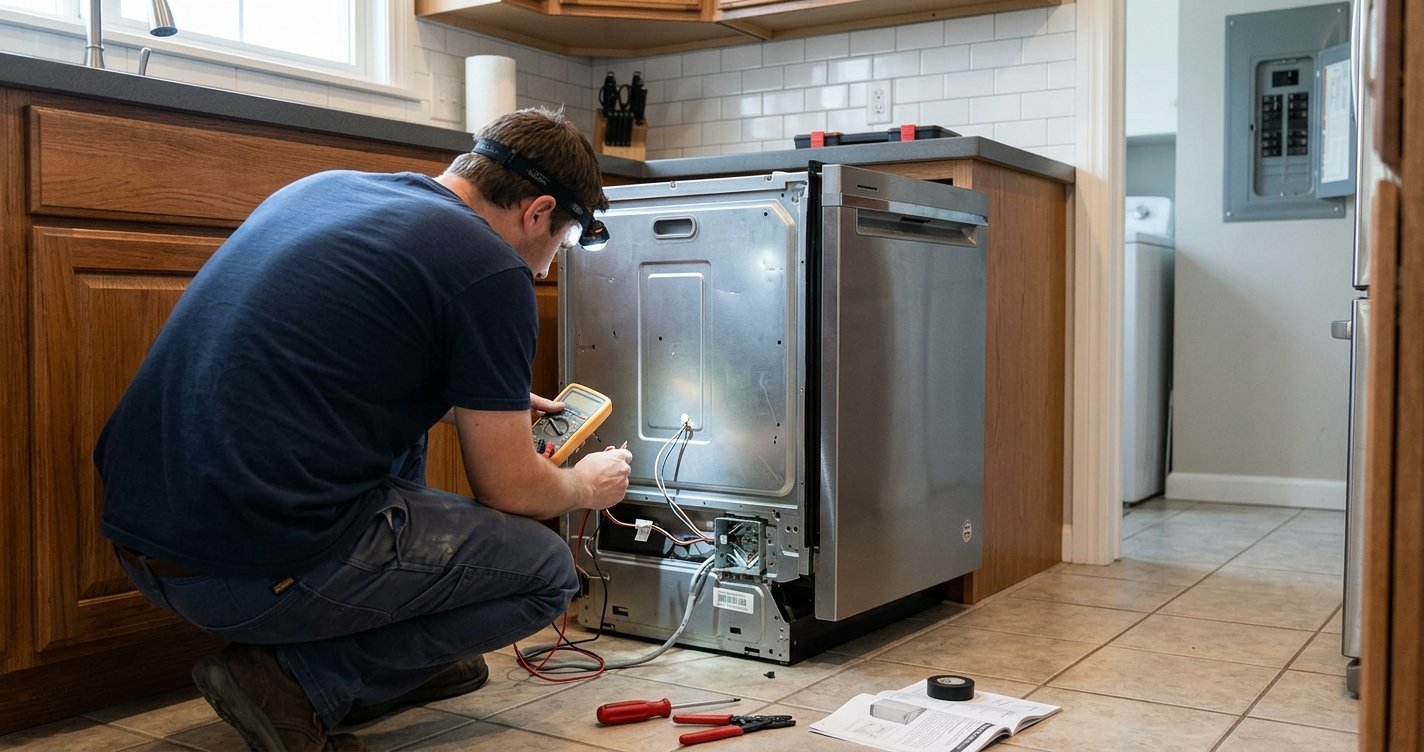
Dishwashers use electricity, water, and detergent. Over time, owners may also need to pay for maintenance or repairs.
4. Not everything is dishwasher-safe
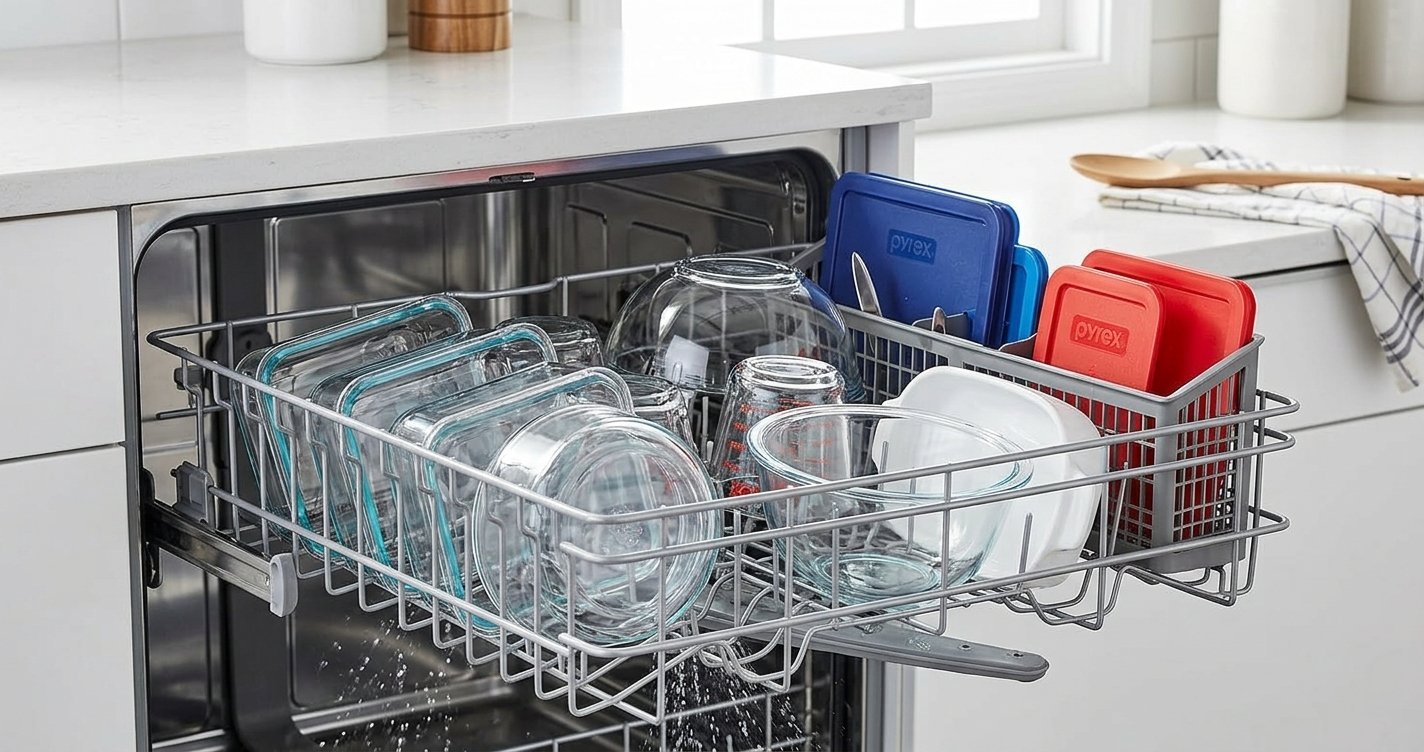
Certain materials, finishes, wooden utensils, delicate glassware, and some cookware may require hand washing. Always check the manufacturer’s care instructions.
Hand Washing: Pros and Cons
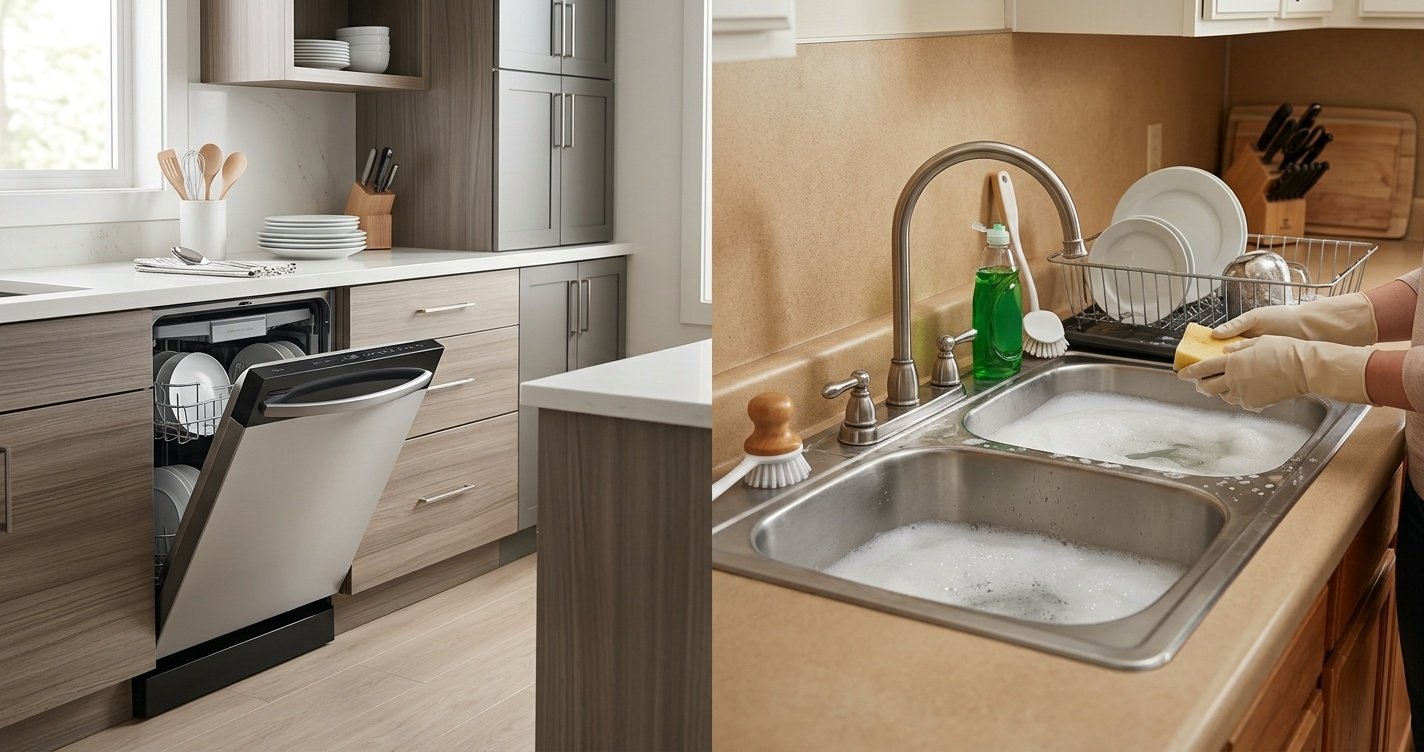
Hand washing remains a simple and flexible way to clean dishes. It requires no appliance and works particularly well when you only have a small number of dishes to clean.
Advantages of Hand Washing
1. Minimal upfront cost
You don’t need to purchase or install an appliance. A sink, dish soap, sponge or brush, and water are generally enough.
2. Excellent control
You can adjust the pressure, water temperature, and cleaning method for each item. This makes hand washing useful for delicate cookware and dishes.
3. Convenient for small amounts
If you only have a couple of cups and plates, washing them immediately may be faster than waiting to fill a dishwasher.
4. No dishwasher maintenance
There is no appliance filter, spray arm, heating element, or other dishwasher component to maintain or repair.
Disadvantages of Hand Washing
1. More manual effort
Every dish has to be washed, rinsed, and usually dried or placed on a rack by hand.
2. Water usage can vary considerably
Leaving the faucet running while washing and rinsing can result in substantial water use. Efficient hand-washing techniques can reduce this.
3. Time-consuming for larger households
The more dishes a household produces, the more time someone needs to spend at the sink.
Which Uses More Water: Dishwasher or Hand Washing?
Water consumption is one of the most common considerations when comparing dishwashers with hand washing.
The actual difference depends on the dishwasher’s efficiency and the way dishes are washed by hand. A modern, efficient dishwasher operated with full loads can be competitive with—and in some circumstances use less water than—hand washing. For hand washing, using a filled basin or stopping the faucet while scrubbing can reduce water consumption compared with continuously running water.
Tip: If you own a dishwasher, running it only when you have a sufficiently full load can help make each cycle more efficient.
Which Is More Hygienic?
Both methods can clean dishes effectively when used correctly.
A dishwasher can use high-temperature water and dedicated cleaning cycles, while hand washing gives you direct control over scrubbing and rinsing. However, hygiene also depends on factors such as detergent, water temperature, washing technique, sponge or brush cleanliness, and how dishes are handled after washing. For either method, proper cleaning practices are more important than simply choosing one method over the other.
Dishwasher vs Hand Washing: Cost Considerations
The cost comparison isn’t simply the price of water or electricity.
For a dishwasher, consider:
- Purchase price
- Installation
- Electricity
- Water
- Dishwasher detergent
- Rinse aid, if used
- Repairs and maintenance
- Expected appliance lifespan
For hand washing, consider:
- Water
- Water-heating energy
- Dish soap
- Sponges or brushes
- Drying accessories
If you’re washing only a few dishes each day, purchasing a dishwasher may not make financial sense purely for dish cleaning. For larger households with frequent dish loads, the convenience and time savings can become more significant.
Dishwasher or Hand Washing: Which Should You Choose?
There isn’t one answer that works for every household.
A dishwasher may suit you if you have a busy household, regularly wash large quantities of dishes, have sufficient kitchen space, and value convenience. Hand washing may suit you if you live alone or have a small household, wash relatively few dishes, have limited kitchen space, or don’t want the upfront cost of an appliance.
For many households, the most practical approach is actually a combination of both: use the dishwasher for everyday plates, bowls, glasses, and utensils, while hand washing items that are delicate, oversized, or not dishwasher-safe.
What to Look for When Buying a Dishwasher
If you’re considering purchasing a dishwasher, don’t focus only on the price tag. Compare the following features:
1. Capacity
Check how many place settings the dishwasher can accommodate and whether its interior layout works for your cookware.
2. Energy and Water Efficiency
Look for models with strong efficiency ratings and cycles that match your typical load size.
3. Noise Level
A quieter dishwasher can be especially useful in open-plan kitchens or smaller homes.
4. Wash Cycles
Useful options may include normal, heavy-duty, quick, delicate, and eco-oriented cycles.
5. Drying Performance
Different models use different drying technologies. Consider whether effective drying is important for your household.
6. Rack Configuration
Adjustable racks, folding tines, and dedicated utensil areas can make loading considerably easier.
7. Maintenance Requirements
Check how easy it is to clean the filter and access other components that require regular maintenance.
FAQs
Is a dishwasher better than hand washing dishes?
A dishwasher can be more convenient and may use water efficiently when fully loaded. Hand washing offers more control and can be practical for small loads. The better option depends on your household size, dish volume, budget, and kitchen space.
Does a dishwasher use less water than hand washing?
A modern, efficient dishwasher can use less water than hand washing, particularly when it is run with a full load. However, water usage varies depending on the dishwasher model and how efficiently dishes are washed by hand.
Is it cheaper to use a dishwasher or wash dishes by hand?
The total cost depends on water and energy rates, dishwasher efficiency, detergent costs, and how dishes are washed by hand. Hand washing has a lower upfront cost, while a dishwasher may offer greater convenience and efficiency over time.
Are dishwashers more hygienic than hand washing?
Dishwashers can provide thorough cleaning using controlled water temperatures and cleaning cycles. Hand washing can also be hygienic when proper detergent, water temperature, and cleaning practices are used.
Should I wash dishes before putting them in the dishwasher?
Usually, heavy food scraps should be scraped off before loading. Pre-rinsing every dish is generally unnecessary with modern dishwashers and can waste water.
Is hand washing better for delicate dishes?
Hand washing can be preferable for items that are delicate, oversized, or specifically labeled as not dishwasher-safe. Always follow the care instructions provided by the manufacturer.
Is a dishwasher worth buying for a small household?
It depends on how frequently you wash dishes and how much you value convenience. A small household that generates few dishes may find hand washing sufficient, while a dishwasher can still be useful for people who want to reduce daily hands-on cleaning time.
How often should I run my dishwasher?
Run the dishwasher when you have enough dishes for a reasonably full load, while avoiding overloading it. Following the manufacturer’s loading and cycle recommendations can help maintain cleaning performance and efficiency.
Final Verdict
The choice between a dishwasher and hand washing ultimately comes down to your household’s needs. Hand washing offers simplicity, flexibility, and a low upfront cost. A dishwasher requires an initial investment and ongoing operating costs, but it can provide substantial convenience and reduce hands-on dishwashing.