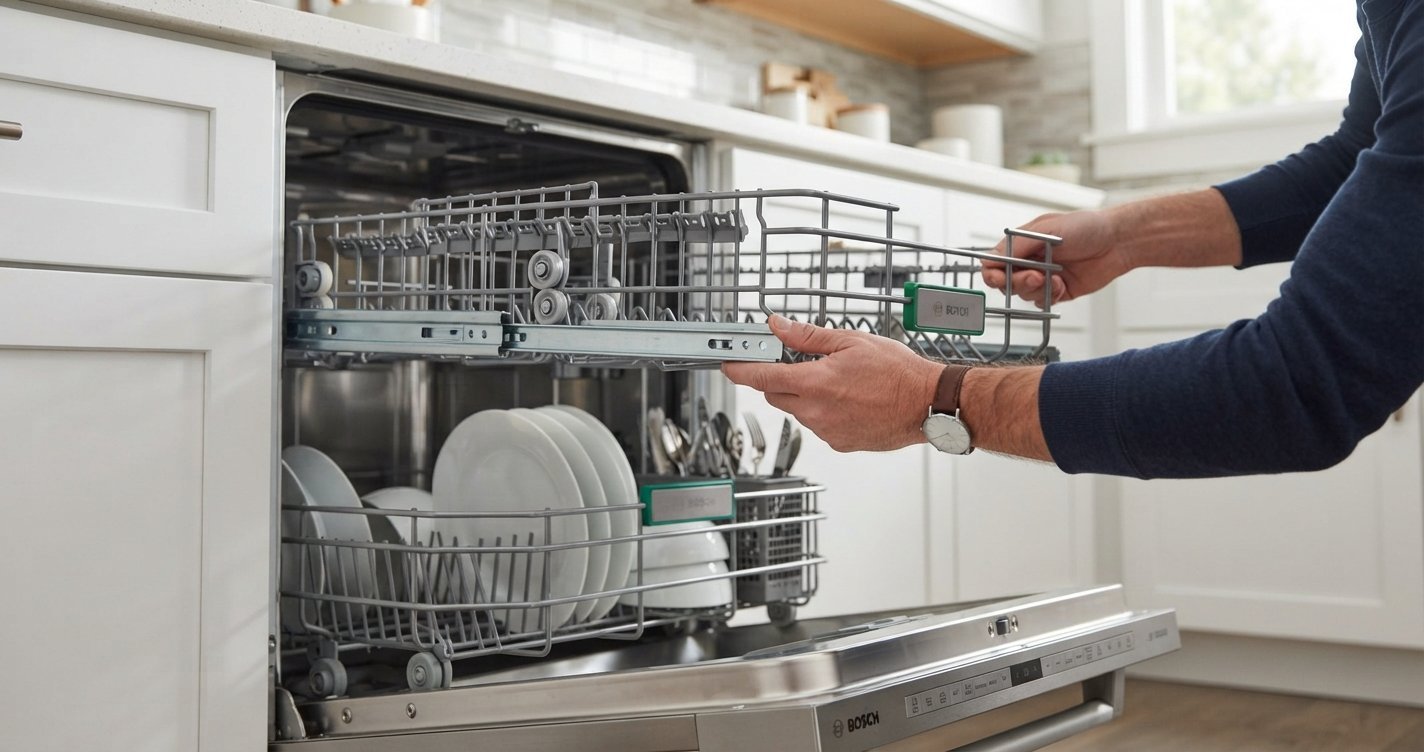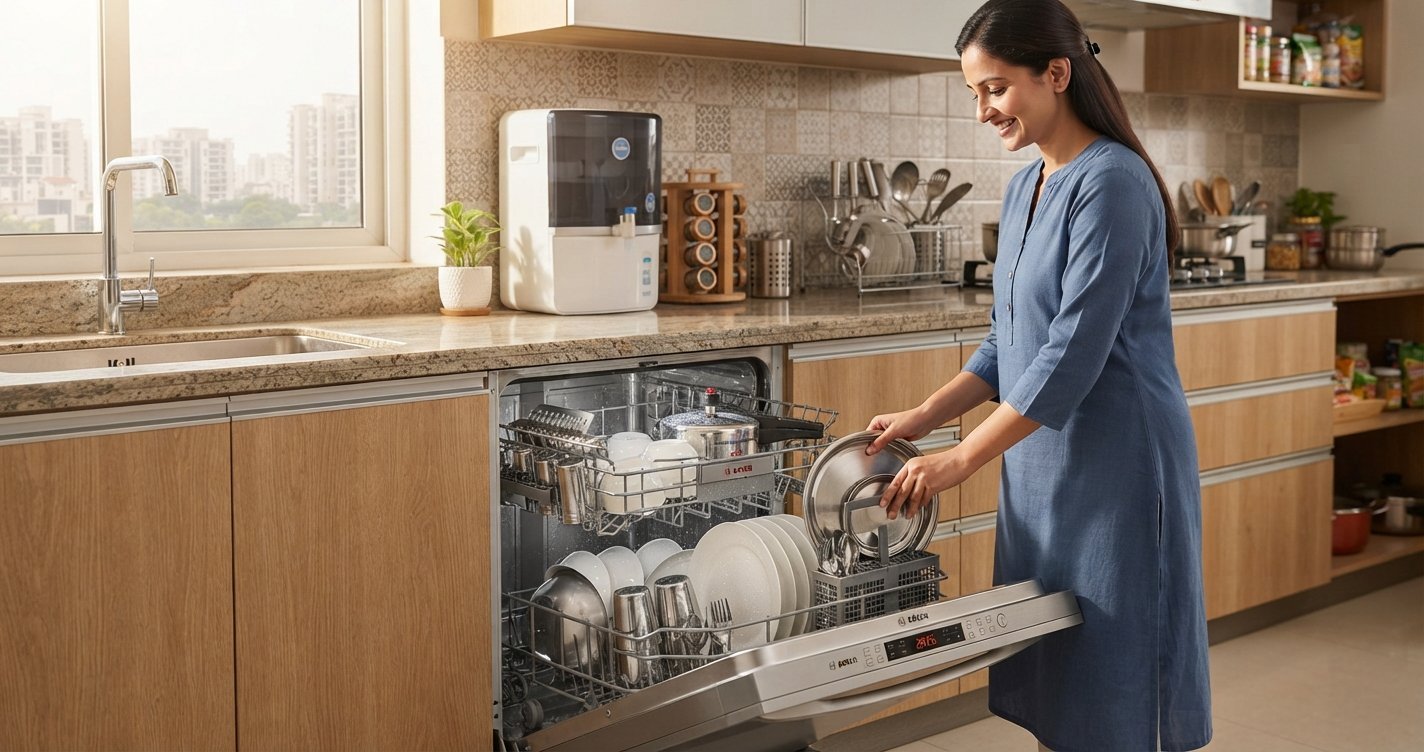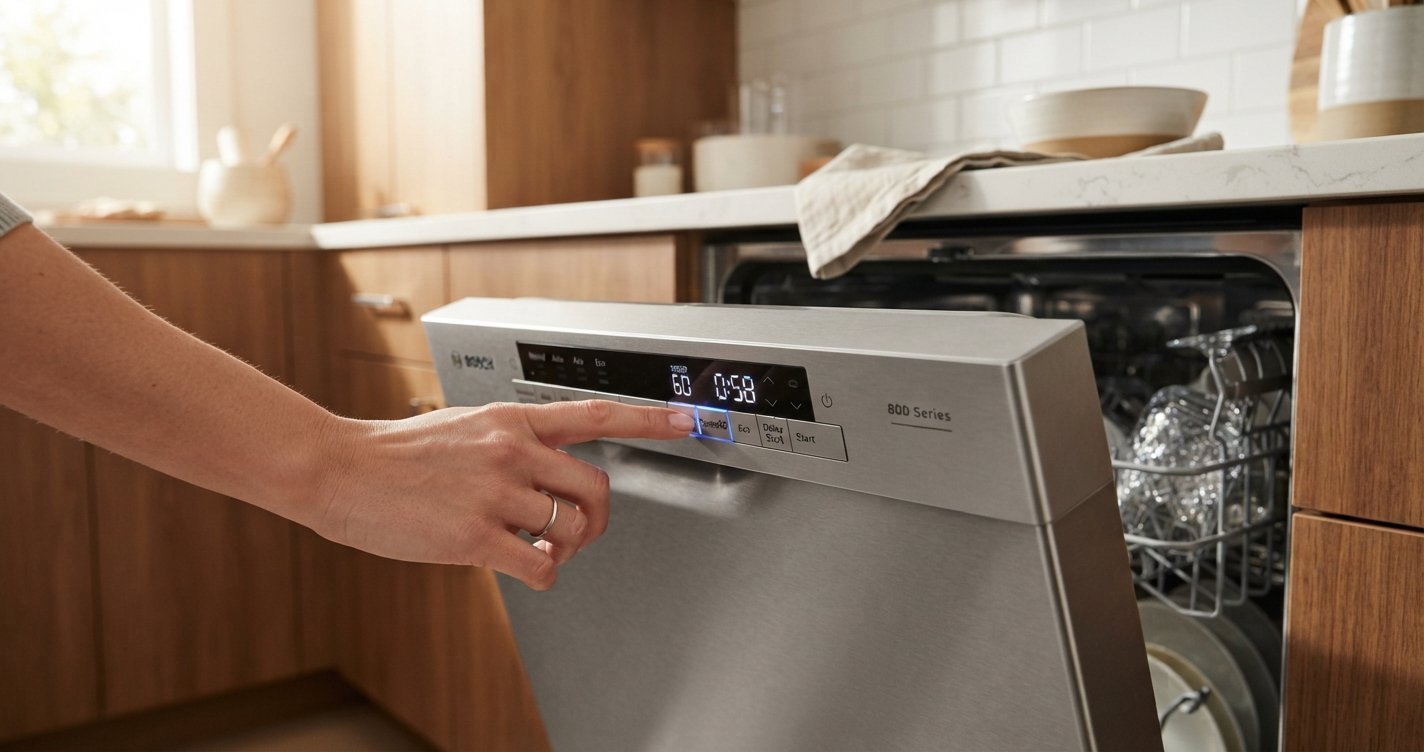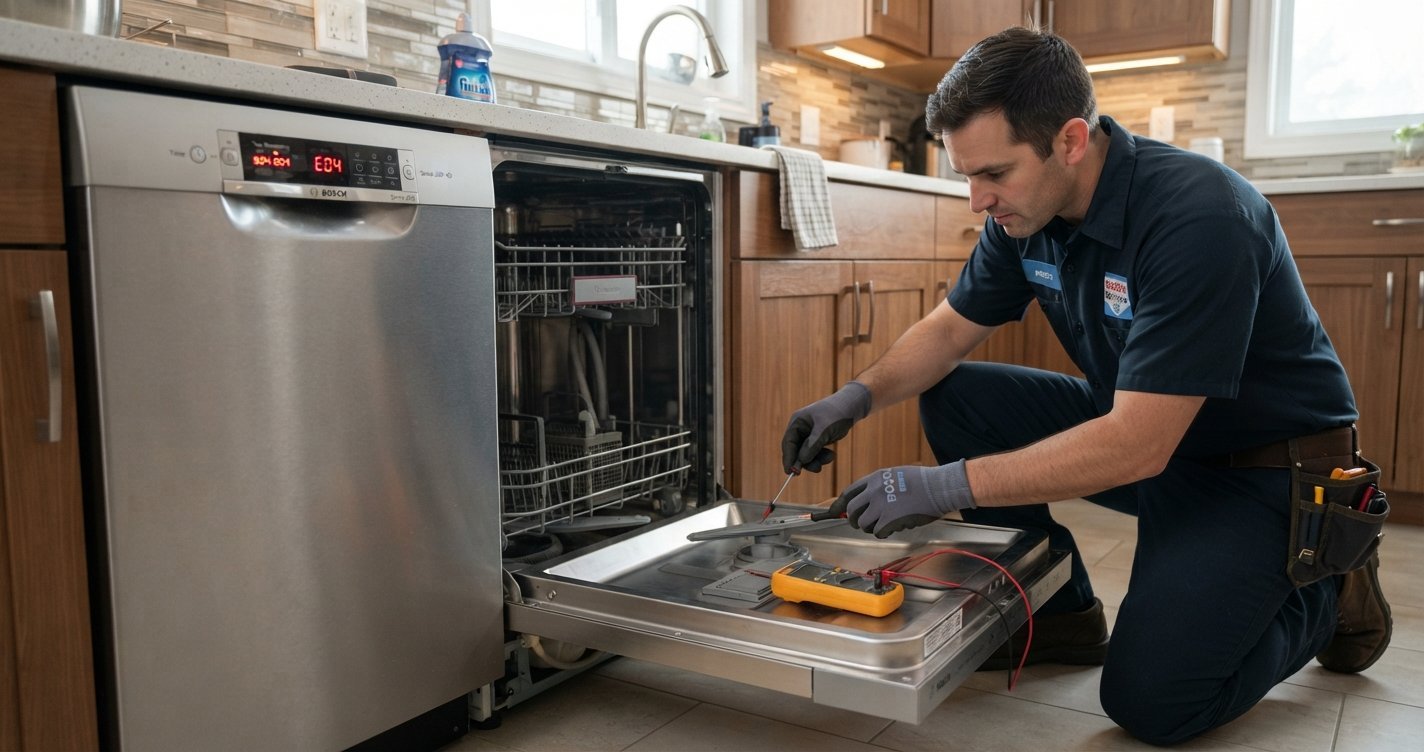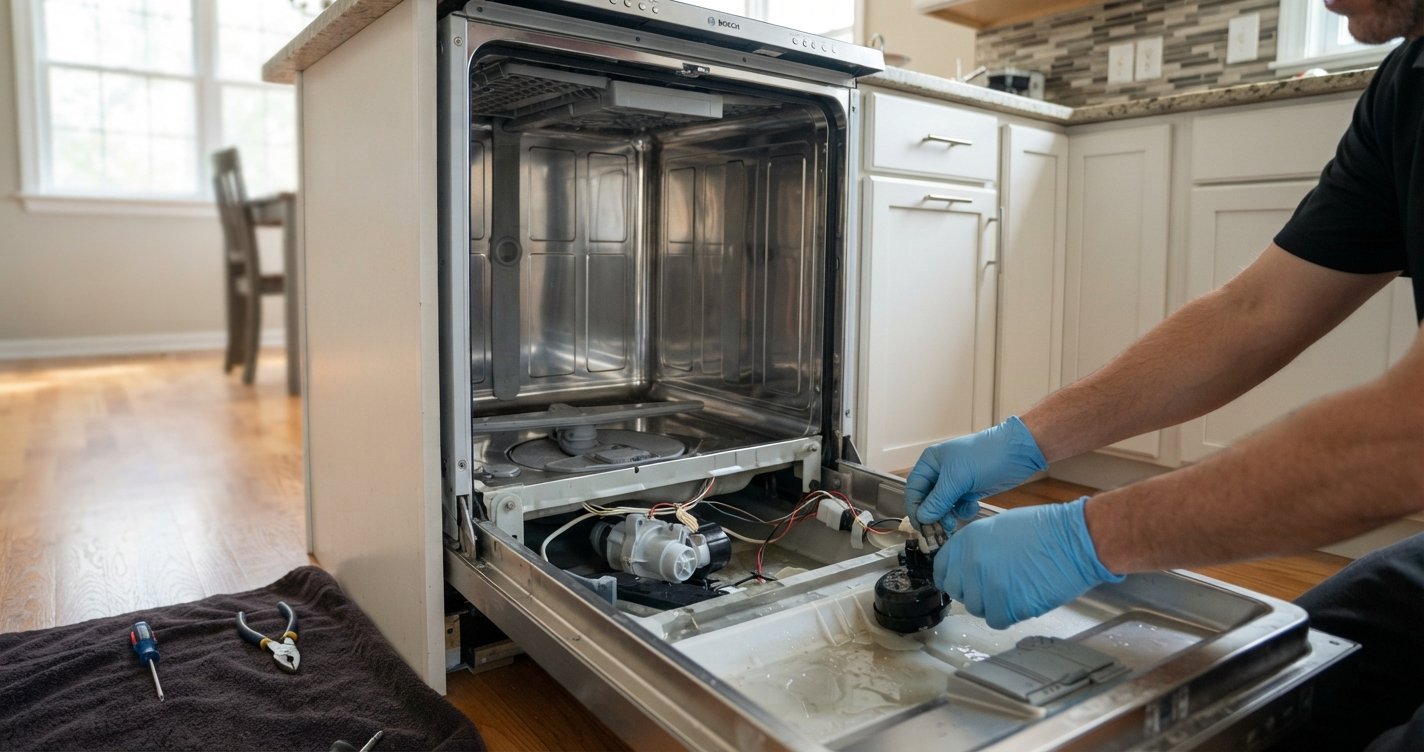
Installing a dishwasher involves five main phases: removing the old unit (if applicable), connecting the water supply line, connecting the drain hose, wiring the electrical connection, and leveling and testing the new machine. According to Whirlpool, most dishwashers are 24 inches wide and fit into an existing cabinet opening without modification, and a first-time DIY installation typically takes at least two hours, while professional installations generally run 1–4 hours depending on complexity. Before starting, always turn off the water supply and shut off power at the circuit breaker.
Read More: How to Clean a Bosch Dishwasher (Full Guide)
Table of contents
Before You Start: Tools and Prep
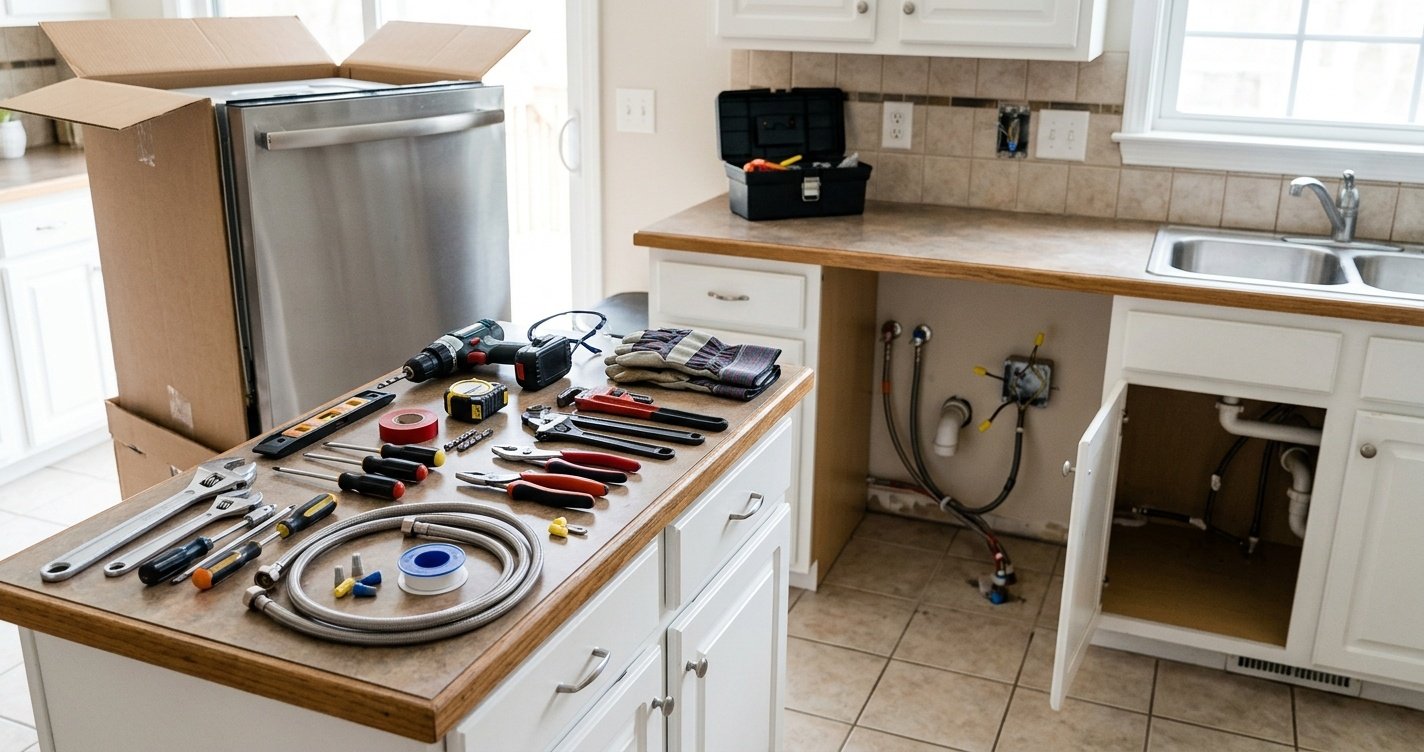
Installing a dishwasher requires connecting three essential utilities — water supply, drainage, and electricity — so gathering the right tools and reviewing your specific model’s manual before you begin saves time and prevents mistakes.
What you’ll typically need:
- Adjustable wrench and screwdriver
- Teflon tape
- A bucket, towel, or shallow pan to catch water
- A level
- Wire connectors (if hardwiring rather than plugging in)
- Your dishwasher’s owner’s manual, since specific connection points vary by model
Before you begin:
- Check your local building codes — some areas require an air gap device rather than a high loop in the drain line, and some may require a permit depending on your location.
- Confirm there are no existing utility connections in the cabinet opening that need to be cleared first.
- Have your new dishwasher’s model number and manual on hand for model-specific instructions.
Step 1: Remove the Old Dishwasher (If Applicable)
- Turn off the electrical power to the dishwasher at the circuit breaker, and shut off the water supply to the appliance.
- Unplug the dishwasher from the outlet, then disconnect the water supply line and drain hose. Keep a towel, shallow pan, or bucket ready to catch any water that drains out.
- Remove the mounting screws anchoring the dishwasher to the cabinets or countertop.
- Remove the front access panel below the door and adjust the leveling legs at each corner to make sliding the unit out easier.
- Protect your floor with a towel or cardboard, then carefully slide the old dishwasher out from the cabinet opening.
Step 2: Connect the Water Supply Line
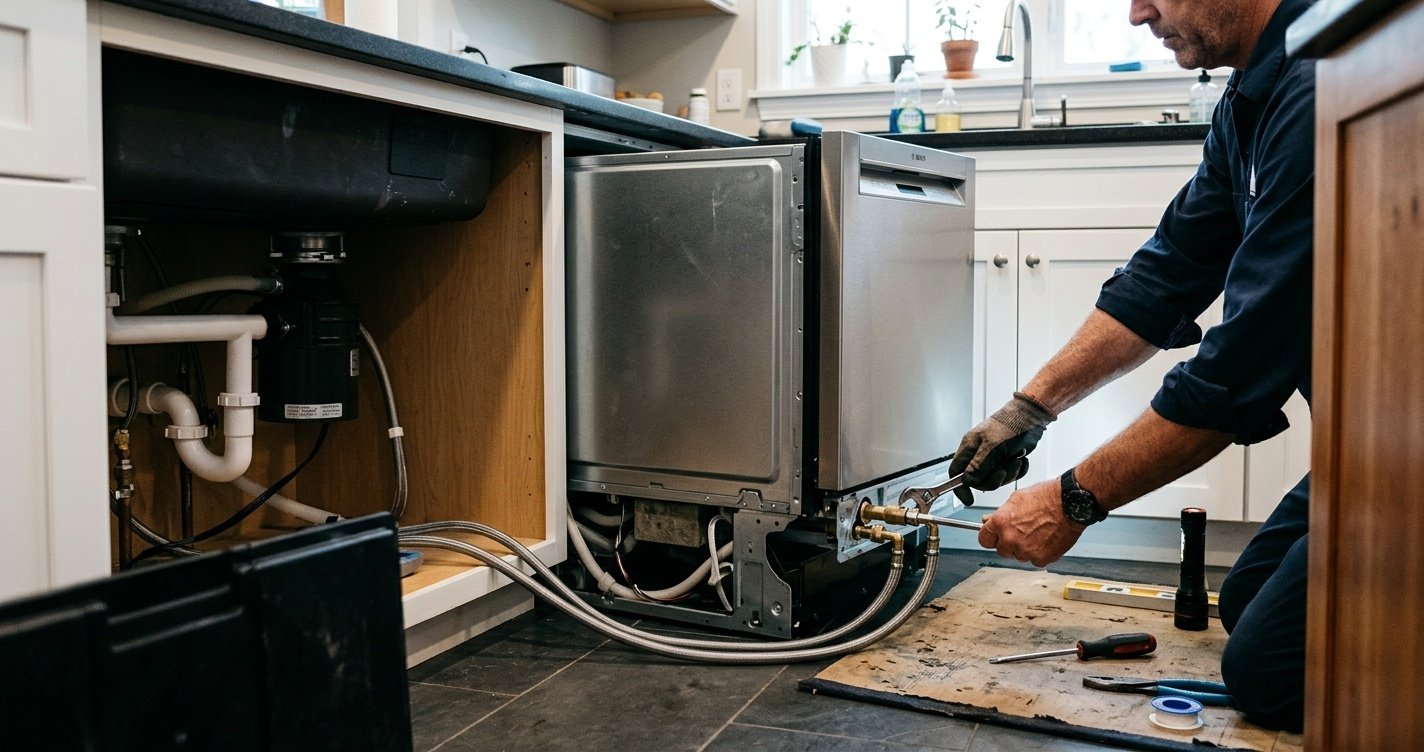
- Route the new water supply line through the hole in the sink cabinet, securing it in place with tape so it doesn’t shift while you install the dishwasher.
- Apply Teflon tape to the threads of the shut-off valve, then attach the flexible water supply line.
- Hand-tighten the connection first, then use an adjustable wrench for an additional quarter to half turn — avoid overtightening, which can damage the fitting.
- Connect the other end to the dishwasher’s water inlet valve, typically located at the front bottom of the unit, hand-tightening first and then snugging with a wrench.
Not all dishwashers include a water supply line in the box, so confirm before you start whether you’ll need to buy one separately.
Step 3: Connect the Drain Hose
- Route the drain hose through the cabinets to the dishwasher’s location, making sure there are no kinks or tight bends anywhere along its length.
- If connecting to a garbage disposal, remove the knockout plug from the disposal’s dishwasher inlet first — this is a very common oversight and one of the most frequent causes of drainage problems after a new installation.
- Secure the drain hose to the disposal or drain tailpiece using a hose clamp.
- Create a high loop in the drain hose by securing it to the underside of the countertop with a bracket or cable tie. The loop should reach as high as possible (ideally just below the countertop) to prevent dirty water from siphoning back into the dishwasher — this loop, or an air gap device depending on your local code, is the crucial siphon break that keeps sink water out of the machine.
Step 4: Make the Electrical Connection
This step requires caution and a basic understanding of electrical work — if you’re not comfortable with it, this is a reasonable point to bring in a licensed electrician or appliance installer rather than proceeding solo.
- Confirm power is off at the breaker before touching any wiring.
- Route the power cord through the sink cabinet along with the water supply line and drain hose.
- Clamp and connect the electrical wires, following the wiring diagram in your dishwasher’s manual — match wire colors carefully (typically black to black, white to white, and a ground wire connection).
- Secure any slack in the drain hose and cabling to the back of the cabinet to avoid backwash from the sink’s drain or interference with the dishwasher door.
Step 5: Slide In, Level, and Secure the Dishwasher
- Tip the dishwasher upright and carefully slide it into the cabinet opening, grasping it by the sides rather than the front panel to avoid denting it.
- Check that the water line, drain hose, and electrical cord are properly routed and not pinched as the unit slides into place.
- Level the dishwasher front-to-back and side-to-side using a level placed on top of the door, adjusting the leveling feet at each corner as needed.
- Screw the dishwasher to the countertop or cabinet sides, following the mounting bracket instructions in your manual. If your countertop is a synthetic material or stone and the pre-drilled holes don’t line up, follow your specific model’s manual for the correct approach.
Step 6: Test for Leaks and Proper Function
- Turn the water supply and electrical power back on.
- Check all connections carefully for leaks — the water supply line, the drain hose fittings, and the inlet valve connection.
- If you notice any leaks, turn the water back off, tighten the hose clamps further, and consider adding Teflon tape around the connections for an extra seal before retesting.
- Run a short test cycle to confirm the dishwasher fills, washes, and drains properly with no unusual noises or water pooling.
- Secure the drain hose with zip ties or a clamp to the back of the dishwasher or the cabinet wall, which helps prevent kinks and keeps everything tidy under the sink long-term.
DIY vs. Professional Installation: What to Consider
Most standard dishwasher installations — swapping a 24-inch model for another 24-inch model in the same location — don’t require special tools or advanced skills, and many homeowners complete the job themselves in a few hours. Consider hiring a professional instead if:
- You’re changing dishwasher sizes or cabinet configurations, which requires more advanced carpentry to modify the cabinet opening.
- You’re not comfortable with electrical work, particularly if your installation requires hardwiring rather than a simple plug-and-outlet connection.
- Extra flooring layers or an uneven floor height are making it difficult to slide the old unit out or the new one in.
- Your local code requires a permit for the installation, and you’d rather have a licensed professional handle the inspection process.
Frequently Asked Questions
How long does it take to install a dishwasher?
A first-time DIY installation typically takes at least two hours, according to Whirlpool, while professional installations generally range from 1 to 4 hours depending on the complexity of the connections and any unexpected issues encountered.
Do I need a permit to install a dishwasher?
It depends on your local building codes — some areas require a permit for the plumbing or electrical work involved, while others do not. Check with your local municipality before starting.
Can I install a dishwasher myself without a plumber or electrician?
In most cases, yes, especially if you’re replacing an existing dishwasher of the same size in the same location. If you’re not comfortable with electrical wiring or your installation involves changing the cabinet layout, hiring a professional is the safer choice.
Why is my new dishwasher leaking after installation?
This is most often caused by a loose water supply connection or an improperly seated hose clamp. Recheck each connection, tighten as needed, and consider adding Teflon tape for a better seal before running another test cycle.
Do I need to remove a knockout plug when connecting to a garbage disposal?
Yes, if it’s your first time connecting a dishwasher to that particular garbage disposal. The knockout plug blocks the dishwasher’s drain inlet until it’s removed, and forgetting this step is one of the most common causes of drainage problems after installation.
What is a high loop, and why does my dishwasher drain hose need one?
A high loop is a section of the drain hose secured as high as possible under the countertop, creating an air pocket that prevents dirty sink water from siphoning back into the dishwasher. Some local codes require an air gap device instead — check your area’s requirements before installing.
Conclusion
Installing a dishwasher is a manageable weekend project for most homeowners, as long as you work through the utilities in order: water supply, drainage, and electrical, followed by leveling, securing, and testing. The steps that trip people up most often — a missed knockout plug on the garbage disposal, a drain hose without a proper high loop, or an overtightened water connection — are all easy to avoid once you know to check for them. If your installation involves changing dishwasher sizes, modifying cabinetry, or wiring you’re not fully comfortable with, that’s the point where bringing in a professional is worth the cost rather than risking a leak or an electrical issue down the line.