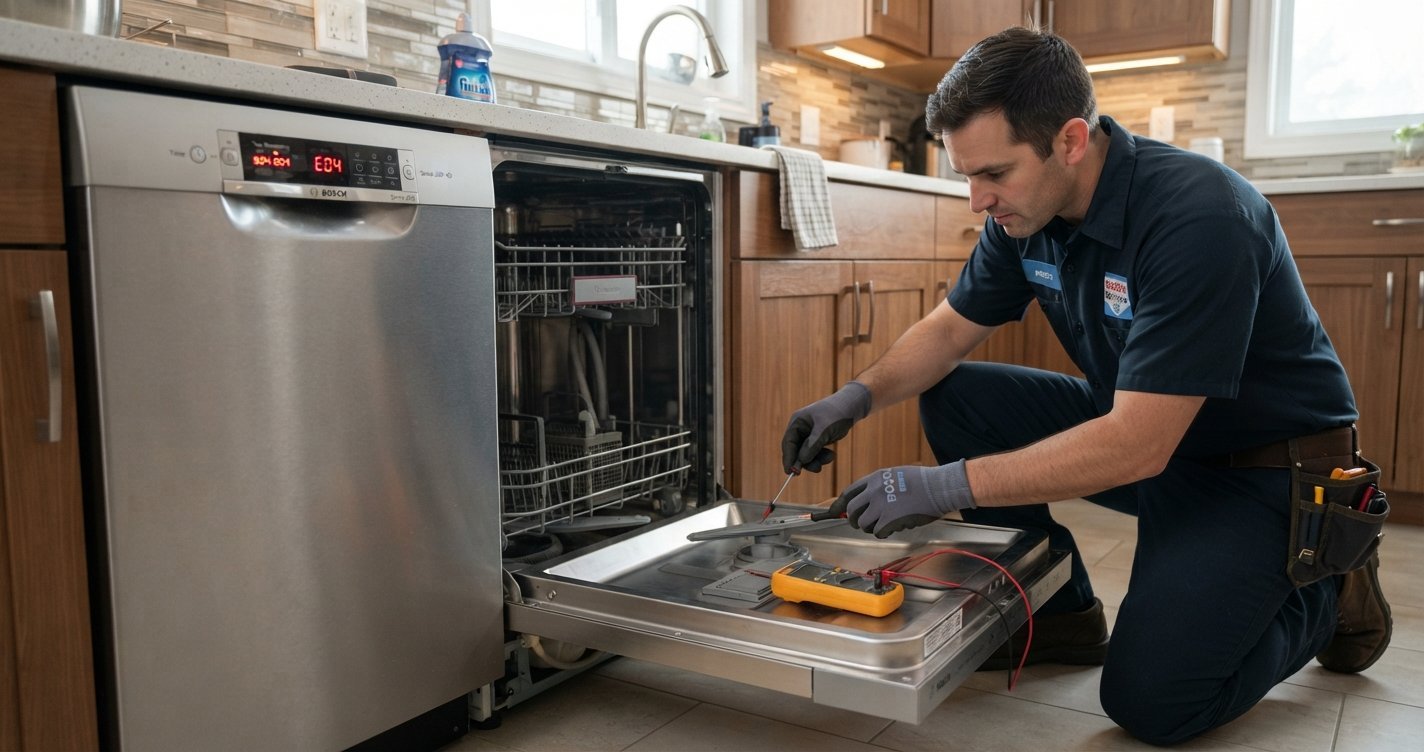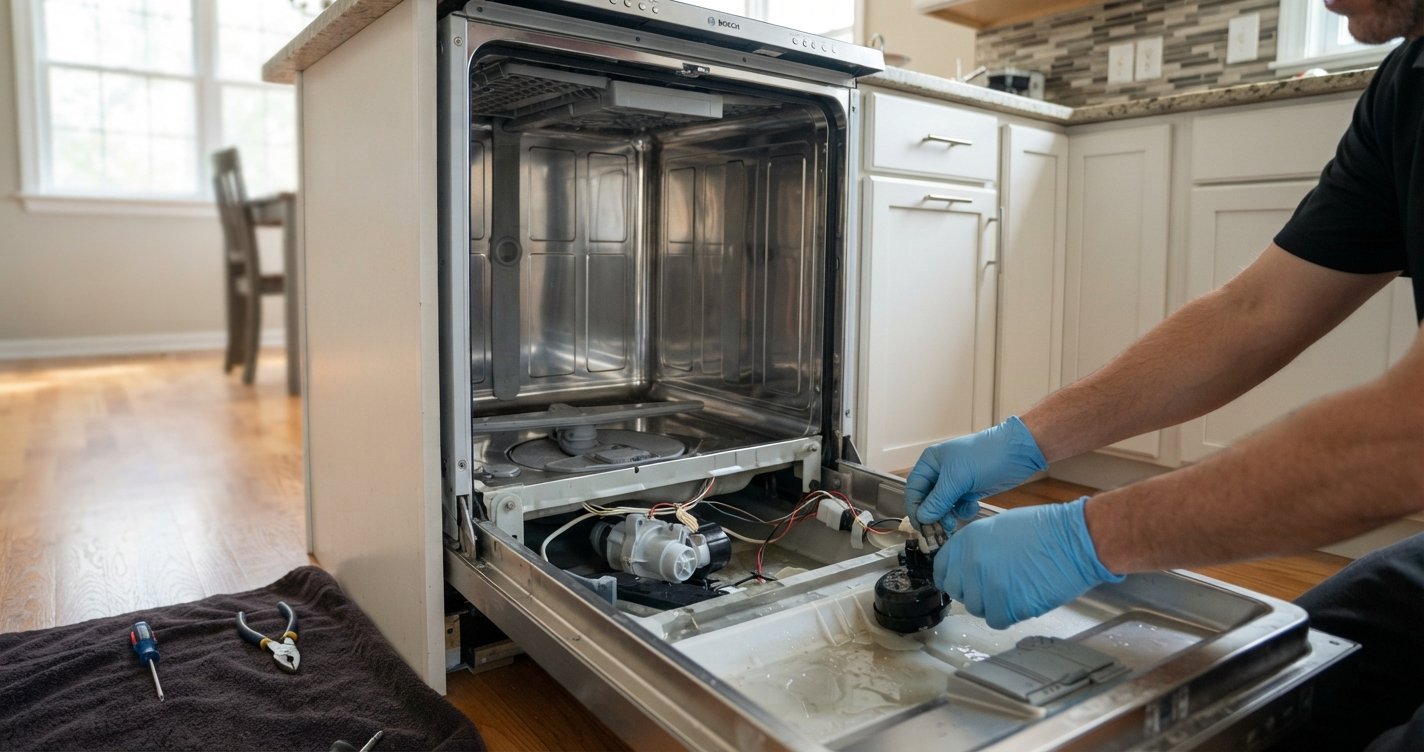
Making your own dishwasher detergent can be an appealing option if you want to experiment with simple household ingredients or reduce reliance on commercial cleaning products. A homemade formula can be inexpensive and easy to prepare, but it is important to understand how dishwasher detergents work and how different ingredients affect your machine and dishes.
Read More: FAQ: Bosch Dishwasher Repair in New York
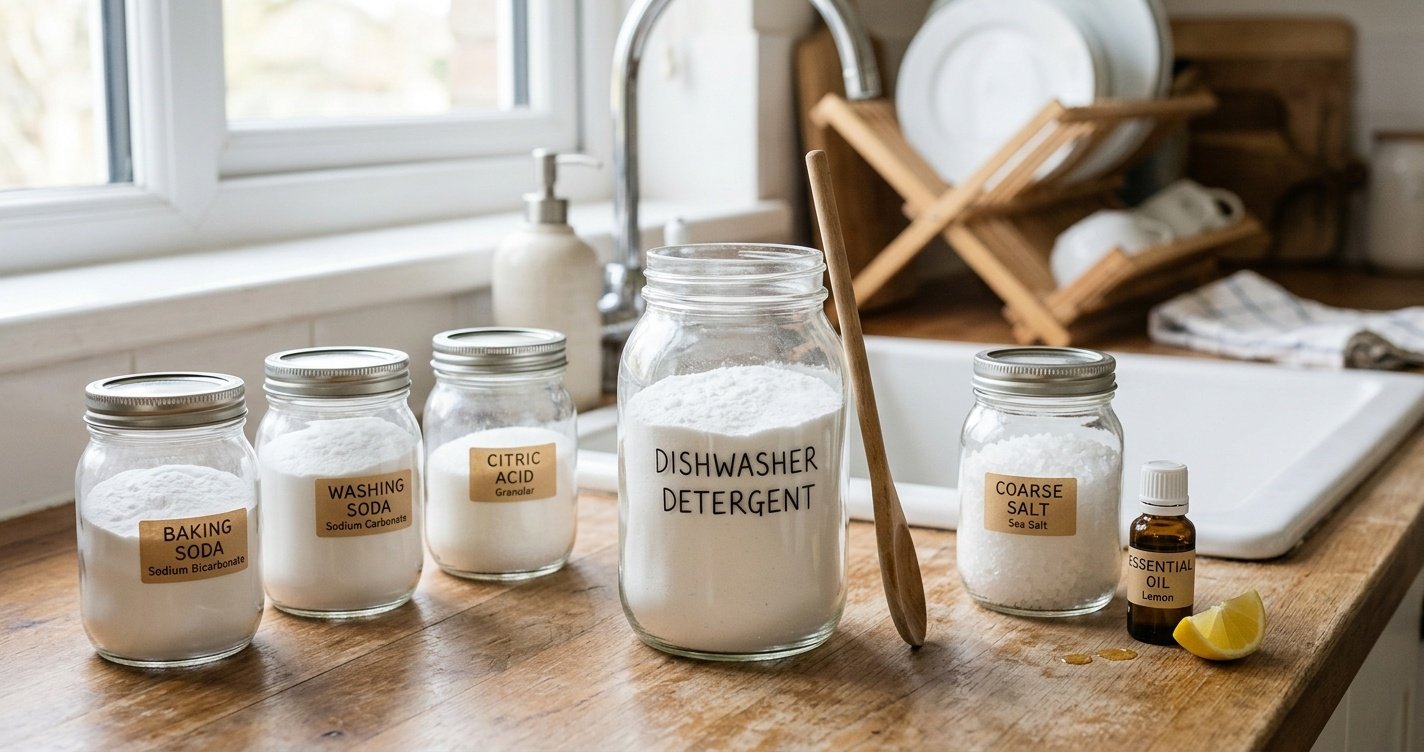
Table of contents
What Is DIY Dishwasher Detergent?
DIY dishwasher detergent is a homemade cleaning mixture designed to help remove food residue, grease, and stains from dishes during a dishwasher cycle. Common homemade recipes use ingredients such as washing soda, baking soda, citric acid, and salt.
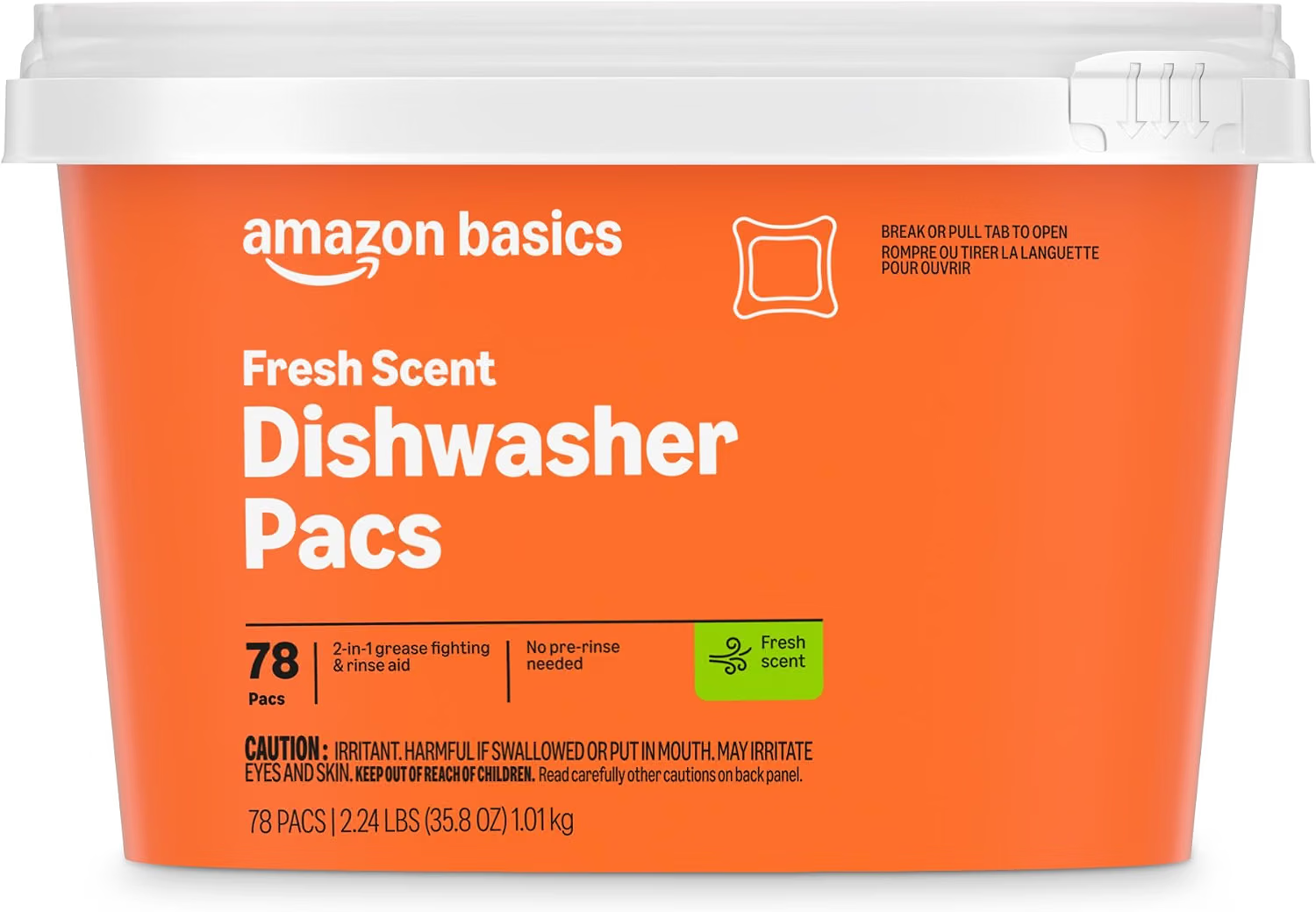
However, homemade mixtures do not necessarily provide the same cleaning performance as commercial dishwasher detergents. Commercial products are specifically formulated with surfactants, enzymes, water softeners, and other ingredients to work under dishwasher conditions.
Common Ingredients
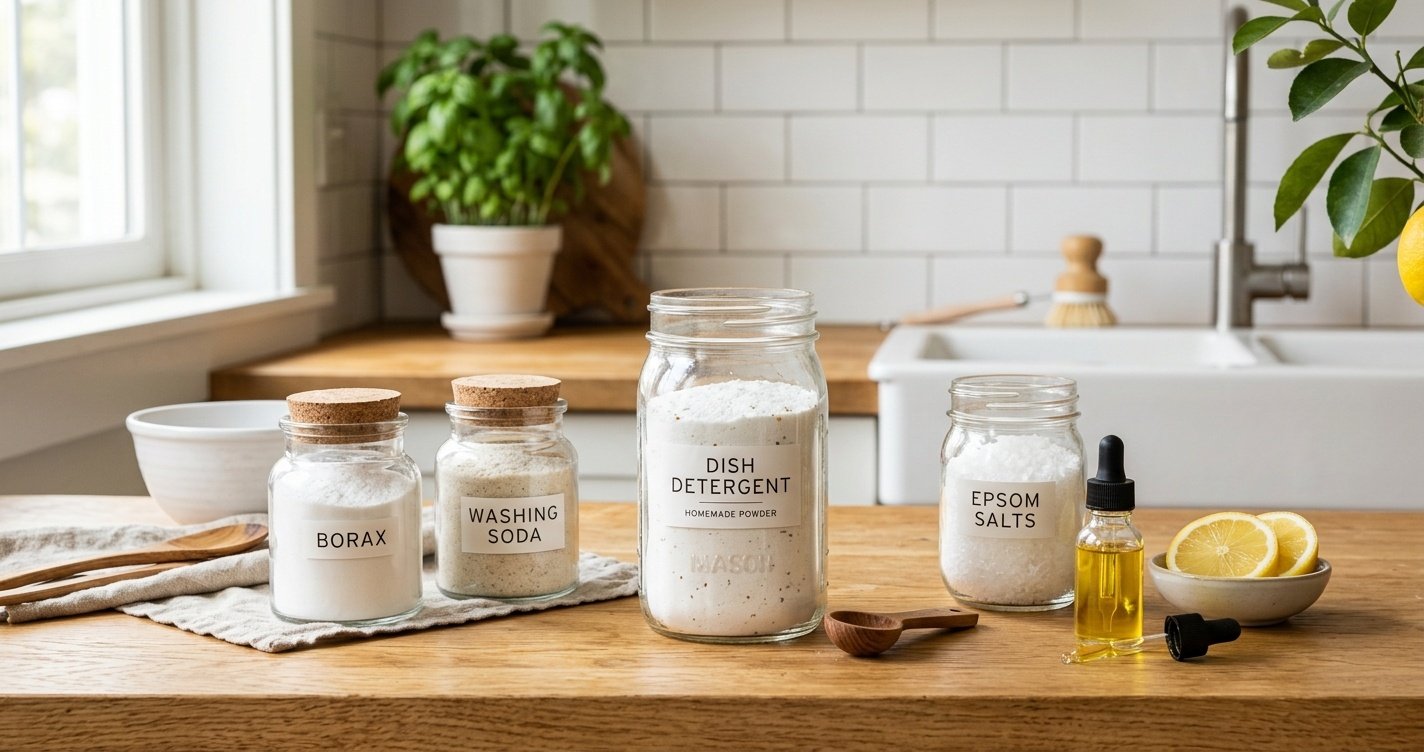
A basic homemade dishwasher powder may include:
- Washing soda: Helps soften water and break down grease and food residue.
- Baking soda: Provides mild cleaning and deodorizing properties.
- Citric acid: Adds acidity that can help with mineral deposits and water spots.
- Salt: May be included in some formulas, particularly where water hardness is an issue.
The exact combination and proportions vary between recipes. More ingredients do not automatically mean better cleaning, so it is worth testing a small amount before making a large batch.
How to Make a Simple Dishwasher Detergent
One commonly used approach is to combine washing soda and baking soda with a smaller amount of citric acid. Mix the dry ingredients thoroughly and store them in a completely dry, airtight container. For use, place the recommended amount in the dishwasher’s detergent compartment rather than scattering a large quantity directly inside the machine. Because homemade formulas vary considerably, start with a small load and check the results before adjusting the amount.
Can You Use DIY Detergent in Every Dishwasher?
Not necessarily. Dishwasher manufacturers may recommend specific types of detergent, and some homemade formulas may not provide the cleaning, rinsing, or corrosion protection that a particular machine requires.
Before switching to a DIY detergent, check your dishwasher’s owner’s manual. Pay particular attention to recommendations concerning detergent type, water hardness, rinse aid, and warranty requirements.
Important Safety Considerations
DIY dishwasher detergent should be treated like any other household cleaning product. Keep dry ingredients in clearly labeled, sealed containers and away from children and pets. Avoid mixing cleaning ingredients with chlorine bleach or other chemical cleaners. If a mixture produces an unexpected reaction, strong fumes, or irritation, stop using it and ventilate the area.
Also avoid assuming that a homemade detergent is automatically safer simply because it contains familiar household ingredients.
DIY vs. Commercial Dishwasher Detergent
The main advantage of DIY detergent is control over the ingredients and the ability to experiment with a simple formulation. It may also reduce packaging or ingredient costs depending on what you already have at home. Commercial detergents, however, are engineered specifically for dishwashers. Their formulations can address grease, baked-on food, mineral buildup, and water hardness more consistently.
For households that rely heavily on their dishwasher, cleaning performance and machine compatibility are important factors to consider alongside cost.
Tips for Better Dishwasher Results
Even the best detergent cannot compensate for poor dishwasher loading or inadequate water conditions. For better results:
- Scrape large food particles from dishes before loading.
- Avoid overcrowding the dishwasher.
- Keep spray arms free from obstructions.
- Use the detergent compartment as directed.
- Check and clean the dishwasher filter regularly.
- Consider the hardness of your household water.
- Follow the manufacturer’s recommendations for rinse aid and dishwasher maintenance.
FAQs
1. What can I use to make DIY dishwasher detergent?
Common ingredients include washing soda, baking soda, citric acid, and salt. Recipes vary, and not every combination is suitable for every dishwasher.
2. Is homemade dishwasher detergent effective?
DIY dishwasher detergent can help clean lightly soiled dishes, but its performance may vary. Commercial dishwasher detergents are specially formulated to handle grease, food residue, and different water conditions.
3. Can I use baking soda alone in a dishwasher?
Baking soda can help deodorize and provide mild cleaning, but it may not provide the complete cleaning performance of a purpose-made dishwasher detergent.
4. Is DIY dishwasher detergent safe for my dishwasher?
Not always. Check your dishwasher’s owner’s manual before using a homemade detergent. Some formulas may affect cleaning performance or potentially cause problems with certain machines.
5. Can I use vinegar with homemade dishwasher detergent?
Vinegar is sometimes used as a household cleaning ingredient, but it should not automatically be added to every dishwasher cycle. Follow your dishwasher manufacturer’s recommendations to avoid potential damage or poor results.
6. How should I store homemade dishwasher detergent?
Store it in a clearly labeled, airtight container in a cool, dry location. Keep it away from children, pets, moisture, and other household cleaning products.
7. Can DIY dishwasher detergent remove tough, baked-on food?
It may not perform as consistently against baked-on grease and food as commercial dishwasher detergents. Pre-scraping dishes and choosing an appropriate dishwasher cycle can help improve results.
8. Does water hardness affect homemade dishwasher detergent?
Yes. Hard water contains minerals that can contribute to spots and buildup. A homemade formula may not contain the specialized water-softening ingredients found in many commercial detergents.
Final Thoughts
DIY dishwasher detergent can be an interesting household experiment, particularly for people who prefer simple ingredient combinations. However, homemade formulas are not guaranteed to clean as effectively as purpose-made dishwasher detergents and may not be appropriate for every machine.