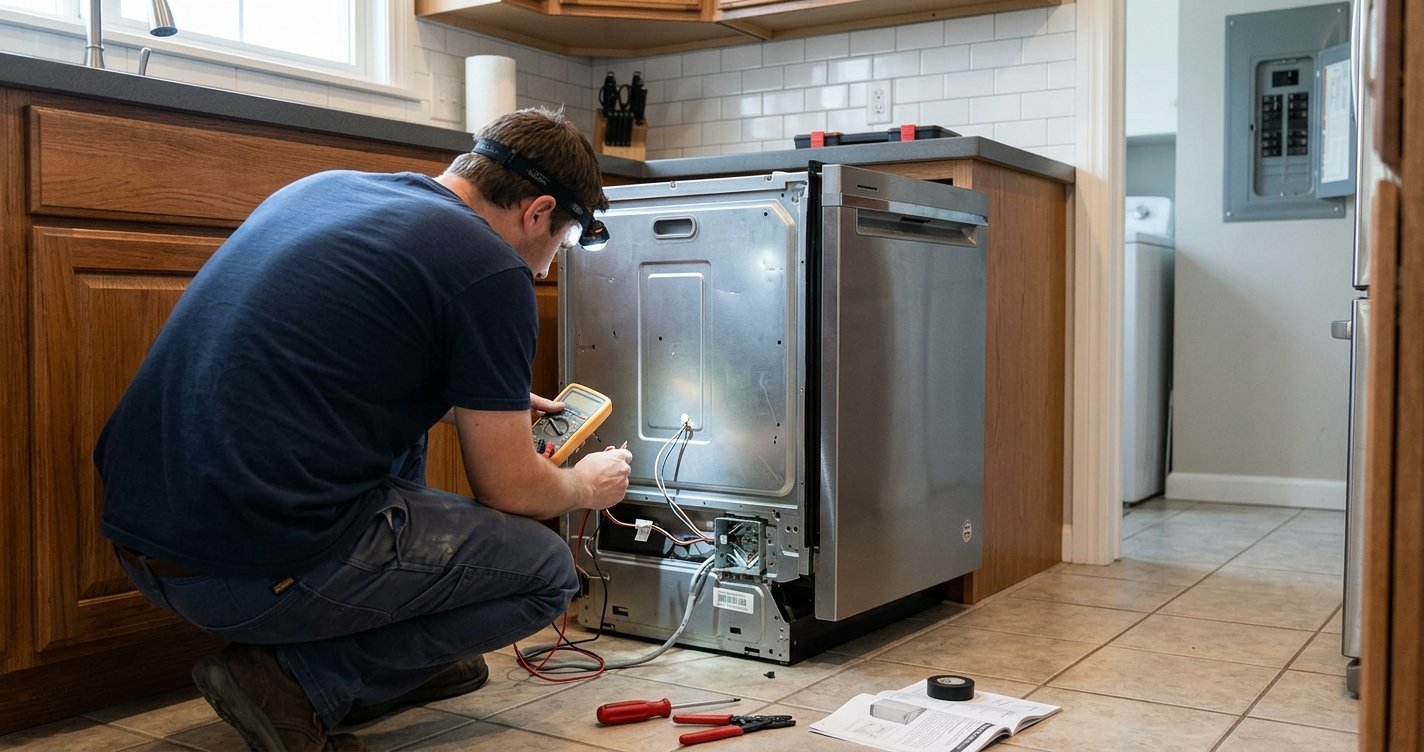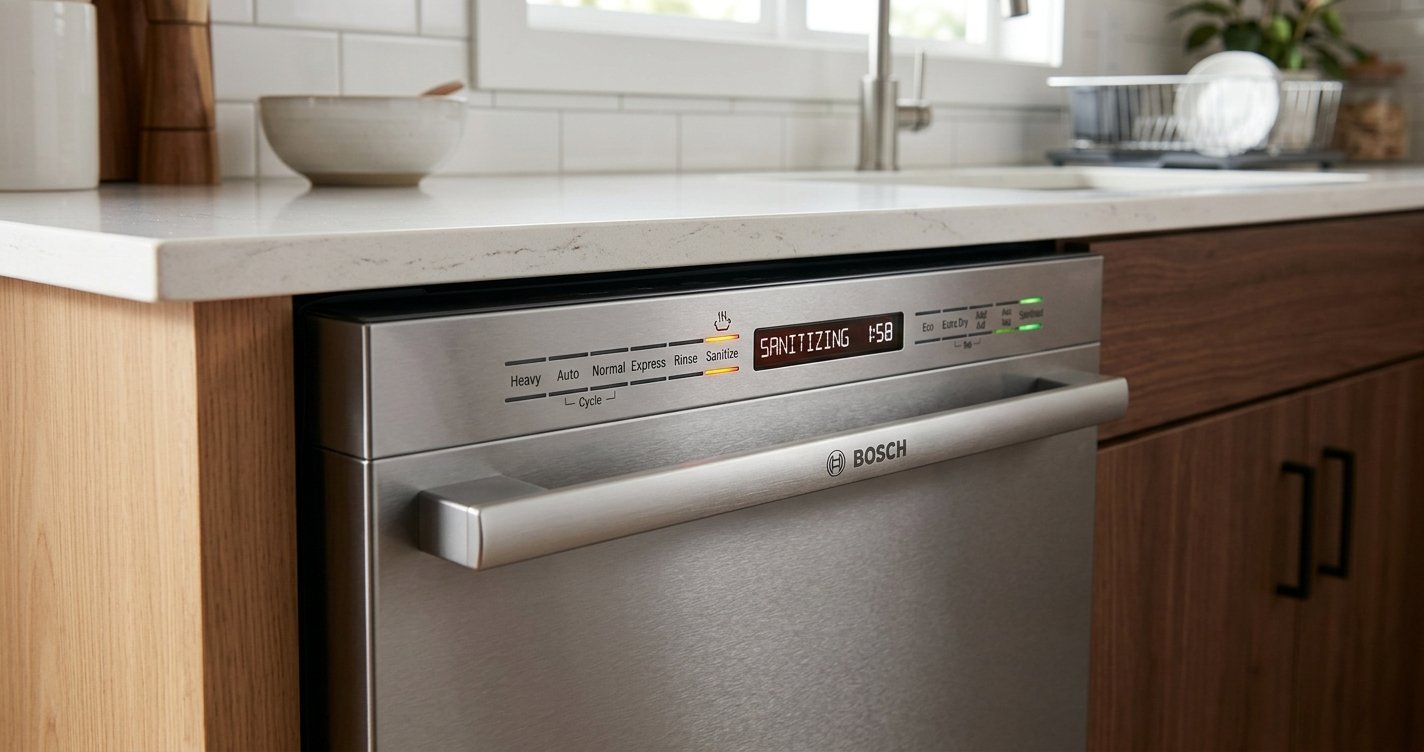
To repair a Bosch dishwasher, disconnect the power when inspecting components, check the filter and drain system, verify the water supply, inspect the door latch, and consult the model-specific manual for error codes. If the problem involves electrical components, internal wiring, or a persistent leak, contact a qualified technician.
Read More: How to Operate a Bosch Dishwasher: A Complete Guide
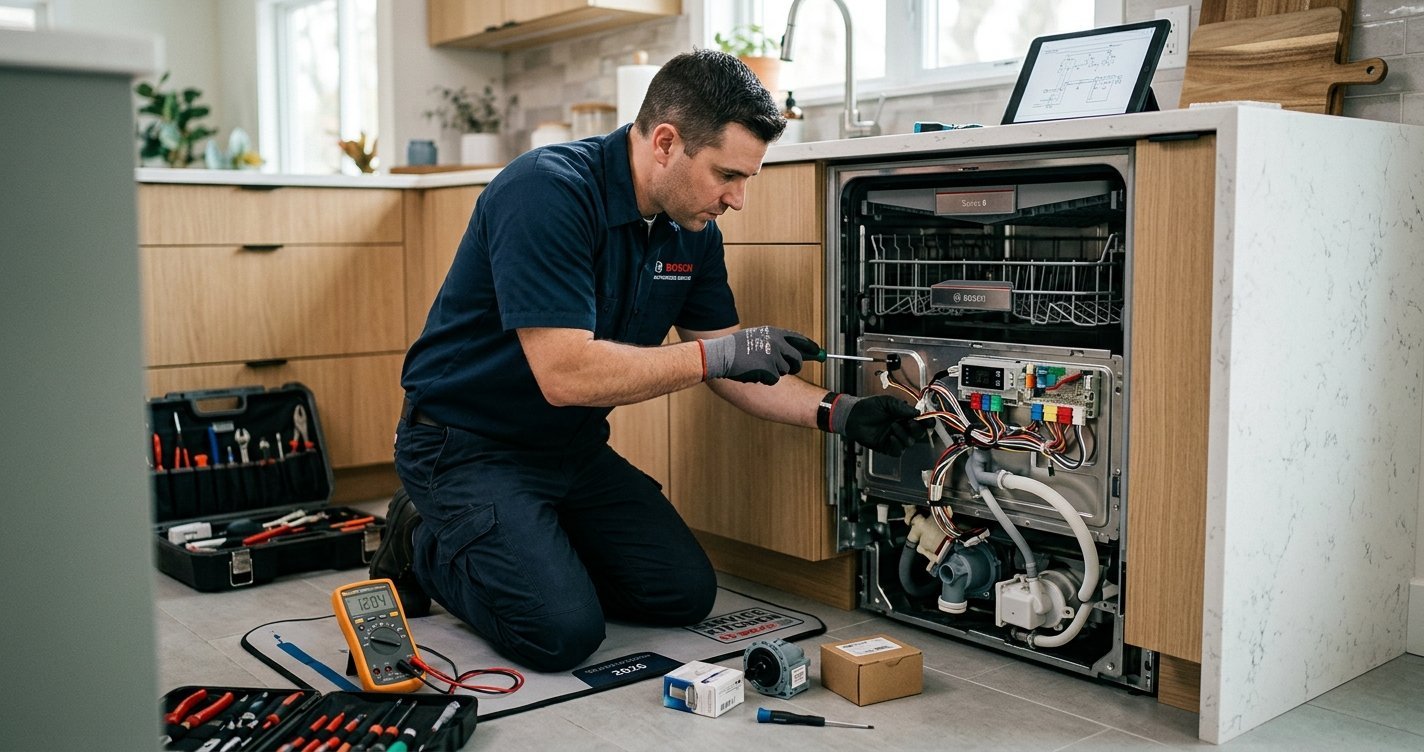
Table of contents
1. Identify the Problem Before Repairing Your Bosch Dishwasher
Before replacing parts or disassembling your appliance, identify what the dishwasher is doing.
Use the following table to narrow down the likely cause.
| Problem | Possible cause | First troubleshooting step |
| Dishwasher will not start | Power, latch, or control issue | Check the breaker and door closure |
| Water remains inside | Clogged filter or drain obstruction | Clean the filter and inspect the drain area |
| Dishes remain dirty | Blocked spray arms or poor loading | Clean spray arms and rearrange dishes |
| Dishwasher leaks | Seal, hose, or suds problem | Stop the cycle and inspect accessible areas |
| Dishes remain wet | Rinse aid, cycle, or drying settings | Check the selected cycle and rinse aid |
| Unusual noises | Loose items or spray-arm obstruction | Remove obstructions and check loading |
| Error code appears | Model-specific fault | Look up the code in the owner’s manual |
Important safety step: Switch off the dishwasher and disconnect its electrical supply before cleaning internal components or inspecting accessible parts. If the plug is inaccessible, use the appropriate circuit breaker. Turn off the water supply before inspecting hoses or performing work that could release water.
Never remove panels or handle electrical components while the appliance is connected to power.
2. How to Repair a Bosch Dishwasher That Will Not Start
A Bosch dishwasher that does not start may have a simple power, door, or control issue.
Step 1: Check the power supply
- Confirm that the dishwasher’s circuit breaker has not tripped.
- If your model uses an accessible plug, check it.
- Look for signs of damaged cords or electrical connections.
If the breaker trips repeatedly, do not keep resetting it. Have a qualified professional check the electrical supply and appliance.
Step 2: Make sure the door closes properly
Bosch dishwashers generally will not begin a cycle unless the door is securely closed.
- Remove items that prevent the door from closing.
- Check the accessible door seal for debris.
- Close the door firmly without slamming it.
If the door closes but the dishwasher still does not start, the latch or door-switch mechanism may need professional inspection.
Step 3: Check the control lock and delay settings
Some models have a control lock that prevents accidental operation. Others allow you to schedule a delayed start.
Consult the control panel instructions for your exact model to disable the lock or cancel the delay.
Step 4: Try the correct reset procedure
A reset may resolve a temporary control issue.
Many Bosch models allow you to cancel or reset a cycle using the Start button, often by pressing and holding it for several seconds. The exact duration and subsequent steps vary by model.
Refer to your owner’s manual before attempting a reset.
When to call a technician: If the display remains unresponsive, the dishwasher repeatedly stops before starting, or the same fault returns after a reset, the issue may involve the control system, door latch, or electrical supply.
3. How to Fix a Bosch Dishwasher That Is Not Draining
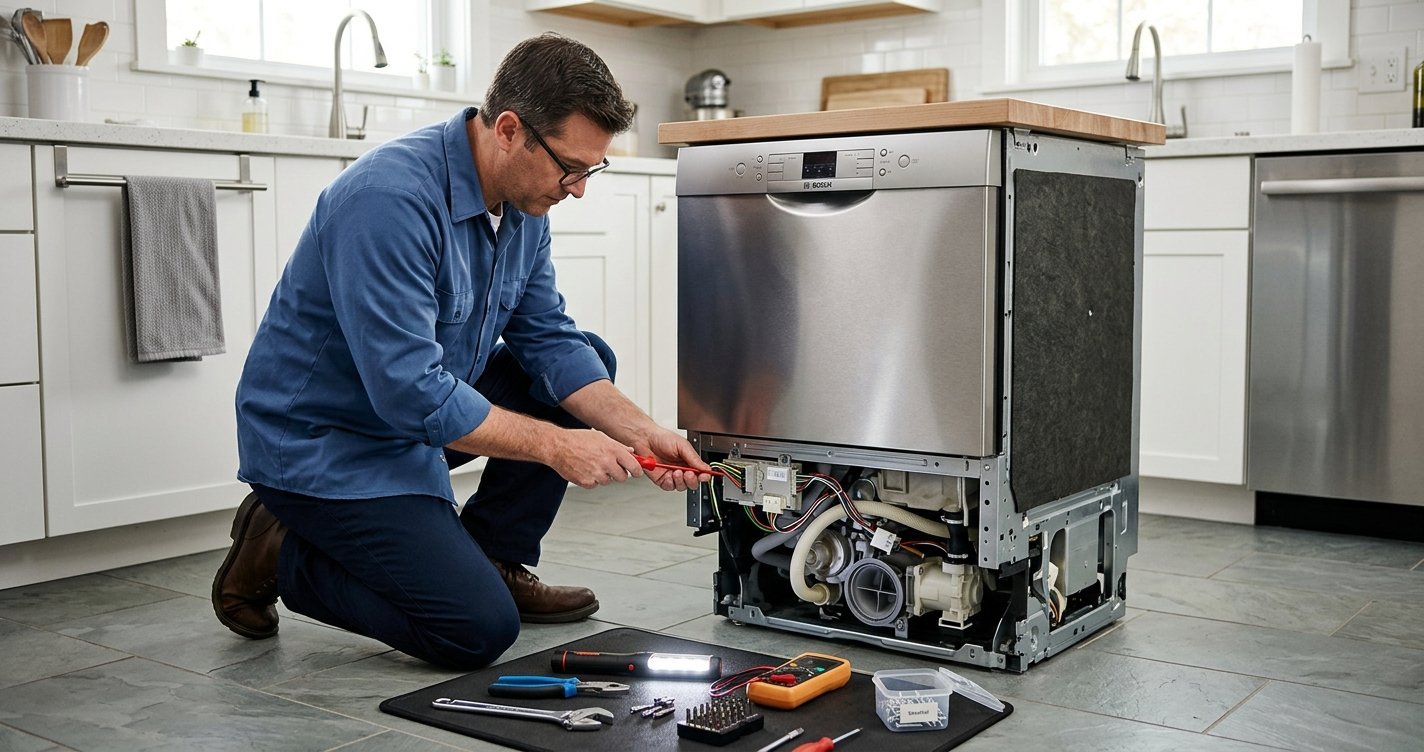
Water left at the bottom of a dishwasher after a cycle may indicate a clogged filter, obstructed drain path, or pump problem.
A small amount of water in the sump area can be normal on some models. However, substantial standing water that prevents normal operation needs investigation.
Step 1: Clean the dishwasher filter
- Switch off the dishwasher and allow hot water to cool.
- Open the door and remove the lower dish rack.
- Locate the filter assembly at the bottom of the tub.
- Remove the filter according to the manufacturer’s instructions.
- Rinse away food particles and grease under running water.
- Inspect the accessible filter housing for debris.
- Reinstall the filter securely.
Avoid sharp tools that could damage the filter or internal components.
Step 2: Inspect the drain area
Look for food scraps, broken glass, labels, or other debris around the accessible drain area.
Wear protective gloves when checking for sharp objects. Do not reach blindly into the drain or attempt to remove pump components without following the model-specific service instructions.
Step 3: Check the drain hose
Inspect the accessible drain hose for:
- Kinks or crushing.
- Visible blockages.
- Signs of leakage.
- Incorrect routing after recent installation or plumbing work.
If the hose connects to a garbage disposal, verify that the disposal and dishwasher connection are clear. A recently installed disposal may retain a knockout plug that must be removed during installation.
Do not disconnect a hose without first shutting off power and preparing for residual water.
Step 4: Check whether the problem persists
After cleaning and reassembling the accessible components, restore the water and power supplies and run an appropriate test cycle.
If water still remains, the drain pump, wiring, installation, or plumbing connection may require further diagnosis.
Short answer: A Bosch dishwasher that will not drain often has a dirty filter or blocked drain path. Clean the filter first, then inspect the accessible hose and drain connection before considering pump repair.
4. How to Repair a Bosch Dishwasher That Is Not Cleaning Properly
If your Bosch dishwasher completes a cycle but leaves food residue, cloudy glasses, or greasy dishes, check the water circulation and wash conditions before replacing parts.
Clean the spray arms.
Spray arms distribute water throughout the dishwasher. Blocked openings can reduce cleaning performance.
- Turn off the appliance.
- Remove the spray arms if your model’s instructions permit it.
- Rinse them under running water.
- Clear visible debris from the spray openings using a non-damaging method.
- Reinstall the arms correctly and confirm they rotate freely.
Do not force a spray arm or use a sharp metal object that could enlarge or damage its openings.
Clean the filter regularly.
Food debris in the filter can interfere with cleaning performance and contribute to unpleasant odors.
Inspect and clean the filter according to the maintenance schedule in your Bosch manual. Homes with heavy dishwasher use may need more frequent cleaning.
Check detergent and rinse aid.
Use detergent intended for automatic dishwashers. Handwashing liquid can create excessive suds and cause leaks.
Check that the detergent is fresh and stored correctly. Refill rinse aid if your model uses it and the indicator shows that it is needed.
Load dishes correctly
Poor loading can block water circulation.
- Keep tall plates and utensils from obstructing the spray arms.
- Avoid nesting bowls and cups.
- Place heavily soiled items where water can reach them.
- Follow the loading instructions for your specific rack design.
Check the water temperature.
Dishwashers rely on suitably hot water for effective cleaning. If the incoming water is too cold or the heating system is malfunctioning, performance may suffer.
Follow the manufacturer’s recommendations for hot-water supply and cycle selection. If dishes remain consistently dirty despite proper loading and maintenance, professional diagnosis may be necessary.
5. How to Fix a Bosch Dishwasher That Is Leaking
A leaking dishwasher should be addressed promptly to prevent water damage to cabinets, flooring, and nearby electrical components.
If water is actively leaking, stop the cycle if it is safe to do so, isolate the electrical supply without touching wet electrical equipment, and shut off the water supply.
Common causes of Bosch dishwasher leaks
Damaged or dirty door seal
Inspect the accessible door gasket for food debris, visible damage, or displacement. Clean it gently according to the manufacturer’s instructions.
A torn, hardened, or deformed seal may need replacement.
Excessive detergent suds
Using hand dishwashing liquid or too much of an unsuitable product can create excessive foam. This may cause water or suds to escape from the door.
Use the correct dishwasher detergent and follow the dosage recommendations.
Blocked filters or drainage problems
Drainage issues can contribute to abnormal water levels or leaks in some circumstances. Clean the filter and check the accessible drain path.
Loose or damaged hoses
Leaks beneath the appliance may originate from water-supply or drain connections. Inspect only accessible areas without removing electrical or structural panels.
Improper installation or leveling
An incorrectly installed dishwasher may experience drainage or door-sealing problems. Installation and leveling should be checked against the model’s instructions.
Should you repair a leaking dishwasher yourself?
You may be able to clean a dirty door seal or correct excessive suds yourself. However, leaks beneath the appliance, damaged water connections, or recurring leaks require professional assessment.
Do not continue running a dishwasher that leaks repeatedly.
6. How to Troubleshoot Bosch Dishwasher Error Codes
Bosch dishwashers can display error codes that help identify problems with water supply, drainage, heating, or other systems.
The meaning and troubleshooting procedure can vary by model, so always verify the code against the manual for your exact appliance.
Common examples include:
| Error code | Commonly associated issue | Recommended action |
| E15 | Water detected in the base or leak-protection system activated | Stop operation, shut off water if safe, and arrange diagnosis |
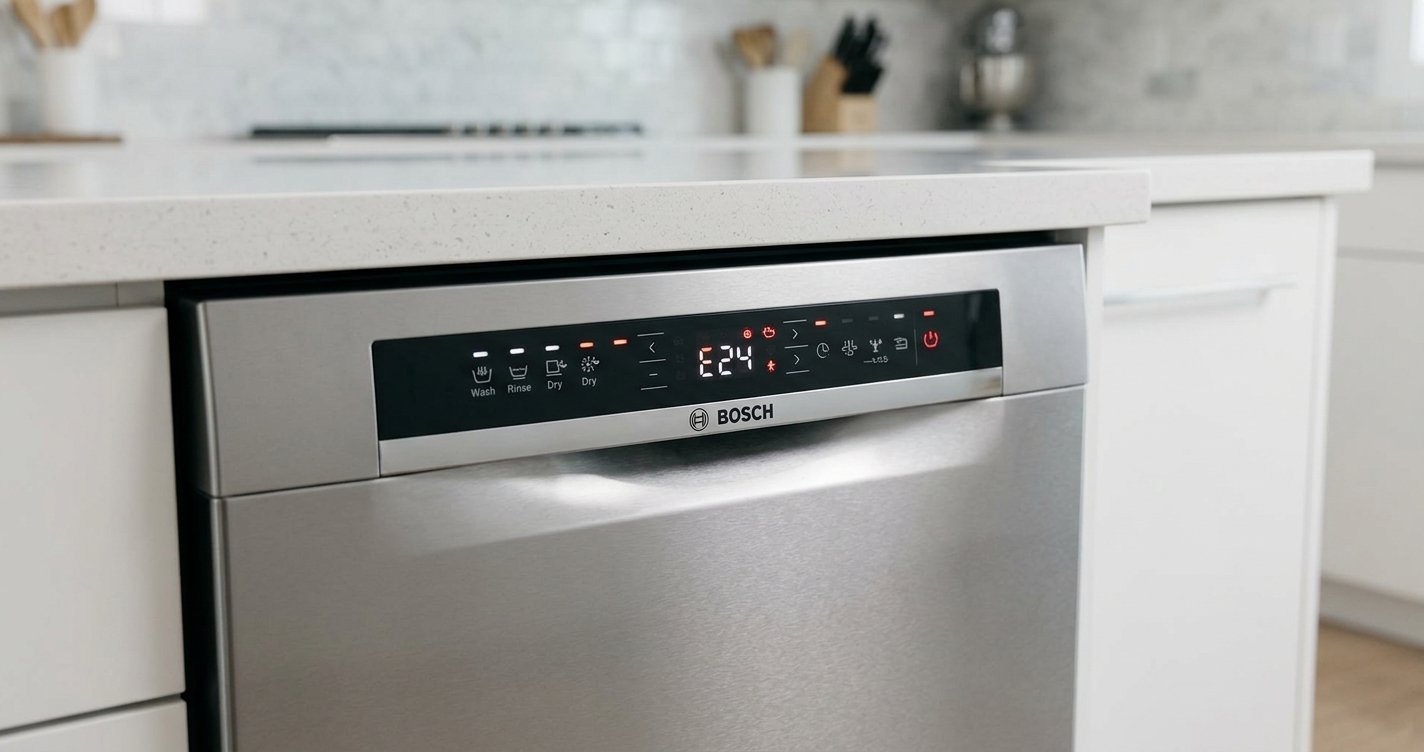
| E24 | Drainage problem | Check the filter, accessible drain path, and hose |
| E25 | Drain pump or drainage obstruction | Inspect the accessible filter and drain area; seek service if unresolved |
| E09 | Heating system fault | Professional diagnosis is generally recommended |
| E22 | Filter blockage or related drainage issue | Clean and reinstall the filter correctly |
| E17 | Water inlet or filling issue | Check the water supply and inlet conditions |
These are general associations, not universal diagnoses. Code definitions and corrective procedures may differ between Bosch product generations and markets.
What should you do when an error code appears?
- Record the exact code.
- Note when it appears, such as during filling, washing, or draining.
- Check the model-specific owner’s manual.
- Perform only the basic checks permitted by the manual.
- Contact an authorized or qualified repair professional if the code persists.
Important: If your dishwasher displays E15, do not assume that resetting the appliance fixes the underlying leak. Water may have entered the base tray and activated a protection system. Do not tilt the appliance to drain it or bypass the protection mechanism.
7. How to Fix a Bosch Dishwasher That Is Not Drying
If dishes are clean but remain wet, the issue may relate to the selected cycle, rinse aid, loading, or the dishwasher’s drying system.
Check the selected wash cycle.
Some energy-saving or short cycles may leave more moisture on dishes than other programs. Check your manual to understand the expected drying performance of the selected cycle.
Refill rinse aid
Rinse aid helps water drain from dish surfaces and can reduce water spots. If your model uses rinse aid, check the indicator and refill the reservoir as directed.
Improve loading
- Angle cups and bowls so water can drain.
- Avoid stacking items that trap water.
- Follow the rack instructions for plastics and other moisture-retaining materials.
Plastic items often remain wetter than glass or ceramic dishes.
Check for a heating or drying fault.
If dishes remain unusually wet despite appropriate settings and maintenance, the heating system, sensors, or other components may need inspection.
Do not open electrical compartments to test these components unless you are qualified to do so.
8. How to Fix Unusual Bosch Dishwasher Noises
Some operating sounds are normal, including water spraying, draining, and the circulation pump running. Grinding, repeated knocking, or unusually loud humming may indicate a problem.
Knocking or rattling
Check whether plates, cutlery, or utensils are contacting the spray arms. Rearrange the load and confirm the arms rotate freely.
Humming without normal operation
A humming sound accompanied by poor drainage may indicate a blocked drain path or a pump problem.
Grinding or scraping
Stop the appliance if the noise is persistent or severe. A foreign object or damaged component may be interfering with moving parts.
When to seek professional help: Persistent grinding, burning smells, repeated pump noises, or abnormal sounds that continue with an empty dishwasher should be investigated by a technician.
9. How to Reset a Bosch Dishwasher
Resetting a Bosch dishwasher can sometimes clear a temporary cycle or control issue, but it will not repair a physical blockage, leak, or failed component.
The correct procedure depends on the model.
- Check the owner’s manual for the reset or cycle-cancellation instructions.
- Use the specified button sequence, which may involve holding Start for several seconds.
- Allow the dishwasher to complete any cancellation or draining process.
- Restart an appropriate cycle and observe whether the problem returns.
Do not repeatedly reset the dishwasher to suppress a recurring error code.
If the dishwasher displays a leak-protection error, trips the breaker, or produces a burning smell, stop troubleshooting and address the underlying safety issue.
10. When Should You Repair or Replace a Bosch Dishwasher?
Not every dishwasher problem requires a replacement. The right decision depends on the appliance’s age, repair cost, condition, and availability of parts.
Repair may be worthwhile when:
- The problem is limited to a clogged filter or drain obstruction.
- A door seal or other relatively simple component needs replacement.
- The dishwasher is otherwise in good condition.
- The repair cost is reasonable compared with the price of a suitable replacement.
Replacement may be worth considering when:
- The appliance has repeated major failures.
- Several expensive components require replacement.
- The repair estimate approaches the cost of a comparable new dishwasher.
- Parts are difficult to obtain, or the appliance has significant corrosion or water damage.
A common decision-making approach is to compare the full repair estimate with the installed replacement cost, while considering expected remaining service life and energy or water efficiency.
There is no universal age or percentage that automatically makes replacement the best option.
Is professional Bosch dishwasher repair worth the cost?
Professional repair can be worthwhile when accurate diagnosis prevents unnecessary part replacements or when the fault involves internal pumps, heating components, control boards, wiring, or leak-protection systems.
Ask for a diagnosis and estimate before authorizing expensive work.
11. How to Maintain a Bosch Dishwasher and Prevent Future Problems
Regular maintenance can reduce the likelihood of drainage problems, unpleasant odors, and poor cleaning performance.
Recommended maintenance routine
After heavy use
- Remove visible food debris.
- Check that dishes and utensils have not obstructed the spray arms.
- Wipe away spills around the door opening.
Every few weeks, as needed
- Inspect and clean the filter.
- Check the spray arms for blocked openings.
- Inspect the accessible door seal.
Periodically
- Refill rinse aid if required.
- Run a suitable dishwasher-cleaning program or maintenance cycle according to the manual.
- Check accessible water and drain connections for signs of leaks.
When performance changes
- Review detergent type and dosage.
- Check loading arrangements.
- Look for new error codes or abnormal noises.
- Consult the model-specific troubleshooting guide.
Avoid abrasive cleaners, unsuitable chemicals, and unapproved descaling methods. Use only products and maintenance procedures compatible with your Bosch dishwasher.
12. Frequently Asked Questions About Bosch Dishwasher Repair
How do I repair a Bosch dishwasher at home?
Start by identifying the symptom. Check the power supply, door latch, filter, spray arms, accessible drain hose, and control settings. Follow your model’s manual and leave electrical or complex internal repairs to a qualified professional.
What is the most common problem with a Bosch dishwasher?
Common issues include drainage obstructions, dirty filters, blocked spray arms, incorrect loading, and control or water-supply problems. The most likely cause depends on the symptoms and model.
Why is my Bosch dishwasher not starting but has power?
Check whether the door is fully closed, the control lock is active, a delayed start is selected, or the cycle needs to be canceled. If the controls remain unresponsive, the latch or control system may need inspection.
Why is my Bosch dishwasher full of water?
A clogged filter, obstructed drain hose, blocked drain connection, or drain-pump fault may prevent water from leaving the dishwasher. Clean the accessible filter and inspect the drain path before arranging further service.
Can I reset my Bosch dishwasher to fix an error code?
A reset may clear a temporary control issue, but it does not fix a physical blockage, leak, or defective component. Consult the manual and investigate the cause if the code returns.
What does E15 mean on a Bosch dishwasher?
E15 is commonly associated with water detected in the dishwasher’s base or activation of its leak-protection system. Stop operation, shut off the water supply if safe, and arrange appropriate diagnosis rather than bypassing the safety system.
How much does it cost to repair a Bosch dishwasher?
The cost depends on the fault, parts, labor rates, location, and warranty coverage. Basic maintenance may cost little or nothing, while pump, heating, or electronic-control repairs can be substantially more expensive. Obtain a local estimate before deciding.
Is it safe to repair a Bosch dishwasher myself?
Basic maintenance, such as cleaning filters and spray arms, is generally suitable for homeowners who follow the manual. Repairs involving live electrical components, internal wiring, heating systems, or complex leaks should be handled by qualified professionals.
How long should a Bosch dishwasher last?
Lifespan varies with usage, installation, maintenance, water conditions, and repair history. Rather than relying on a fixed number of years, compare the appliance’s condition and repair estimate with the cost and expected service life of a replacement.
Where can I find the correct Bosch dishwasher repair instructions?
Locate the appliance’s model number, often found on the door edge or rating plate, and use it to find the correct documentation through Bosch’s official support resources for your country. Model-specific instructions are especially important for error codes, resets, replacement parts, and disassembly.
Conclusion
Learning how to repair a Bosch dishwasher starts with identifying the problem and performing the simplest safe checks first. Cleaning the filter, inspecting the spray arms, checking the door closure, and examining accessible drainage components can resolve many everyday issues.
For error codes, always consult the manual for your exact model rather than relying on a generic diagnosis. Stop using the appliance if it leaks repeatedly, trips the circuit breaker, or shows signs of an electrical fault.
The best approach is to troubleshoot methodically, maintain the dishwasher regularly, and seek professional help when the repair involves internal electrical, heating, pump, or leak-protection components. This helps prevent unnecessary replacements, protect your home from water damage, and keep your Bosch dishwasher operating reliably.