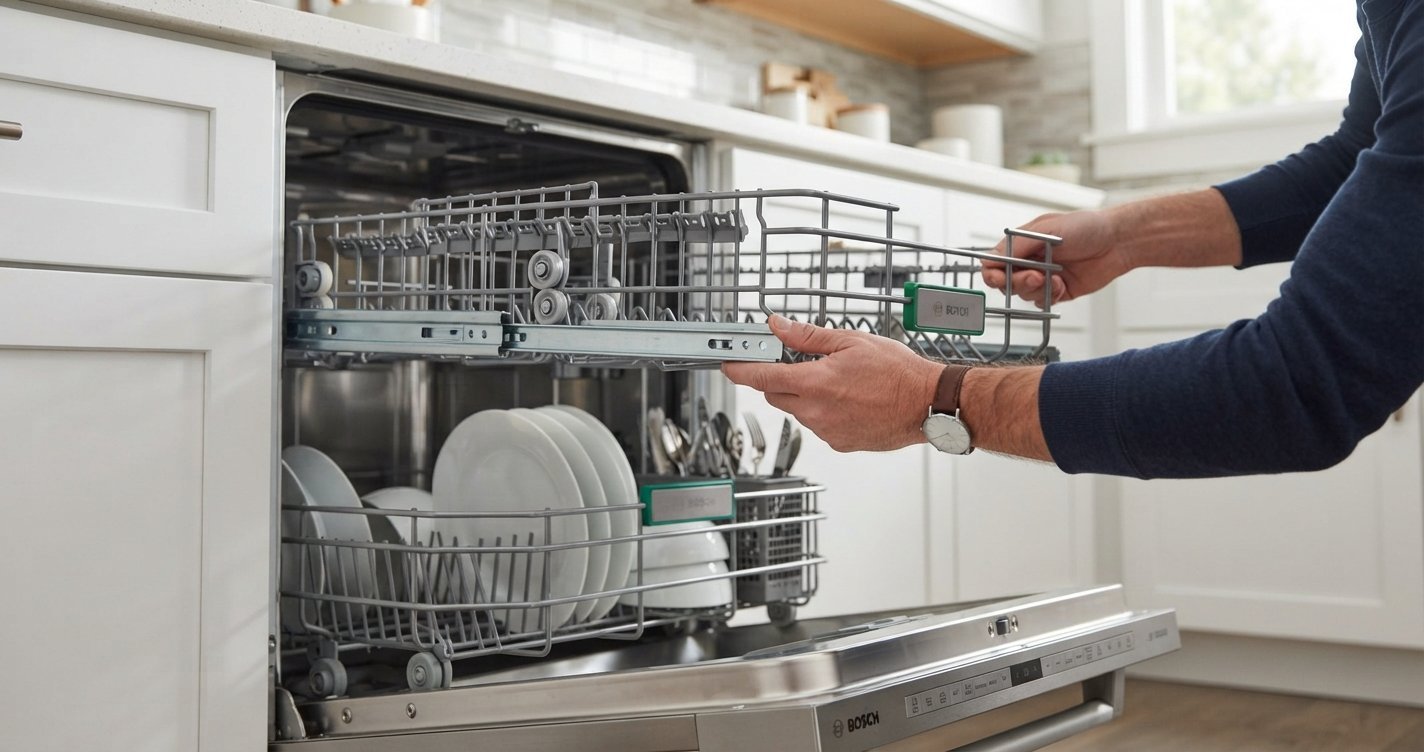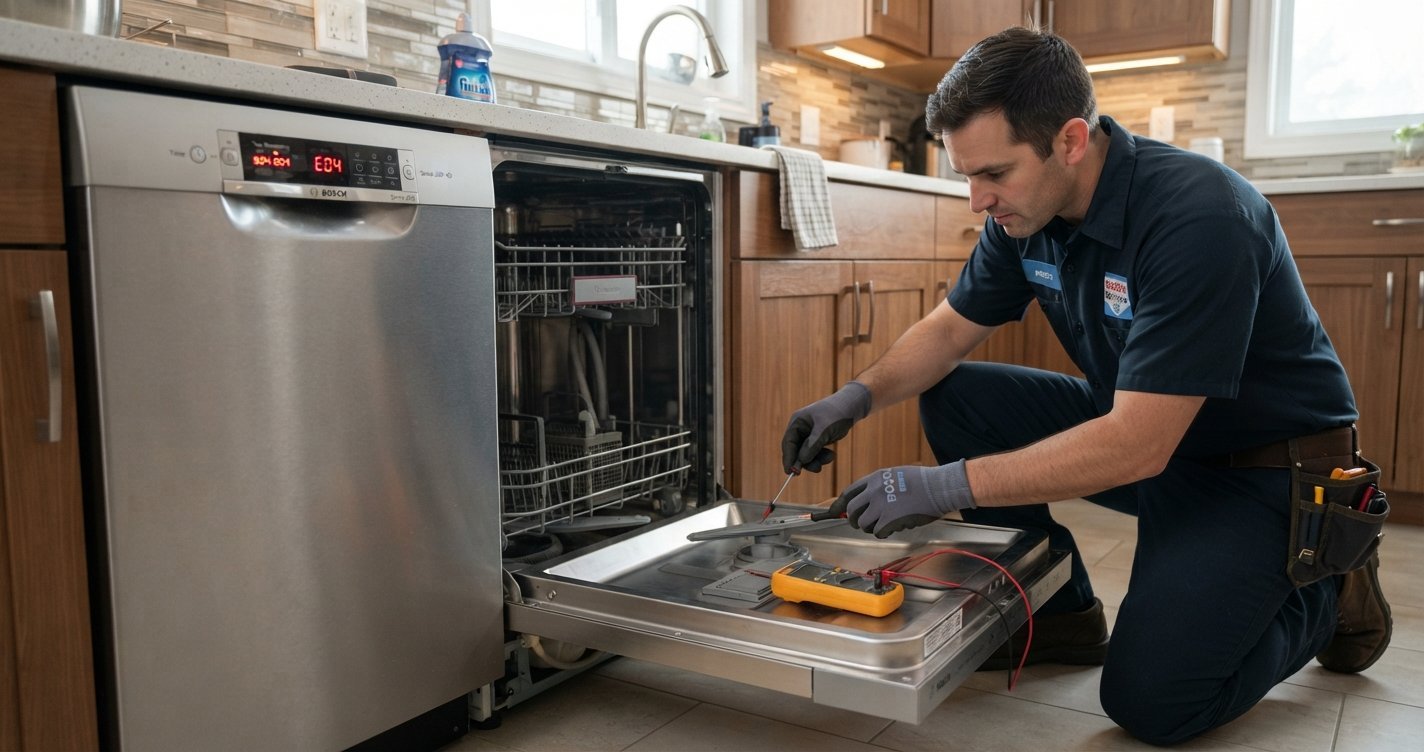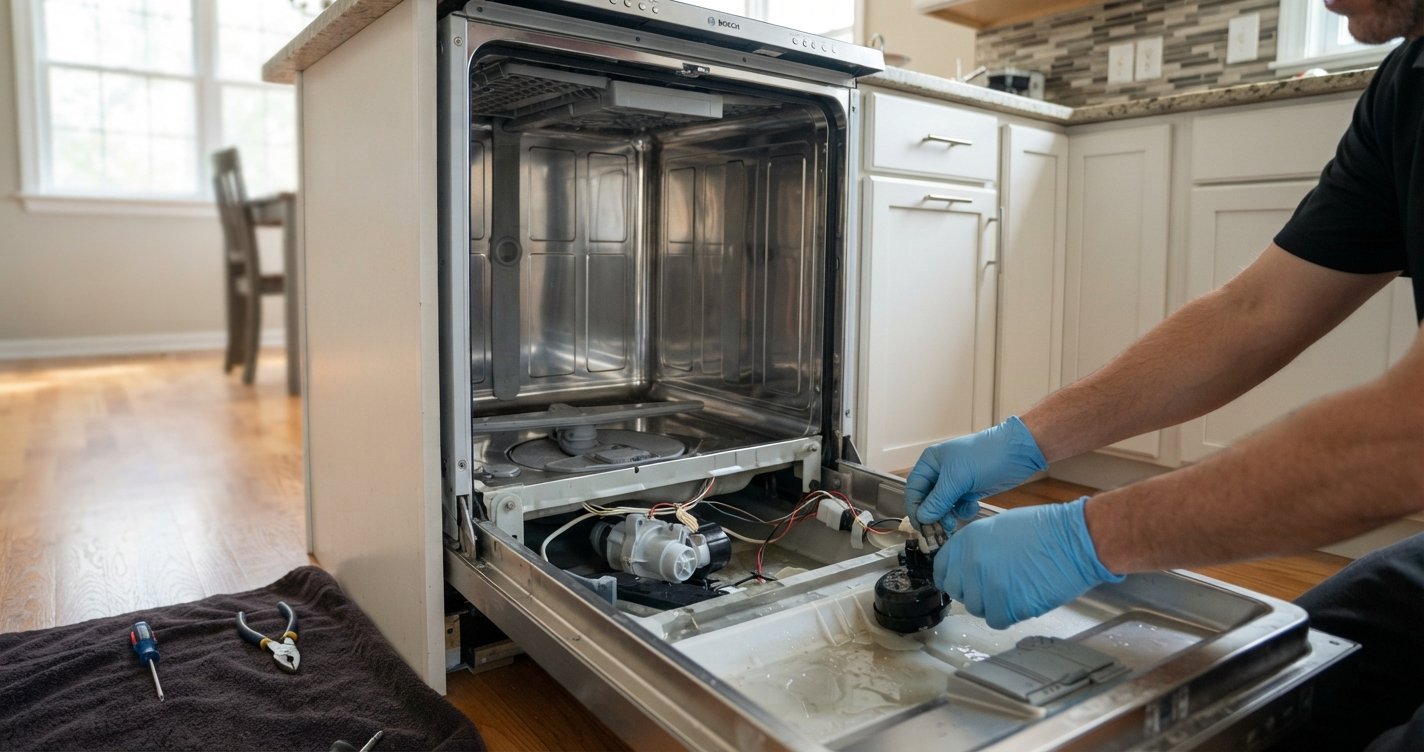
A damaged dishwasher rack can make loading dishes frustrating and may even cause scratches, rust, or broken dishes. Fortunately, many rack problems are simple to repair at home. Whether the rack has chipped coating, rust spots, broken wheels, or a damaged tine, you can often fix the issue without replacing the entire rack.
Read More: Bosch Dishwasher UP Code and How to Fix It
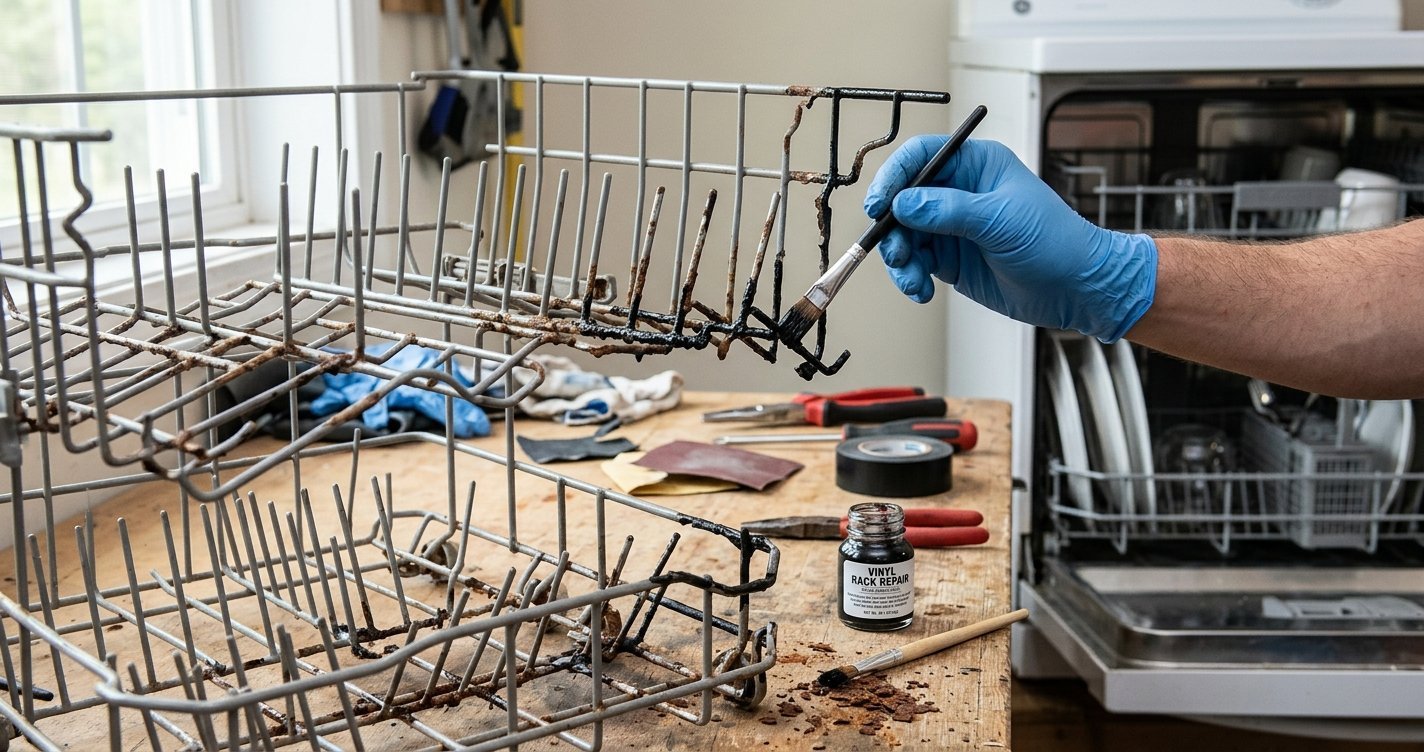
Table of contents
Common Dishwasher Rack Problems
Dishwasher racks are exposed to hot water, detergent, and repeated movement, so they can eventually wear out. Common problems include:
- Peeling or chipped coating: The plastic or vinyl coating can wear away, exposing the metal underneath.
- Rust: Exposed metal may begin to rust, particularly around chipped areas.
- Broken wheels: Rack wheels can crack or fall off, making the rack difficult to slide.
- Bent tines: The vertical supports that hold dishes can bend or break.
- Damaged rack clips: Small clips and holders may loosen or break over time.
Identifying the specific problem first will help you choose the right repair method.
How to Repair a Chipped Dishwasher Rack
Small areas of damaged coating can usually be repaired with a dishwasher-rack repair coating designed for high-temperature, water-exposed environments.
Step 1: Remove the Rack
Pull the rack completely out of the dishwasher. If necessary, remove the rack stops according to your dishwasher manufacturer’s instructions.
Step 2: Clean the Damaged Area
Wash the rack thoroughly and allow it to dry. Remove loose pieces of coating around the damaged area. The surface should be clean and dry before applying any repair product.
Step 3: Smooth Rough Edges
If exposed metal has sharp edges, carefully smooth them with fine-grit sandpaper. Remove any loose rust or flaking material.
Step 4: Apply Rack Repair Coating
Use a product specifically intended for dishwasher racks. Follow the manufacturer’s instructions regarding application, drying time, and the number of coats required.
Do not use ordinary household paint. Dishwasher racks experience high temperatures, moisture, and detergent exposure, so a product that is not designed for these conditions may deteriorate quickly.
Step 5: Let It Cure Completely
Allow the repair to cure for the recommended period before putting the rack back into the dishwasher. A properly cured coating helps prevent water from reaching the exposed metal.
How to Repair Rust on a Dishwasher Rack
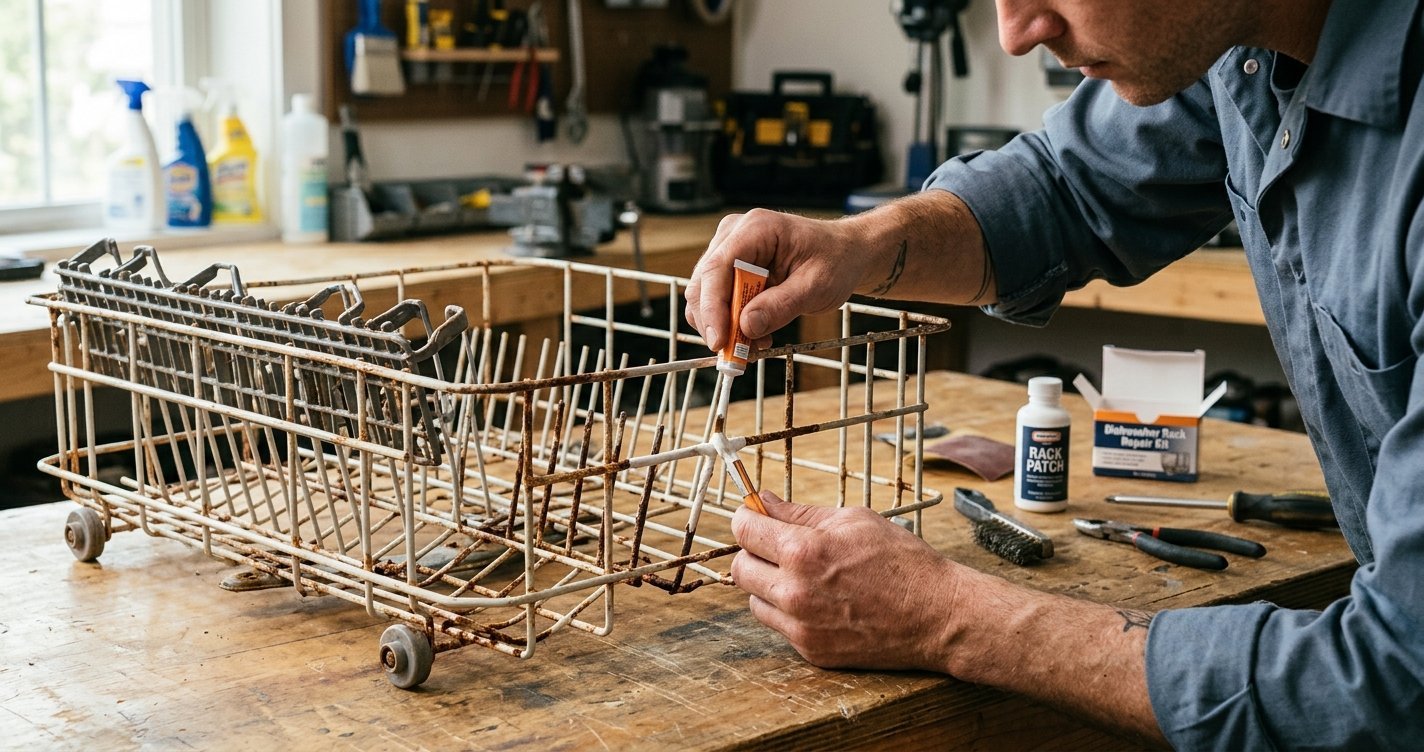
Rust should be addressed promptly because it can spread beneath the rack’s coating.
First, remove loose rust and coating from the affected area. Clean and dry the surface, then apply a dishwasher-rack repair product according to its instructions. Cover the exposed metal completely and allow the repair to cure before using the rack.
If rust has caused the metal to become severely weakened or brittle, repairing the coating may not be enough. In that situation, replacing the rack may be safer and more practical.
How to Replace Broken Rack Wheels
Broken wheels are among the easiest dishwasher-rack repairs.
- Remove the rack from the dishwasher.
- Inspect the wheel assembly to determine how it attaches to the rack.
- Remove the damaged wheel or wheel assembly.
- Install a compatible replacement part.
- Roll the rack back and forth to make sure the wheels move smoothly.
Replacement wheels are often available individually or as complete assemblies. Check your dishwasher’s model number before purchasing a replacement so the part fits correctly.
How to Fix Bent Rack Tines
Bent tines can sometimes be carefully straightened by hand. Work slowly to avoid breaking the coating or metal.
For a tine that has completely broken off, a replacement tine or rack component may be available for your dishwasher model. Avoid creating sharp exposed edges that could damage dishes or injure you while loading the dishwasher.
When Should You Replace the Rack?
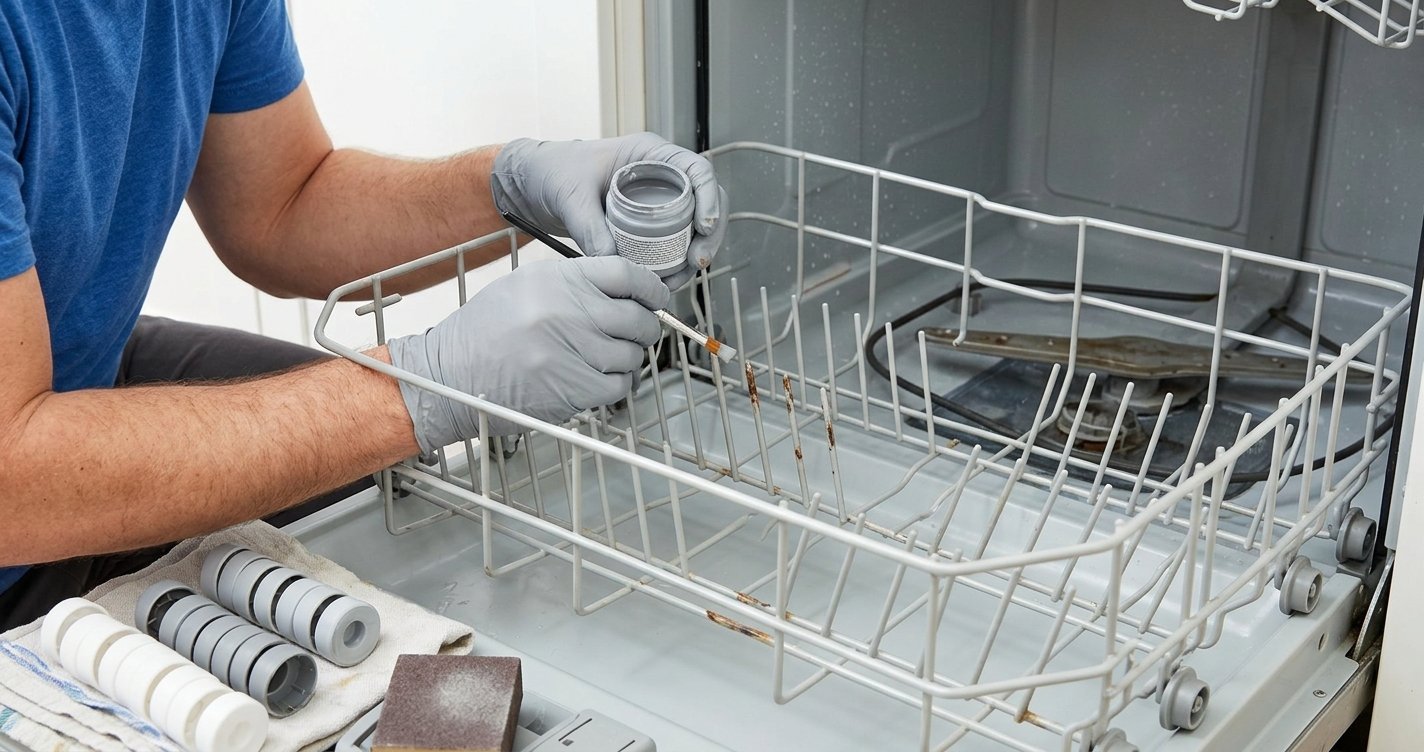
Repair is useful when the damage is limited to a small area. However, replacement may make more sense when:
- Large sections of the rack are rusted.
- Several tines are broken.
- The metal has become weak or corroded.
- Multiple wheels or rack components are damaged.
- The rack no longer slides or sits correctly.
- Repairs would cost nearly as much as a replacement rack.
A severely corroded rack can also leave rust particles on dishes, so extensive deterioration should not be ignored.
Tips for Preventing Rack Damage
A few simple habits can help extend the life of your dishwasher rack:
- Avoid placing sharp utensils where they can scrape the coating.
- Do not overload the rack.
- Load dishes according to the manufacturer’s recommendations.
- Check the rack periodically for chipped coating or rust.
- Repair small damaged areas before corrosion spreads.
- Keep the rack wheels and tracks free of food debris.
FAQs
Can a dishwasher rack be repaired?
Yes. Minor damage such as chipped coating, small rust spots, broken wheels, and bent tines can often be repaired with suitable replacement parts or dishwasher-rack repair products.
How do you fix chipped coating on a dishwasher rack?
Clean and dry the damaged area, remove loose coating and rust, smooth rough edges, and apply a repair product specifically designed for dishwasher racks. Allow it to cure fully before using the rack.
Can rust on a dishwasher rack be repaired?
Small rust spots can often be repaired by removing loose rust and applying a dishwasher-rack repair coating. Extensive corrosion may require replacing the rack.
How do you replace dishwasher rack wheels?
Remove the rack, take off the damaged wheel or wheel assembly, and install a compatible replacement. Check the dishwasher’s model number to ensure you purchase the correct part.
Is it worth repairing a dishwasher rack?
Repairing minor damage is usually practical. If the rack has extensive rust, structural damage, or several broken components, replacing it may be more practical.
How can I prevent my dishwasher rack from rusting?
Inspect the rack regularly, repair chipped coating promptly, avoid scraping it with sharp utensils, and avoid overloading the rack.
Final Thoughts
Repairing a dishwasher rack is often straightforward when the damage is minor. Chipped coating, small rust spots, broken wheels, and bent tines can often be fixed with the right replacement parts or rack-repair materials.
Before starting any repair, identify your dishwasher’s model and use parts and repair products specifically designed for dishwasher racks. If the rack has extensive corrosion or structural damage, replacing it is generally more practical than attempting a major repair.