If you’re shopping for premium cookware, Made In vs. Caraway is a comparison worth making. Both brands offer attractive, high-performance cookware, but they take noticeably different approaches.
Made In focuses heavily on professional-style cookware, including 5-ply stainless steel, carbon steel, nonstick, and its CeramiClad ceramic collection. Caraway is best known for its colorful ceramic nonstick cookware, although it also sells stainless steel and enameled cast iron.
Read More: Chicago Cutlery vs. Henckels Knives: Which Brand Is Right for Your Kitchen?
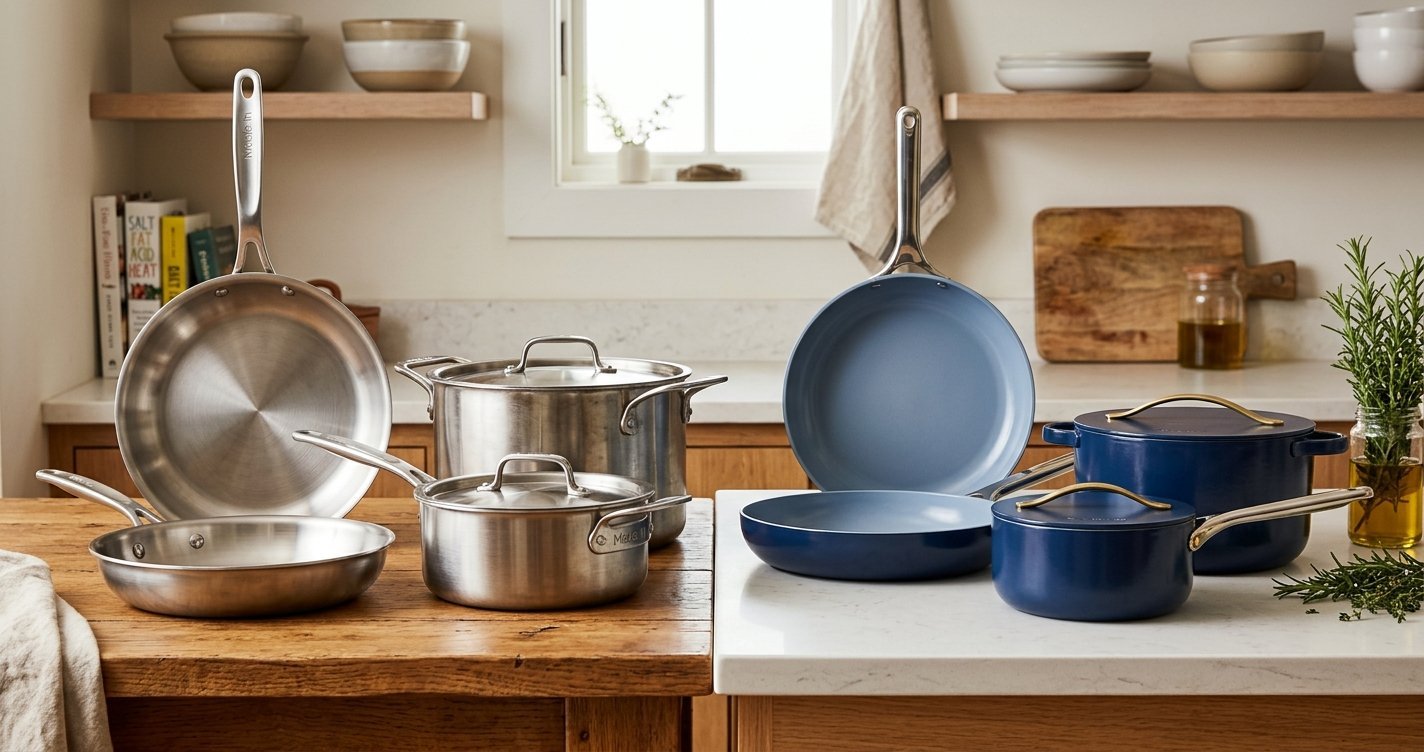
Table of contents
Made In vs. Caraway at a Glance
| Feature | Made In | Caraway |
| Best known for | Professional-style cookware | Ceramic nonstick cookware |
| Main cookware options | Stainless, nonstick, ceramic, carbon steel, cast iron | Ceramic nonstick, stainless steel, cast iron |
| Ceramic nonstick | Yes, CeramiClad | Yes |
| Stainless steel | 5-ply | 5-ply |
| Induction compatible | Yes, depending on collection | Yes |
| Ceramic oven limit | Varies by product | Up to 550°F |
| Ceramic care | Hand wash | Hand wash |
| Ceramic warranty | Varies by product | 1 year |
| Stainless warranty | Lifetime on eligible Made In products | Limited lifetime |
| Design | Professional/restaurant-inspired | Colorful, modern |
| Current entry-level cookware set pricing | Varies by collection | Ceramic set from $445 at time of writing |
Prices and availability can change.
Made In vs. Caraway: What’s the Difference?
The biggest difference is cookware philosophy. Made In offers a broader range of materials and construction styles. Its Stainless Clad collection, for example, uses five layers of metal and is made in Italy. The 10-piece set is currently listed at $749.99, although Made In also lists regular and promotional pricing that can change.
Caraway’s signature cookware uses a ceramic nonstick coating over an aluminum core. Its current cookware set is listed at $445 on sale from $675, with a 1-year limited warranty.
That distinction matters because stainless steel and ceramic nonstick behave very differently in the kitchen. Stainless steel is generally better suited to high-heat cooking, browning, and searing. Ceramic nonstick is designed around easy food release and convenient cleanup.
Made In Cookware
Made In has built its reputation around cookware with a more professional-kitchen-oriented approach. Its Stainless Clad cookware uses a 5-ply construction designed for heat conduction and even heating.
The company’s 10-piece Stainless Set is made in Italy from domestic and imported components, works on gas, electric and induction cooktops, and is oven-safe to 800°F. Made In also lists a lifetime warranty for the collection.
Made In Pros
- Broad selection of cookware materials
- 5-ply stainless construction
- Excellent option for high-heat cooking
- Strong choice for searing and browning
- Induction compatible
- Lifetime warranty on eligible Stainless Clad cookware
- Offers ceramic nonstick as well as traditional stainless
- More professional-style design
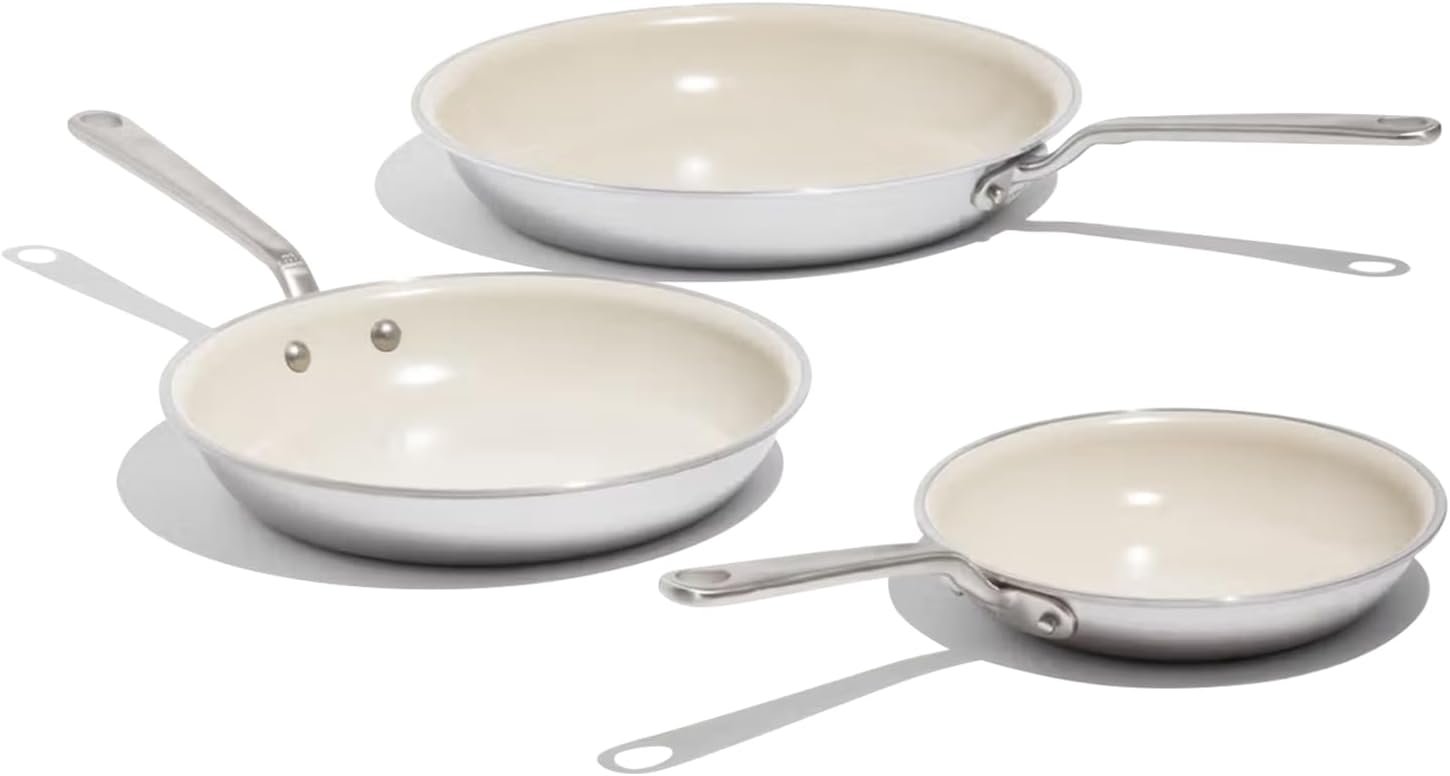
Made In also offers CeramiClad, which combines ceramic nonstick with a 5-ply stainless-steel body. The company says its CeramiClad cookware is made without PFAS, PFOA and PTFE.
That makes the comparison more interesting than simply “Made In stainless vs. Caraway ceramic.” If you specifically want ceramic nonstick, Made In has an option that sits much closer to Caraway’s category.
Made In Cons
- Some collections are relatively expensive
- Stainless steel has a learning curve compared with nonstick
- Ceramic cookware requires careful handling
- The large product range can make choosing the right collection confusing
Caraway Cookware
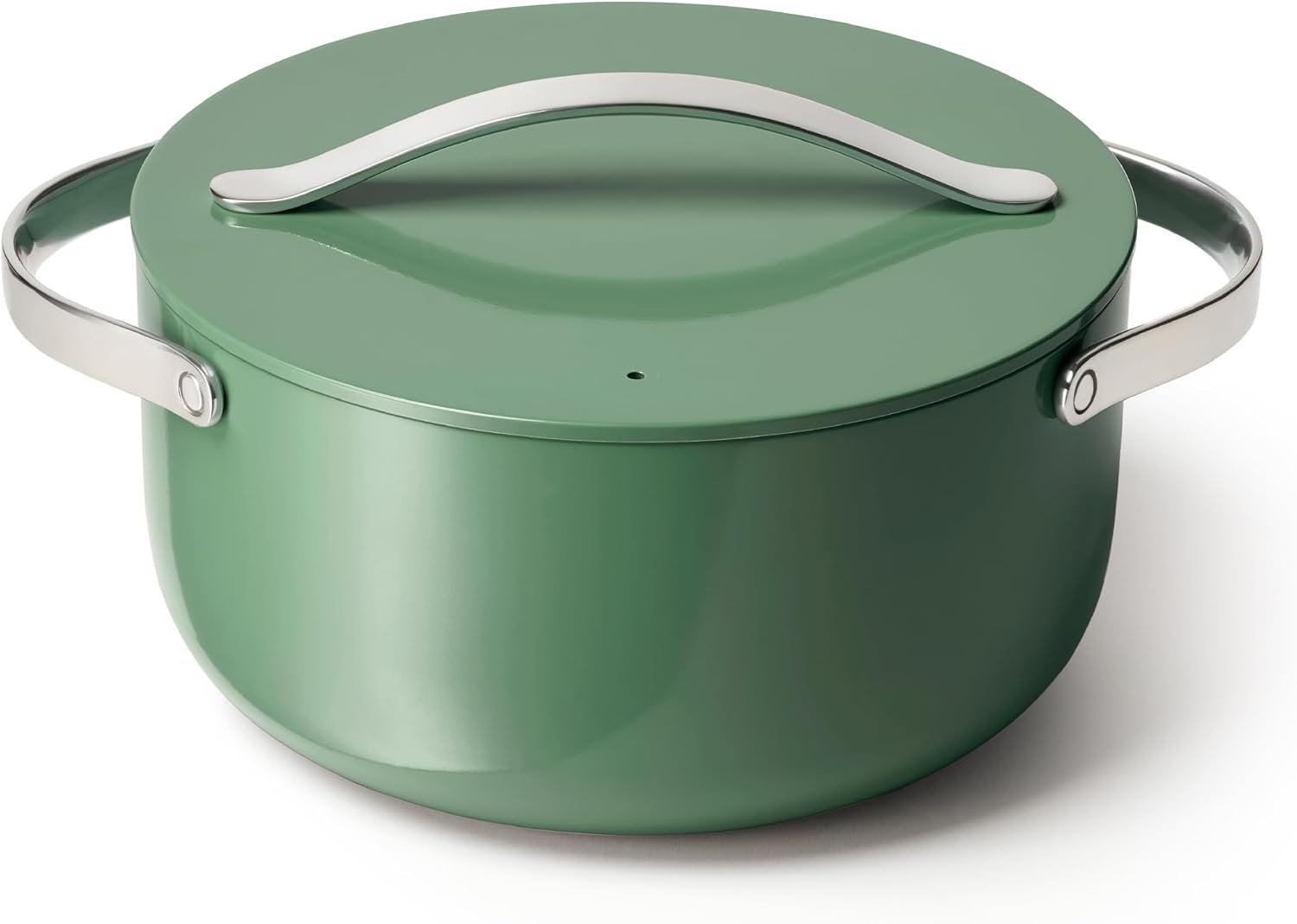
Caraway is best known for its ceramic-coated nonstick cookware and distinctive colors. The standard Caraway cookware set uses a dual-layer ceramic coating over an aluminum core and stainless steel handles. It is compatible with gas, electric, and induction cooktops and is oven-safe to 550°F.
Caraway Pros
- Excellent food release when the coating is new
- Easy cleanup
- Attractive range of colors
- Lightweight compared with many stainless-steel sets
- Compatible with induction
- Made without PTFE, PFOA and PFAS, according to Caraway
- Cookware sets include storage solutions
- 30-day trial/returns are currently offered
Independent testing has also found strong performance from Caraway’s ceramic nonstick surface. Consumer Reports reported excellent food release and evenness in its testing of the Caraway ceramic frying pan.
Caraway Cons
- Ceramic nonstick requires more careful use than bare stainless steel
- High heat can shorten coating life
- Hand washing is recommended
- The ceramic coating is not designed to last indefinitely
- The standard ceramic cookware warranty is only one year
Caraway specifically recommends low-to-medium heat and hand washing for its ceramic cookware. It also advises using a small amount of oil or butter to help protect the surface and maintain performance.
Performance: Made In vs. Caraway
Which is better for searing?
Made In stainless steel has the advantage for high-heat searing.
Stainless steel is well suited to browning meat and developing fond for sauces. It also doesn’t have a nonstick coating that can be damaged by high temperatures.
Caraway’s ceramic cookware is better suited to lower-temperature everyday cooking. Independent testing has found that Caraway releases food very well, but some testers have reported weaker browning and searing performance compared with heavier cookware.
If steak, chicken thighs and deeply browned vegetables are regular parts of your cooking routine, construction matters more than appearance.
Which is more nonstick?
Caraway’s ceramic cookware provides the classic easy-release experience that makes ceramic nonstick popular.
Eggs, pancakes, fish, and other foods that commonly stick to stainless steel can be easier to handle on a fresh ceramic nonstick surface.
Made In’s CeramiClad collection provides a similar ceramic nonstick experience while using a 5-ply stainless-clad construction. Made In says the collection is designed for even heating and is available in both U.S. and Italian-made configurations.
Which Lasts Longer?
This is one of the most important differences. Uncoated stainless steel generally has an inherent longevity advantage because there is no nonstick coating to wear out.
Ceramic nonstick cookware can perform extremely well, but its nonstick properties can decline with use. Independent long-term reviews of Caraway have noted that the coating requires careful maintenance and may lose some of its original nonstick performance over time.
That doesn’t necessarily make Caraway a bad purchase. It simply means you should think about ceramic cookware differently from a stainless-steel pan.
A stainless pan can potentially remain useful for decades. A ceramic nonstick pan is purchased partly for convenience during its useful coating life.
Made In vs. Caraway: Price
Price varies considerably depending on the collection and promotions. At the time of writing, Made In lists its 10-piece Stainless Set at $749.99, discounted from $1,024.
Caraway currently lists its standard ceramic Cookware Set at $445, discounted from $675. However, comparing the sticker price alone can be misleading. You’re not buying equivalent products:
Performance: Made In vs. Caraway
Which is better for searing?
Made In stainless steel has the advantage for high-heat searing.
- Made In’s Stainless Clad set is primarily an uncoated stainless-steel system.
- Caraway’s standard set is primarily ceramic nonstick.
- Made In also has CeramiClad, which brings ceramic nonstick and 5-ply stainless construction together.
- Caraway also sells 5-ply stainless cookware, currently starting at $595 for its stainless collection.
Compare the specific collection, not just the brand.
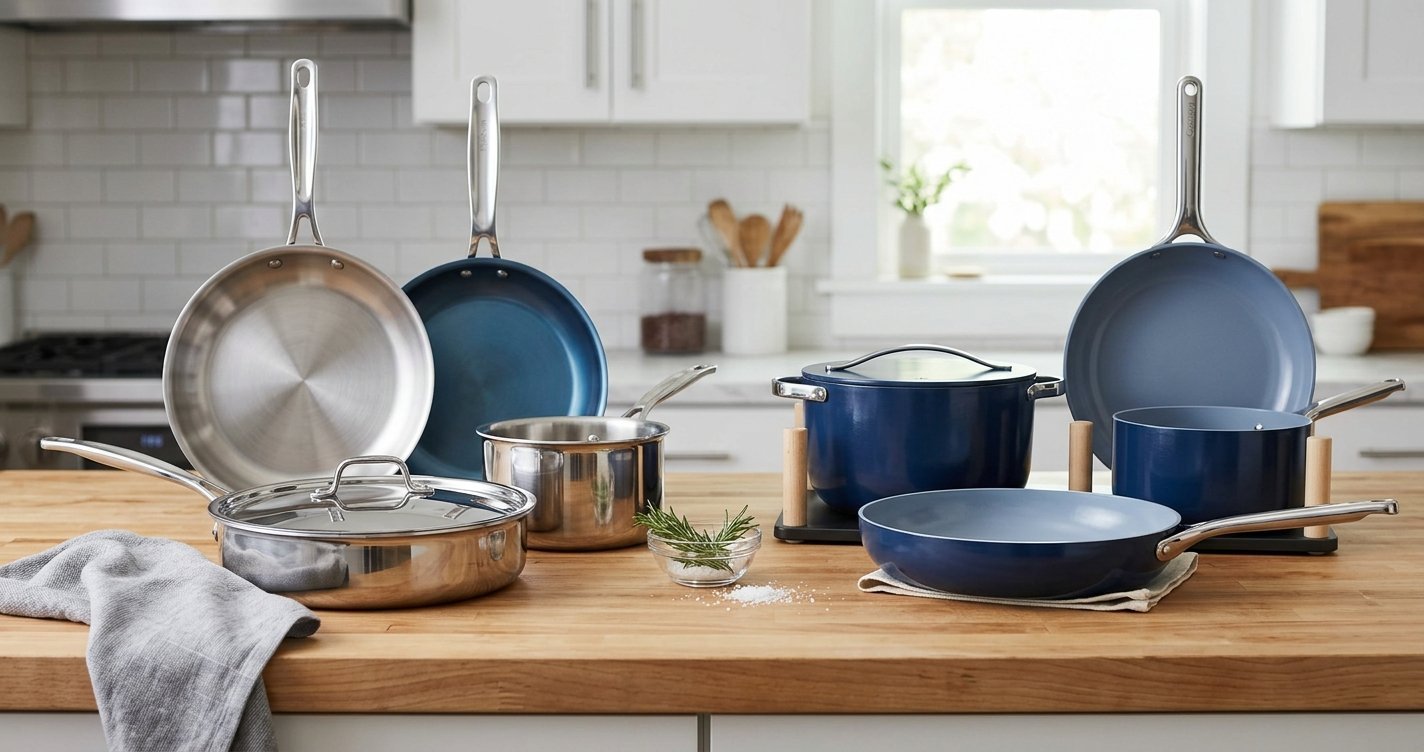
Warranty Comparison
Warranty is another significant difference. Made In’s Stainless Clad set currently includes a lifetime warranty. The company says its products have either limited or lifetime warranties depending on the product.
Caraway’s standard ceramic cookware has a one-year limited warranty. Its warranty excludes certain coating deterioration and damage associated with high heat, abrasive cleaning, and improper care.
Caraway’s stainless steel collection has a limited lifetime warranty, so the warranty difference largely depends on which Caraway collection you’re considering.
Which Should You Buy?
Instead of asking which brand is universally better, consider what you want from your cookware.
Choose Made In if you:
- Want professional-style cookware
- Cook at high temperatures
- Frequently sear meat
- Prefer stainless steel
- Want a broader selection of materials
- Want cookware designed for long-term use
- Want the option of 5-ply ceramic nonstick through CeramiClad
Choose Caraway if you:
- Prioritize easy food release
- Prefer ceramic nonstick
- Want colorful, modern cookware
- Cook mostly everyday meals at moderate temperatures
- Want easy cleanup
- Like the included storage organizers
- Prefer a lower entry price for a complete ceramic cookware set
FAQs
Is Made In better than Caraway?
There isn’t one answer for every cook. Made In offers more cookware materials and includes durable 5-ply stainless options, while Caraway’s ceramic nonstick cookware emphasizes easy food release, cleanup, and design.
Is Caraway cookware worth the money?
Caraway can make sense if you specifically want ceramic nonstick cookware, easy cleanup, and a design-focused set. Its current ceramic cookware set is listed at $445, although prices can change.
Is Made In cookware non-toxic?
Made In’s uncoated Stainless Clad cookware is made without PFAS, PFOA, PTFE, lead, and cadmium, according to the company. Its CeramiClad collection is also marketed as free of PFAS, PFOA, and PTFE.
Is Caraway really PFAS-free?
Caraway states that its ceramic nonstick cookware is made without PTFE, PFOA, and PFAS.
Can you use metal utensils with Caraway?
For its ceramic nonstick cookware, Caraway recommends care designed to protect the coating, including avoiding harsh cleaning methods. Using softer utensils is the safer approach for preserving the nonstick surface.
Is Made In ceramic cookware better than Caraway?
Made In’s CeramiClad uses a 5-ply stainless-clad construction beneath its ceramic coating, while Caraway’s standard ceramic cookware uses an aluminum core. Independent testing has found Made In CeramiClad to feel more substantial and perform strongly for browning, although Caraway is lighter and generally less expensive.
Which is better for induction cooking?
Both brands offer induction-compatible cookware. Made In’s Stainless Clad and CeramiClad collections are induction compatible, while Caraway’s ceramic cookware is also designed for gas, electric, and induction cooktops.
Which is easier to clean, Made In or Caraway?
Caraway ceramic nonstick is generally easier to clean because food releases readily from the coating. Made In stainless steel can require more technique and occasional scrubbing, although it doesn’t have a nonstick coating that needs to be protected.
Does Caraway have a lifetime warranty?
Not on its standard ceramic cookware. Caraway’s ceramic cookware currently carries a one-year limited warranty. Its stainless steel and some other collections have longer warranty coverage.
Does Made In have a lifetime warranty?
Eligible Made In cookware, including its Stainless Clad collection, carries a lifetime warranty. The exact warranty depends on the product.