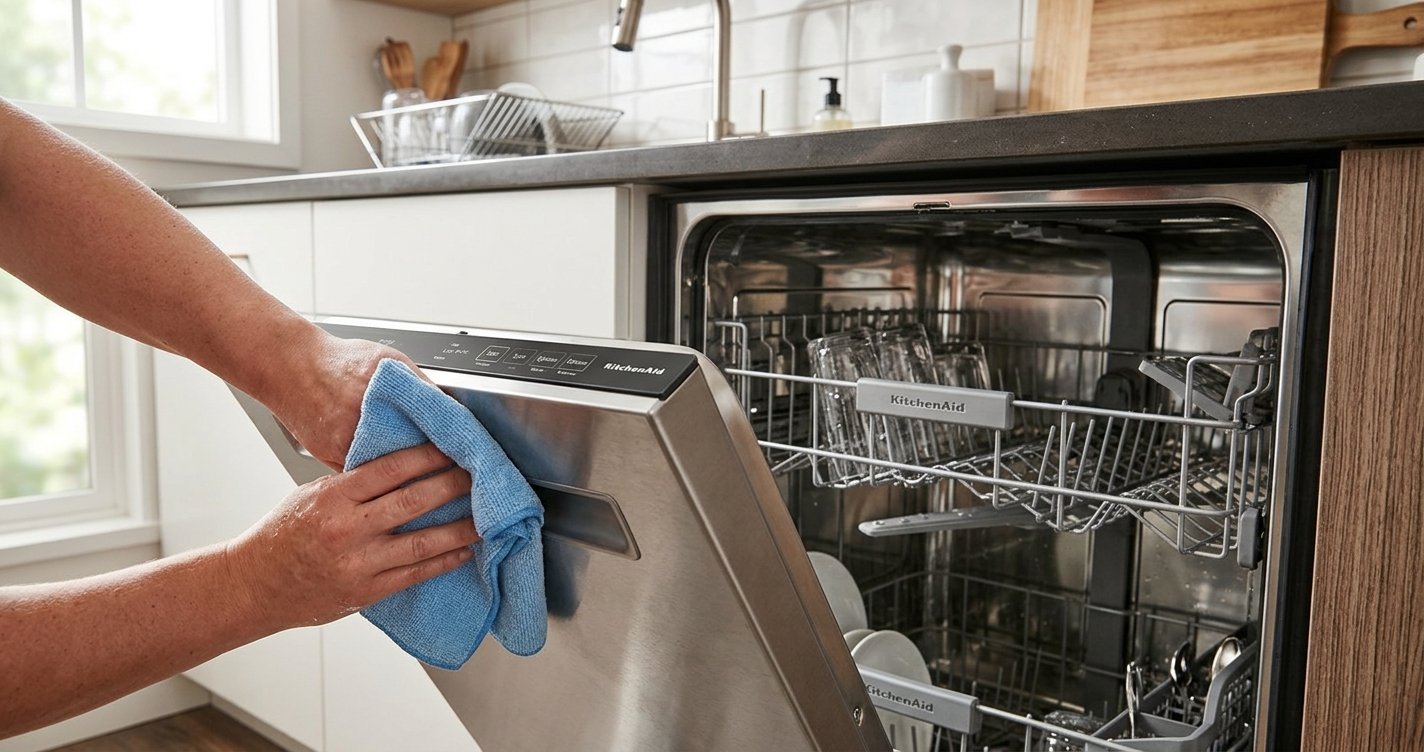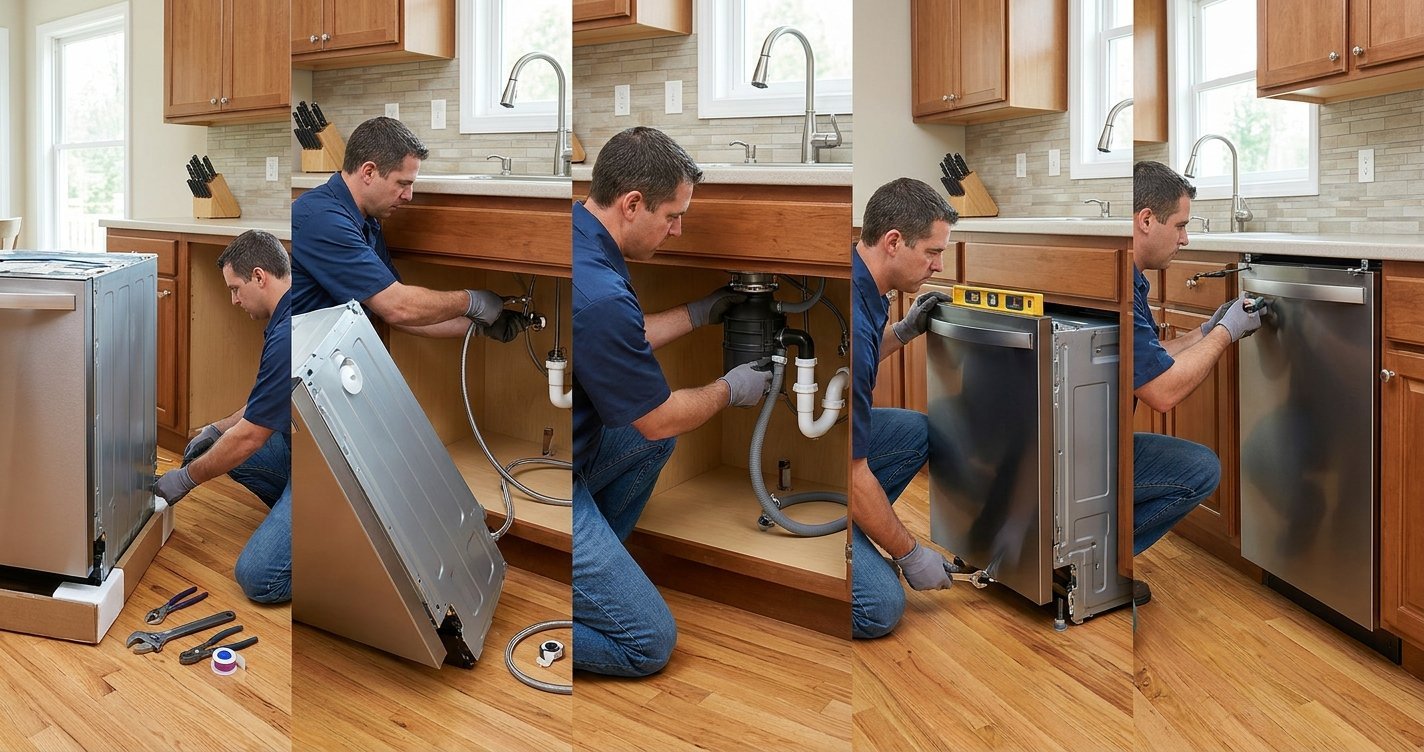
A standard dishwasher is typically 24 inches wide (about 61 cm), while compact dishwashers are usually 18 inches wide (about 46 cm). However, dishwasher dimensions vary by type, model, and installation requirements. Before buying a dishwasher in 2026, measure the available cabinet opening, check the appliance’s actual dimensions, and allow for the clearance specified by the manufacturer.
This guide explains standard dishwasher widths, compact and portable options, common dimensions in inches and centimeters, and how to measure your kitchen space for a proper fit.
Read More: How to Reset Your Thor Dishwasher
Table of contents
How Wide Is a Standard Dishwasher?
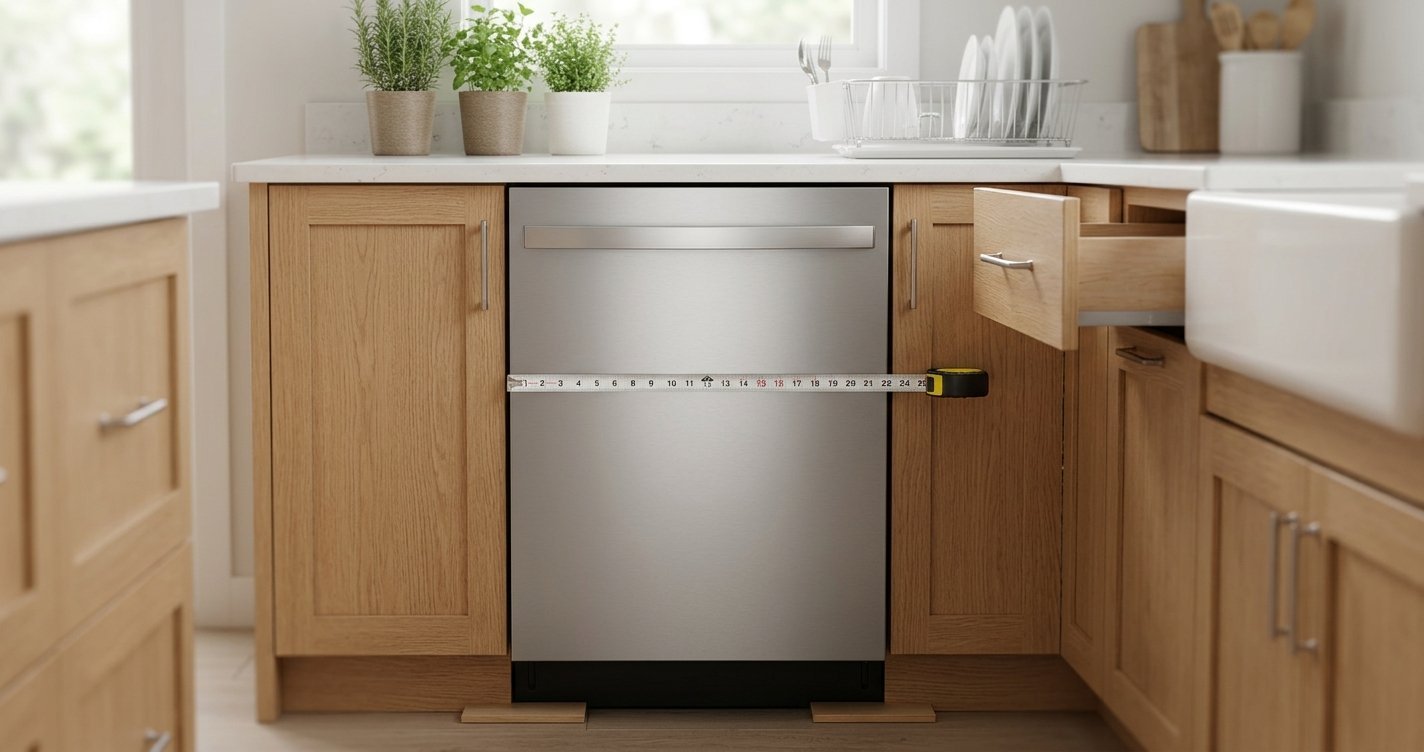
A standard built-in dishwasher is generally 24 inches wide (61 cm). This size is designed to fit the common dishwasher opening found in many modern kitchens.
A compact built-in dishwasher is typically 18 inches wide (46 cm), making it a practical option for smaller kitchens, apartments, and households with limited cabinet space.
Keep in mind that the advertised width is not always the exact width of the appliance. The cabinet opening, appliance body, door, trim, and installation clearances can have different measurements. Always check the manufacturer’s specification sheet before purchasing.
Dishwasher Sizes at a Glance
The following table summarizes common dishwasher widths and their typical uses.
| Dishwasher type | Typical width | Best suited for |
| Standard built-in | 24 inches (61 cm) | Most households and family kitchens |
| Compact built-in | 18 inches (46 cm) | Small kitchens and apartments |
| Portable dishwasher | Varies by model, often around 18–24 inches (46–61 cm) | Renters and kitchens without a built-in connection |
| Countertop dishwasher | Varies, often around 16–22 inches (41–56 cm) | Small households and limited counter space |
| Drawer dishwasher | Varies by configuration, commonly around 24 inches (61 cm) for a single full-width unit | Flexible loading and ergonomic access |
These are general size ranges, not universal specifications. Portable, countertop, and drawer dishwashers can differ considerably between manufacturers.
How Wide Are Different Types of Dishwashers?
1. Standard 24-Inch Dishwashers
Standard dishwashers are the most common choice for built-in kitchen installations. They generally measure about 24 inches wide and offer enough capacity for everyday dishes, cookware, and utensils in a family household.
Typical dimensions:
- Width: approximately 24 inches (61 cm)
- Height: approximately 33–35 inches (84–89 cm)
- Depth: approximately 24–25 inches (61–64 cm)
The actual dimensions vary by model, particularly for tall-tub designs, integrated fronts, and models with different door configurations.
2. Compact 18-Inch Dishwashers
Compact dishwashers are designed for kitchens where a standard-width appliance will not fit. At around 18 inches wide, they can provide a convenient built-in solution without requiring as much cabinet space.
Typical dimensions:
- Width: approximately 18 inches (46 cm)
- Height: approximately 32–35 inches (81–89 cm)
- Depth: approximately 22–25 inches (56–64 cm)
Compact models generally hold fewer dishes than standard models. They are often suitable for couples, smaller households, and kitchens with limited floor space.
3. Portable Dishwashers
Portable dishwashers are useful when permanent plumbing or cabinet modifications are impractical. Many models connect to a kitchen faucet and can be moved when needed.
Their widths vary, with some models comparable to compact built-in dishwashers and others approaching standard dishwasher dimensions. Before buying, check the appliance width, overall depth, hose reach, and available storage space.
4. Countertop Dishwashers
Countertop dishwashers are among the smallest options available. They are designed to sit on a sturdy counter or another manufacturer-approved surface.
Many models are roughly 16–22 inches wide, although some fall outside this range. Their compact size makes them suitable for small apartments, offices, and households that wash fewer dishes at a time.
Measure the counter’s usable width and depth, and confirm that there is sufficient room for the door to open and for the water supply and drainage connections.
5. Drawer Dishwashers
Drawer dishwashers feature one or more pull-out drawers instead of a conventional drop-down door. Their dimensions depend on the design: some are installed in a standard-width opening, while other configurations use different cabinet layouts.
If you are considering a drawer dishwasher, check the complete installation diagram rather than relying on the product category alone.
Dishwasher Dimensions in Inches and Centimeters
For easy comparison, use the conversion table below when planning a kitchen installation.
| Measurement in inches | Approximate measurement in centimeters |
| 16 inches | 40.6 cm |
| 18 inches | 45.7 cm |
| 20 inches | 50.8 cm |
| 22 inches | 55.9 cm |
| 24 inches | 61.0 cm |
| 30 inches | 76.2 cm |
Important: These figures are unit conversions, not recommendations for cabinet-opening sizes. Your required opening depends on the exact appliance model and its installation instructions.
How to Measure for a Dishwasher
Follow these steps before ordering a new dishwasher or replacing an existing one.
Step 1: Measure the Width of the Opening
Measure horizontally between the inside edges of the cabinets where the dishwasher will be installed. If the opening is uneven, measure at the top, middle, and bottom.
Record the smallest measurement so you do not select an appliance that is too wide.
Step 2: Measure the Height
Measure vertically from the finished floor to the underside of the countertop. Check the measurement at more than one point, particularly if the floor is uneven.
Some dishwashers have adjustable leveling feet, but their adjustment range is limited.
Step 3: Measure the Available Depth
Measure from the back of the opening to the front edge of the surrounding cabinetry. Account for the space occupied by water lines, drainage hoses, electrical connections, and other obstructions.
Also consider how far the door will project into the kitchen when open.
Step 4: Check the Manufacturer’s Installation Guide
Compare your measurements with the appliance’s published dimensions and required cabinet-opening dimensions. These measurements are not always identical.
Confirm whether the listed width refers to the appliance body, the overall exterior, or the required installation opening.
Step 5: Check Connections and Door Clearance
Make sure the water supply, drainage, and electrical connections can be routed according to the manufacturer’s instructions. Confirm that nearby cabinet doors, drawers, and walkways will not interfere with the dishwasher door.
How Much Space Do You Need Around a Dishwasher?
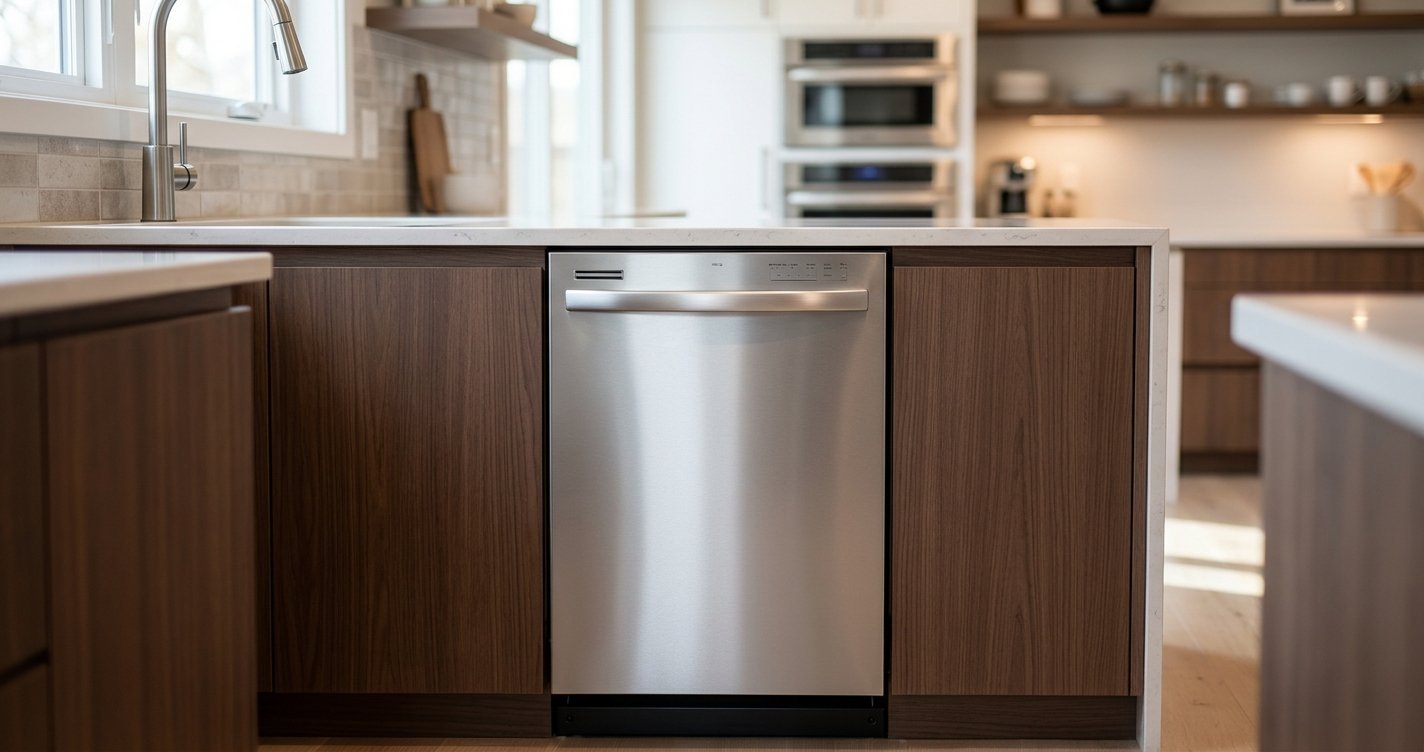
A dishwasher needs more than enough room to fit between two cabinets. It also requires space for connections, leveling, and normal operation.
Consider these factors:
- Side clearance: Follow the installation guide for the required opening width and any specified side clearances.
- Rear clearance: Allow room for hoses, pipes, and electrical connections without pinching or bending them improperly.
- Height clearance: Ensure the appliance can slide into place and be leveled beneath the countertop.
- Front clearance: Check that the door opens fully and that racks can slide out without hitting nearby cabinets or appliances.
- Service access: Install the appliance in a way that permits removal and servicing when necessary.
Do not assume every dishwasher requires an extra inch on each side. Some models are designed for a close-fitting installation, and the manufacturer’s instructions determine the correct clearance.
Can You Fit a 24-Inch Dishwasher in a 23-Inch Opening?
Generally, a dishwasher that is wider than the permitted installation opening will not fit safely or correctly. A standard dishwasher advertised as 24 inches wide may have a slightly different actual body width, but you should never assume it will fit a 23-inch opening without checking the specifications.
Here is what to do:
- Measure the opening again at the top, middle, and bottom.
- Find the appliance’s exact exterior width and required opening width.
- Check whether the model is designed for your available space.
- Consider an 18-inch compact dishwasher if the opening cannot be modified.
- Consult a qualified installer before altering cabinets or countertops.
Do not force the dishwasher into a narrow opening. Doing so can damage the cabinetry, appliance, hoses, or surrounding finishes.
How to Choose the Right Dishwasher Width
The best dishwasher width depends on your kitchen layout, household size, available plumbing, and washing habits.
Choose a 24-Inch Dishwasher If:
- You have a standard dishwasher opening.
- You regularly wash dishes for a family or several people.
- You need room for larger cookware and everyday loads.
- Your kitchen can accommodate a full-size built-in appliance.
Choose an 18-Inch Dishwasher If:
- Your kitchen has limited cabinet space.
- You live in a small apartment or compact home.
- You usually wash smaller loads.
- You want a built-in dishwasher without reserving space for a standard-width model.
Choose a Countertop or Portable Model If:
- You rent your home and want to minimize permanent modifications.
- Your kitchen lacks a dedicated built-in dishwasher opening.
- Your household produces relatively few dirty dishes.
- You have enough room for the appliance and its required connections.
Before deciding, compare the dishwasher’s capacity, energy and water use, noise rating, cycle options, and installation requirements. A narrower dishwasher isn’t automatically the best choice if you regularly wash large loads.
Frequently Asked Questions
Is every standard dishwasher 24 inches wide?
No. Many standard built-in dishwashers are approximately 24 inches wide, but actual dimensions vary by manufacturer and model. Compact models are often around 18 inches wide, while portable and countertop designs come in several sizes.
Is a 24-inch dishwasher exactly 24 inches wide?
Not necessarily. The advertised size may be rounded, and the appliance’s actual exterior dimensions can differ from the required cabinet-opening dimensions. Always check the model’s specification sheet.
How wide is an 18-inch dishwasher in centimeters?
An 18-inch dishwasher is approximately 45.7 centimeters wide. This is a common size for compact built-in dishwashers.
What is the narrowest type of dishwasher?
Countertop dishwashers are often among the narrowest options, but their dimensions vary by model. Some compact built-in dishwashers are around 18 inches wide. Compare the actual product dimensions before deciding.
Can I replace an 18-inch dishwasher with a 24-inch model?
Only if the kitchen opening can accommodate the larger model and the installation requirements can be met. A 24-inch dishwasher will not fit directly into an opening designed for an 18-inch unit without suitable modifications.
How deep is a standard dishwasher?
Many standard built-in dishwashers are approximately 24–25 inches deep, although the exact measurement varies. Check the installation diagram to account for the appliance body, door, and connections.
Should I measure the dishwasher or the cabinet opening?
Measure both. The cabinet opening determines the space available for installation, while the appliance dimensions determine whether the unit will fit within that space. The manufacturer’s installation guide confirms the required tolerances and clearances.
Final Thoughts
Most standard built-in dishwashers are approximately 24 inches wide (61 cm), while compact built-in models are typically 18 inches wide (46 cm). Portable and countertop models offer additional options for kitchens without a conventional dishwasher opening.
For the best fit, measure the cabinet opening’s width, height, and depth, then compare those measurements with the exact appliance specifications. Checking the manufacturer’s installation requirements before buying can help prevent costly fitting problems and ensure your new dishwasher works properly.