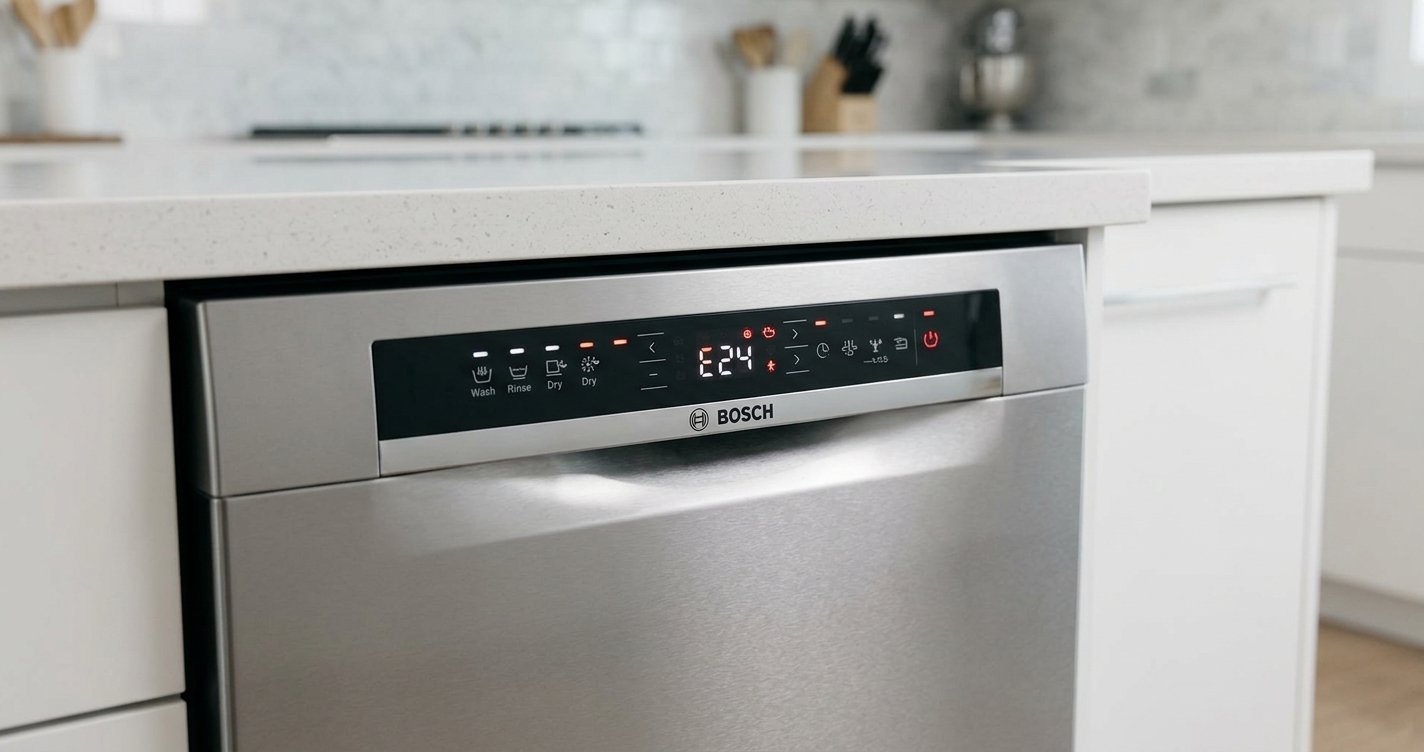
A Bosch dishwasher E17 error points to a problem with water flowing into the machine during the fill cycle. According to Bosch’s own troubleshooting page, an E16 or E17 code means water may not be entering the dishwasher properly, and the first thing to check is a kinked or damaged inlet hose. Independent appliance technicians commonly describe E17 more specifically as an overfill or flow-sensor error — the machine detects more water entering than expected and stops the fill to prevent flooding. Most cases trace back to a stuck or faulty water inlet valve, a kinked hose, or a dirty flow sensor.
Read More: Dishwasher Detergent: Pods vs Liquid vs Powder
Table of contents
What Does the E17 Error Mean on a Bosch Dishwasher?
Bosch’s official guidance groups E16 and E17 together as fill-system errors: the dishwasher isn’t getting water the way it should during the fill stage. In practice, repair technicians and appliance forums generally break it down a bit further — E17 usually means the unit’s water inlet flow sensor or pressure switch has detected too much water entering the tub, triggering a safety response that halts the fill and can activate the drain pump to prevent overflow.
Both explanations point to the same general area of the machine: the water inlet system — the hose, the inlet valve, and the sensor that measures how much water is coming in.
Common Causes of the E17 Error
- Kinked or damaged inlet hose — restricts or distorts water flow into the machine, which Bosch specifically flags as the first thing to check.
- Stuck-open water inlet valve — the solenoid valve fails to fully close, letting water trickle or flow in continuously even when the fill command has stopped.
- Dirty or failing flow sensor — mineral buildup or debris on the sensor can cause it to misread the actual water level.
- Unstable water pressure — pressure that’s too high or fluctuating can cause the machine to overcompensate and overfill.
- Blocked float chamber or switch — grease or debris in the float chamber can cause a false “too much water” reading even when the tub isn’t actually overfilled.
- Recent plumbing work — turning water off and back on in the house (for renovations, repairs, etc.) is a common trigger reported by owners right before the error appears.
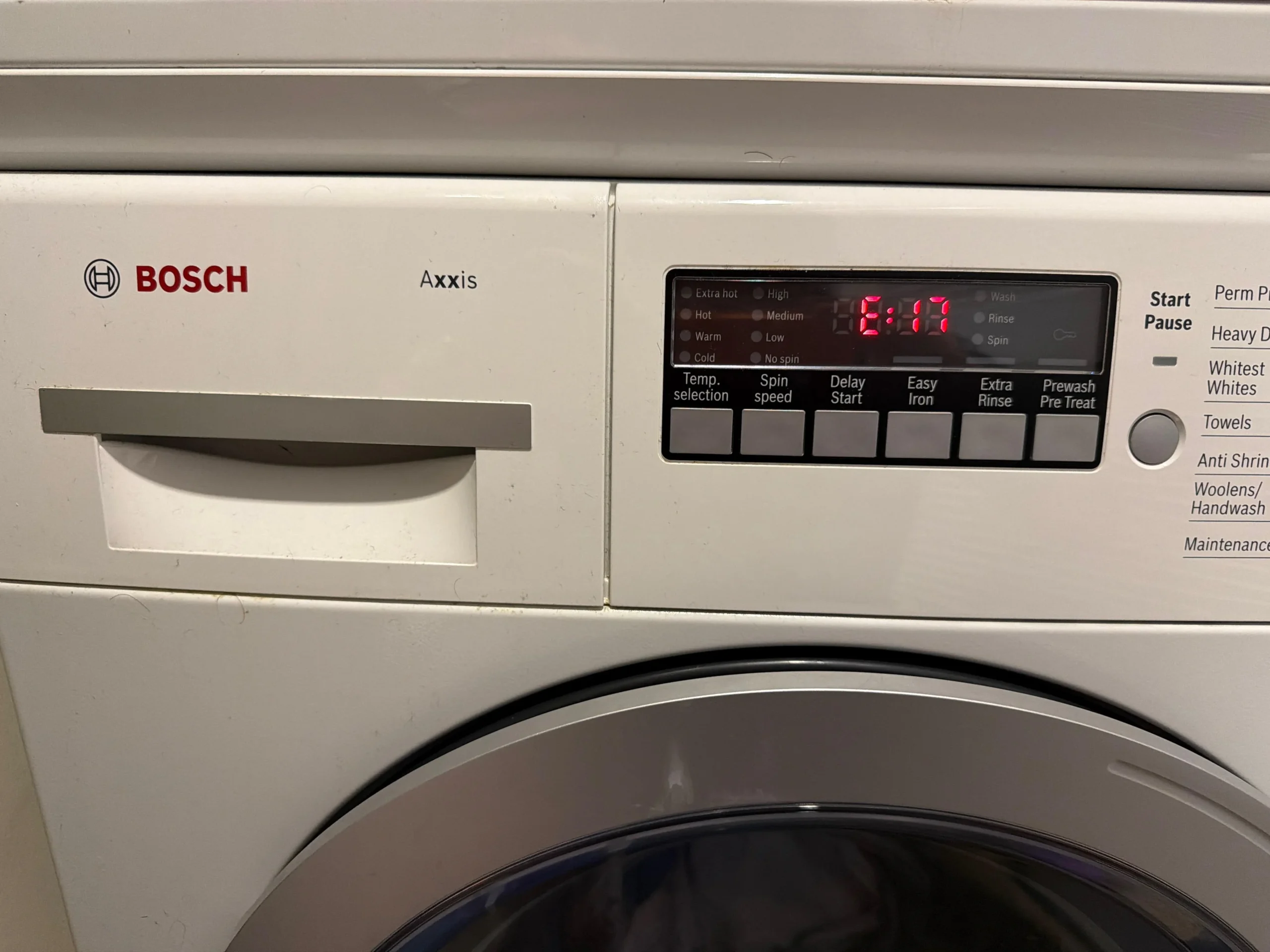
How to Fix a Bosch Dishwasher E17 Error
1. Power-Cycle the Dishwasher
Turn off the power at the breaker (not just the door switch) for about 5 minutes. This fully resets the control board, which can clear a one-time sensor glitch without needing any parts replaced.
2. Check the Water Supply and Inlet Hose
Confirm the water supply valve under the sink is fully open, and inspect the inlet hose for kinks, tight bends, or visible damage. A restricted hose can cause both under-filling and the pressure irregularities that trigger E17.
3. Inspect for Standing Water
Remove the lower kick plate and check the base pan for standing water. If you find any, there may be a leak (sometimes from a failing inlet valve) that’s triggering the safety sensors rather than a true overfill.
4. Test the Water Inlet Valve
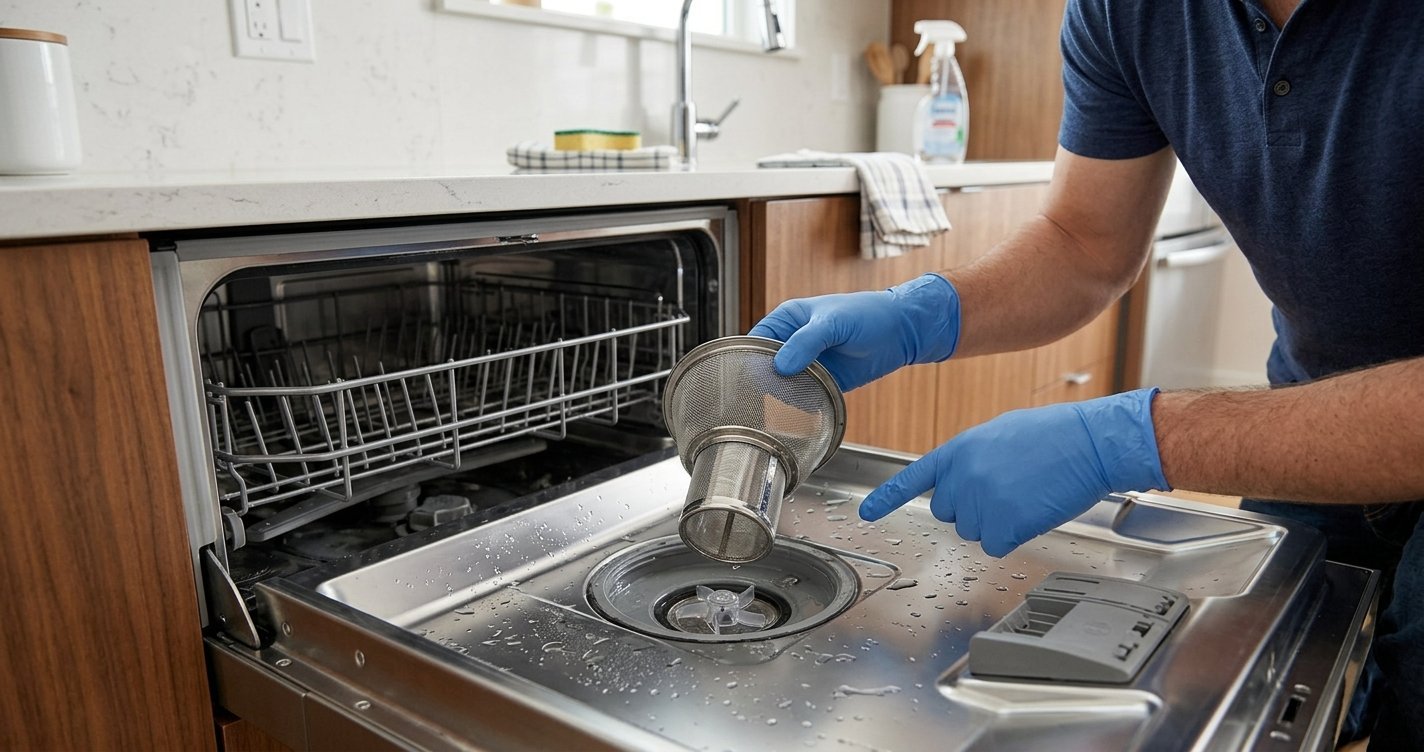
With the water supply off, access and inspect the inlet valve for obstructions, mineral buildup, or a solenoid that isn’t sealing properly. A valve that’s stuck open is one of the most common root causes of a recurring E17 error and usually needs to be replaced rather than cleaned.
5. Clean the Flow Sensor and Float Chamber
Grease and mineral deposits around the float switch or flow sensor can cause false readings. Cleaning this area sometimes resolves an intermittent E17 without any parts needing replacement.
6. Run a Drain-Only Cycle, Then Retest
Cancel the current cycle and run a drain-only program to clear any water sitting in the tub, then start a normal cycle to see if the error returns immediately or only after a delay — this helps distinguish a one-off glitch from a recurring hardware issue.
When to Call a Bosch Technician
Call a professional if you notice any of the following:
- The E17 error returns immediately after a power reset or on the very next cycle.
- You see standing water, pooling, or leaks under or around the dishwasher.
- The dishwasher overflows or water is visible above the door sill mid-cycle.
- You’ve already checked the hose, valve access, and flow sensor and the code persists.
A stuck-open inlet valve or a failing flow sensor generally requires the part to be tested and replaced — not something most owners want to attempt without appliance repair experience, especially since it involves the water supply line.
How to Prevent the E17 Error From Coming Back
- Inspect hoses and valves periodically for kinks, wear, or mineral buildup, especially if you have hard water.
- Keep water pressure stable and within the range specified in your dishwasher’s manual.
- Clean filters and sensors on a regular schedule so grease and debris don’t accumulate near the float chamber.
- Re-check the dishwasher after any plumbing work in the house — shutting water on and off is a common trigger for a first-time E17.
Frequently Asked Questions
What does E17 mean on a Bosch dishwasher?
It’s a water-fill error. Bosch describes it as an issue with water entering the dishwasher; technicians commonly identify it more specifically as the flow sensor detecting an overfill condition.
Is E17 a drain problem?
No. E17 is about water flowing into the dishwasher during the fill stage, not water draining out.
Can I fix the E17 error myself?
Often, yes — a kinked hose or a one-time sensor glitch can be resolved with a power reset or hose check. A stuck inlet valve or failing flow sensor usually requires a technician to test and replace the part.
Why does my Bosch dishwasher show E17 right after I had my water shut off?
This is a commonly reported trigger. Turning the home’s water supply off and back on can disturb pressure or introduce air into the line, which can cause the fill system to misread the water level on the next cycle.
Will a power reset fix E17 permanently?
Sometimes. If the cause was a temporary sensor glitch, a 5-minute breaker reset can clear it for good. If E17 returns after the next cycle, the underlying cause is more likely a hardware issue like a stuck valve.
Is it safe to keep running my dishwasher with an E17 error?
It’s best not to. E17 is a safety response to prevent overflow, and running the dishwasher repeatedly with an unresolved fill issue increases the risk of leaks or flooding around the unit.
Conclusion
A Bosch dishwasher E17 error almost always comes back to one thing: something is disrupting normal water flow into the machine, whether that’s a simple kinked hose or a failing inlet valve. Start with the easy checks — a power reset, the hose, and the water supply — before assuming you need a repair. If the error keeps returning after those steps, particularly alongside standing water or overflow, it’s a sign the inlet valve or flow sensor needs to be tested and likely replaced by a technician rather than something to keep resetting around.