A KitchenAid dishwasher soap dispenser that will not close properly can prevent the detergent from being held in the dispenser during the wash cycle. Fortunately, the problem is often caused by something simple, such as excess detergent, dried detergent residue, or an item blocking the dispenser.
KitchenAid recommends checking the dispenser for obstructions and buildup before considering replacement or service.
Read More: KitchenAid Dishwasher Heat Dry Not Working: Causes and Fixes
Table of contents
Why Is My KitchenAid Dishwasher Soap Dispenser Not Closing?
Several issues can keep the detergent dispenser from latching properly.
1. Too Much Detergent
Overfilling the detergent compartment can prevent the dispenser drawer or lid from closing completely. Excess powder can also interfere with the latch mechanism.
Remove the excess detergent and use the amount recommended for your specific dishwasher and detergent.
2. Caked or Hardened Detergent
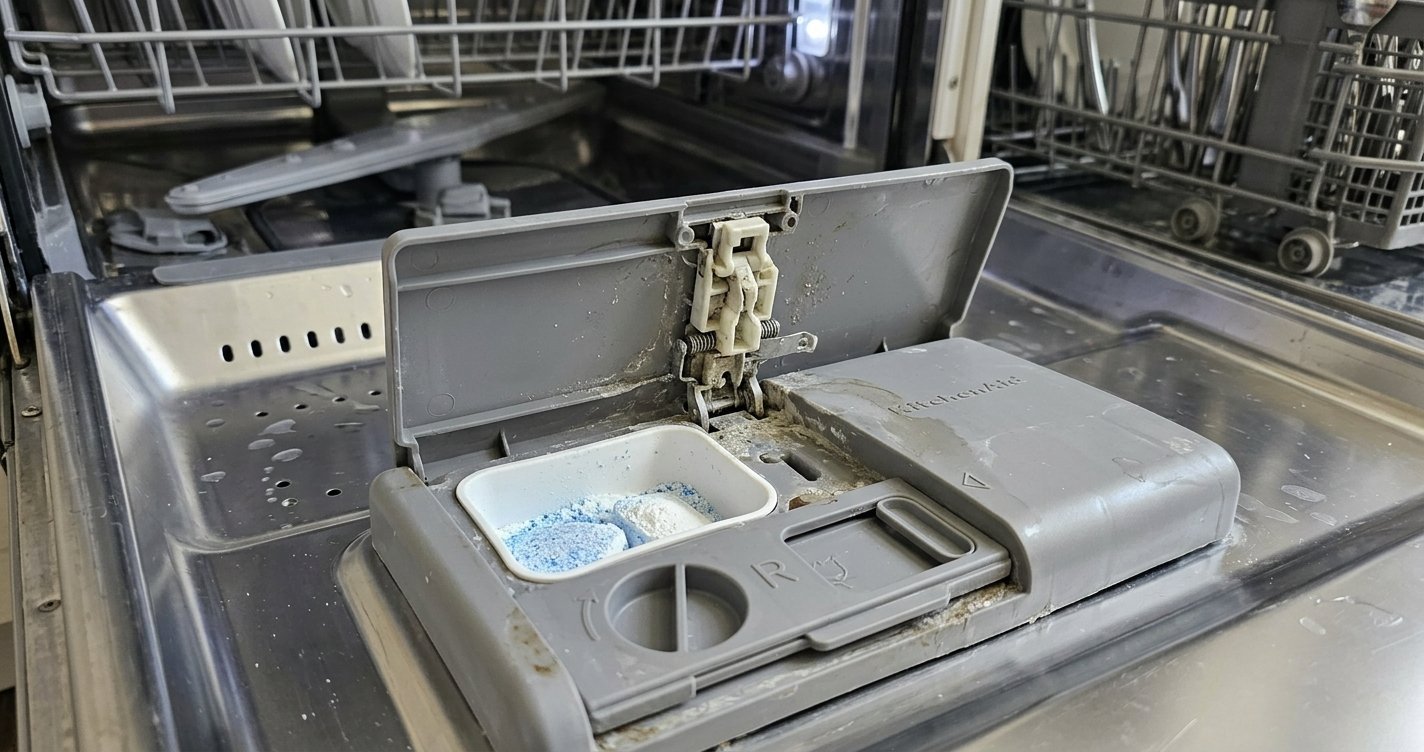
Old or moisture-exposed detergent can become hard and sticky inside the dispenser. This buildup can prevent the lid from moving freely or engaging with the latch.
KitchenAid recommends removing the detergent and cleaning the dispenser with warm water and a soft cloth. Before adding new detergent, make sure the dispenser is completely dry.
3. Something Is Blocking the Dispenser
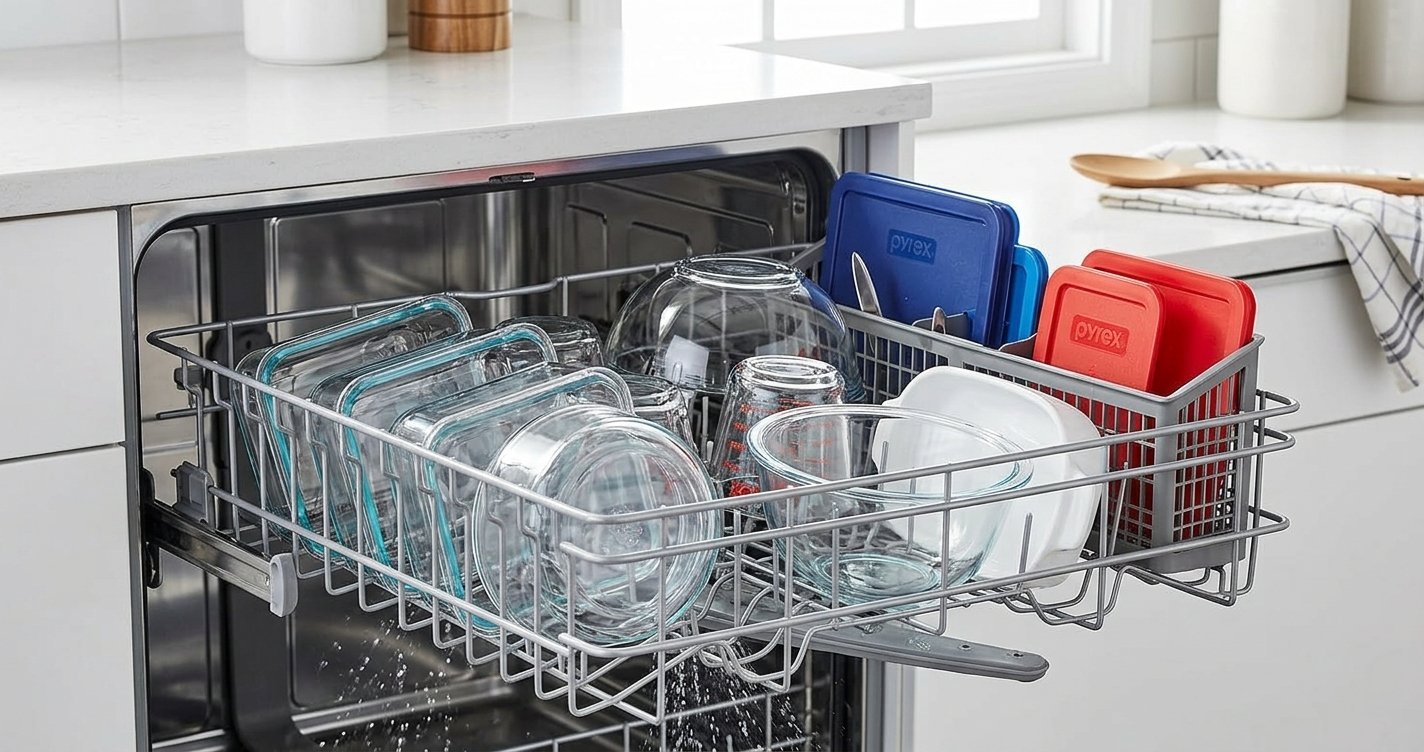
A large plate, pan handle, cutting board, wooden spoon, or another item in the rack can interfere with the dispenser door.
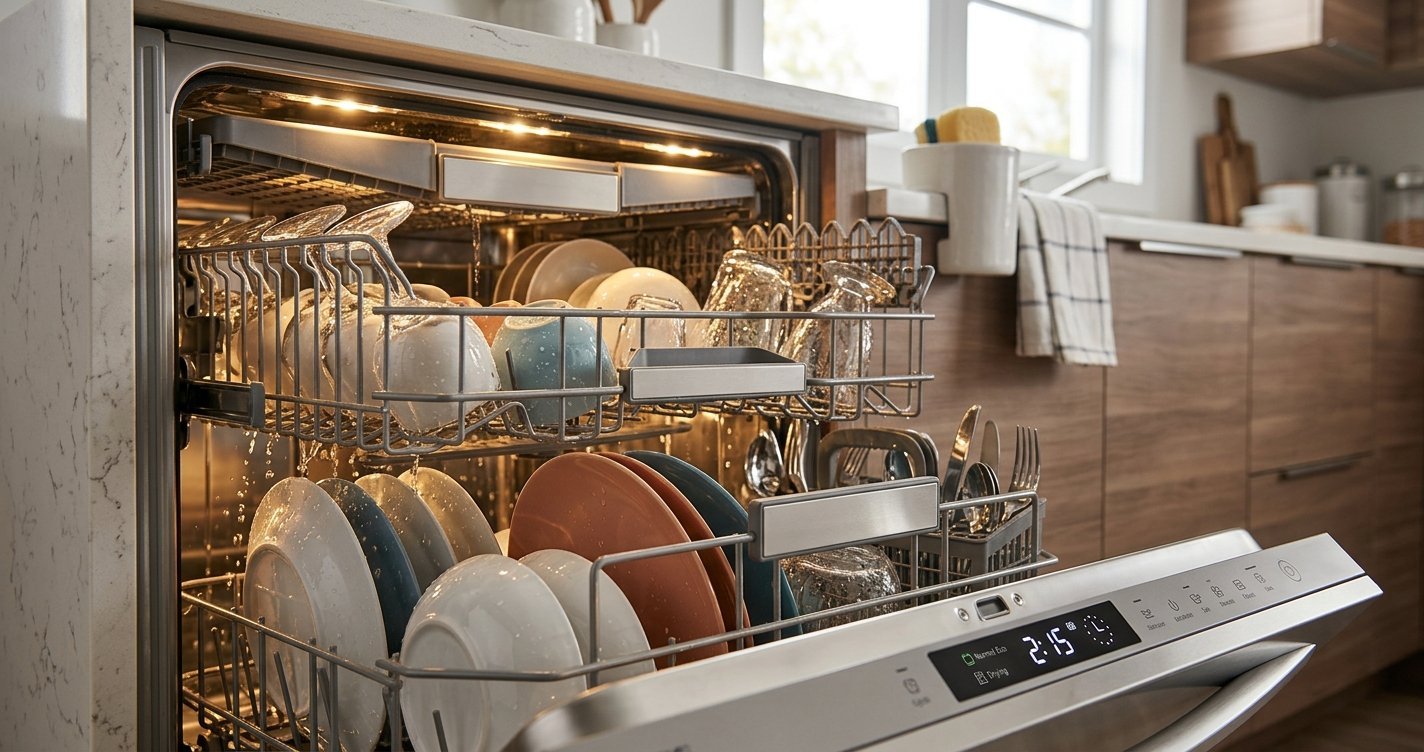
Open the dishwasher and inspect the area around the detergent compartment. Rearrange dishes so nothing touches or presses against the dispenser. KitchenAid specifically recommends checking the lower rack for items that may block the dispenser.
4. The Dispenser Is Dirty
Food particles and detergent residue can accumulate around the dispenser and its moving parts. Regular cleaning can help prevent the lid from sticking.
KitchenAid recommends cleaning the dishwasher approximately every 30 days as part of routine maintenance.
How to Fix a KitchenAid Dishwasher Soap Dispenser That Won’t Close
Try these steps in order:
Step 1: Empty the Dispenser
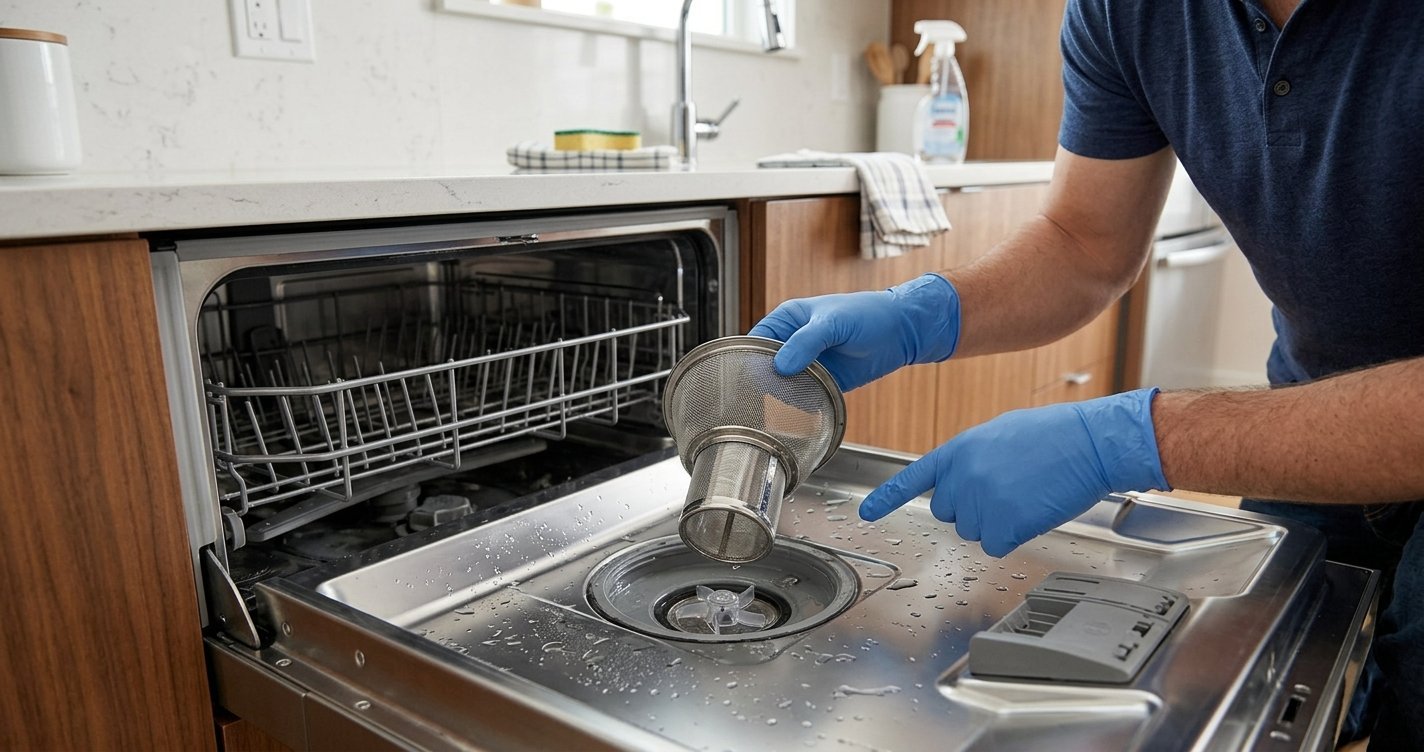
Remove all detergent from the compartment. Check for powder or detergent chunks around the edges, latch, and hinge.
Step 2: Clean the Dispenser
Use warm water and a soft cloth to remove hardened detergent and residue. Avoid forcing the door if it feels stuck.
Allow the compartment to dry completely before adding detergent again.
Step 3: Check the Latch
With the dispenser empty, gently close the lid. It should move smoothly and latch without excessive force. If it still will not latch, inspect the latch and surrounding plastic for cracks, broken pieces, or obvious damage.
Step 4: Check the Dishwasher Rack
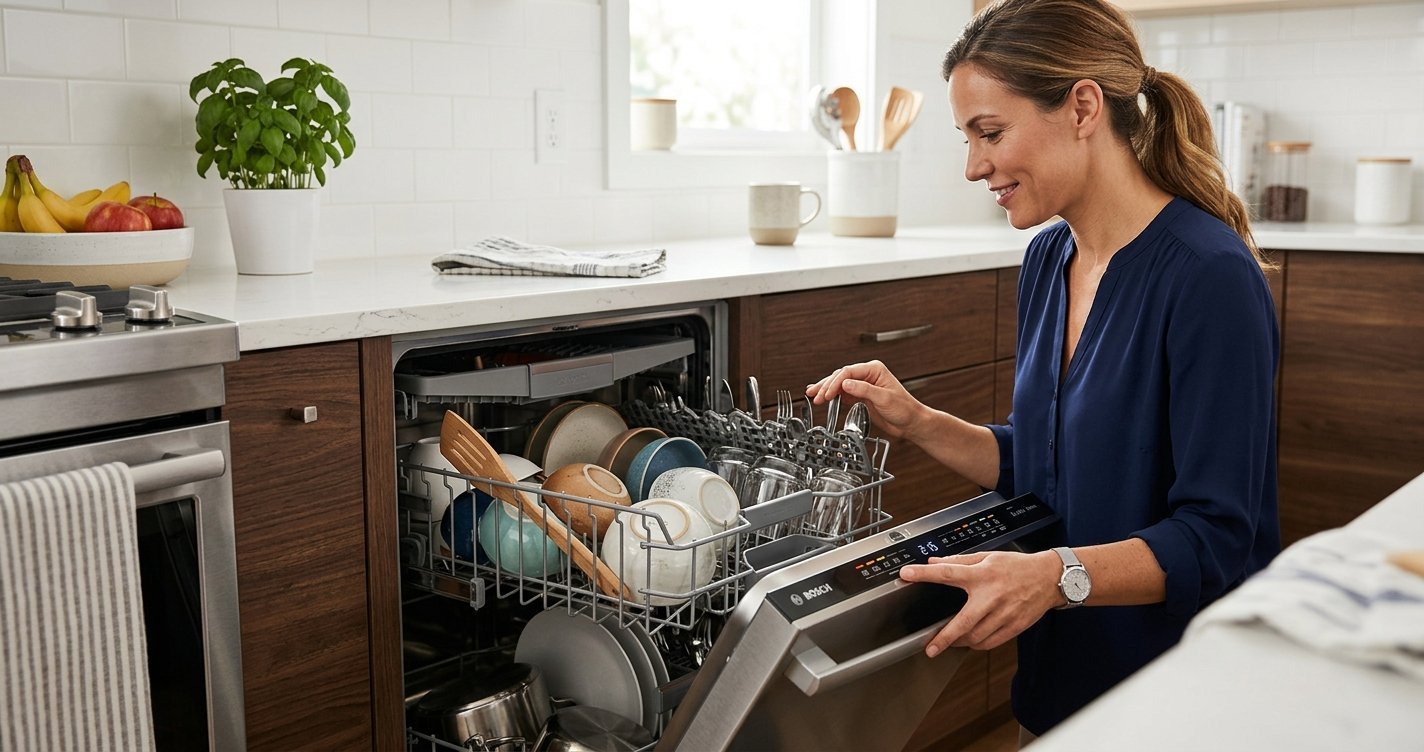
Look at the lower rack and make sure no dishes, utensils, or cookware are pressing against the dispenser.
Also check whether the upper rack is positioned in a way that interferes with the dispenser on your particular model. KitchenAid notes that rack position can affect dispenser operation on some dishwashers.
Step 5: Use Fresh Detergent
If your detergent is old, damp, or clumped, replace it with fresh automatic dishwasher detergent. Store detergent in a tightly closed container in a cool, dry location.
What If the Dispenser Still Won’t Close?
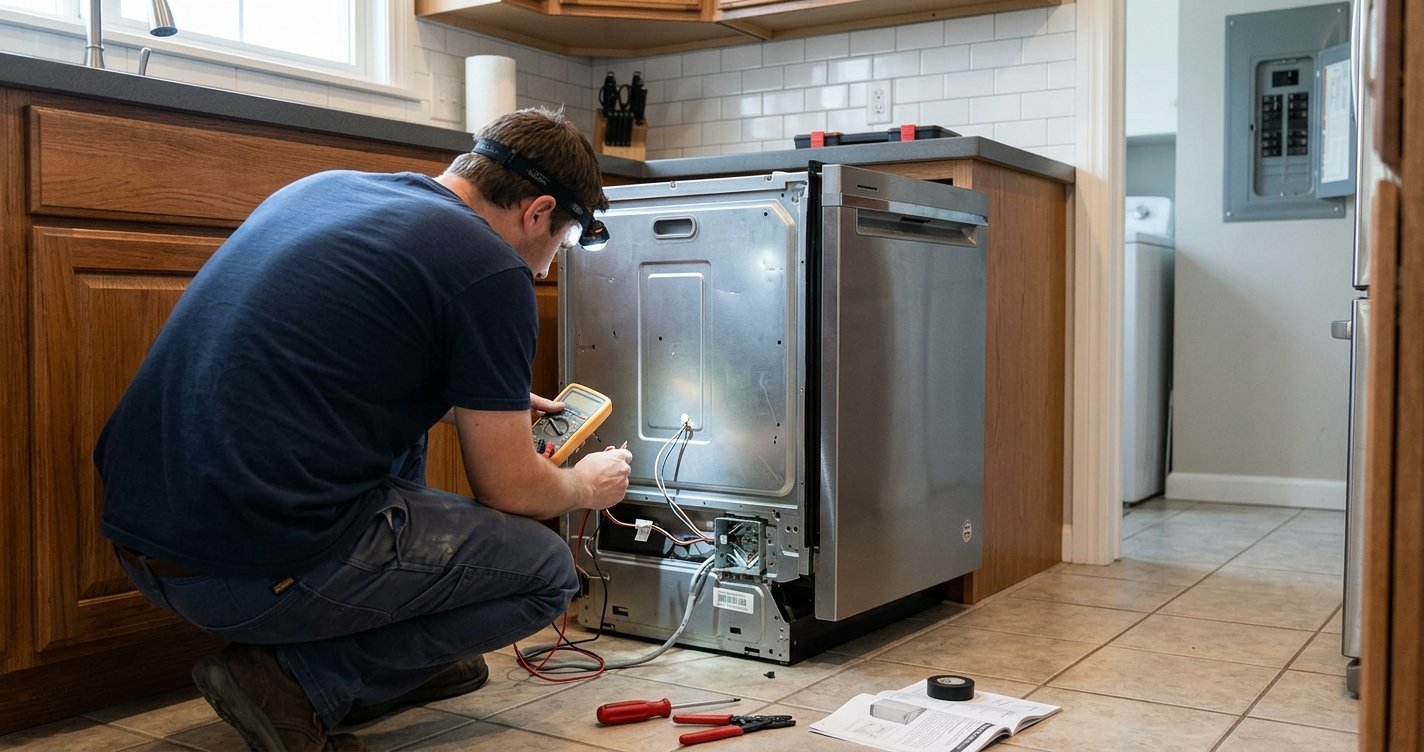
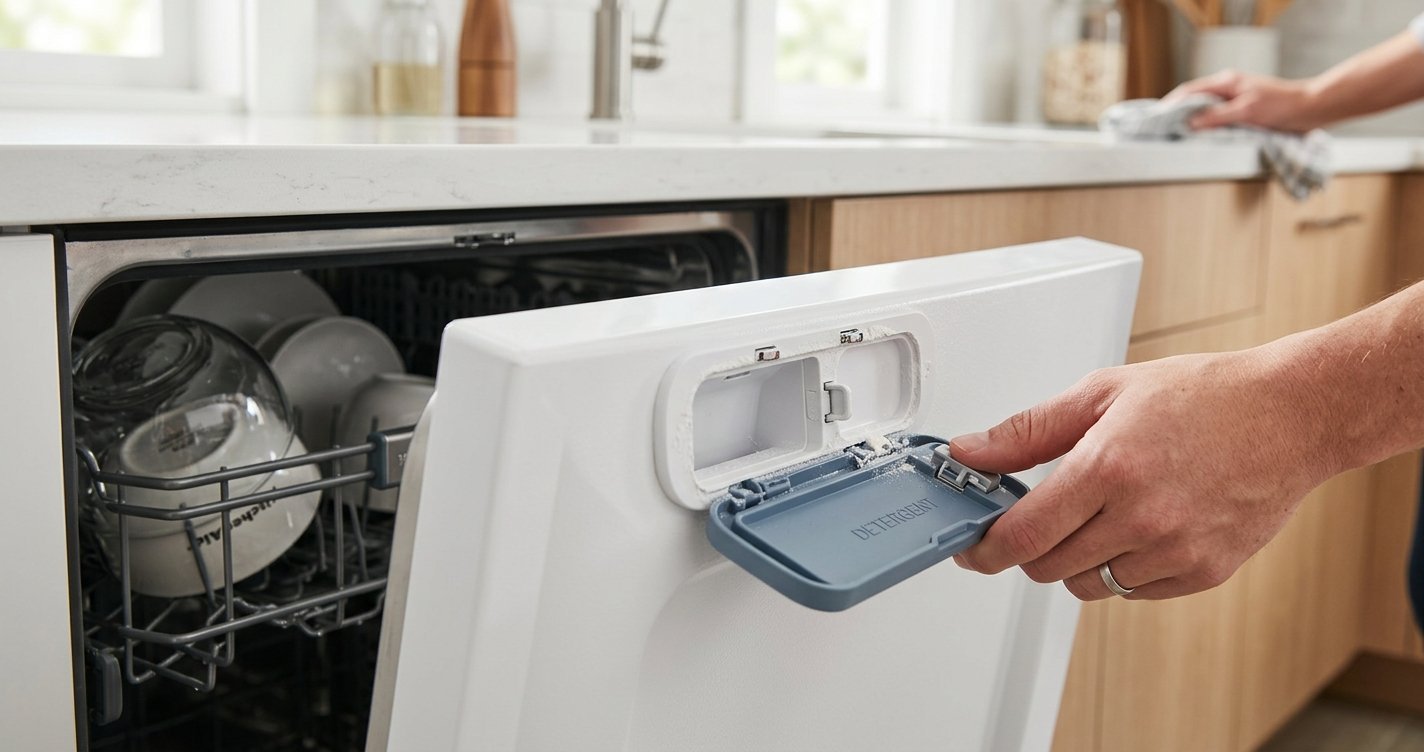
If the dispenser remains open after cleaning and removing obstructions, the dispenser assembly may be damaged. A cracked drawer, broken latch, or damaged dispenser door may require replacement.
KitchenAid states that a broken, cracked, or detached dispenser drawer should be replaced with a part specific to the dishwasher model. Before ordering a replacement, find your dishwasher’s model number and confirm that the replacement dispenser is compatible.
Can You Run the Dishwasher With the Dispenser Open?
It is better to correct the problem before running a normal wash cycle. An improperly closed dispenser may not release detergent as intended, which can affect cleaning performance.
If the dispenser is blocked during a cycle, detergent may remain in the compartment or fail to reach the wash at the proper time. KitchenAid’s troubleshooting guidance recommends checking for dishware blocking the dispenser and ensuring the detergent is fresh and free of lumps.
How to Prevent the Problem
A few simple habits can reduce the chance of the dispenser sticking again:
- Do not overfill the detergent compartment.
- Keep the dispenser clean and dry.
- Use fresh automatic dishwasher detergent.
- Store detergent in a tightly closed container.
- Keep large dishes and cookware away from the dispenser.
- Check the rack arrangement before starting a cycle.
- Clean the dishwasher regularly.
When Should You Replace the Dispenser?
Consider replacing the dispenser if cleaning and removing obstructions do not solve the problem and the lid still will not latch. Visible cracks, a broken latch, or a dispenser door that has come off are signs that the assembly may be damaged. For model-specific instructions, KitchenAid provides dishwasher troubleshooting resources and manuals based on the appliance model.
FAQs
Why won’t my KitchenAid dishwasher soap dispenser close?
The dispenser may not close because of excess detergent, hardened detergent residue, a blocked latch, or a dish interfering with the dispenser door.
How do I fix a KitchenAid dishwasher soap dispenser that won’t latch?
Empty the dispenser and clean away any detergent buildup. Check the latch and make sure no dishes are blocking the dispenser. Then try closing it again gently.
Can too much detergent prevent the dispenser from closing?
Yes. Overfilling the detergent compartment can interfere with the dispenser door and prevent it from latching properly.
Why is detergent stuck inside my KitchenAid dispenser?
Detergent can become damp and harden inside the compartment. Remove the buildup with warm water and a soft cloth, then allow the dispenser to dry before adding fresh detergent.
Can dishes block the KitchenAid detergent dispenser?
Yes. Large plates, pans, utensils, or other items can prevent the dispenser door from opening or closing correctly. Rearrange the rack so nothing presses against the dispenser.
Should I replace the soap dispenser if it won’t close?
If cleaning the dispenser and removing obstructions do not solve the problem, inspect it for a broken latch, crack, or damaged door. A damaged dispenser assembly may need replacement.
Can I run my KitchenAid dishwasher with the dispenser open?
It is better to fix the dispenser first. If it does not close properly, detergent may not be released at the intended point during the wash cycle.
Final Thoughts
A KitchenAid dishwasher soap dispenser that won’t close is often caused by too much detergent, hardened detergent residue, or an obstruction from the dishwasher rack. Start by emptying and cleaning the dispenser, checking the surrounding dishes, and testing the latch.