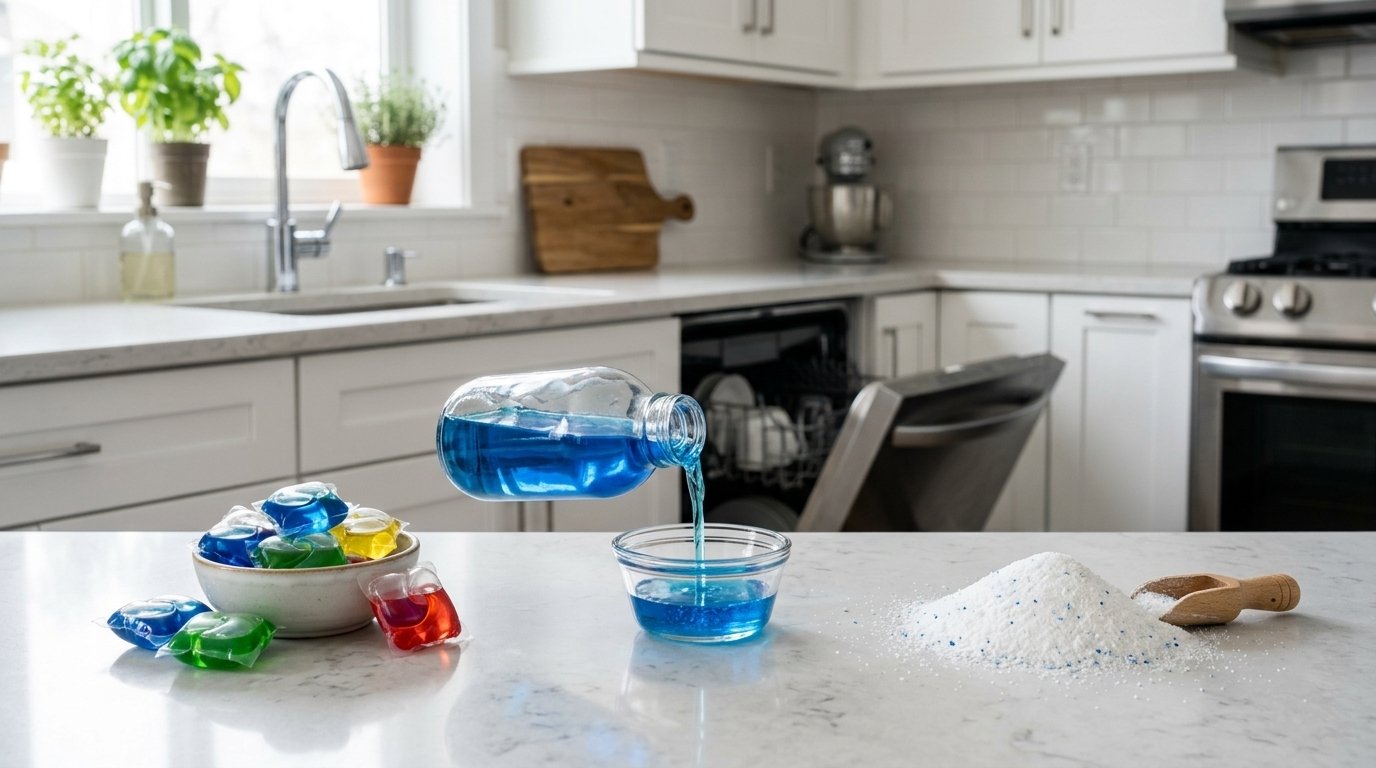
Pods are the best overall choice for most people — pre-measured, convenient, and strong on filming and residue. Powder is the better pick if you have hard water, since it’s typically more effective at removing limescale deposits, streaks, white spots, and cloudiness. Liquid sits in the middle: easy to dose in small amounts and generally the cheapest per load, but slightly less effective than pods at preventing film on glassware.
Read More: 10 Tri-Ply Cookware Care Tips for a Lifetime
Table of contents
Why the Format You Choose Actually Matters
It’s tempting to assume detergent is detergent — but the format changes how well it dissolves, how much you use, and how it performs against your specific water. Water hardness or softness, the type of dishes you’re washing, and your typical wash cycle temperature all interact differently with pods, liquid, and powder, which is why the “best” detergent genuinely depends on your kitchen, not just the brand on the box. (KitchenAid)
Dishwasher Pods
What they are
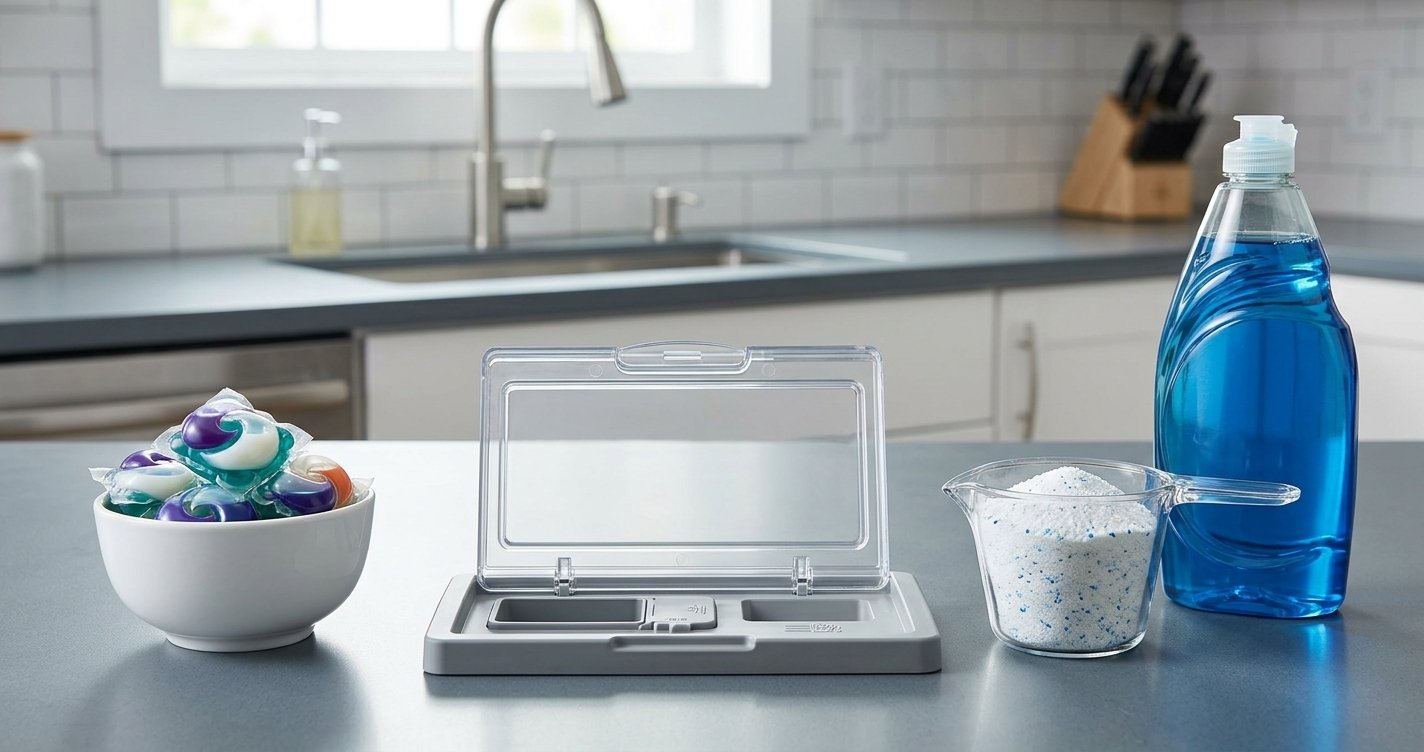
Single-use, pre-measured packets that combine detergent, degreaser, and often rinse aid in one dose.
Pros
- No measuring — drop one in and go.
- Small, pre-dosed, and easy to store without spills or clumping. (Davies Appliance)
- Generally work better than powder, liquid, or gel at reducing filming on dishes. (Whirlpool)
Cons
- Typically more expensive per load than liquid or powder. (Droppe)
- Fixed dose — you can’t use less for a lightly soiled, half-full load.
- Not ideal for hard water on their own; you may still need a rinse aid or water softener.
Best for: busy households that want zero-thought, consistent results on standard loads.
Liquid Dishwasher Detergent
What they are
A pourable gel or liquid measured into the dispenser cup before each cycle.
Pros
- Straightforward to use and ideal for households with busy schedules, with no need to break apart a pod or measure powder precisely. (Droppe)
- Dissolves reliably even in cooler wash cycles.
- Often the cheapest per-load option when bought in bulk.
Cons
- Easy to overpour, which wastes product and can leave residue.
- Most detergents work with most water hardness levels, but liquid isn’t the strongest option specifically for hard water (Whirlpool) — liquid and pod detergents tend to work better with soft water instead (KitchenAid).
Best for: budget-conscious households with soft-to-moderate water who don’t mind a quick pour.
Powder Dishwasher Detergent
What they are
A loose, granulated detergent added to the dispenser cup, often the most old-school of the three formats.
Pros
- Considered the most effective against hard water, cutting through limescale, streaks, and cloudiness better than liquid or pods. (Whirlpool)
- Lets you adjust the amount based on how many dishes or utensils you’re washing, so lightly soiled loads use less product. (Davies Appliance)
- Typically offers more washes per package, making it the most economical option long-term. (Droppe)
Cons
- Doesn’t dissolve well in cold water, so it needs a hotter wash cycle to work properly. (KitchenAid)
- Can be difficult to distribute evenly in the dispenser, and clumps if stored somewhere humid. (Whirlpool)
Best for: hard-water homes and anyone who wants to control exactly how much detergent goes in each load.
Pods vs Liquid vs Powder: Quick Comparison
| Pods | Liquid | Powder | |
| Ease of use | Highest — no measuring | Easy, but can overpour | Requires careful measuring |
| Hard water performance | Moderate | Moderate | Best |
| Cost per load | Highest | Low–moderate | Lowest |
| Cold water dissolving | Good | Good | Poor |
| Best for | Convenience | Budget, soft water | Hard water, control |
How to Choose the Right One for Your Home
- Check your water hardness first. If you see spots on glasses or scale on faucets, lean toward powder or add a dedicated rinse aid to your pods/liquid.
- Think about your wash cycle temperature. If you regularly run cooler or eco cycles, avoid powder — it doesn’t dissolve well in cold water. (KitchenAid)
- Factor in your actual habits. If you’re likely to eyeball a liquid pour or forget to measure powder correctly, a pod removes that guesswork entirely.
- Weigh cost against convenience. Powder is usually cheapest per load; pods cost more but save time and reduce the risk of under- or overdosing.
Frequently Asked Questions
Which is better, dishwasher pods or liquid?
Pods generally outperform liquid at preventing filming and residue, but liquid is cheaper per load and easier to dose down for small loads.
Is powder or liquid detergent better for hard water?
Powder — it’s more effective at cutting through limescale, streaks, and cloudiness caused by hard water than liquid or pod formulas.
Do dishwasher pods work in cold water?
Yes, pods generally dissolve well across wash temperatures, unlike powder, which struggles to dissolve fully in cold cycles.
Is it cheaper to use powder or pods?
Powder is typically the most economical option per load, since packages tend to offer more washes for the price. Pods are the most expensive format but the most convenient.
Can I use liquid detergent instead of pods in any dishwasher?
Yes, virtually all dishwashers accept any of the three formats — the choice comes down to your water hardness, budget, and how much measuring you’re willing to do.
Do I still need a rinse aid if I use pods?
Many pods include a built-in rinse aid, but adding a separate one can still improve drying and reduce spotting, especially in hard-water areas.
Conclusion
There’s no universally “best” format — only the best format for your water and your habits. If your tap water is hard and leaves spots on glasses, powder will outperform the other two. If you want zero-effort consistency and don’t mind paying a bit more, pods are the easiest choice. And if you’re watching your budget with soft-to-moderate water, liquid detergent gets the job done reliably for less. Match the format to your water hardness and wash routine first — the specific brand matters far less than getting that fundamental choice right.