Table of contents
Triply Cookware Care 10: Make Your Pots and Pans Last a Lifetime
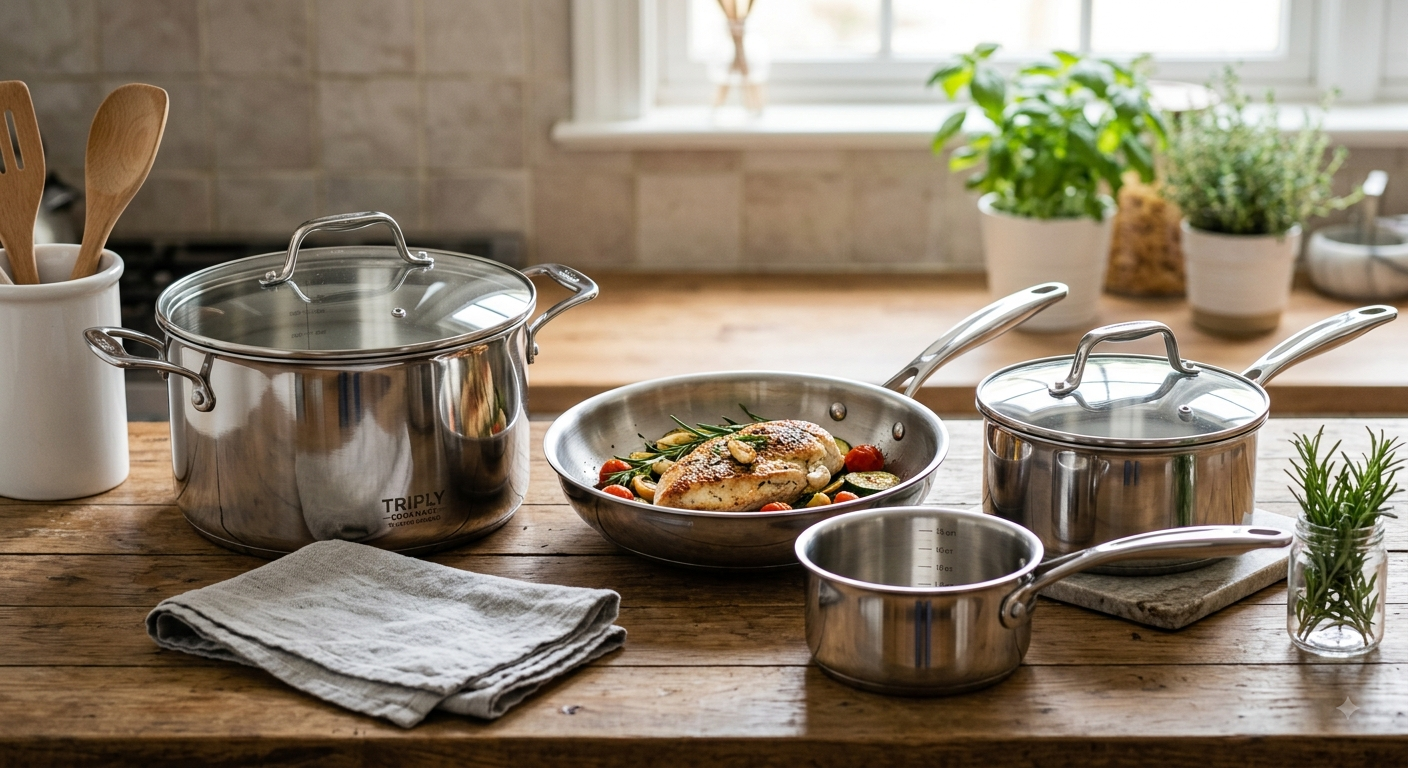
Triply (tri-ply) stainless steel cookware is genuinely built to last decades, but only if you avoid the handful of habits that damage it — steel wool, high heat, harsh abrasive powders, and letting it air-dry. Stick to warm water, mild dish soap, a soft sponge, low-to-medium heat, and immediate drying, and your cookware will keep its shine and performance for years. Stains, water spots, and burnt residue are almost always fixable with vinegar or baking soda rather than a replacement.
Here are the 10 habits that matter most, organized by what you’ll actually run into using tri-ply cookware day to day.
Read More: Copper vs Cast Iron: Which Cookware Wins?
1. Clean After Every Use — Don’t Let Things Sit
Food residue and oil left on the pan for hours become much harder to remove later and can contribute to staining over time. Wash with warm water, a mild dish soap, and a soft sponge or cloth as soon as the pan has cooled enough to handle, as recommended in Allo Innoware’s triply care guide. This single habit prevents most of the buildup that leads to dull, stained cookware down the line.
2. Never Use Steel Wool or Abrasive Scrubbers
This is the single most common way people damage tri-ply cookware. Steel wool, scouring pads, and abrasive powders can leave fine scratches across the stainless steel surface — and while the pan will still function, the scratches dull the finish permanently and make future cleaning harder, since food catches more easily in a roughened surface, per OmiChef’s essential care tips.
Reach for a soft sponge instead. For anything stuck on, soak the pan in warm soapy water for 10–15 minutes before wiping — it loosens far more than scrubbing does.
3. Handle Burnt Food Without Attacking the Pan
Even experienced cooks burn something occasionally. The fix isn’t force — it’s a gentle soak:
- Sprinkle baking soda over the burnt area.
- Add a small amount of water and bring it to a simmer on the stove.
- Let it cool, then scrub gently with a soft sponge.
For deeper burnt-on residue, boiling plain water in the pan for a few minutes before this step helps lift stuck food further, making the baking soda pass much easier — a method detailed in OmiChef’s cookware cleaning guide.
4. Fix Stains and Discoloration With Vinegar or Baking Soda
Tri-ply cookware sometimes develops pale white patches (usually mineral buildup from hard water) or faint rainbow-like discoloration (usually from prolonged high-heat cooking). Both are cosmetic, not damage, and both respond to the same simple fix:
- For mineral/water stains: boil a mixture of water and vinegar in a roughly 3:1 ratio in the pan, let it cool, then wash as usual, as outlined in Maxima Kitchenware’s cleaning guidelines.
- For general dullness or light stains: make a paste of baking soda and a little water, apply it to the spot, let it sit a few minutes, then scrub gently with a soft sponge.
Avoid bleach-based cleaners on stainless steel — they can react with the metal and contribute to pitting rather than fixing the discoloration, according to OmiChef’s guide on cleaning mistakes to avoid.
5. Dry Immediately — Don’t Air-Dry
Stainless steel that air-dries is prone to water spots from mineral deposits left behind as the water evaporates. They’re not harmful, but they dull the pan’s finish over time if left repeatedly. Dry cookware with a clean towel immediately after washing and rinsing — it takes seconds and keeps the surface looking new far longer.

🛠️ Recommended: Omichef Cookware
Omichef’s triply cookware uses high-quality stainless steel. Its professional-grade build and polished finish help it resist wear. Omichef provides reliable, chef-quality tools for your kitchen. Whether you’re upgrading your essentials or starting fresh, you can trust them.
6. Cook on Low-to-Medium Heat, Not High
One of the main advantages of tri-ply construction is even, efficient heat distribution — the aluminum core spreads heat across the whole cooking surface rather than concentrating it in one spot, which is why The Indus Valley’s guide to avoiding stains recommends preheating on moderate rather than high heat. That means you rarely need high heat to get the results you want. Cranking the flame up anyway is one of the more common causes of discoloration and can shorten the cookware’s lifespan over time. Preheating on moderate heat before adding food, rather than starting on high, also helps prevent sticking.
7. Season Your Pan for a Semi-Nonstick Surface
Seasoning isn’t just for cast iron — it works on stainless steel tri-ply too, and it’s especially useful if you cook a lot of protein (eggs, fish, meat) that tends to stick.
- Heat the pan until warm (not smoking).
- Add a few drops of a high-smoke-point oil, such as grapeseed or avocado oil.
- Spread the oil around and let it heat until it shimmers.
- Remove from heat and wipe off the excess with a paper towel.
Repeating this every few uses gradually improves the pan’s release properties without any coating or chemicals.
8. Store It Properly to Avoid Scratches
Stacking cookware directly on top of each other is one of the most overlooked causes of surface scratches. If you need to stack:
- Place a soft cloth, paper towel, or dedicated pan protector between each piece, a tip echoed in Allo Innoware’s storage advice.
- Store cookware in a dry area to prevent moisture buildup, which can eventually lead to rust or corrosion around joints and rivets.
- If you have the space, hanging pots and pans on hooks or a rail avoids stacking altogether and keeps pieces fully separated, as suggested by OmiChef.
9. Use the Right Utensils
Metal utensils — especially metal spatulas and whisks used aggressively — can scratch the interior cooking surface over repeated use. Wooden or silicone utensils are the safer everyday choice and won’t wear down the finish the way metal edges can, per Omichef’s step-by-step cleaning guide.
10. Know When to Hand-Wash vs. Dishwasher
Most tri-ply cookware is labeled dishwasher-safe, but hand-washing is still the gentler option and tends to preserve the shine and finish longer, especially on higher-end pieces — a point OmiChef makes explicitly when comparing hand-washing to long dishwasher cycles. If you do use the dishwasher occasionally, avoid letting cookware sit through long dishwasher cycles or soak for extended periods, and dry it by hand afterward rather than relying on the dishwasher’s dry cycle, which can contribute to water spotting.
Frequently Asked Questions
How often should I deep clean my triply cookware?
For regular home use, a deep clean with vinegar or baking soda every couple of weeks is enough to remove hidden buildup and keep pans performing well — daily washing handles everyday surface dirt in between, per OmiChef’s cleaning guide.
Why does my triply pan have rainbow-colored discoloration?
This is typically caused by cooking on high heat for extended periods. It’s cosmetic and can usually be improved with a baking soda or vinegar cleaning, and largely prevented by cooking on lower heat going forward.
Can I use steel wool on triply cookware if the stains are really tough?
It’s best to avoid it entirely. Steel wool scratches the stainless steel surface permanently, and there’s almost always a gentler fix — soaking, vinegar, or baking soda — that resolves even stubborn stains.
Is triply cookware actually dishwasher-safe?
Most triply cookware can technically go in the dishwasher, but hand-washing is gentler and better preserves the shine and finish over the long term, especially for cookware you plan to keep for years.
What causes white or pale patches on stainless steel cookware?
This is usually mineral buildup from hard water. Boiling a water-and-vinegar mixture in the pan and then washing as normal typically clears it.
Does triply cookware really last a lifetime?
With proper care — gentle cleaning tools, moderate heat, prompt drying, and careful storage — tri-ply stainless steel cookware is genuinely built to perform well for decades, which is a large part of its appeal over cookware with nonstick coatings that wear out.
The Bottom Line
Tri-ply cookware is designed to outlast almost everything else in your kitchen. Still, longevity depends on avoiding a short list of habits: abrasive scrubbers, high heat, air-drying, and careless stacking. Swap those for a soft sponge, moderate heat, immediate drying, and a little padding between stacked pans, and there’s no real reason your cookware shouldn’t still be performing exactly as well ten or twenty years from now.