A dishwasher cleans your dishes every day, but over time, food particles, grease, mineral deposits, and unpleasant odors can build up inside the appliance. Regular cleaning helps keep the dishwasher fresh and allows it to work efficiently.
Two common household ingredients—white vinegar and baking soda—can be useful for routine dishwasher cleaning. Vinegar can help loosen mineral deposits and residue, while baking soda can help neutralize odors and remove light grime.
Read More: How to Start a Bosch Dishwasher
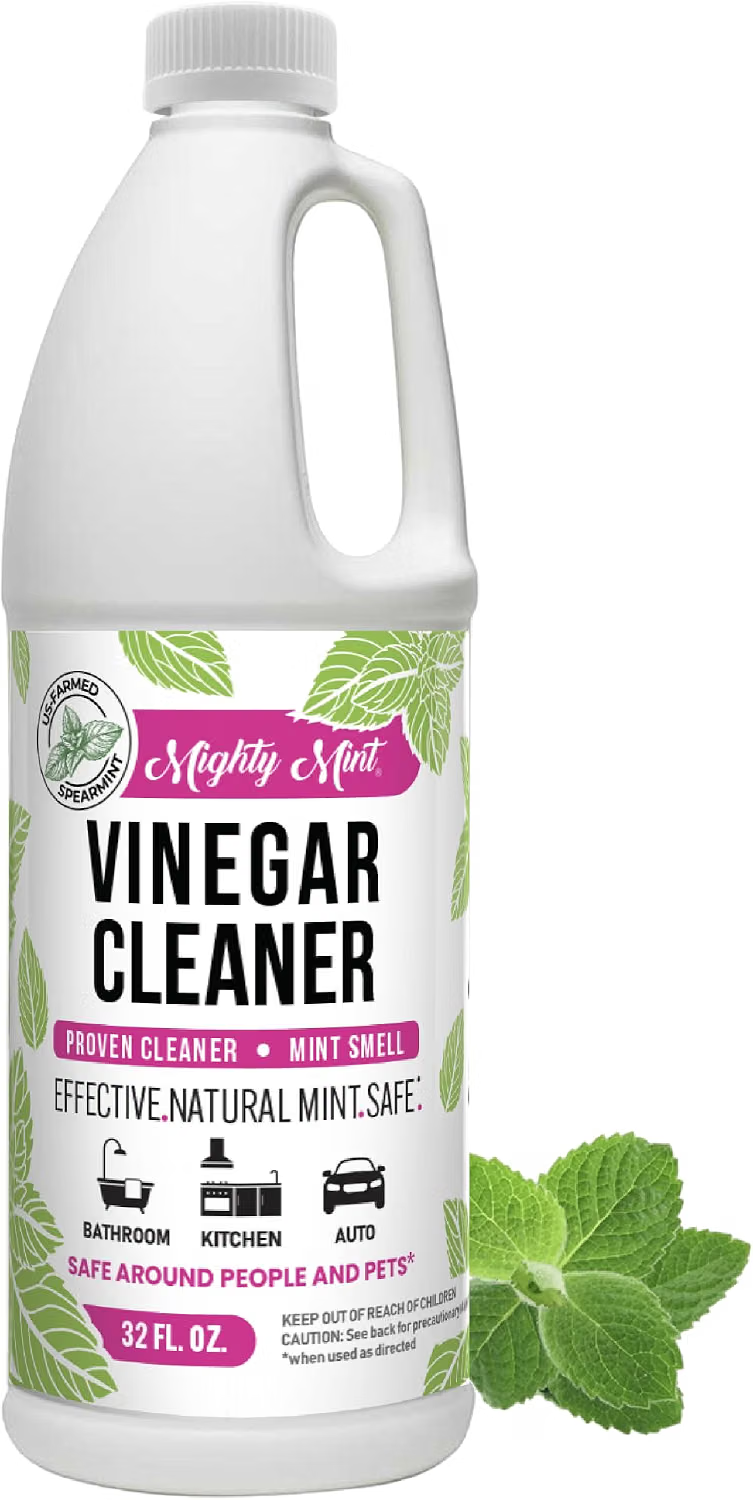
Table of contents
Why Clean Your Dishwasher?
Even though a dishwasher constantly uses water and detergent, its interior does not automatically stay clean. Food debris can collect around the filter, spray arms, door seals, and bottom of the tub.
A dirty dishwasher may develop:
- Unpleasant or musty odors
- Greasy or cloudy residue
- Mineral buildup
- Food particles around the filter
- Reduced cleaning performance
Cleaning the appliance periodically can help prevent these problems.
What You’ll Need
Before starting, gather:
- 1 cup of plain white vinegar
- About 1/2 cup of baking soda
- A soft cloth or sponge
- An old toothbrush or small soft brush
- Warm water
- Dishwashing gloves, if preferred
Check your dishwasher’s manufacturer’s instructions before using vinegar or any other cleaning substance. Some manufacturers advise against vinegar because its acidity may affect certain rubber components or finishes with repeated use.
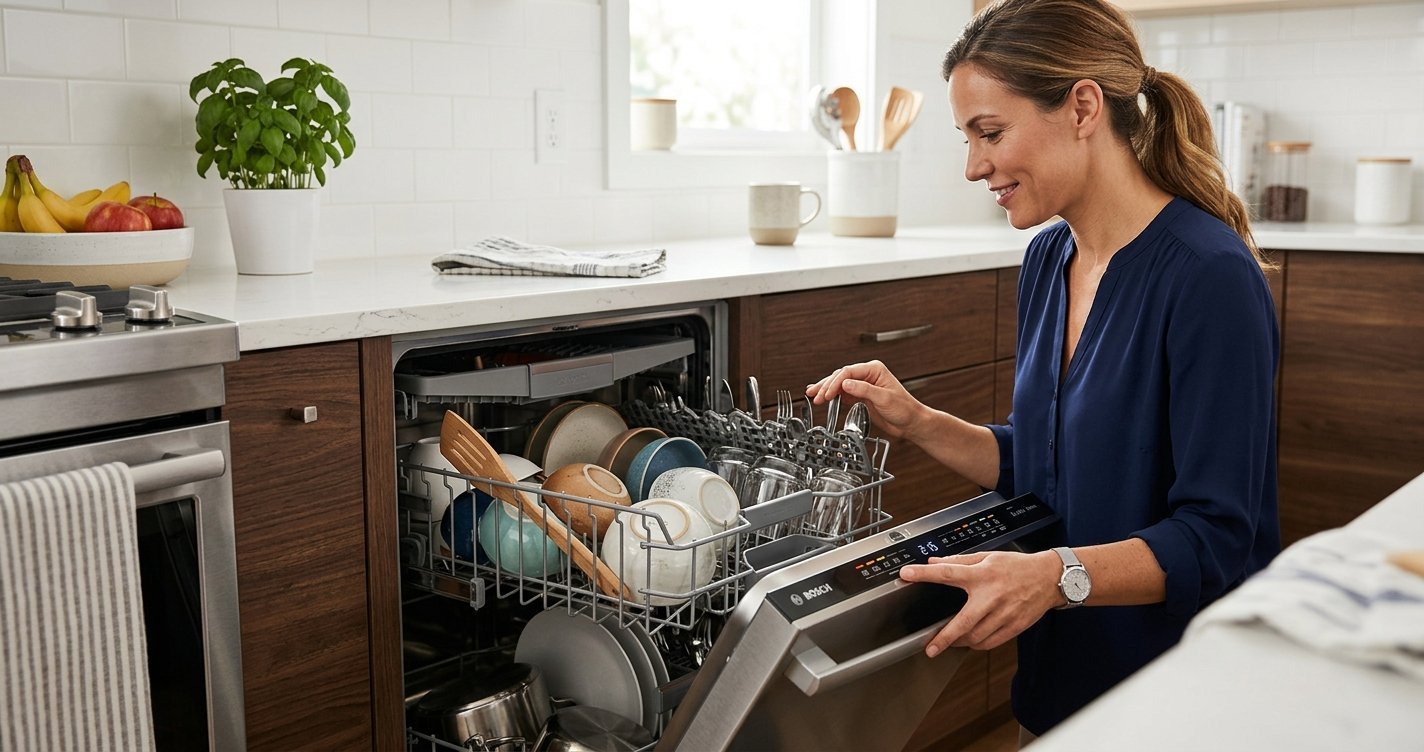
Step 1: Empty the Dishwasher
Remove all dishes, utensils, and racks that can be taken out easily. Cleaning an empty dishwasher allows the cleaning solution to reach the interior surfaces more effectively.
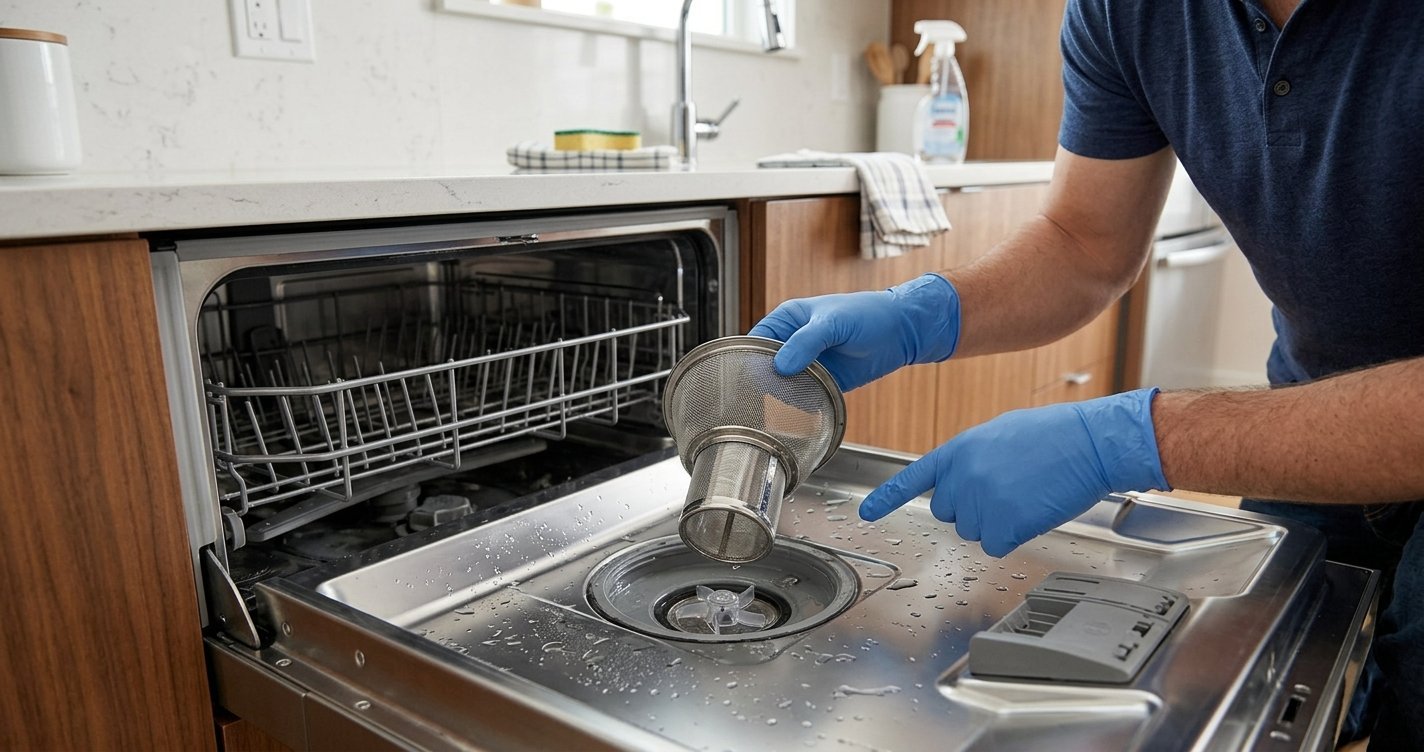
Step 2: Clean the Filter
The filter is one of the most important areas to clean because it catches food particles and debris.
Remove the filter according to your dishwasher’s instructions. Rinse it under warm running water and gently scrub away stuck-on residue with a soft brush.
Avoid using a hard brush that could damage the filter.
While the filter is removed, wipe away any visible food debris from the area around it.
Step 3: Wipe the Door and Seals
Use a damp cloth or sponge to wipe the inside of the dishwasher door. Pay particular attention to the edges and rubber door seal, where grease and food residue can accumulate.
For stubborn residue, use warm water and a soft toothbrush to gently clean around crevices.
Step 4: Run a Vinegar Cleaning Cycle
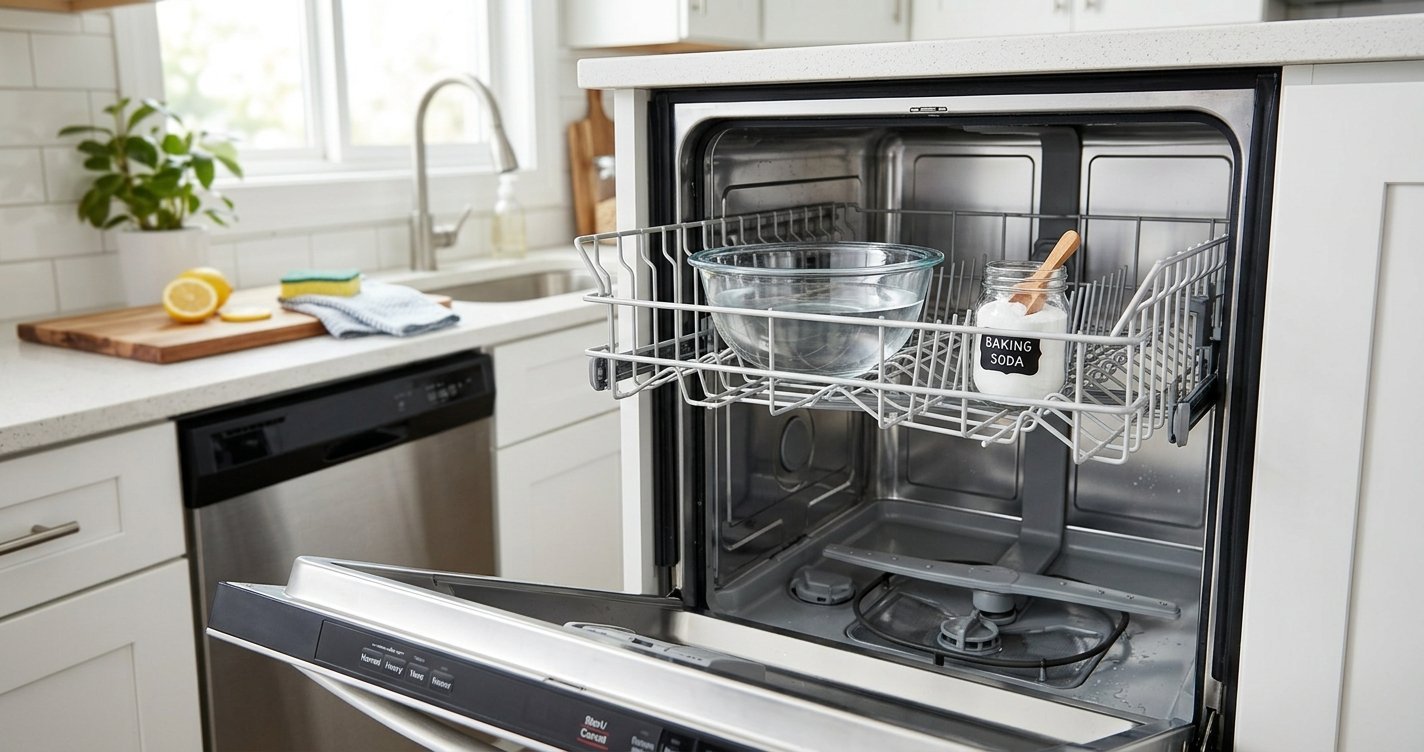
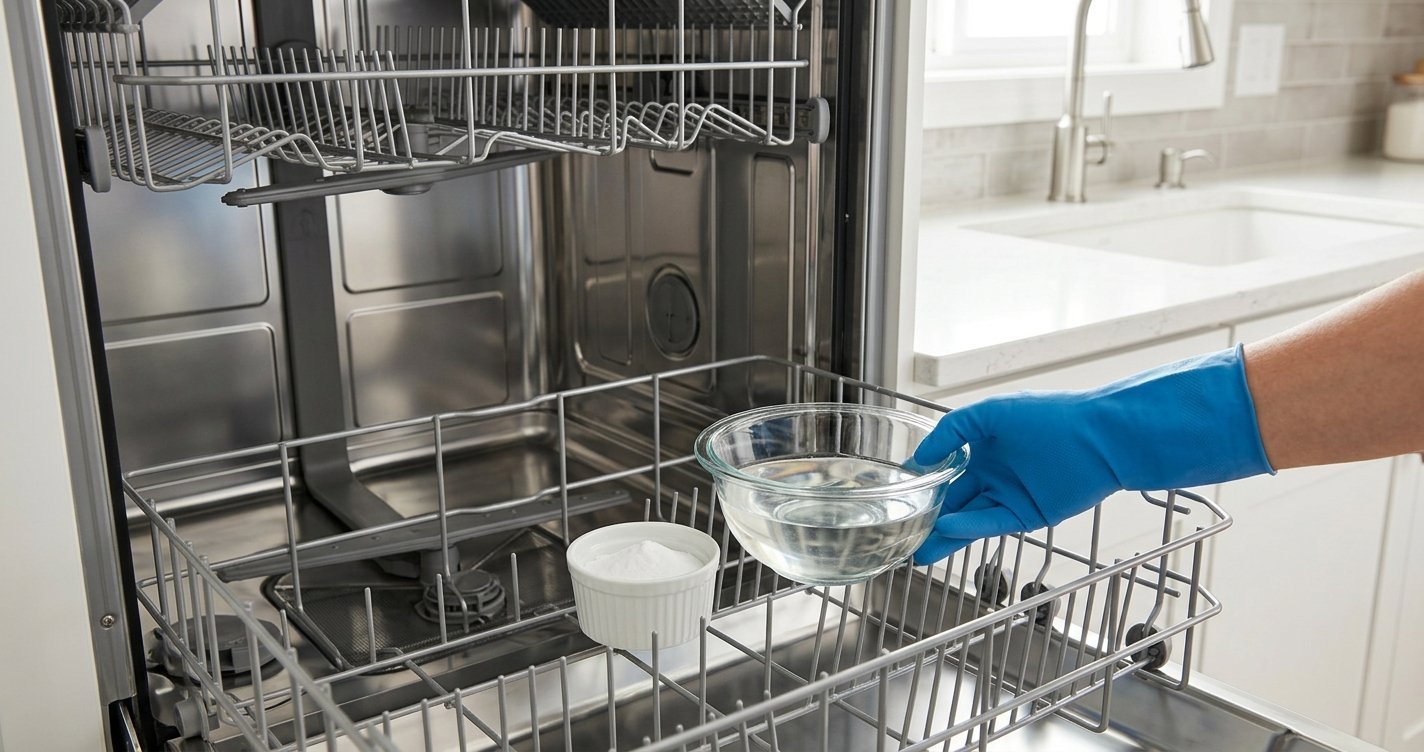
Place 1 cup of plain white vinegar in a dishwasher-safe container and put the container on the upper rack.
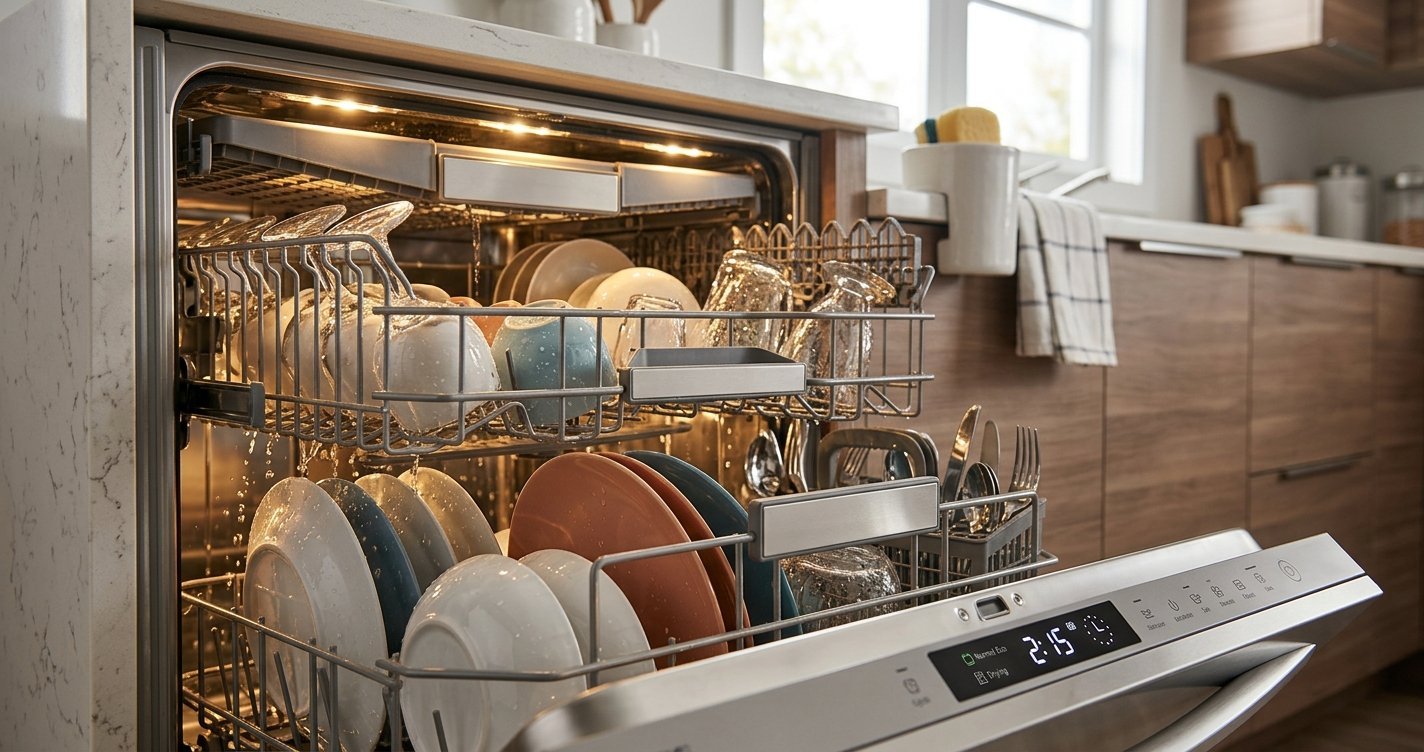
Run the dishwasher on a hot or normal cleaning cycle without dishes or detergent.
The vinegar solution can help loosen mineral deposits, grease, and other residue inside the dishwasher.
Do not pour vinegar directly into the detergent dispenser unless your dishwasher’s instructions specifically recommend doing so.
Step 5: Use Baking Soda
After the vinegar cycle has finished, sprinkle approximately 1/2 cup of baking soda across the bottom of the empty dishwasher.
Run a short or normal cycle using hot water.
Baking soda can help absorb odors and freshen the dishwasher while gently addressing remaining residue.
Important: Don’t Mix Vinegar and Baking Soda Together
Although vinegar and baking soda are both useful household cleaning ingredients, mixing them together causes an acid-base reaction that produces carbon dioxide bubbles and largely neutralizes the two substances.
For dishwasher cleaning, it is generally more useful to use them separately: vinegar in one cycle and baking soda in another.
Never mix either ingredient with chlorine bleach or other cleaning chemicals.
How Often Should You Clean a Dishwasher?
The ideal cleaning schedule depends on how frequently you use the dishwasher and how much food residue enters it.
As a general routine:
- Clean the filter: Check it regularly and clean it when food debris is visible.
- Wipe the door seal: Every few weeks or whenever residue appears.
- Deep-clean the dishwasher: About once a month or as needed.
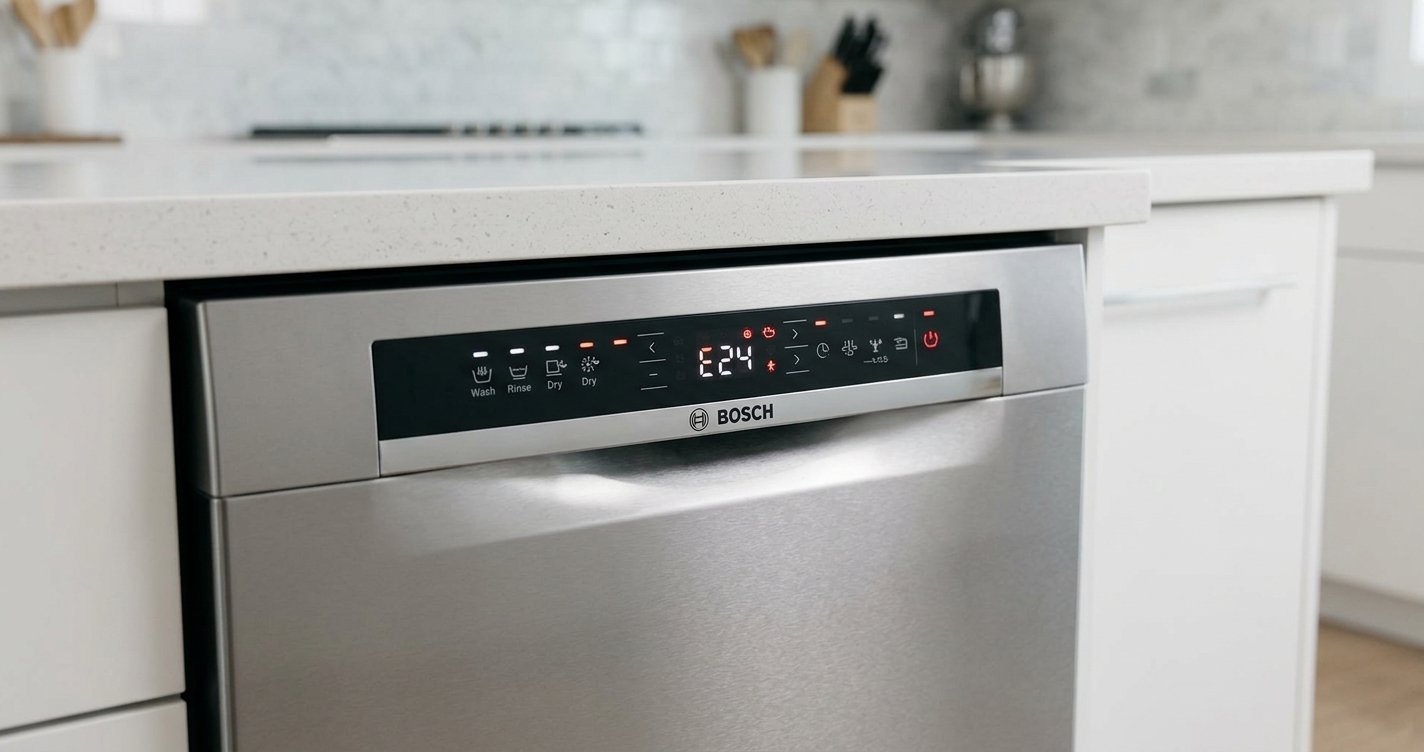
- Clean more frequently: If you notice persistent odors, visible buildup, or reduced cleaning performance.
Your dishwasher’s owner’s manual should take priority over general cleaning recommendations.
Other Ways to Keep Your Dishwasher Clean
Vinegar and baking soda are only part of good dishwasher maintenance. You can also:
- Scrape large food particles from dishes before loading them.
- Avoid overcrowding the racks.
- Keep the filter clean.
- Check the spray arms for blocked holes.
- Wipe the door gasket periodically.
- Use the appropriate dishwasher detergent and amount recommended by the manufacturer.
- Leave the door slightly open after a cycle, when appropriate, to allow the interior to dry.
Frequently Asked Questions
Can I put vinegar and baking soda in the dishwasher at the same time?
It is better to use them separately. When combined, vinegar and baking soda react immediately, reducing the properties that make each ingredient useful on its own.
Will vinegar remove hard-water buildup?
Vinegar’s acidity can help loosen some mineral deposits associated with hard water. However, significant buildup may require a dishwasher cleaner specifically designed for the appliance.
Can baking soda remove dishwasher odors?
Baking soda can help neutralize odors and freshen the interior. If a strong smell continues after cleaning, inspect the filter, drain area, door seal, and other areas for trapped food or standing water.
Can I use apple cider vinegar instead?
Plain white vinegar is generally preferable because it is clear and does not contain the coloring or additional compounds found in some other types of vinegar.
Final Thoughts
Cleaning your dishwasher does not have to be complicated. Removing debris, cleaning the filter and seals, and periodically running an appropriate cleaning cycle can help keep the appliance fresh.
If your dishwasher manufacturer permits vinegar use, white vinegar followed by a separate baking soda cycle can be a simple option for routine maintenance. Always follow the appliance manufacturer’s care instructions, particularly regarding vinegar, because repeated use may not be suitable for every dishwasher.