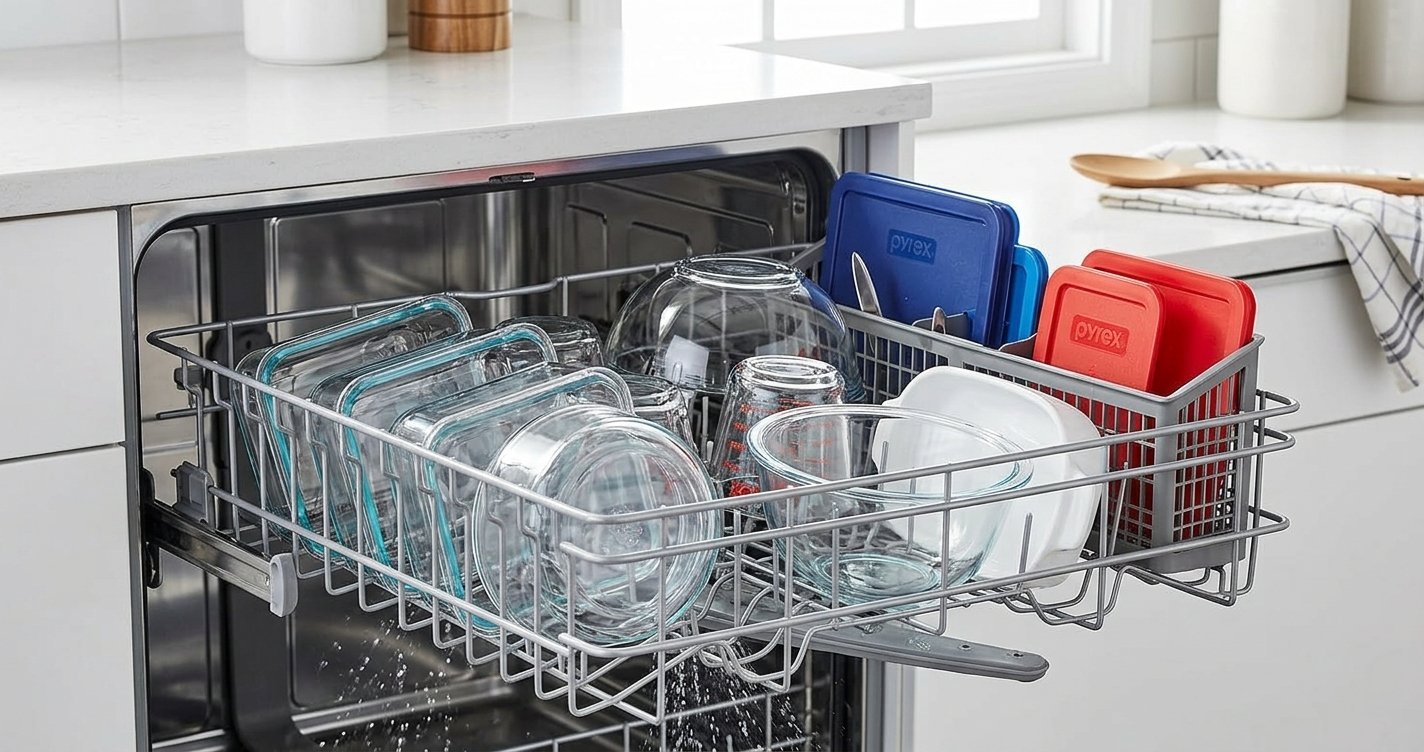
A third rack dishwasher has a slim, sliding tray at the very top of the tub, above the standard upper rack, designed to hold flatware, small utensils, and other flat or awkward items. It’s worth the extra cost for most households, especially larger ones or anyone who cooks often — it frees up bottom-rack space by replacing the silverware basket, improves cutlery cleaning by preventing nesting, and increases total capacity by roughly 30%. It’s less essential if you rarely fill your dishwasher or mainly wash simple loads of plates, cups, and a few utensils.
Read More: Bosch Dishwasher E07 Error: What It Means & Fixes
Table of contents
What Is a Third Rack in a Dishwasher?
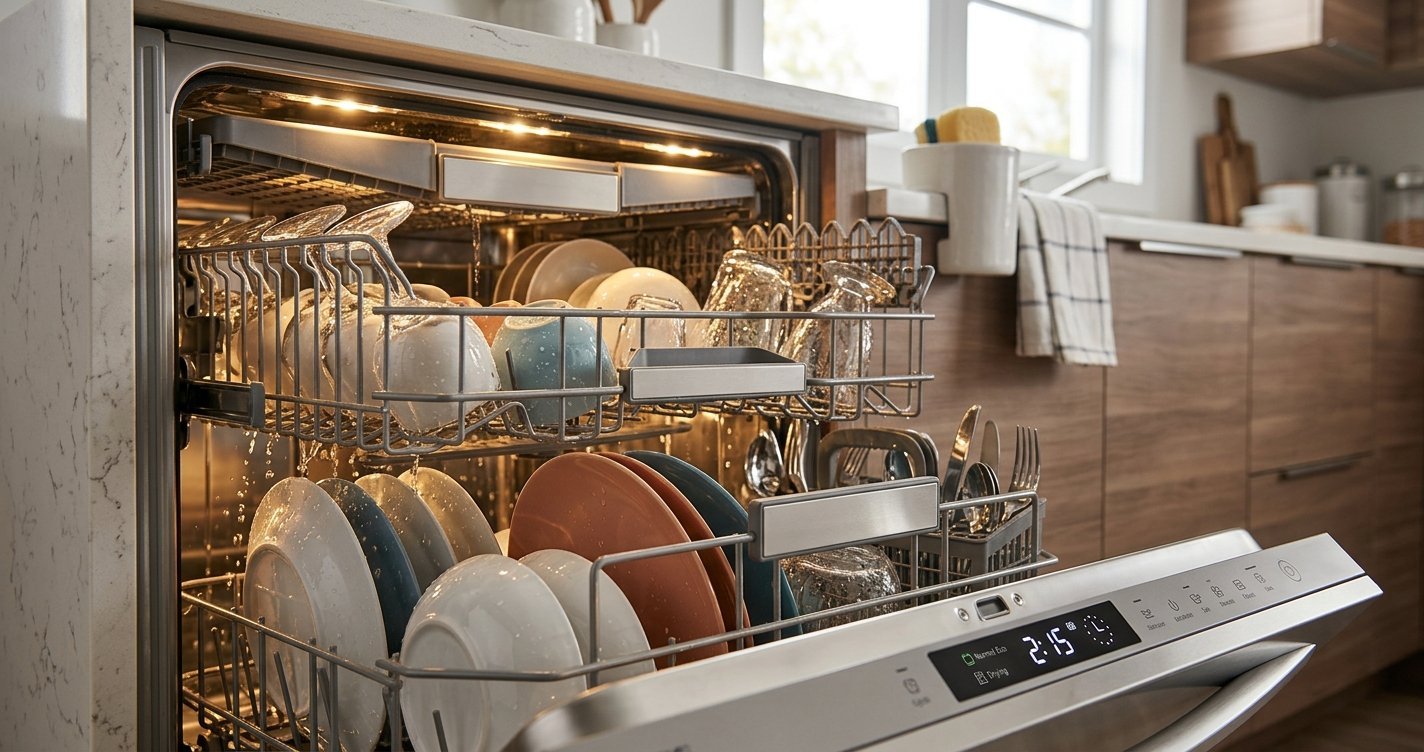
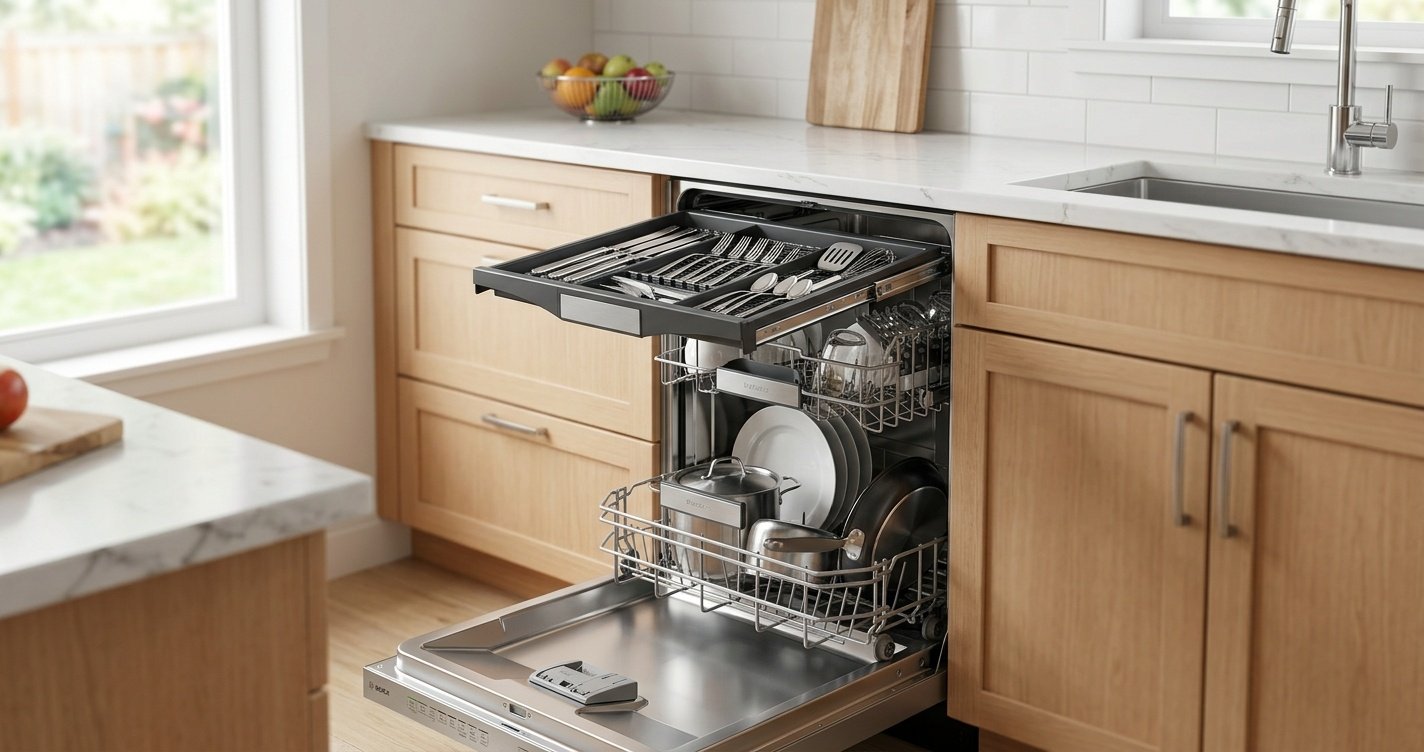
A third rack is an additional shallow tray positioned above the traditional top rack, turning a standard two-level dishwasher into a three-tier design. Unlike the two main racks — which handle plates, bowls, glasses, and cookware — the third rack is built specifically for flat, small, or oddly shaped items that don’t sit well anywhere else: flatware, spatulas, serving utensils, small lids, and measuring cups.
The typical layout looks like this:
- Top rack (traditional): cups, bowls, and glasses.
- Bottom rack: plates, pots, and larger cookware.
- Third rack (new top tier): flatware, utensils, and small flat items.
Third racks have existed since roughly the mid-2000s, though Miele reportedly patented an early version back in the late 1980s. They’ve since evolved from shallow trays built purely for cutlery into deeper designs that can also hold small bowls, wide spatulas, and soup ladles, depending on the model.
Types of Third Racks
Not every third rack is designed the same way, and the type matters for how useful it actually is:
Standard flat tray:
A fixed, narrow tray with slots designed specifically for forks, knives, and spoons. Common on entry-level models, but limited for anything thicker.
Adjustable third rack:
Sections that fold, slide, or move to accommodate taller utensils, mugs, or tools — more versatile for mixed loads.
Deep third rack:
Has enough clearance for small bowls, measuring cups, or wide spatulas, not just flatware.
Specialized/spray-zone racks:
Some higher-end models add dedicated spray jets aimed at the third rack for a more thorough clean on the items placed there.
If you’re comparing dishwashers, checking which type of third rack a model has matters more than simply confirming that “it has one.”
Pros of a Third Rack Dishwasher
More total capacity.
Moving flatware off the bottom rack (where a silverware basket usually sits) frees up meaningful space for plates, pots, and pans — some manufacturers cite roughly 30% more usable loading space.
Better cutlery cleaning.
In a traditional silverware basket, utensils often nest together — two spoons stacking face to face, for example — which blocks water from reaching the dirty surfaces. A third rack’s individual slots keep each piece separated and fully exposed to the spray, which is why several brands report noticeably cleaner flatware with this design.
Improved organization.
Small items like lids, baby bottle caps, and measuring tools have a dedicated, secure spot instead of falling through the main racks or getting lost among plates.
Fewer total loads.
With more usable space throughout the dishwasher, larger households or people who cook frequently often need to run the dishwasher less often, which can also reduce total water and energy use over time.
No loss of practical space for tall items.
Most modern third-rack dishwashers pair the extra tier with an adjustable middle rack, so you can still lower or raise it to fit tall glasses or a large stockpot when needed.
Cons of a Third Rack Dishwasher
Higher upfront cost.
Third-rack models are generally priced higher than comparable two-rack dishwashers, since the feature typically appears on mid-range and premium models.
Reduced vertical clearance.
The extra tier does take up some of the dishwasher’s interior height, so very tall items in the middle rack may need to be rearranged or removed before a wash.
Not all third racks clean equally well.
On budget models without dedicated spray jets, items on the third rack sometimes don’t get cleaned as thoroughly as items on the main racks — worth checking reviews for your specific model before assuming performance parity.
Can slow down loading for some households.
If you’re used to simply dropping a handful of silverware into a basket, sorting individual pieces into a third rack’s slots takes a bit more time and habit-building.
Overkill for simple loads.
If your typical wash is just a handful of plates, cups, and a few forks, the added capacity and organization may not translate into a meaningful day-to-day benefit.
Who Actually Needs a Third Rack?
- Larger households or families who regularly run full loads benefit the most from the added capacity and reduced need for extra cycles.
- People who cook often and use a lot of spatulas, ladles, measuring cups, and other odd-shaped tools will appreciate having a dedicated, well-fitting spot for them.
- Anyone frustrated by nested, poorly cleaned silverware in a traditional basket will likely notice an immediate improvement.
- Light dishwasher users — those washing small loads a few times a week — may not get enough day-to-day value to justify paying more for the feature.
How to Load a Third Rack Dishwasher Properly
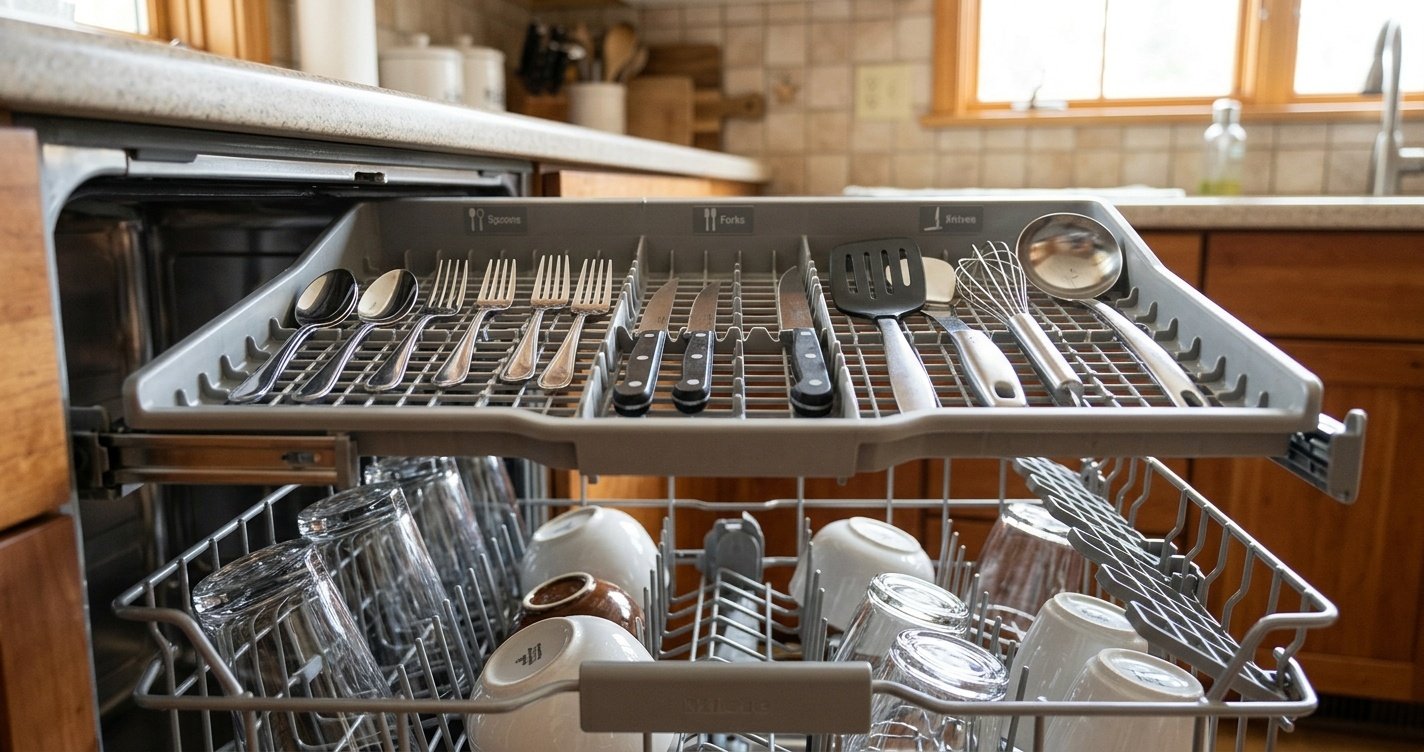
- Place flatware in individual slots on the third rack rather than clustering pieces together, so water reaches every surface.
- Use the freed-up bottom rack space for larger cookware, mixing bowls, and baking sheets that previously competed with a silverware basket.
- Adjust the middle rack up or down depending on whether you need clearance for tall stemware or a large pot on the bottom.
- Reserve the third rack for flat or small items — spatulas, ladles, lids, and measuring tools — rather than trying to fit bulkier dishware up there.
- Check your model’s spray coverage for the third rack; if it lacks dedicated jets, avoid stacking items too closely, since coverage can be less thorough than on the main racks.
Frequently Asked Questions
What is the third rack in a dishwasher for?
It’s a shallow, sliding tray at the top of the dishwasher designed to hold flatware, small utensils, and other flat items, freeing up the bottom rack for larger cookware.
Is a third rack dishwasher worth the extra cost?
For most households, yes — especially larger families or frequent cooks who benefit from the added capacity and better cutlery cleaning. If you rarely fill your dishwasher, the upgrade may be nice to have rather than essential.
Does a third rack reduce space for other dishes?
Not typically. Most third-rack dishwashers pair the extra tier with an adjustable middle rack, so you can still make room for tall glasses or large pots when needed.
Do all dishwasher brands offer a third rack?
No, but it’s increasingly common, particularly among mid-range and premium models. Brands like Bosch, KitchenAid, Miele, LG, and Samsung are frequently cited for well-designed third racks.
Are third rack dishwashers noisier than standard models?
Not inherently — noise level depends more on insulation and build quality than on the number of racks. Many third-rack dishwashers are actually quieter due to better overall construction on the higher-end models where the feature is common.
Can I add a third rack to my existing dishwasher?
Generally, no. Third racks are built into the dishwasher’s interior dimensions and mounting hardware at the factory, so it’s not something that can typically be retrofitted onto a standard two-rack model.
Conclusion
A third rack dishwasher isn’t a universal upgrade — it’s a genuinely useful one for the right household. If you regularly run full loads, cook with a wide range of utensils, or have been annoyed by soggy, nested silverware for years, the extra tier solves real, everyday problems and often pays for itself in fewer loads and less rewashing. If your dishwasher rarely fills up and your loads are simple, a standard two-rack model will likely serve you just as well for less money. The right call comes down to matching the feature to how you actually use your dishwasher, not just defaulting to whichever model has more racks.