Table of contents
Dutch Oven vs Stock Pot: What’s the Difference?
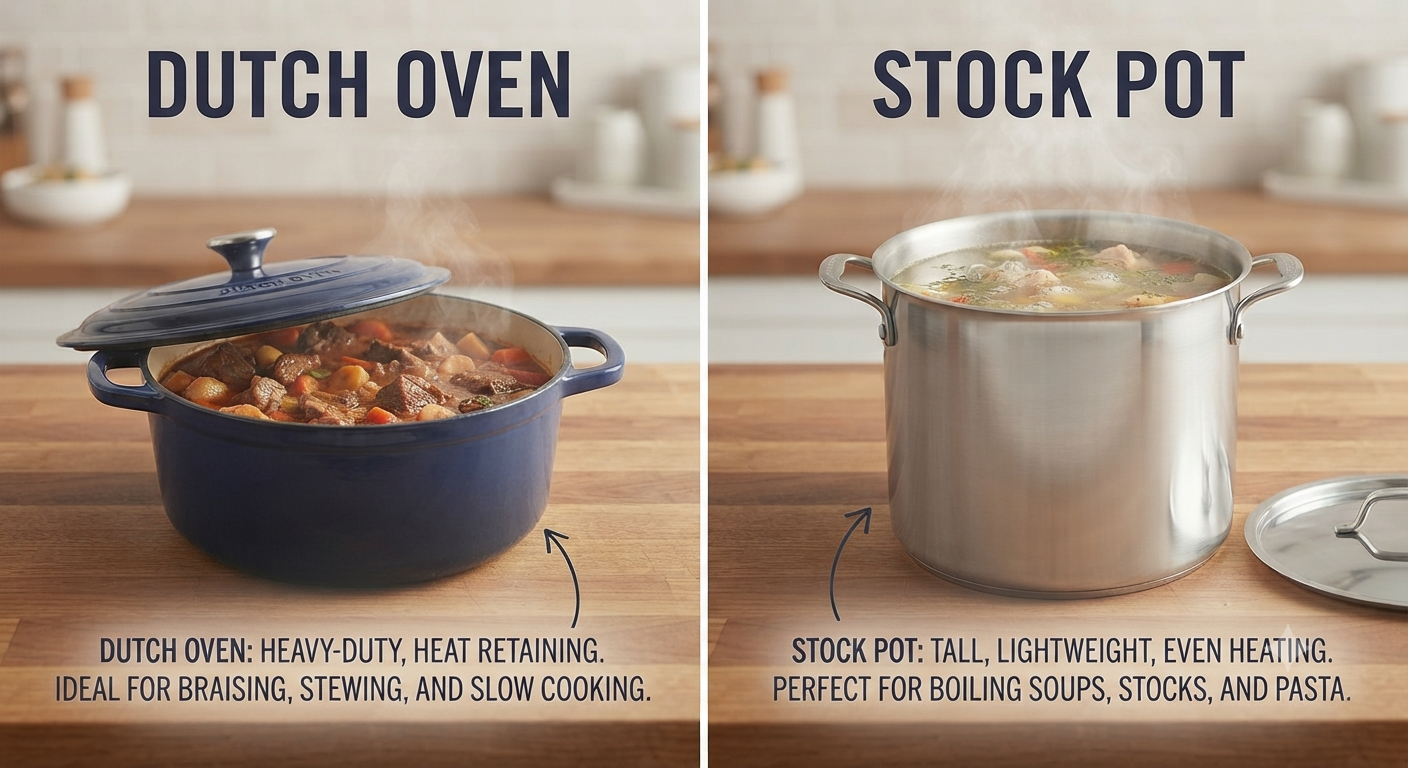
A Dutch oven is a heavy, thick-walled pot designed for slow cooking, braising, baking, and roasting. A stock pot is a lightweight, tall pot made for boiling, making soup, cooking pasta, and preparing large batches of stock.
If you cook low-and-slow meals, choose a Dutch oven. If you frequently boil large amounts of liquid, a stock pot is the better option.
Read More: Frying Pan vs Sauté Pan: Essential Differences
Dutch Oven vs Stock Pot Comparison Table
| Feature | Dutch Oven | Stock Pot |
| Material | Cast iron (often enamel-coated) | Stainless steel or aluminum |
| Weight | Heavy | Lightweight |
| Shape | Wide and shorter | Tall and narrow |
| Heat Retention | Excellent | Moderate |
| Best For | Braising, baking, roasting | Soup, stock, pasta, seafood boils |
| Cooking Style | Slow cooking | Boiling and simmering |
| Oven Safe | Usually yes | Some models only |
| Price | Higher | Usually more affordable |
| Cleaning | Heavier to clean | Easier to clean |
| Lifespan | Decades with care | Long-lasting but lighter construction |
Core Differences Between a Dutch Oven and a Stock Pot
| Dutch Oven | Stock Pot |
| Thick walls store heat | Thin walls heat quickly |
| Ideal for browning meat | Best for boiling liquids |
| Excellent moisture retention | Allows rapid evaporation |
| Suitable for oven cooking | Mainly used on the stovetop |
| Performs well for one-pot meals | Best for cooking large volumes |
What Is a Dutch Oven?
A Dutch oven is a thick cast-iron cooking pot with a tight-fitting lid. It distributes heat evenly and maintains a stable cooking temperature for long periods.
Best Uses
- Braised beef
- Stews
- Chili
- Artisan bread
- Pot roast
- Curry
- Short ribs
- Casseroles
Pros
- Exceptional heat retention
- Even cooking
- Oven safe
- Extremely durable
- Excellent for slow cooking
Cons
- Heavy
- More expensive
- Longer to heat up
What Is a Stock Pot?
A stock pot is a tall cooking pot designed to hold large amounts of liquid.
Best Uses
- Chicken stock
- Bone broth
- Vegetable broth
- Pasta
- Corn on the cob
- Seafood boils
- Large soups
- Batch cooking
Pros
- Lightweight
- Affordable
- Large capacity
- Heats water quickly
- Easy to handle
Cons
- Poor heat retention
- Not ideal for browning
- Less versatile for baking
Dutch Oven vs Stock Pot: Which Is Better?
It depends on what you cook most often.
| Cooking Task | Best Choice |
| Bread baking | Dutch Oven |
| Beef stew | Dutch Oven |
| Pot roast | Dutch Oven |
| Chili | Dutch Oven |
| Bone broth | Stock Pot |
| Chicken stock | Stock Pot |
| Pasta | Stock Pot |
| Seafood boil | Stock Pot |
| Large soup batches | Stock Pot |
| Slow-cooked meals | Dutch Oven |
Heat Retention Comparison
| Feature | Winner |
| Even heating | Dutch Oven |
| Heat retention | Dutch Oven |
| Fast boiling | Stock Pot |
| Cooling speed | Stock Pot |
| Energy efficiency for slow cooking | Dutch Oven |
Capacity Comparison
| Dutch Oven Sizes | Stock Pot Sizes |
| 3 qt | 8 qt |
| 5 qt | 12 qt |
| 6 qt | 16 qt |
| 7 qt | 20 qt |
| 9 qt | 24 qt |
Stock pots are designed for much larger cooking volumes.
Which Lasts Longer?
A quality Dutch oven can last for decades and is often passed down through generations.
A stainless steel stock pot also lasts many years, but is generally built for lighter-duty cooking.
Winner: Dutch Oven
Which Is Easier to Clean?
| Dutch Oven | Stock Pot |
| Heavy | Lightweight |
| May require soaking | Usually quick to wash |
| Enamel resists sticking | Stainless steel cleans easily |
Winner: Stock Pot
Which Is More Versatile?
| Cooking Style | Better Choice |
| Bake | Dutch Oven |
| Roast | Dutch Oven |
| Braise | Dutch Oven |
| Fry | Dutch Oven |
| Boil | Stock Pot |
| Steam | Stock Pot |
| Prepare broth | Stock Pot |
For overall versatility, the Dutch oven covers more cooking techniques.
Should You Buy Both?
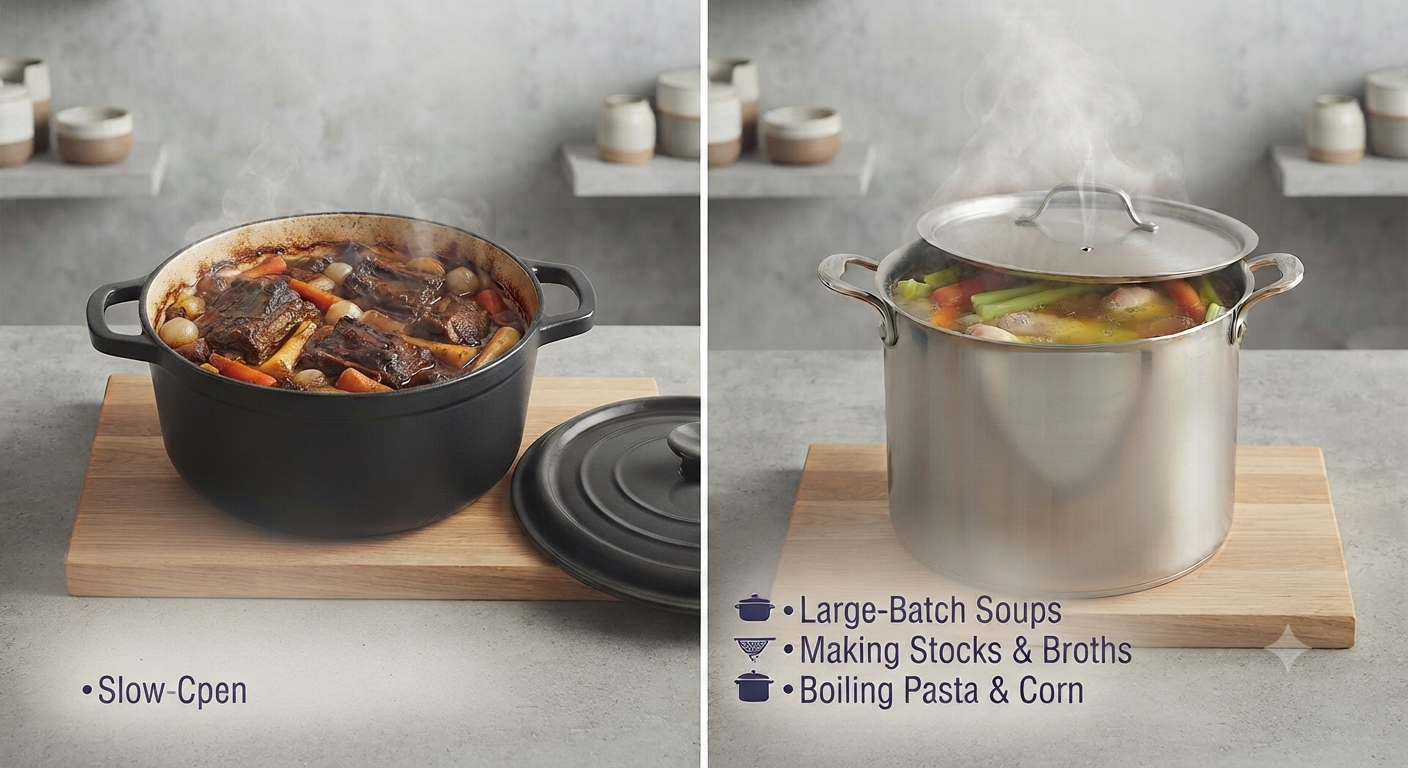
Buying both makes sense if you cook a wide variety of meals.
Choose both if you regularly:
- Make homemade stock
- Cook pasta often
- Bake bread
- Prepare stews
- Host family dinners
- Batch cook soups
Together, they complement each other rather than replace one another.
Buying Guide
| If You Mainly Cook… | Buy |
| Bread | Dutch Oven |
| Stews | Dutch Oven |
| Pot Roast | Dutch Oven |
| Pasta | Stock Pot |
| Soup for large groups | Stock Pot |
| Homemade broth | Stock Pot |
| Everyday one-pot meals | Dutch Oven |
| Batch cooking | Stock Pot |
Frequently Asked Questions (PAA-Ready)
Is a Dutch oven better than a stock pot?
For slow cooking, braising, roasting, and baking, yes. For boiling water, making stock, or cooking pasta, a stock pot is better.
Can I make soup in a Dutch oven?
Yes. A Dutch oven is excellent for soups because it heats evenly and retains heat well.
Can a stockpot replace a Dutch oven?
Not completely. A stock pot cannot match the Dutch oven’s heat retention or oven performance for braising and baking.
Can I bake bread in a stockpot?
Generally, no. A Dutch oven is the preferred choice because it traps steam, helping create a crisp crust.
Which is better for making bone broth?
A stock pot is usually better because its larger capacity accommodates more bones and water for long simmering.
Is a Dutch oven worth the higher price?
If you regularly cook stews, roasts, casseroles, or homemade bread, the durability and versatility often justify the investment.
Final Verdict
| Choose a Dutch Oven If… | Choose a Stock Pot If… |
| You love slow cooking | You boil large amounts of liquid |
| You bake bread | You make stock often |
| You cook one-pot meals | You cook pasta regularly |
| You roast meats | You prepare food for large groups |
| You want maximum versatility | You need the largest capacity |
Final Tip
A Dutch oven and a stock pot serve different purposes rather than competing directly. A Dutch oven excels at slow cooking, baking, and braising with superior heat retention, while a stock pot is the practical choice for boiling, soups, broths, and high-volume cooking. If your budget allows only one, choose the one that matches the meals you cook most often. For a well-equipped kitchen, owning both provides the greatest flexibility.