Stainless steel is more durable, safer at high heat, and better for searing, browning, and deglazing — but it requires more technique and oil to prevent sticking. Nonstick is easier for eggs, fish, and delicate foods and needs less oil, but coatings wear out faster and shouldn’t be used at very high heat. Most well-equipped kitchens benefit from having both.
Read More: Lead-Free Cookware Brands: 2026 Comparison Guide
Table of contents
Stainless Steel vs Nonstick Cookware: At a Glance
| Factor | Stainless Steel | Nonstick |
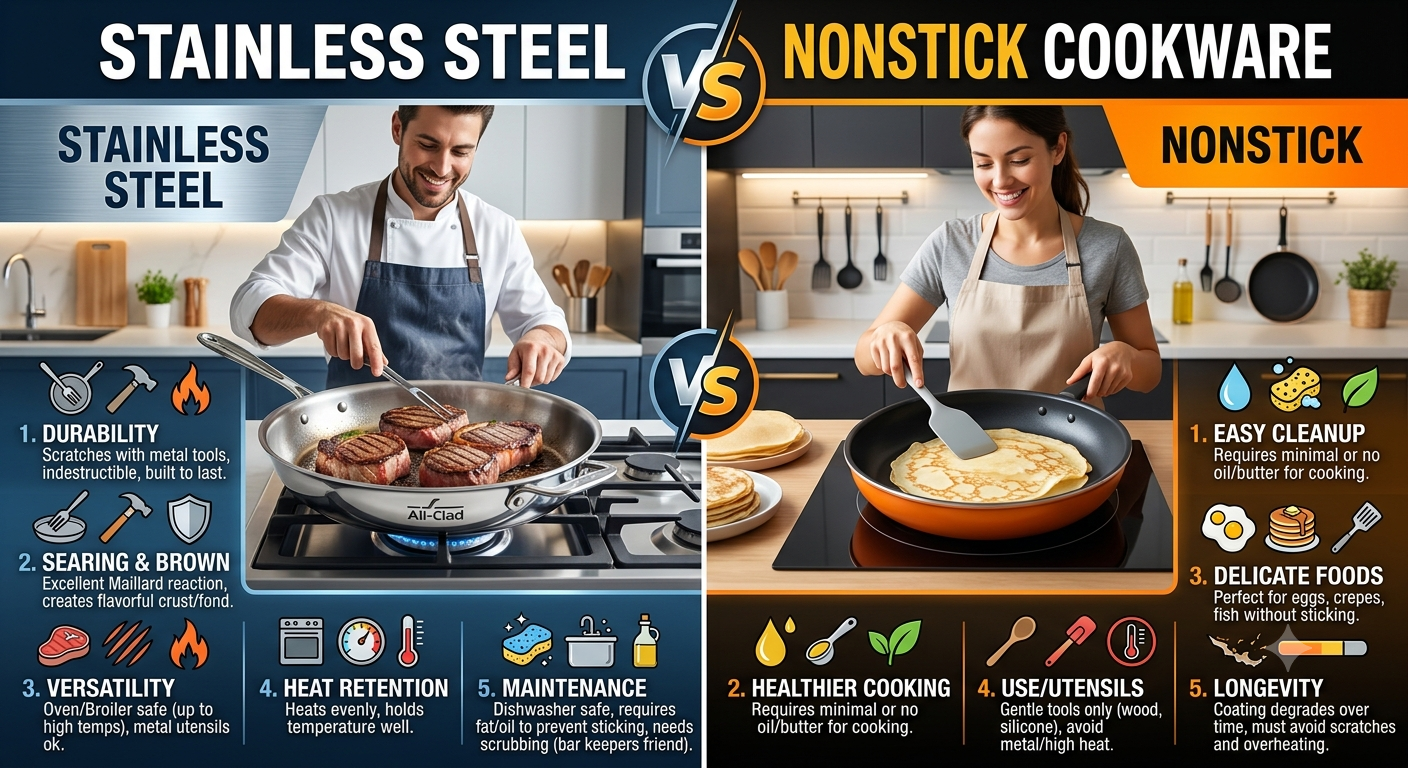
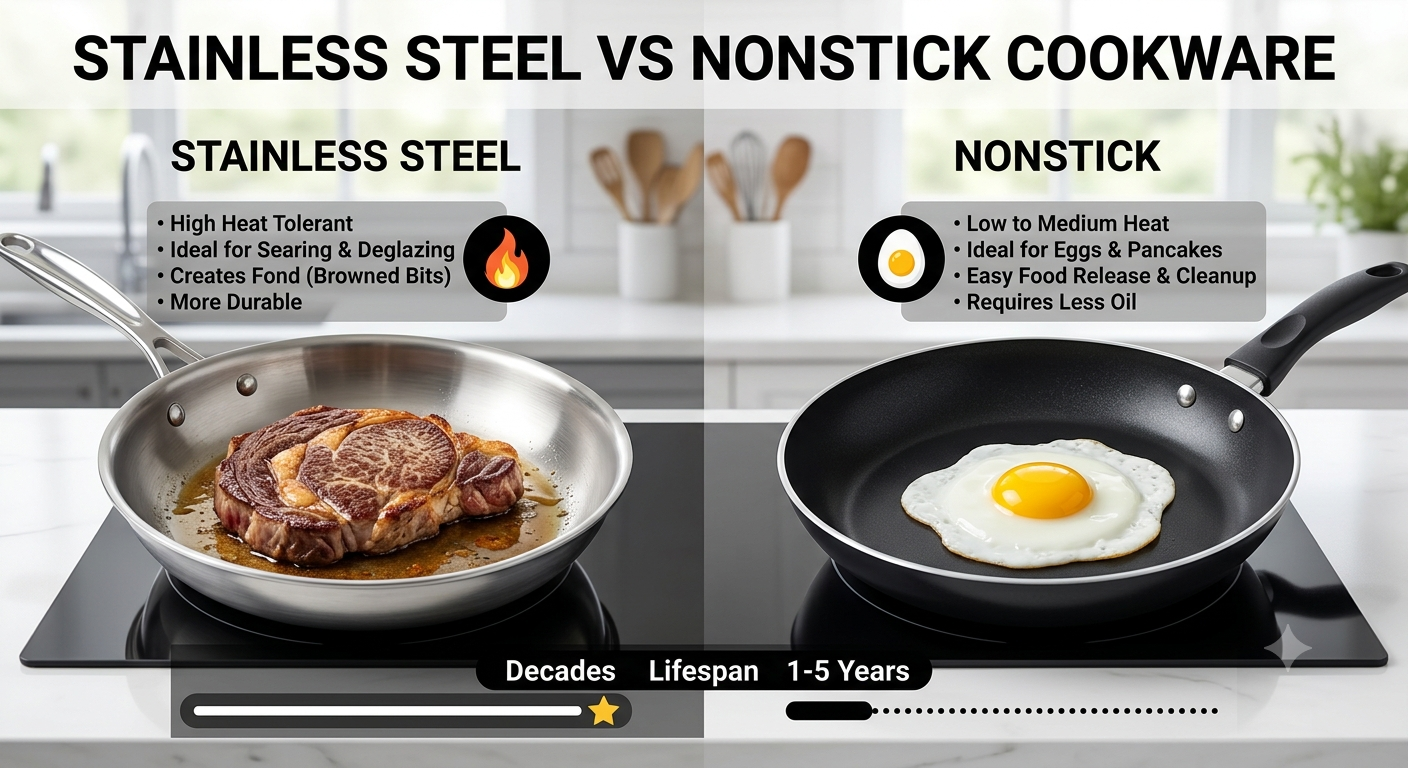
| Durability | Lasts decades, scratch- and dishwasher-safe | Coating degrades in 1–5 years with regular use |
| Heat tolerance | Handles high heat, broiler- and oven-safe | Best under medium heat; high heat can damage the coating |
| Best for | Searing meat, browning, deglazing, and sauces | Eggs, pancakes, fish, and low-fat cooking |
| Maintenance | Needs oil/fat and technique to prevent sticking | Needs gentle utensils, hand washing recommended |
| Health/safety | No coating to break down; inert material | Modern ceramic and PTFE coatings are considered safe when uncoated and unscratched, but damaged coatings should be replaced |
| Utensils | Metal utensils are generally fine | Wood, silicone, or plastic utensils only |
| Price range | Higher upfront, long-term value | Lower upfront, replaced more often |
| Induction compatible | Yes (with magnetic base) | Varies by brand |
Core Concepts: How Each Cookware Type Works
What Makes Stainless Steel Cookware Different
Stainless steel pans (often tri-ply or clad with an aluminum or copper core) rely on even heat distribution rather than a slick coating. Food naturally releases from the surface once a proper sear forms — the “fond” that builds up is also the base for pan sauces. Higher-grade stainless steel, often labeled 18/10, contains no PFAS and doesn’t require a nonstick coating at all.
What Makes Nonstick Cookware Different
Nonstick pans use a coating — traditionally PTFE (Teflon), increasingly ceramic-based alternatives — to create a low-friction surface that needs little to no oil. The tradeoff is that coatings can degrade with high heat, metal utensils, or abrasive cleaning, and once scratched or worn, performance and safety both decline.
Health and Safety: What the Research Says
Older nonstick cookware sometimes used PFOA, a PFAS chemical linked to health concerns, before manufacturers phased it out by around 2014. Modern PTFE coatings are generally considered chemically stable and safe under normal cooking conditions, but they can release fumes if overheated well beyond typical stovetop temperatures. Experts commonly recommend materials like stainless steel, cast iron, and ceramic as ways to reduce exposure to PFAS, “forever chemicals,” since these materials don’t rely on a synthetic coating at all.
Stainless steel carries no coating-related health questions. Nonstick is generally safe when the coating is intact and not overheated, but it should be replaced once visibly scratched or worn.
When to Use Each: Real Decisions in the Kitchen
| Cooking Task | Better Choice | Why |
| Searing steak or chicken | Stainless steel | Handles high heat, builds better browning/fond |
| Scrambled eggs or omelets | Nonstick | Releases easily with minimal oil |
| Pan sauces and deglazing | Stainless steel | Fond adds flavor; safe with wine/acidic liquids |
| Delicate fish fillets | Nonstick | Prevents sticking and tearing |
| Oven finishing/broiling | Stainless steel | Most are oven-safe to higher temps |
| Low-oil or low-fat cooking | Nonstick | Needs little to no added fat |
| Everyday high-heat cooking | Stainless steel | More durable under repeated high heat |
| Pancakes, crepes | Nonstick | Even release, no sticking or tearing |
Buying Tips
- Choose 18/10 stainless steel with an aluminum or copper core for even heating.
- For nonstick, look for PFOA-free and PFAS-free labeling, and consider ceramic-coated options as a longer-lasting alternative to traditional PTFE.
- Replace nonstick pans once the coating is scratched, flaking, or discolored.
- A practical setup: one stainless steel pan for searing and sauces, one nonstick pan for eggs and delicate foods.
People Also Ask
Is stainless steel healthier than nonstick?
Stainless steel has no coating to wear down or degrade, so it avoids the questions that come with nonstick coatings entirely. It’s considered one of the safer, more inert cookware materials.
Does food stick more to stainless steel?
Yes, initially, stainless steel needs enough preheating and oil/fat to release food properly. Once mastered, it sears and browns better than nonstick.
Which lasts longer, stainless steel or nonstick?
Stainless steel, by a wide margin. A quality stainless pan can last decades, while nonstick coatings typically need replacing every 1–5 years.
Can you use metal utensils on stainless steel?
Yes. Stainless steel tolerates metal utensils well, unlike nonstick, which requires wood, silicone, or plastic tools to protect the coating.
Is nonstick cookware good for eggs and pancakes?
Yes — nonstick is the easier choice for delicate, low-fat foods like eggs, omelets, and pancakes, since it needs very little oil and releases food cleanly.
What is the best cookware for searing steak?
Stainless steel (or cast iron) is best for searing, since it handles high heat and produces better browning than most nonstick surfaces.
Final Tip
The best cookware strategy isn’t choosing one material over the other — it’s matching the pan to the task. Keep stainless steel for high-heat searing, sauces, and durability, and keep nonstick on hand for eggs, fish, and low-fat, easy-release cooking. Buying PFAS-free and replacing worn nonstick coatings promptly covers the health side, while investing in one good stainless steel pan covers the longevity side.