The Bosch 300 Series is a mid-range dishwasher (roughly $999–$1,149) built around a full stainless steel tub, sensor-driven PrecisionWash cleaning, a standard third rack, and built-in Home Connect Wi-Fi. It runs at a quiet 44–46 dBA and holds 14–16 place settings depending on the exact model. Its main weakness is drying: the condensation-based PureDry system can leave plastic items damp. For most households, it’s one of the strongest value picks in Bosch’s lineup — a step up from the 100 Series and a more affordable alternative to the 500 and 800 Series.
Read More: Bosch Dishwasher Rinse Aid: How to Fill & Adjust
Table of contents
What Is the Bosch 300 Series Dishwasher?
The 300 Series sits in the middle of Bosch’s dishwasher lineup, above the entry-level 100 Series and below the 500 and 800 Series. It’s positioned as the point where Bosch’s core technology — the stainless tub, adjustable racking, and sensor-based cleaning — becomes standard, without the premium price tag of the higher tiers. That combination has made it one of the most frequently searched and purchased dishwashers in the Bosch catalog.
Key Features
Full Stainless Steel Tub
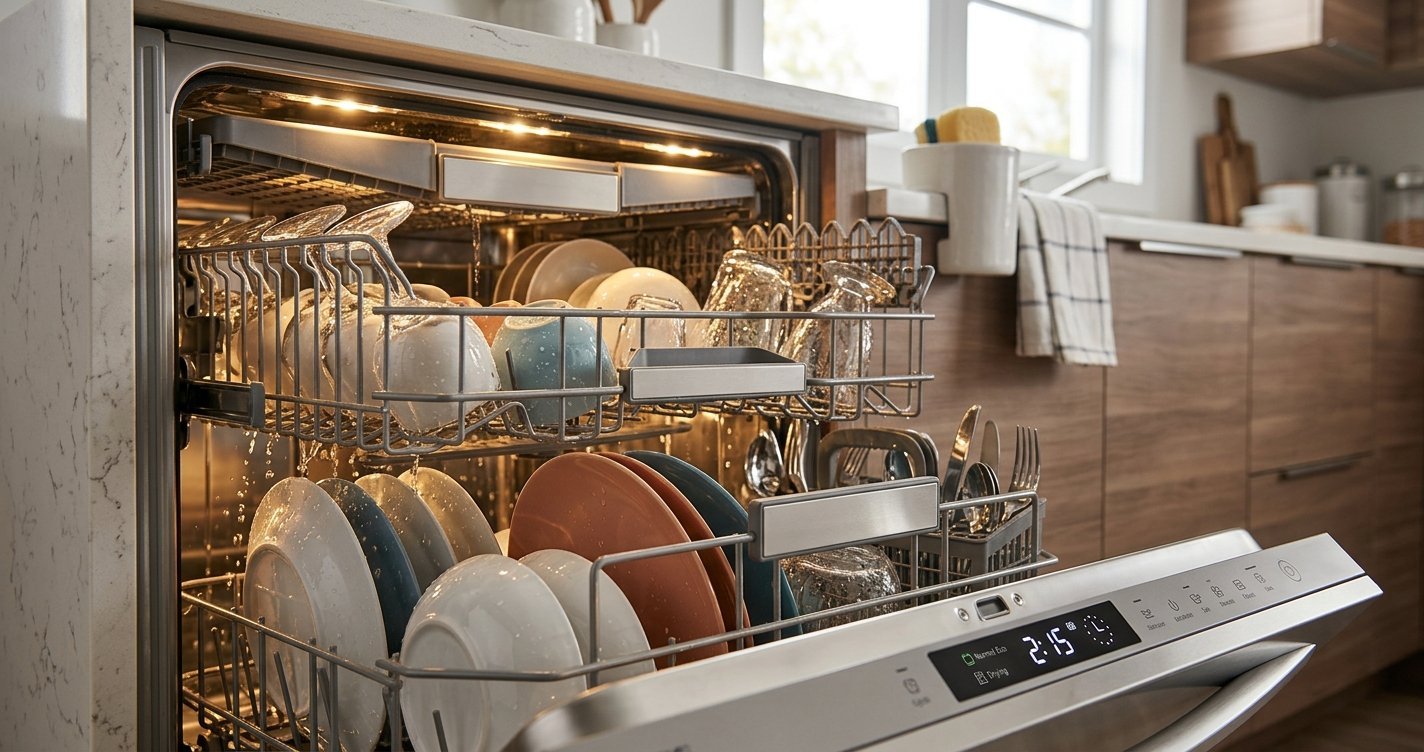
Unlike the 100 Series, which uses a hybrid tub with a plastic base, the 300 Series has a fully stainless interior. Metal retains heat better than plastic, which helps with both drying performance and long-term durability — the tub resists staining, odor buildup, and the wear that comes from repeated exposure to hot water and detergent.
PrecisionWash Cleaning System
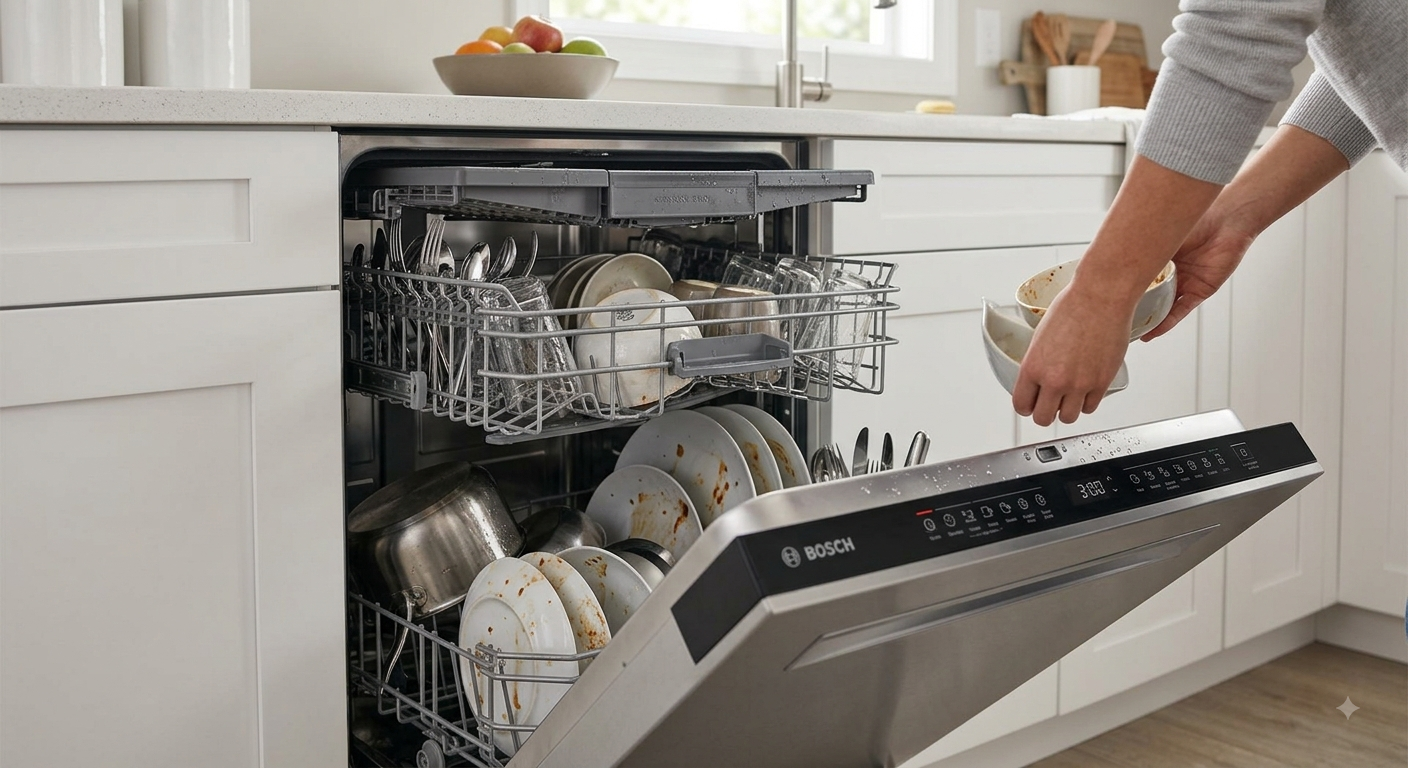
PrecisionWash uses sensors to monitor water clarity and soil levels throughout the cycle, then adjusts water pressure, spray targeting, temperature, and run time to match the actual load. In practice, this means the machine tailors each wash rather than running a fixed program regardless of how dirty the dishes are.
PureDry Drying System
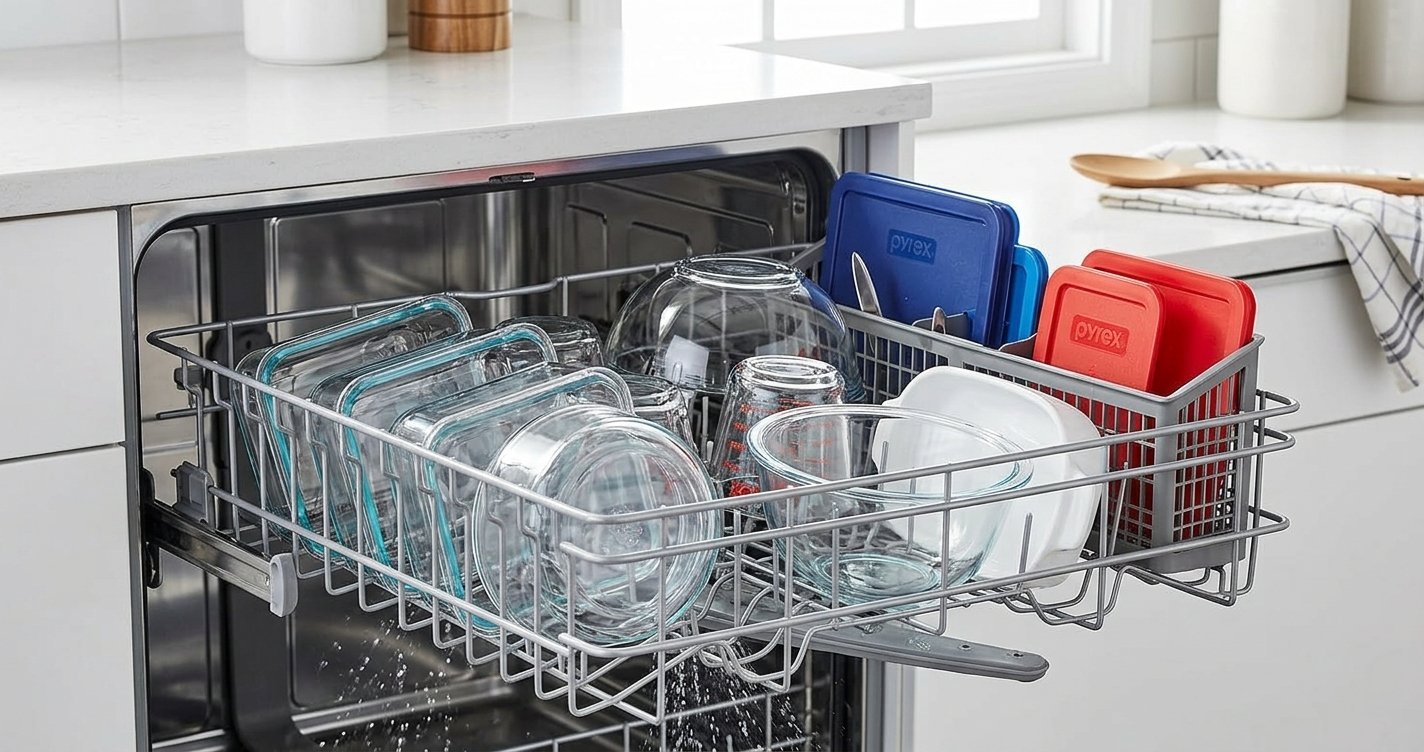
Drying relies on a condensation-based process rather than an active heating element. It works well for glass, ceramic, and most cookware, but plastic items — which don’t retain heat as well — can come out slightly damp. Using rinse aid and the Extra Dry option noticeably improves results
Flexible Racking
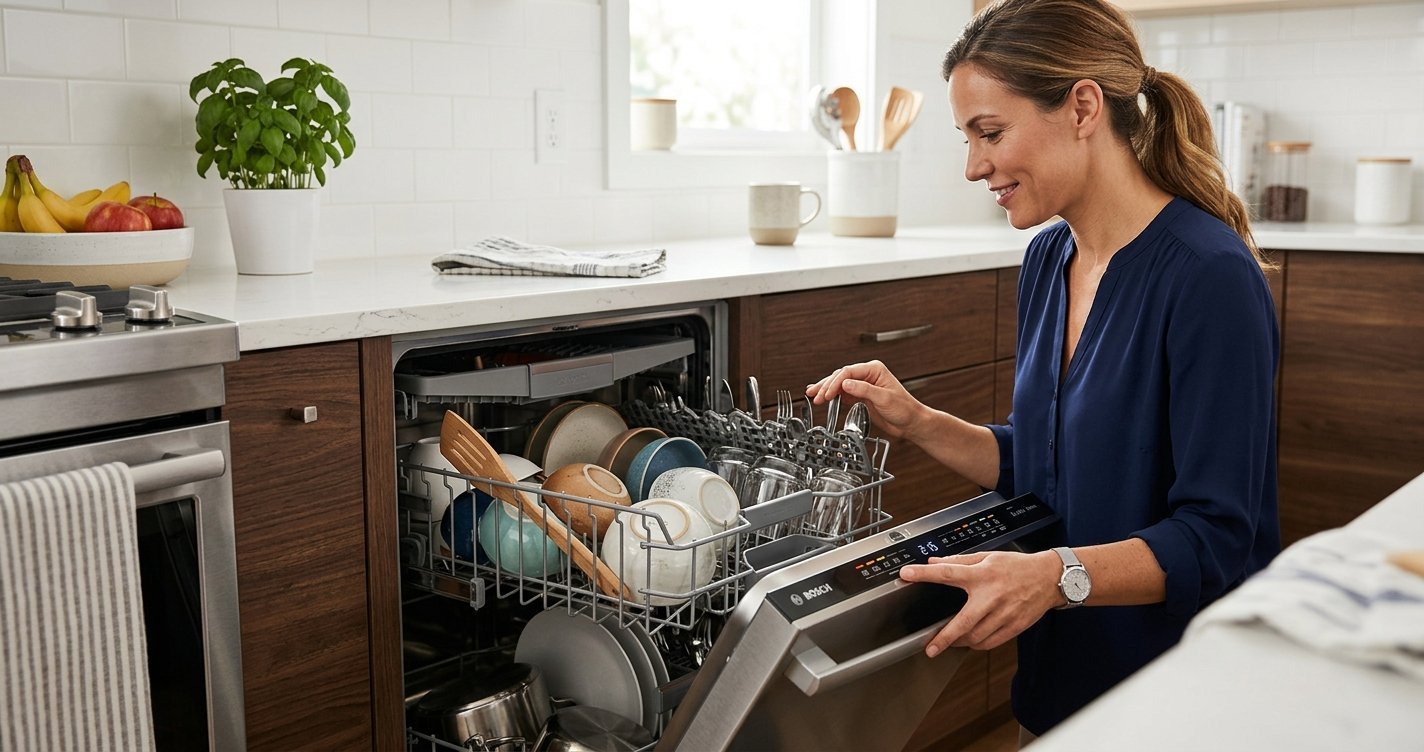
Most models include RackMatic height-adjustable racks and foldable tines, so you can reconfigure the interior for tall pots, mixing bowls, or oddly shaped items. A standard third rack for utensils frees up space in the lower rack and is one of the more genuinely useful upgrades over entry-level models.
Home Connect Wi-Fi
Every current 300 Series unit ships with built-in Wi-Fi via Bosch’s Home Connect app. Useful features include:
- Remote start and cycle notifications
- Low-salt or low-rinse-aid alerts
- A “Tab Counter” to track detergent pod inventory
- Access to app-only Smart Cycles not available on the front controls
- Voice control through Alexa or Google Home
Quiet Operation
Noise levels run around 44–46 dBA, which is quieter than an average conversation and among the quietest options in this price range — a practical feature for open-concept kitchens or overnight cycles.
Internal Water Heater
The 300 Series heats its own water rather than relying solely on your home’s hot water supply, which helps it hit consistent wash temperatures regardless of how far the dishwasher is from your water heater.
Pros and Cons
Pros
- Full stainless steel tub improves durability, heat retention, and odor resistance
- Sensor-based PrecisionWash adjusts each cycle to the actual soil level
- Genuinely quiet at 44–46 dBA
- Standard third rack and flexible RackMatic racking
- Home Connect Wi-Fi and voice control included standard
- Strong value compared to the step-up 500 and 800 Series
Cons
- PureDry can leave plastic items damp without rinse aid or the Extra Dry setting
- Some models place controls along the top edge of the door rather than the front, which some buyers find less convenient
- Fewer premium touches (like touch controls or CrystalDry) than the 800 Series
- Features and control layout vary by exact model number, so it’s easy to compare the wrong configuration
Bosch 300 Series vs. Other Series
| Series | Tub | Drying | Standout Feature | Best For |
|---|---|---|---|---|
| 100 Series | Hybrid (plastic base) | Basic | Lowest price | Budget-first buyers |
| 300 Series | Full stainless | PureDry | PrecisionWash + third rack | Best all-around value |
| 500 Series | Full stainless | AutoAir | More flexible racks, better drying | Buyers who wash a lot of plastic |
| 800 Series | Full stainless | CrystalDry | Touch controls, quietest operation | Buyers prioritizing drying and quiet |
If drying performance on plastics is your main concern, the 500 or 800 Series is worth the extra cost. If you mostly wash standard dishware and cookware, the 300 Series covers nearly everything most households need.
People Also Ask
Is the Bosch 300 Series dishwasher quiet?
Yes. It runs at roughly 44–46 dBA, quieter than a normal conversation, which makes it suitable for open kitchens or running overnight.
Does the Bosch 300 Series dry dishes well?
It uses PureDry, a condensation-based drying system. It handles glass and cookware well but can leave plastic items slightly damp; rinse aid and the Extra Dry cycle help.
Does the Bosch 300 Series have a heating element or internal water heater?
Yes, it includes an internal water heater, so it doesn’t depend entirely on your home’s hot water supply.
How many place settings does the Bosch 300 Series hold?
Typically 14–16 place settings, with capacity varying slightly by model — top-control versions tend to hold slightly more than front-control versions.
How much does the Bosch 300 Series cost?
New units typically run around $999–$1,149, depending on retailer, finish, and control style.
Is the Bosch 300 Series better than the 500 Series?
The 300 Series offers strong performance at a lower price. The 500 Series adds AutoAir for better drying and more flexible racking, which mainly benefits households that wash a lot of plastic.
Does the Bosch 300 Series need a special installation?
DIY installation may require a 90-degree elbow adapter or specific water hose depending on your existing setup, so it’s worth checking compatibility before installing it yourself.
Final Verdict
The Bosch 300 Series earns its reputation as the most practical entry point into the Bosch lineup. It delivers the brand’s core strengths — a stainless tub, sensor-driven cleaning, and quiet operation — without the price jump of the 500 or 800 Series. The main trade-off is drying performance on plastics, which is a minor and manageable issue for most households. For buyers who want reliable, quiet, well-built performance at a mid-range price, it remains one of the smartest dishwasher purchases available in 2026.