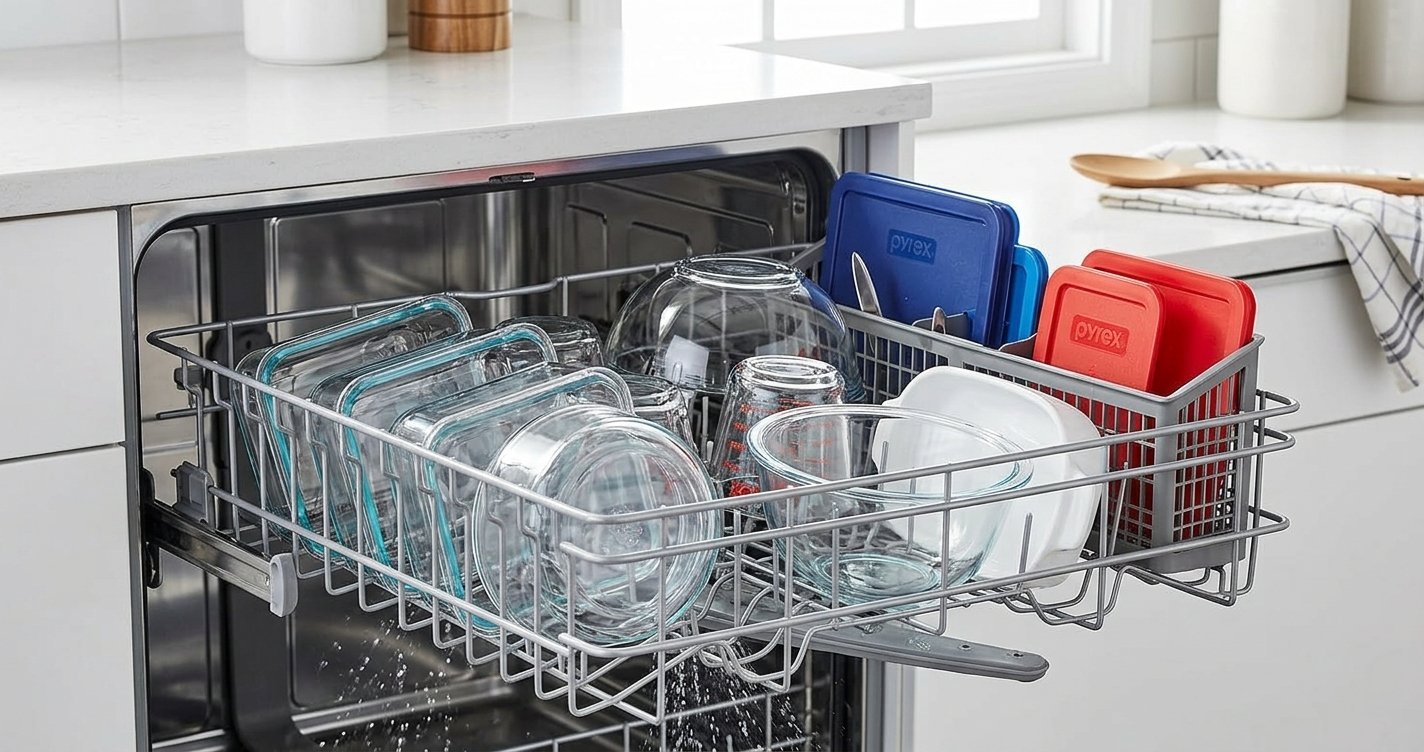
Yes. According to KitchenAid, all of its stand mixer bowls are dishwasher safe except the hammered copper bowl that comes with the Design Series Blossom mixer, which must be hand washed. Stainless steel, glass, and ceramic bowls can all go in the dishwasher. The bigger traps are not the bowl but the attachments: burnished aluminum beaters and whisks with aluminum parts should be washed by hand, and the mixer body should never go in the dishwasher.
Read More: Bosch Dishwasher Error Code E03: Meaning & Fixes
Table of contents
Which KitchenAid Bowls Can Go in the Dishwasher?
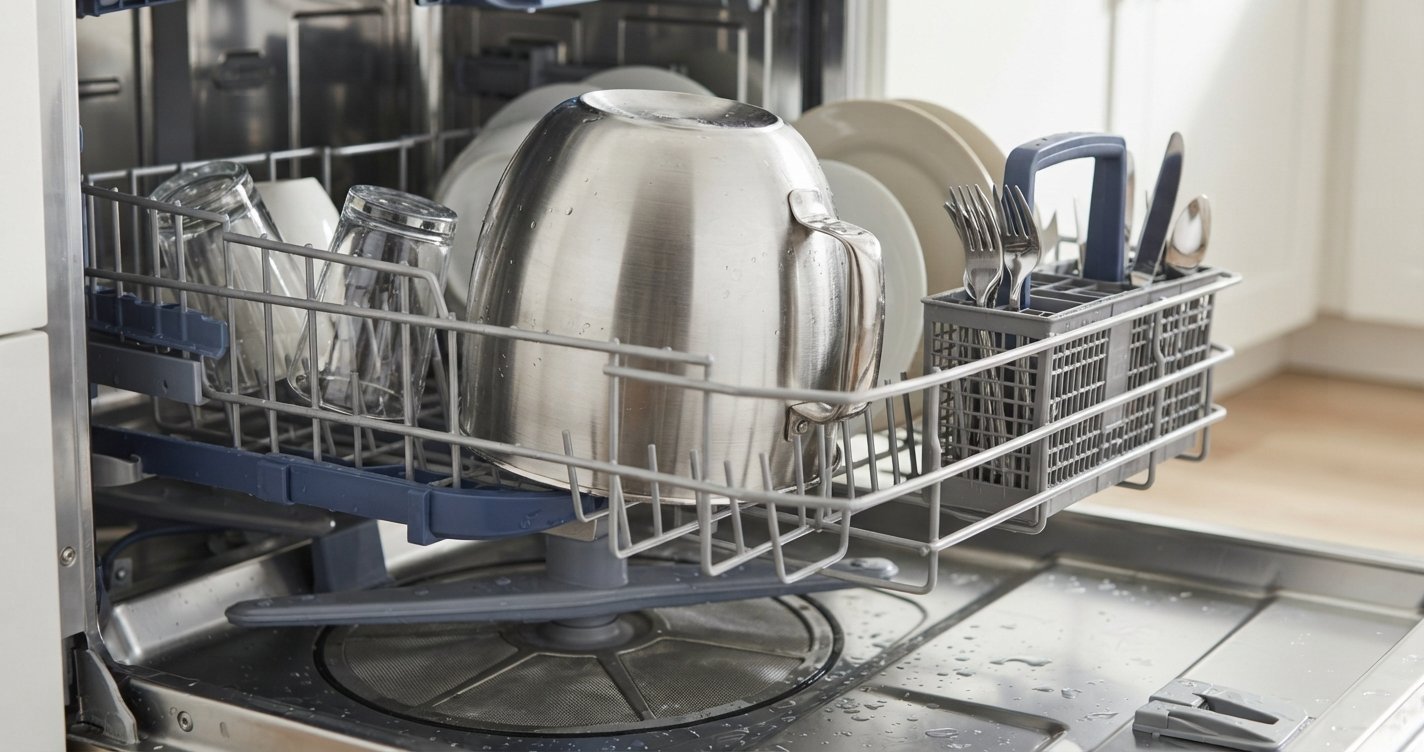
KitchenAid’s care page says dishwasher-safe bowls come in stainless steel, glass, or ceramic, and that the only exception is the hammered copper bowl supplied with the 2022 Design Series Blossom Tilt-Head mixer. KitchenAid’s UK page gives the same rule for the Design Edition 4.7L Blossom Artisan mixer.
| Bowl type | Dishwasher safe? | Notes |
| Stainless steel | Yes | The standard bowl on most mixers |
| Glass | Yes | Dishwasher safe per KitchenAid |
| Ceramic | Yes | Soak baked-on food first |
| Copper-colored stainless steel | Yes | The copper look is a finish over stainless steel |
| Hammered copper (Blossom mixer) | No, hand wash only | The one exception |
What this means: if you’re not sure what you have, it’s almost certainly dishwasher safe, unless it’s the hammered copper bowl that came with a Blossom mixer.
Can KitchenAid Beaters and Attachments Go in the Dishwasher?
Attachments are where most mistakes happen. KitchenAid’s guidance:
| Part | Dishwasher safe? |
| Coated flat beater | Yes, upper rack recommended |
| Stainless steel beater | Yes, upper rack recommended |
| Burnished (polished aluminum) beater | No, hand wash |
| Whisk with a stainless body and an aluminum hub | No, hand wash and dry right away |
| Dough hook, flex-edge beater, pastry beater | Mostly yes (stainless or coated), top rack per the UK page |
| Pouring shield | Yes |
| Pasta, grinder, sausage and shredder attachments | Varies by part; check the manual |
| Mixer body or motor head | Never |
KitchenAid says dishwasher safety varies by attachment and model, and many attachments have both safe and hand-wash-only parts, so check your owner’s manual for each part.
If an aluminum beater goes through the dishwasher by mistake: the UK page says the white residue is harmless and can be scrubbed off by hand with a nylon scrubber, or with a product made for oxidation. KitchenAid’s US page adds that burnished parts may oxidize if left wet or soaked, and that the oxidation is harmless and can be removed.
Which Rack Should the Bowl Go On?
KitchenAid’s US page gives rack guidance only for coated and stainless steel beaters, which belong on the upper rack. It gives no rack guidance for the bowls themselves. The UK page says items marked “top rack only” are safer on the top rack, because the bottom rack is closer to the heating element.
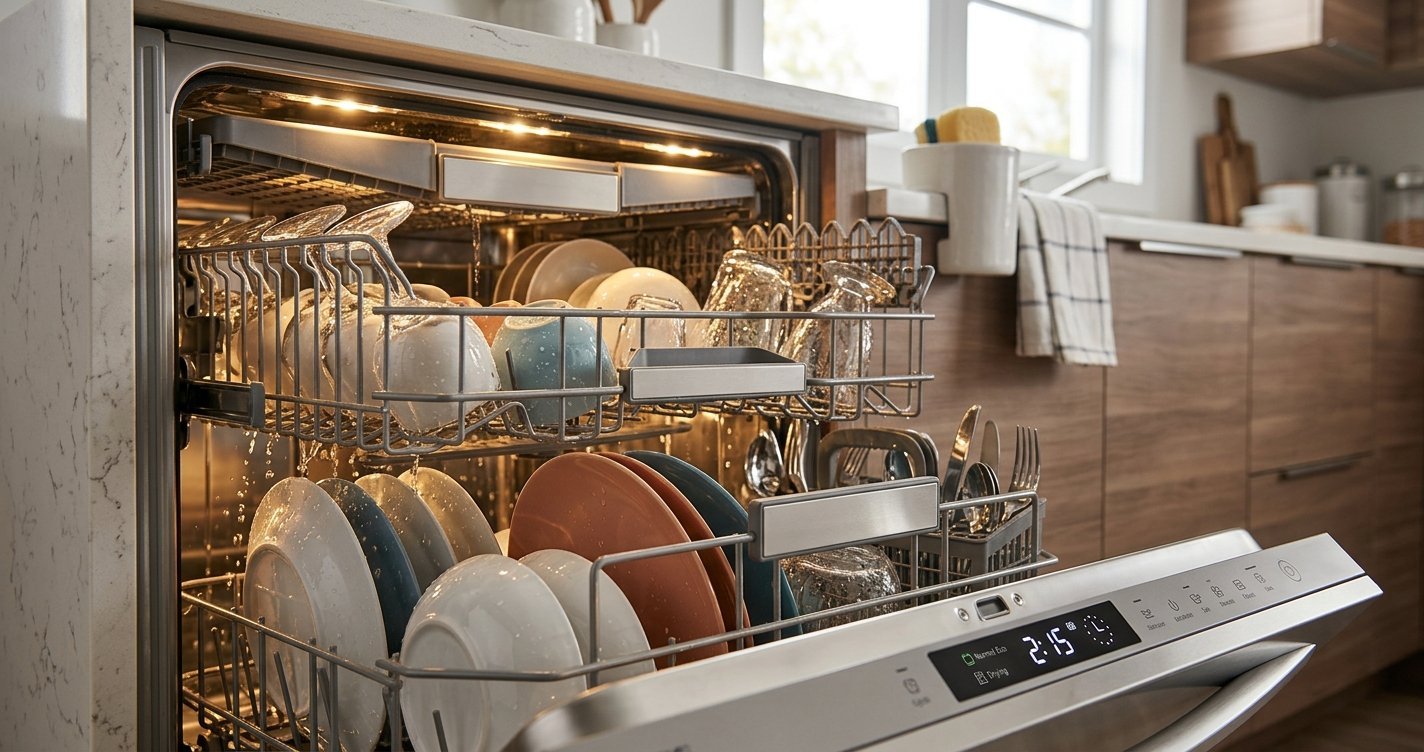
Practical tip: a bowl is big, so you’ll usually need to place it upside down on the lower rack where it fits. If you have a glass or ceramic bowl, the top rack is gentler if it will fit, since it’s farther from the heating element. That is a general precaution, not a KitchenAid rule.
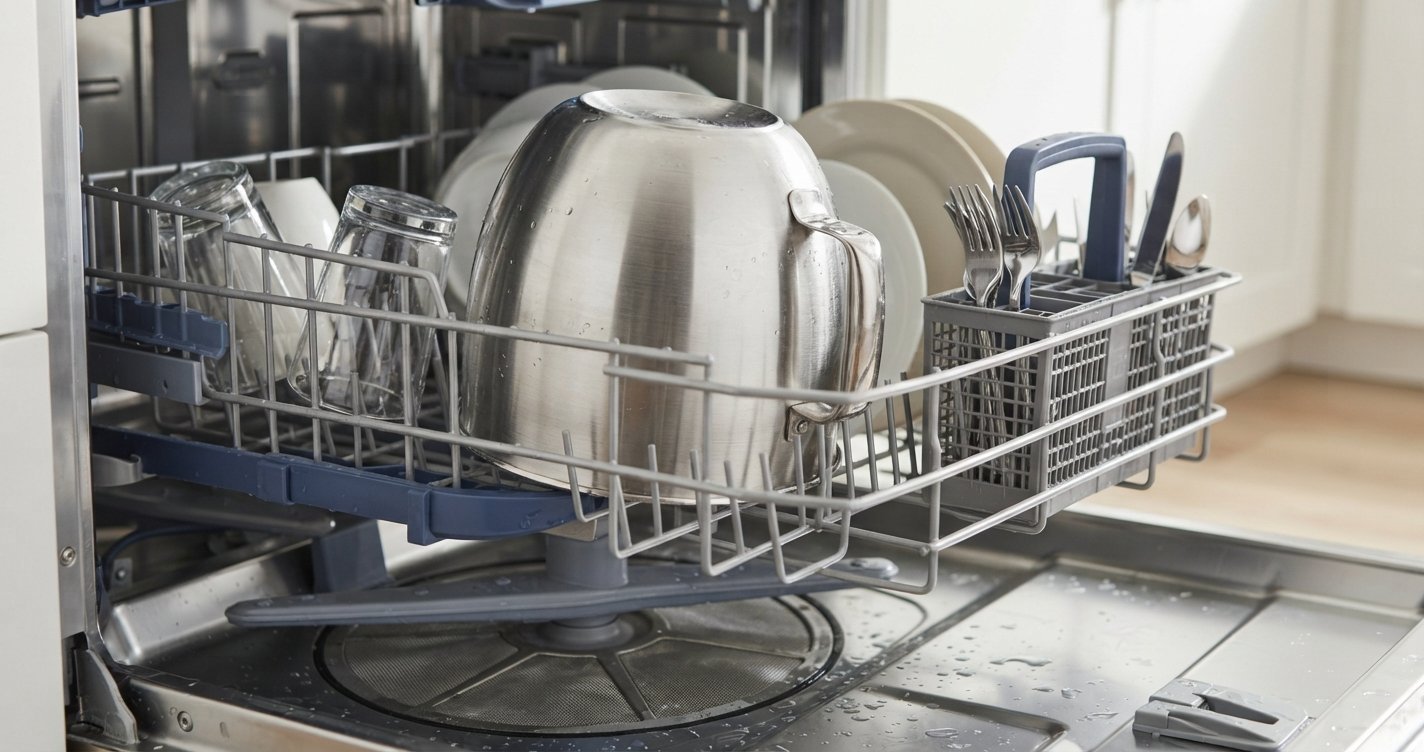
How to Wash a KitchenAid Bowl in the Dishwasher
- Scrape out batter or dough while it’s still soft.
- Soak stubborn residue in warm, soapy water if needed. This is especially useful for baked-on ceramic.
- Load the bowl upside down so water can drain and reach the inside.
- Place beaters on the top rack if they’re coated or stainless steel.
- Keep burnished or aluminum parts out and wash them by hand.
- Dry hand-washed parts right away with a soft cloth to prevent oxidation.
Why Is There Gray Residue in My Stainless Steel Bowl?
If your new stainless bowl has a gray film that doesn’t wash off, don’t worry. KitchenAid explains that stainless bowls are polished mechanically to make them shiny, and new bowls occasionally keep residue that neither dishwashing nor hand washing removes. It says the residue isn’t harmful but can discolor food mixed in the bowl.
How to remove it (KitchenAid’s method):
- Spread a small amount of olive oil inside the bowl.
- Let it sit for several minutes, then wipe it out.
- Wash the bowl in hot water with dish detergent.
KitchenAid also lists a lemon juice and salt mixture or a baking soda paste as food-safe, mildly abrasive alternatives.
Should You Hand Wash Anyway?
You don’t have to. KitchenAid says that if you’re unsure whether an item is dishwasher safe, you can hand wash it in hot, sudsy water and dry it thoroughly. Hand washing is a sensible choice for:
- The hammered copper bowl.
- Burnished aluminum beaters and whisks with aluminum hubs.
- Any attachment whose manual says to hand wash.
- Bowls you want to keep looking new for as long as possible (a personal choice, not a KitchenAid requirement).
Frequently Asked Questions
Can I put a KitchenAid bowl in the dishwasher?
Yes. All KitchenAid stand mixer bowls are dishwasher safe except the hammered copper bowl from the Blossom mixer.
Is the KitchenAid ceramic bowl dishwasher safe?
Yes. For baked-on food, soak the bowl first.
Which KitchenAid bowl is not dishwasher safe?
The hammered copper bowl that comes with the Design Series Blossom mixer.
Can KitchenAid beaters go in the dishwasher?
Coated and stainless steel beaters can, preferably on the upper rack. Burnished aluminum beaters can’t.
Why did my KitchenAid beater turn white or gray in the dishwasher?
Aluminum or burnished parts can oxidize in the dishwasher. KitchenAid says the residue is harmless and can be scrubbed off by hand.
Can I put the KitchenAid mixer itself in the dishwasher?
No. Never put the mixer body or any electrical appliance in the dishwasher. Wipe it with a damp soft cloth.
Which rack should I use for a KitchenAid bowl?
KitchenAid doesn’t specify a rack for bowls. Place it where it fits and drains well, and put beaters on the top rack.
Why is there gray residue in my new stainless bowl?
It’s left over from the polishing process. It’s not harmful, but you can remove it with olive oil, then hot water and dish detergent.
Conclusion
You can safely put a KitchenAid bowl in the dishwasher, whether it’s stainless steel, glass, or ceramic. The only bowl to hand wash is the hammered copper one from the Blossom mixer. Pay more attention to attachments: coated and stainless steel beaters are fine on the top rack, but burnished aluminum beaters and whisks with aluminum hubs should be washed by hand and dried right away, and the mixer body should never go near the dishwasher. If you find gray residue on a new stainless bowl, a little olive oil and a hot wash will clear it.