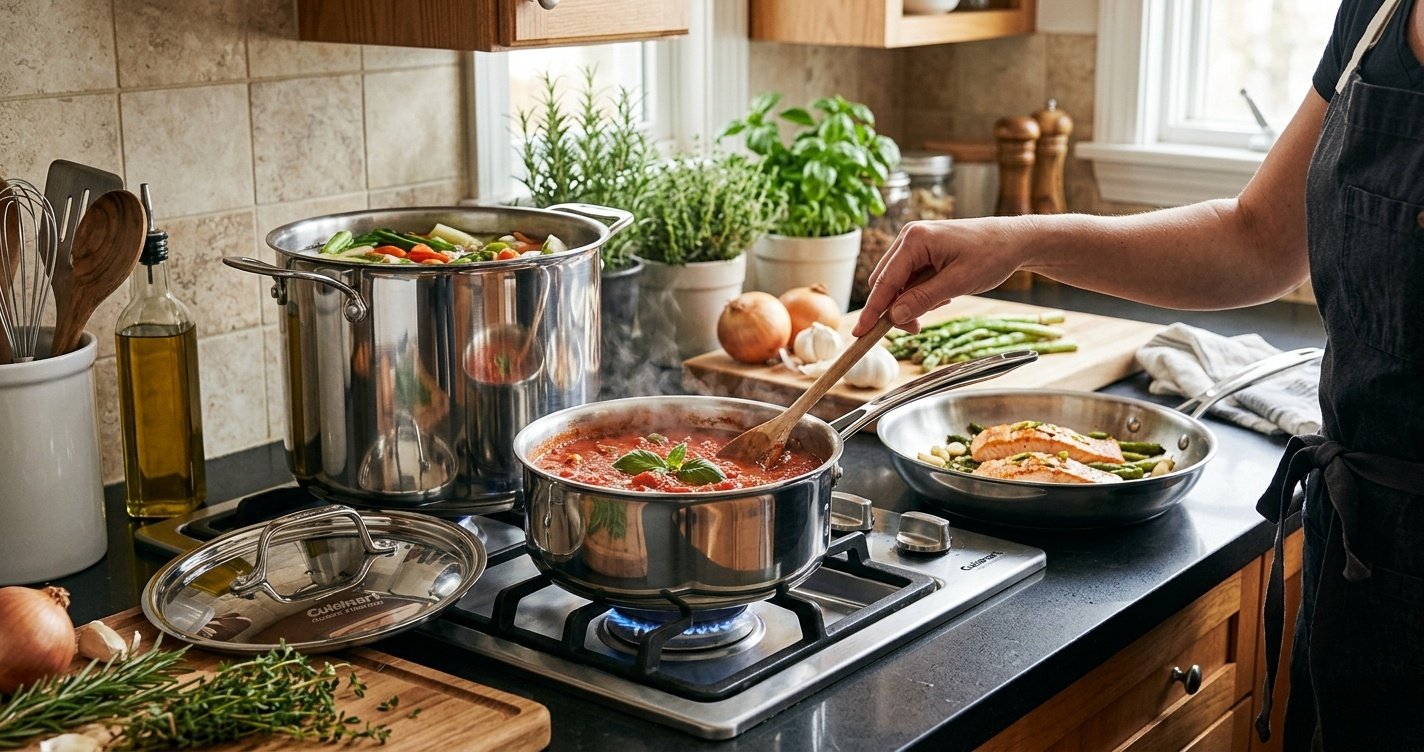
Stainless steel is the better all-around choice for most kitchens — it’s more durable, handles higher heat, excels at searing and browning, and can last for decades with basic care. Ceramic wins on ease of use and cleanup, releasing food easily with little to no oil, which makes it ideal for eggs and other delicate, low-heat cooking. The catch is longevity: ceramic’s nonstick coating typically degrades within a few years, while stainless steel doesn’t have a coating to wear out in the first place. Most experienced home cooks end up owning both — stainless for searing, braising, and boiling, ceramic for the handful of dishes where a gentle nonstick surface genuinely helps.
Read More: Bosch Dishwasher E01 Error Code: Meaning & Fix
Table of contents
Ceramic vs. Stainless Steel at a Glance
| Category | Ceramic | Stainless Steel |
| Nonstick performance | Excellent when new, fades within a few years | Requires proper oil/heat technique; not inherently nonstick |
| Durability | Shorter lifespan, coating degrades with heat cycles | Can last decades, resists corrosion and wear |
| Heat tolerance | Best for low-to-medium heat | Handles high heat well, ideal for searing |
| Versatility | Limited — not ideal for high-heat searing | Handles searing, braising, boiling, and oven use |
| Cleanup | Minimal scrubbing, easy release | Slightly more effort, but dishwasher safe on most lines |
| Weight | Generally lighter | Heavier, especially multi-clad construction |
| Safety profile | Free of PTFE and PFOA | Non-reactive, no coating to break down under heat |
| Typical Lifespan | A few years before nonstick performance fades | Can last a lifetime with basic care |
What Is Ceramic Cookware, Really?
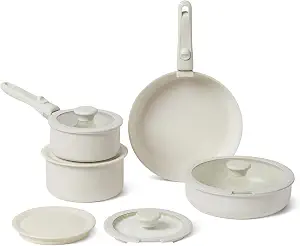
Despite the name, ceramic cookware isn’t kiln-fired earthenware — it’s typically a metal pan (often aluminum) coated with a silicon-based, non-stick finish designed to mimic traditional nonstick without PTFE or PFOA. This makes it a popular choice for cooks who’ve moved away from Teflon but still want an easy-release cooking surface. Performance varies noticeably between brands depending on the specific coating formulation and manufacturing process, so “ceramic” as a category covers a wider quality range than stainless steel does.
What Makes Stainless Steel Different?
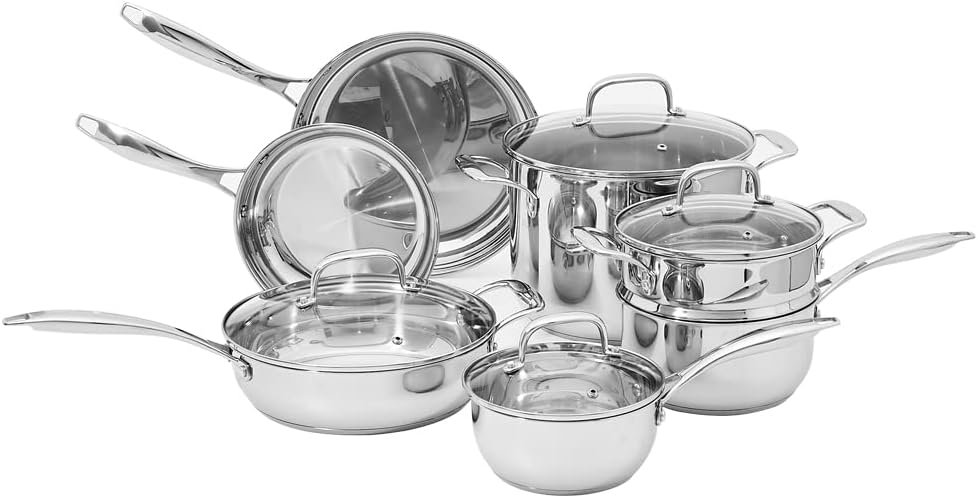
Stainless steel isn’t actually a pure metal — it’s an alloy, typically a mixture that includes nickel and chromium, which is what gives it corrosion resistance and heat tolerance. Most quality stainless cookware uses multi-ply or clad construction, with a core of aluminum or copper sandwiched between layers of stainless steel, combining stainless steel’s durability with better heat conduction than a single layer of steel alone would provide. This construction is also what makes most modern stainless steel cookware induction-compatible.
Ceramic Pros and Cons
Why People Choose Ceramic
- Easy food release with minimal oil. This is the single biggest reason people reach for ceramic — eggs, delicate fish, and other foods prone to sticking cook cleanly without much fat.
- Fast, low-effort cleanup. Less scrubbing means less time at the sink after cooking.
- No PTFE or PFOA. For cooks specifically avoiding traditional nonstick chemical coatings, ceramic offers a genuinely different manufacturing approach.
- Lightweight. Ceramic pans are generally easier to handle and maneuver than heavier stainless steel, especially multi-clad construction.
Where Ceramic Falls Short
- Nonstick performance fades quickly. The coating’s nonstick properties weaken every time the pan is heated, which is why ceramic cookware typically lasts only a few years before needing replacement.
- Not built for high heat. Ceramic performs best at low-to-medium heat and isn’t well suited for searing steaks or achieving a deep, browned crust.
- Shorter overall lifespan. Unlike stainless steel, there’s no getting around the coating’s gradual degradation — it’s a consumable surface, not a permanent one.
Best for: eggs, delicate proteins, and other low-to-medium heat dishes where easy release matters more than searing power.
Stainless Steel Pros and Cons
Why People Choose Stainless Steel
- Exceptional durability. Quality stainless steel cookware can last decades, even with heavy daily use — several cookware brands back their stainless lines with lifetime warranties.
- Handles high heat. Stainless steel is the go-to choice for searing steaks, achieving a proper crust, and other high-temperature techniques ceramic can’t match.
- Genuinely versatile. It moves easily between stovetop searing, oven roasting, braising, and boiling without the material limitations a nonstick coating imposes.
- No coating to fail. Since there’s nothing to wear off, stainless steel doesn’t have ceramic’s built-in expiration date on performance.
- Dishwasher safe on most lines. Many premium stainless cookware sets can go straight into the dishwasher, unlike most ceramic pans.
Where Stainless Steel Falls Short
- More prone to sticking. Without a nonstick coating, stainless steel requires proper technique — adequate preheating and enough oil — to prevent food from sticking, which has a real learning curve for newer cooks.
- Heavier. Multi-clad construction adds weight compared to a typical ceramic pan.
- Uses more oil for delicate foods. Cooking eggs or fish well on stainless steel generally requires more fat than the same dish would need in ceramic.
Best for: searing, braising, boiling, and any high-heat technique, plus cooks who want cookware that will genuinely last for years.
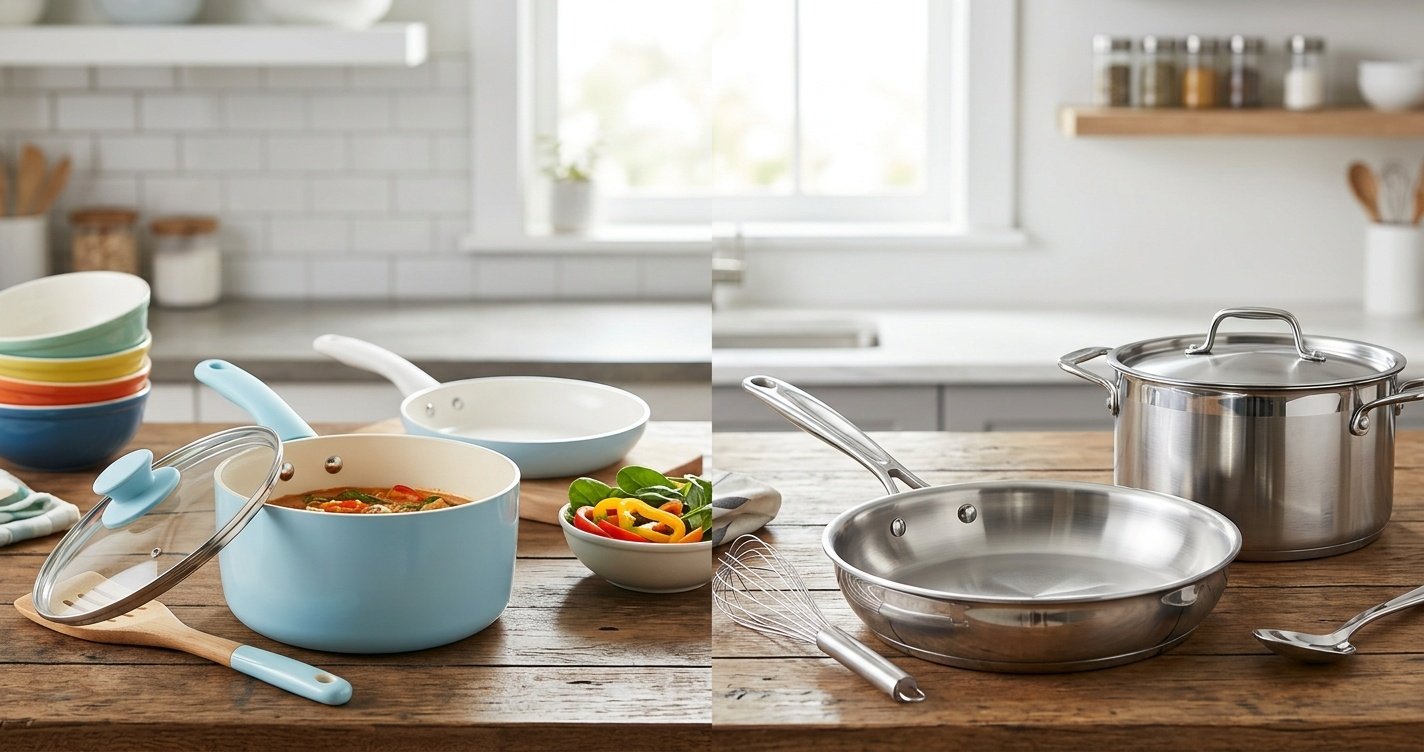
Which One Should You Actually Buy?
- You mostly cook eggs, delicate fish, or other low-heat dishes and want minimal cleanup → Ceramic is the easier day-to-day choice.
- You regularly sear steaks, braise, or cook at high heat → Stainless steel is built for this in a way ceramic simply isn’t.
- You want cookware that lasts a lifetime rather than needing replacement every few years → Stainless steel wins clearly on long-term value.
- You’re avoiding PTFE/PFOA specifically but still want easy food release → Ceramic remains the more convenient nonstick option, even with its shorter lifespan.
- You want one do-everything set → Most experienced cooks land here: a core set of stainless steel for searing, braising, and boiling, with one or two ceramic pans reserved specifically for eggs and delicate proteins.
Is One Actually Safer Than the Other?
Both materials are generally considered safe, non-toxic cooking surfaces. Ceramic cookware is free of PTFE and PFOA, the chemicals associated with traditional nonstick coatings, while stainless steel is non-reactive and has no coating at all to break down or degrade under heat. If avoiding “forever chemicals” is your only priority, either material satisfies that — the real decision comes down to cooking style rather than safety.
How to Care for Each Type
Ceramic:
- Use low-to-medium heat only; high heat accelerates coating breakdown.
- Avoid metal utensils, which can scratch the coating and shorten its lifespan.
- Hand-washing is generally gentler on the coating than a dishwasher, even on models labeled dishwasher safe.
Stainless steel:
- Preheat the pan before adding oil, and let the oil heat before adding food, to minimize sticking.
- Metal utensils are safe to use, since there’s no coating to damage.
- Most quality stainless steel cookware is dishwasher safe, though hand-washing helps preserve its shine longer.
Frequently Asked Questions
Is ceramic or stainless steel cookware better?
Neither is universally better — stainless steel wins on durability, heat tolerance, and versatility, while ceramic wins on easy food release and low-effort cleanup. The right choice depends on your cooking style and how long you want the cookware to last.
Does ceramic cookware really wear out that fast?
Yes, generally. Ceramic’s nonstick coating loses effectiveness with repeated heat exposure, and most ceramic cookware needs replacing within a few years, compared to stainless steel, which can last decades with basic care.
Can I sear a steak in a ceramic pan?
It’s not recommended. Ceramic performs best at low-to-medium heat, and the high temperatures needed for a proper sear can accelerate coating breakdown. Stainless steel is the better choice for searing.
Is stainless steel cookware harder to cook with than ceramic?
It has a steeper learning curve, since it isn’t inherently nonstick—proper preheating and enough oil are necessary to prevent sticking. Once you get the technique down, though, stainless steel handles a much wider range of cooking methods than ceramic.
Is ceramic cookware safer than stainless steel?
Both are generally considered safe. Ceramic is free of PTFE and PFOA, while stainless steel is non-reactive and has no coating to break down under heat—neither poses the concerns associated with older nonstick technology.
Can I put ceramic and stainless steel cookware in the dishwasher?
Most stainless steel cookware is dishwasher safe, though hand-washing helps preserve its shine over time. Ceramic cookware is more often hand-wash recommended, since dishwasher heat and detergent can accelerate coating wear even on pans labeled dishwasher safe.
Conclusion
Ceramic and stainless steel cookware aren’t really competing for the same job — they’re built for different cooking styles, and the “better” choice depends entirely on what you cook most often. Stainless steel remains the stronger long-term investment for most kitchens: it handles more techniques, tolerates higher heat, and can realistically last a lifetime without a coating to wear out. Ceramic earns its place for a specific, real use case — easy, low-oil cooking of eggs and delicate proteins — even knowing you’ll likely replace it sooner. If you’re building a kitchen from scratch, start with a solid stainless steel set for the bulk of your cooking, then add a ceramic pan or two for the dishes where its gentler, easier-release surface genuinely makes a difference.