Table of contents
What Is the Healthiest Cookware Material?
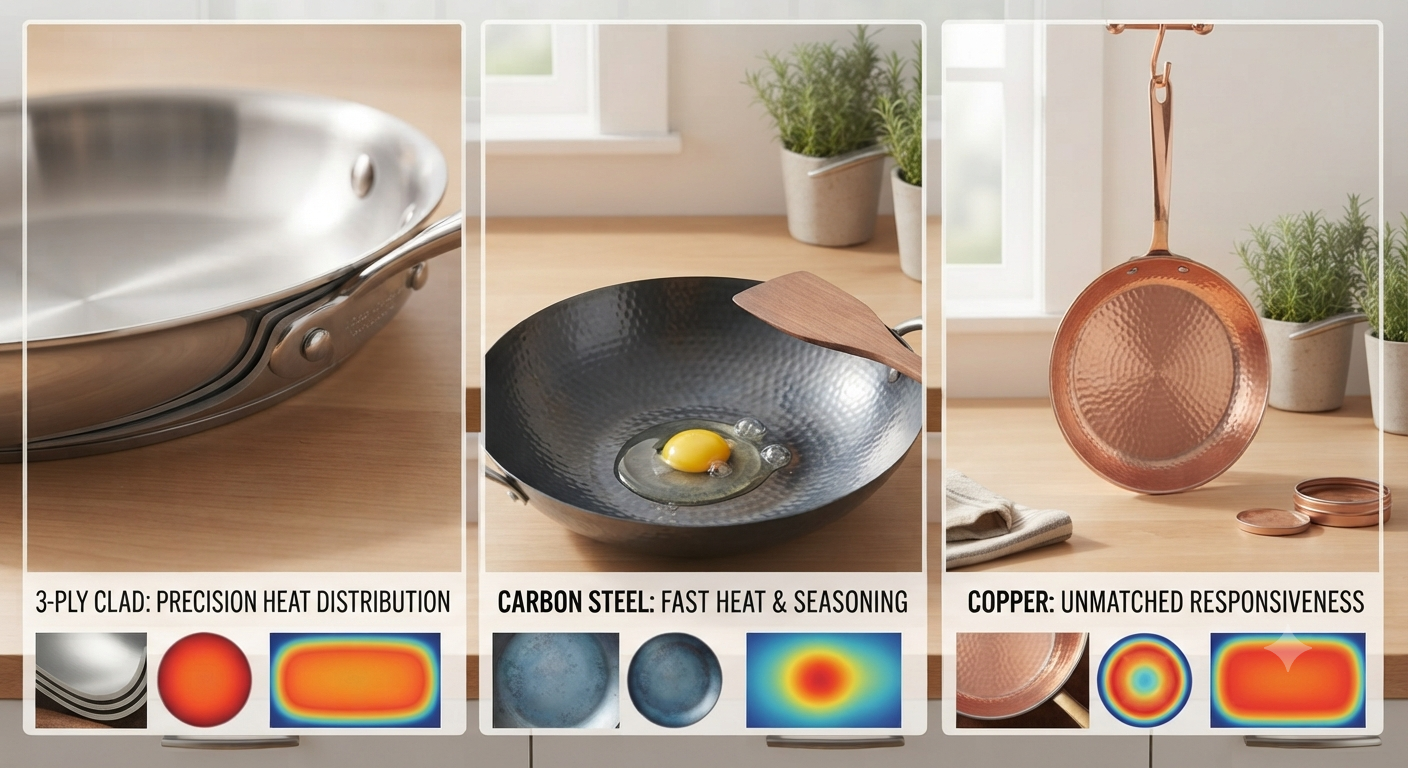
Uncoated stainless steel, cast iron, and carbon steel are the three materials cookware experts consistently rank as the safest for daily use. None of them relies on a synthetic coating, so there’s nothing to wear off, scratch away, or off-gas at high heat. 100% ceramic (not ceramic-coated) is a close fourth, especially for people who want a lighter, non-reactive option.
If you want the ease of a nonstick surface, PFAS-free ceramic-coated pans (not Teflon/PTFE) are the healthiest nonstick alternative — just be aware that the coating wears out faster than uncoated metal.
Read More: Is Ceramic Cookware Safer Than Nonstick? 2026 Guide
Comparison Table: Cookware Materials at a Glance
| Material | PFAS-Free? | Reactive with Acidic Foods? | Best For | Typical Lifespan |
| Stainless steel (304/316) | Yes | No | Everyday cooking, sauces, and searing | Decades |
| Cast iron (seasoned) | Yes | Slightly (with acidic foods) | Searing, frying, and oven use | Decades to generations |
| Carbon steel | Yes | Slightly (with acidic foods) | High-heat cooking, stir-frying | Decades |
| 100% ceramic (solid) | Yes | No | Low-to-medium heat cooking | 5–10+ years |
| Ceramic-coated (ceramic nonstick) | Yes (PFAS-free) | No | Eggs, delicate foods, easy release | 1–3 years (coating wears) |
| Traditional Teflon/PTFE nonstick | No (contains PFAS) | No | Not recommended for daily long-term use | 1–2 years |
Why Material Matters More Than Marketing
“Non-toxic” isn’t a regulated term in the cookware industry, which means a brand can slap it on packaging without meeting a fixed standard. What actually determines whether cookware is a health risk is simple: does the cooking surface have a synthetic coating, and if so, what’s it made of?
Materials without a coating — stainless steel, cast iron, carbon steel, and solid ceramic — have nothing to degrade into your food. Coated materials are only as safe as the coating itself, and that’s where the PFAS conversation comes in.
Is Stainless Steel the Healthiest Cookware?
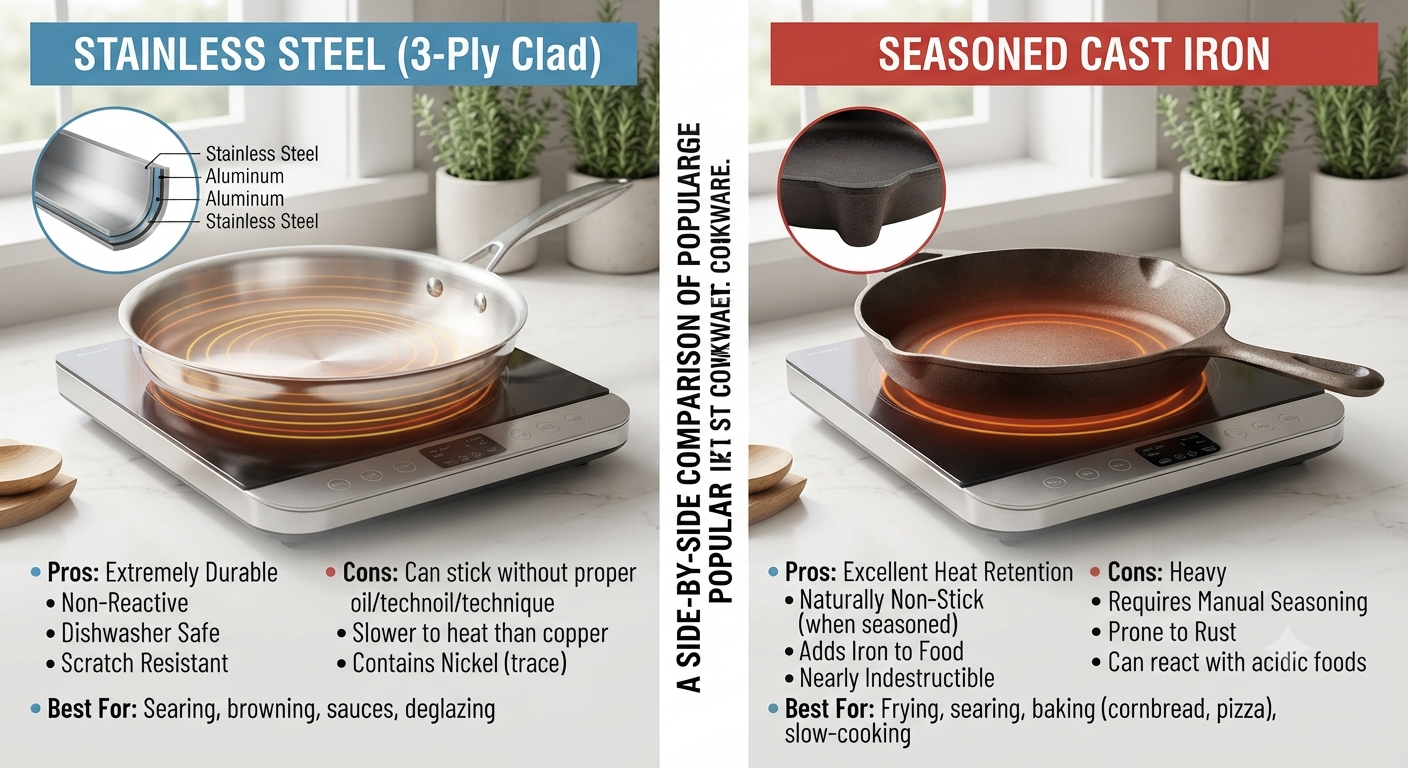
For most people cooking daily, yes — stainless steel is the safest all-around choice. It’s non-reactive, so it won’t leach metal into tomato sauce or wine reductions, and it has no coating to scratch off. Choose 18/8 or 18/10 grade (also labeled 304) for the best balance of durability and price; 316-grade is even more corrosion-resistant if you want to spend more. The one caveat: people with a diagnosed nickel allergy may want to check with a doctor, since trace nickel can leach in small amounts, especially with prolonged acidic cooking.
Is Cast Iron Cookware Safe for Everyday Use?
Yes, and it comes with a bonus: a well-seasoned cast-iron pan can add a small amount of dietary iron to your food, which is generally harmless and can even be helpful for people with iron deficiency. The trade-off is weight and maintenance — it needs to be seasoned and dried properly to avoid rust — and very acidic dishes cooked for a long time (think all-day tomato sauce) can pick up a metallic taste and strip seasoning faster.
Is Ceramic Cookware Actually Safe?
It depends on which “ceramic” you’re buying. 100% ceramic cookware (brands like Xtrema) is solid ceramic all the way through — inert, non-reactive, and PFAS-free. Ceramic-coated cookware (Caraway, GreenPan, Our Place) is usually an aluminum or stainless base with a ceramic-based nonstick layer sprayed on top. That coating is PFAS-free, which is a real improvement over Teflon, but it still wears down with metal utensils, high heat, and dishwashers, and needs replacing every couple of years.
What About Nonstick (Teflon/PTFE) Pans?
Traditional Teflon nonstick is made with PTFE, which is itself classified as a PFAS (“forever chemical”). At normal cooking temperatures, it’s considered low-risk by most food safety agencies, but if a pan is overheated and past roughly 500°F (260°C), it can release fumes that are documented to be harmful, particularly to pet birds. For occasional use (eggs, pancakes), it’s a lower-priority concern; for a pan you use every single day for years, most nutritionists and cookware reviewers recommend switching to ceramic-coated or uncoated alternatives instead.
Is PFAS-Free Cookware Actually Regulated?
Increasingly, yes. As of 2026, cookware sold in Maine, Colorado, and Minnesota cannot legally contain intentionally added PFAS, and several more states — including Kansas, New Mexico, and Vermont — have bans phasing in over the next few years. Because manufacturers rarely make state-specific product lines, these laws are pushing PFAS-free formulations toward becoming the national default well before any federal ban takes effect.
People Also Ask
Is stainless steel or ceramic healthier?
Both are considered safe. Stainless steel is more durable and better for high-heat searing; solid ceramic is lighter and slightly more prone to chipping. Neither leaches chemicals under normal use.
Is cast iron better than nonstick?
For daily, long-term use, yes — cast iron has no coating to wear out and lasts for decades with basic care, while nonstick coatings (even PFAS-free ones) typically need replacing every 1–3 years.
Does ceramic cookware contain lead?
Reputable ceramic and ceramic-coated cookware brands test for lead and cadmium and should be labeled lead-free. Avoid unbranded or very cheap imported ceramic pieces, since lead glazes are a known risk in low-quality ceramics.
Is Teflon cookware banned?
Not federally in the U.S., but several states now restrict PFAS (which includes PTFE/Teflon) in cookware sold within their borders, and brands are shifting toward PFAS-free alternatives ahead of wider regulation.
What’s the safest cookware for cooking eggs daily?
A well-seasoned cast iron or carbon steel pan releases eggs almost as well as nonstick once properly seasoned, and it avoids the recurring coating-replacement issue that comes with ceramic or Teflon nonstick.
Is aluminum cookware safe?
Bare (anodized) aluminum is generally considered safe for occasional use, but uncoated, non-anodized aluminum can react with acidic foods and leach small amounts of metal. Hard-anodized aluminum with a stainless or ceramic surface avoids this issue.
How to Choose: A Simple Decision Guide
- Want one pan that lasts a lifetime? Go with stainless steel or cast iron.
- Cook a lot of acidic sauces (tomato, wine, citrus)? Stainless steel or solid ceramic — avoid bare cast iron or aluminum for these.
- Want easy cleanup for eggs and delicate fish? Ceramic-coated nonstick, PFAS-free, replaced every couple of years.
- Live in Maine, Colorado, or Minnesota? Check that any nonstick pan is explicitly labeled PFAS-free — it’s now a legal requirement, not just a marketing claim.
- Have a nickel allergy? Choose cast iron, carbon steel, or 100% ceramic instead of stainless steel.
The Bottom Line
There’s no single “healthiest” pan that fits every kitchen — but the safest strategy for daily use is building a small rotation of uncoated stainless steel and cast iron or carbon steel, and reserving a PFAS-free ceramic-coated pan for the handful of foods (eggs, delicate fish) where a nonstick surface genuinely earns its place. None of these requires you to gamble on a coating breaking down over years of daily heat.