Table of contents
Carbon Steel vs Nonstick: Which Pan Is Better?
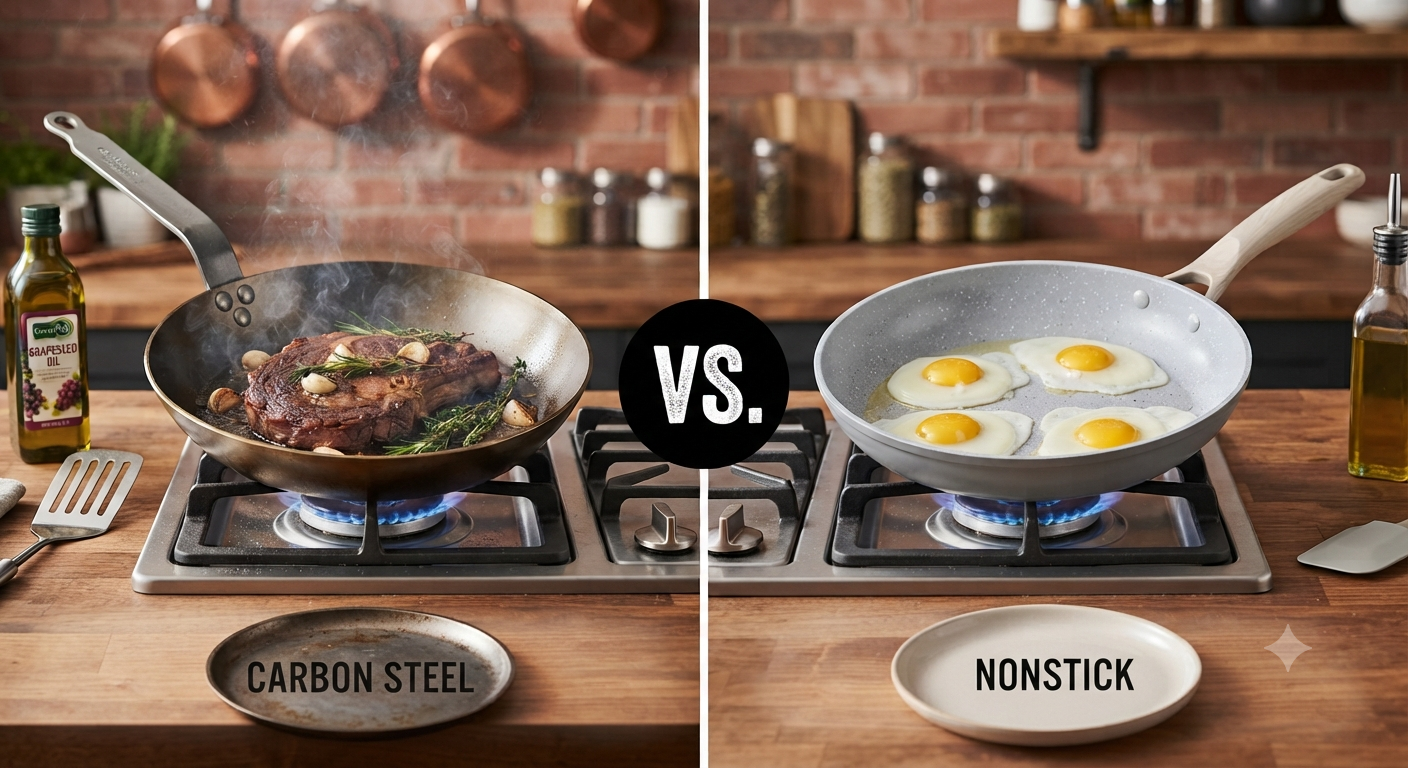
Carbon steel is more durable, handles high heat, and improves with age, making it ideal for searing and stir-frying. Nonstick is easier for eggs, delicate fish, and low-fat cooking, but it wears out faster and can’t handle high heat. Most home cooks benefit from owning both.
Read More: Nonstick vs Cast Iron: Which Cookware Wins?
Quick Comparison Table
| Feature | Carbon Steel | Nonstick |
| Heat tolerance | High (500°F+) | Low-Medium (usually under 400–450°F) |
| Non-stick performance | Good once seasoned | Excellent from day one |
| Durability | Decades with care | 1–5 years typical lifespan |
| Weight | Heavier | Lighter |
| Maintenance | Seasoning required | Minimal, but the coating degrades |
| Are metal utensils safe? | Yes | No |
| Oven-safe | Yes, fully | Usually limited or not recommended |
| Best for | Searing, stir-fry, roasting | Eggs, pancakes, fish, low-oil cooking |
| Health considerations | Naturally coating-free | Coating can degrade over time |
| Price (starting) | $25–$60 | $15–$50 |
What Is Carbon Steel Cookware?
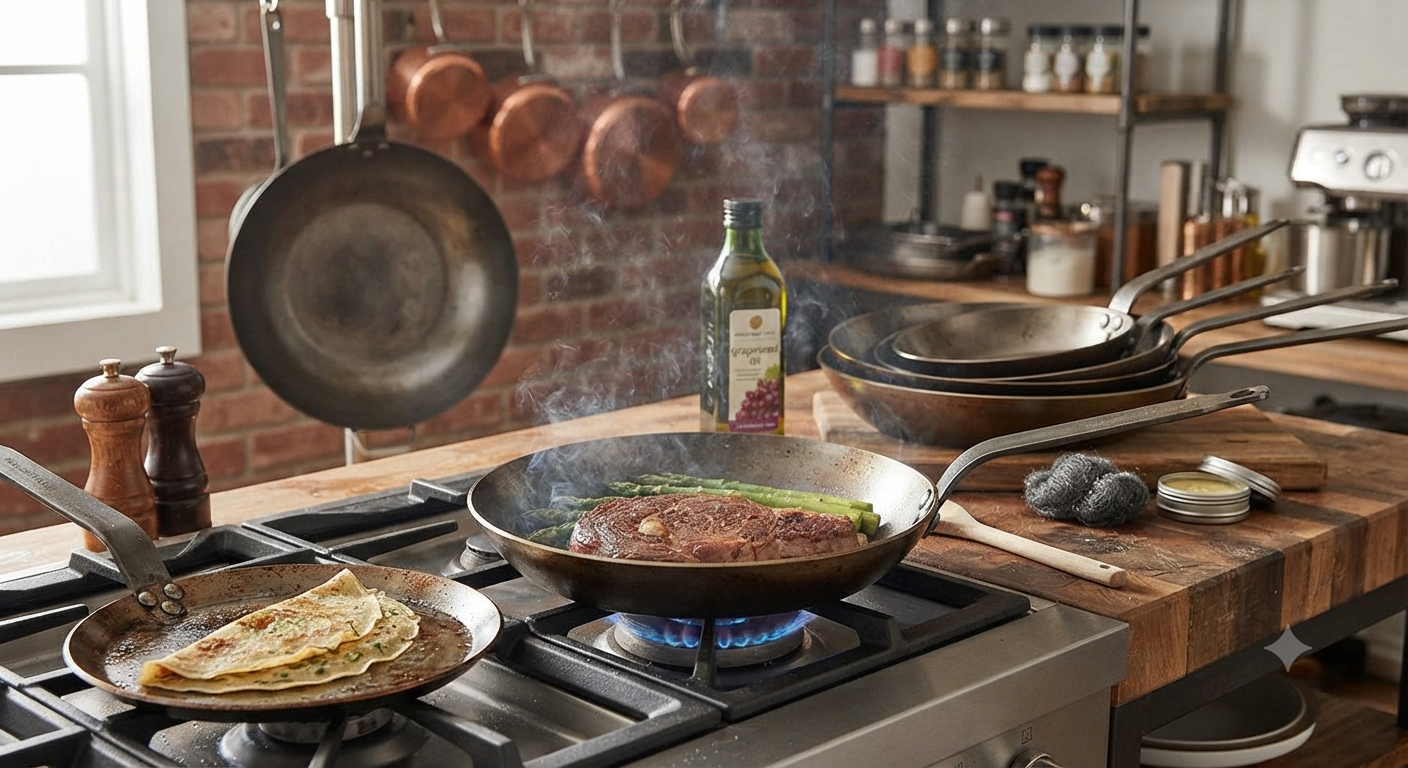
Carbon steel is a blend of iron and carbon, similar to cast iron but thinner and lighter. It develops a natural non-stick surface through seasoning — a layer of polymerized oil baked onto the metal. It heats faster than cast iron and responds quickly to temperature changes, making it popular in professional kitchens.
What Is Nonstick Cookware?
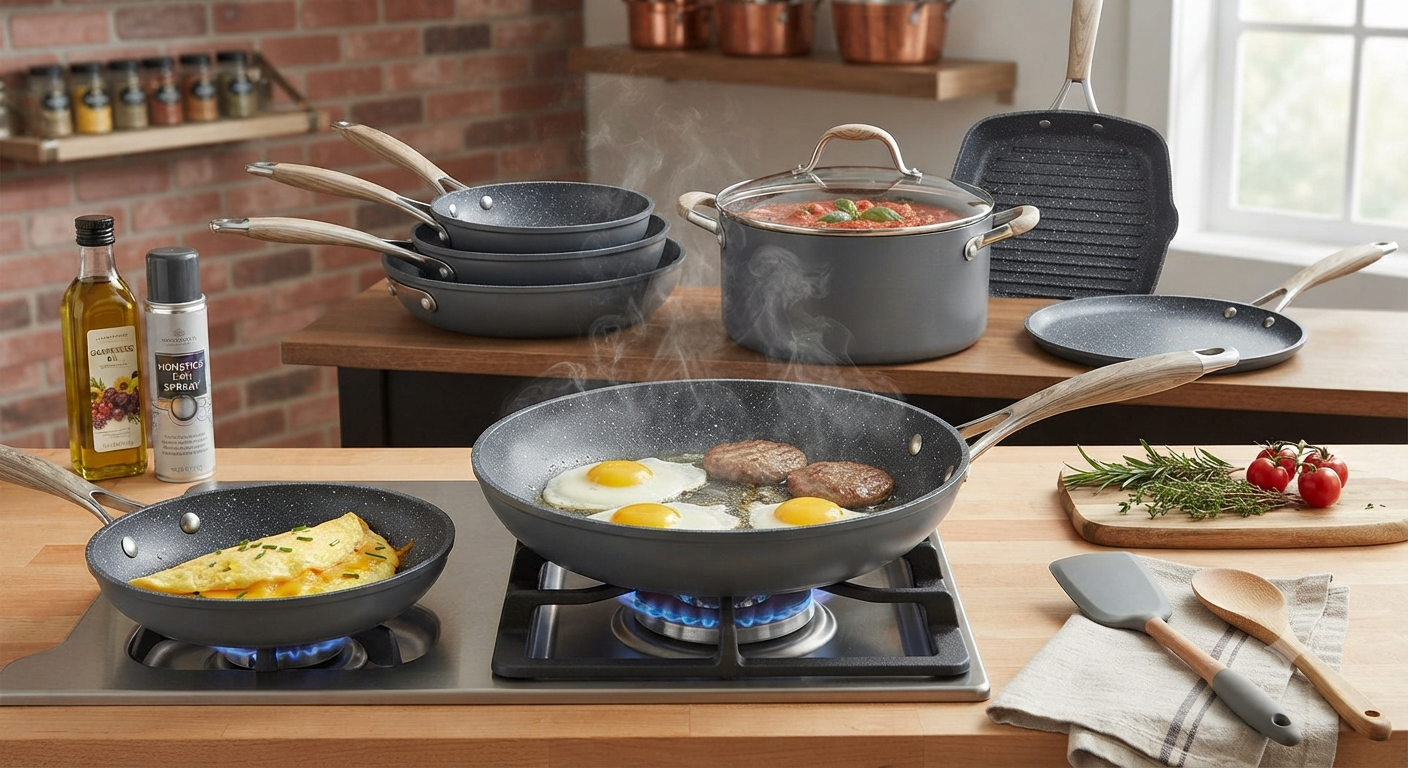
Nonstick pans use a synthetic coating (commonly PTFE or ceramic-based) bonded to an aluminum or steel base. The coating provides an immediately slick surface with no seasoning process, making it beginner-friendly and easy to clean.
Key Differences
Heat Performance
Carbon steel handles high, direct heat and is safe for searing, blackening, and oven finishing. Nonstick coatings degrade above their rated temperature (often 400–450°F), releasing fumes and shortening the pan’s lifespan.
Durability
Carbon steel can last decades and actually improves with use as seasoning builds up. Nonstick coatings wear down from scratches, high heat, and dishwasher use, typically needing replacement every 1–5 years.
Maintenance
Carbon steel requires seasoning, hand-washing, and drying immediately to prevent rust. Nonstick needs gentler care (no metal utensils, no high heat) but requires far less upkeep overall.
Cooking Use Cases
Carbon steel excels at searing meat, stir-frying, and browning. Nonstick is better suited for eggs, crepes, delicate fish, and recipes with little to no oil.
People Also Ask
Is carbon steel healthier than nonstick?
Carbon steel has no synthetic coating, so there’s no risk of coating breakdown at high heat. It’s generally considered the safer long-term option.
Can you use metal utensils on carbon steel?
Yes. Carbon steel is scratch-resistant and works fine with metal utensils, unlike nonstick coatings.
Does carbon steel rust?
Yes, if not dried and lightly oiled after washing. Proper seasoning and care prevent rust.
Is nonstick cookware safe in 2026?
Modern nonstick pans made without PFOA are considered safe under normal use, but performance and safety decline once the coating is scratched or overheated.
Which pan is better for beginners?
Nonstick is easier to start with due to instant slickness and simple cleanup. Carbon steel has a learning curve around seasoning and heat control.
Which pan lasts longer?
Carbon steel, by a wide margin — it can last a lifetime with basic care, while nonstick typically needs replacing every few years.
Which Should You Buy?
- Choose carbon steel if you want a durable, high-heat pan for searing, stir-frying, and long-term value.
- Choose nonstick if you prioritize convenience, easy cleanup, and cooking delicate or low-fat foods.
- Best solution: many cooks keep one of each — nonstick for eggs and fish, carbon steel for everything that needs high heat.
Conclusion
There’s no single “better” pan — only the better fit for how you cook. Carbon steel wins on durability, high-heat performance, and long-term value, making it the workhorse for searing, stir-frying, and roasting. Nonstick wins on convenience, offering an easy, low-maintenance surface for eggs, fish, and low-fat meals. If you can only own one, base the choice on your most common cooking task; if you can own two, they cover each other’s weak points perfectly.