Table of contents
Nonstick vs Cast Iron: Which Cookware Wins?
Nonstick cookware wins for easy cleanup, low-fat cooking, and delicate foods like eggs and fish. Cast iron wins for high-heat searing, durability, and long-term value. Most kitchens benefit from owning both.
Read More: Copper vs Carbon Steel Cookware: 2026 Comparison
Quick Comparison Table
| Feature | Nonstick | Cast Iron |
| Best for | Eggs, fish, delicate foods | Searing, frying, baking |
| Heat retention | Low-moderate | Excellent |
| Max safe heat | Low-medium (varies by coating) | Very high, oven-safe |
| Maintenance | Minimal, gentle wash | Seasoning required |
| Lifespan | 2–5 years | Decades (with care) |
| Weight | Light | Heavy |
| Upfront cost | Low to moderate | Low to moderate |
| Long-term cost | Higher (replacement) | Lower (one-time buy) |
| Oven-safe | Sometimes, check the rating | Always |
| Dishwasher-safe | Rarely recommended | Never |
| Metal utensils | Not recommended | Safe |
Heat Performance
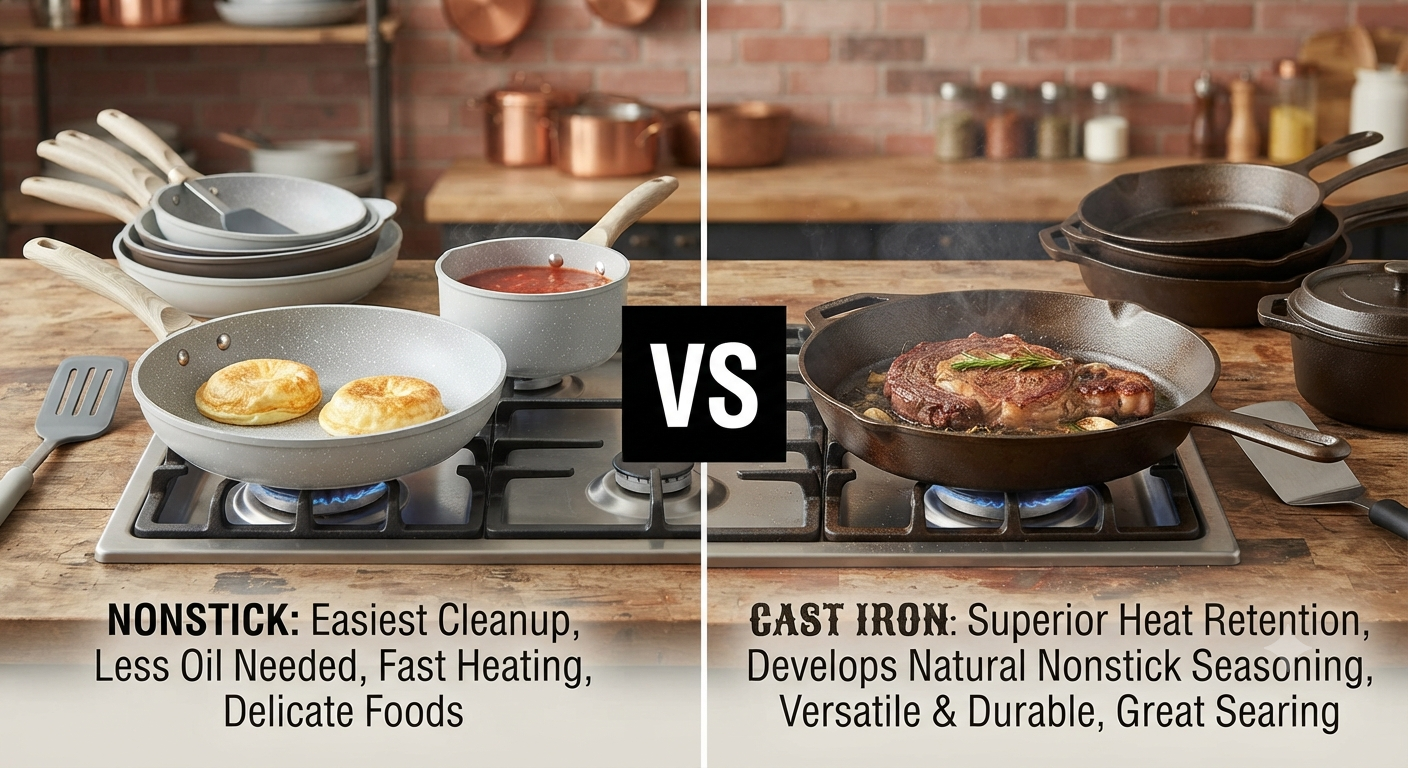
Cast iron heats slowly but retains and distributes heat evenly once hot, making it ideal for searing steaks, frying chicken, and baking cornbread at high temperatures. Nonstick pans heat up faster but lose heat quickly and typically shouldn’t be used above medium-high heat, since excessive heat can degrade the coating.
Cast iron holds heat better; nonstick heats faster but performs best at lower temperatures.
Health and Safety
Modern PTFE nonstick coatings are safe under normal cooking temperatures (below 500°F/260°C) but can release fumes if a pan is overheated or scratched. Cast iron has no synthetic coating and can add trace amounts of dietary iron to food, which some people view as a benefit.
Cast iron has no coating to break down; nonstick is safe if you avoid overheating and damaged surfaces.
Maintenance and Care
| Task | Nonstick | Cast Iron |
| Cleaning | Wipe with a soft sponge | Scrub, dry, and oil after use |
| Seasoning | Not required | Required periodically |
| Storage | Stack carefully to protect the coating | Stack freely, rust risk if damp |
| Repair | Not repairable once scratched | Can be re-seasoned indefinitely |
Nonstick needs gentle handling but little upkeep; cast iron needs seasoning but can last generations.
Durability and Long-Term Cost
Nonstick coatings degrade over time, even with careful use, and most brands recommend replacement every 2–5 years. Cast iron, by contrast, can last decades or even generations when seasoned and dried properly, making it a better long-term investment despite requiring more hands-on care.
Cast iron costs less over time because it rarely needs replacing.
Best Use Cases
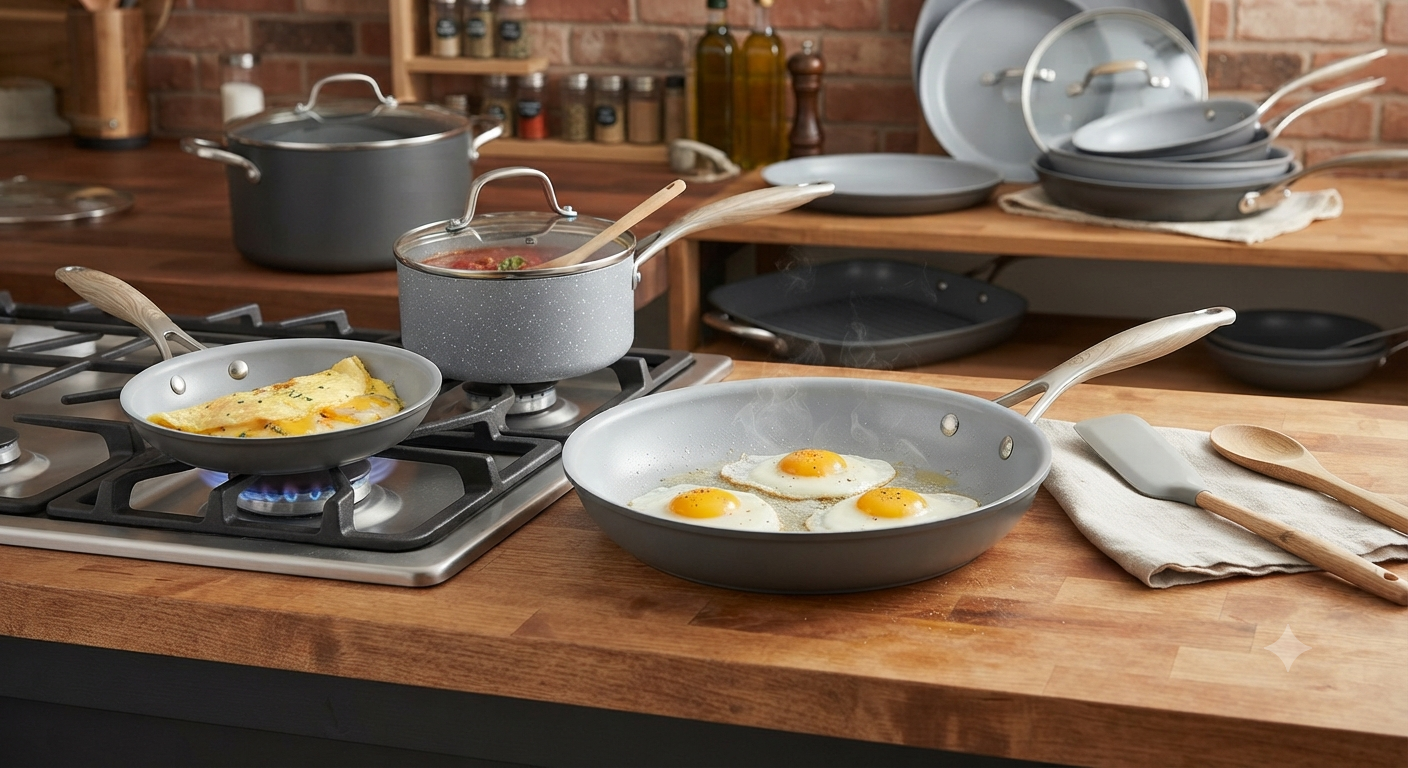
Choose nonstick for:
- Eggs, omelets, and pancakes
- Delicate fish fillets
- Low-oil or low-fat cooking
- Quick weekday cooking with easy cleanup
Choose cast iron for:
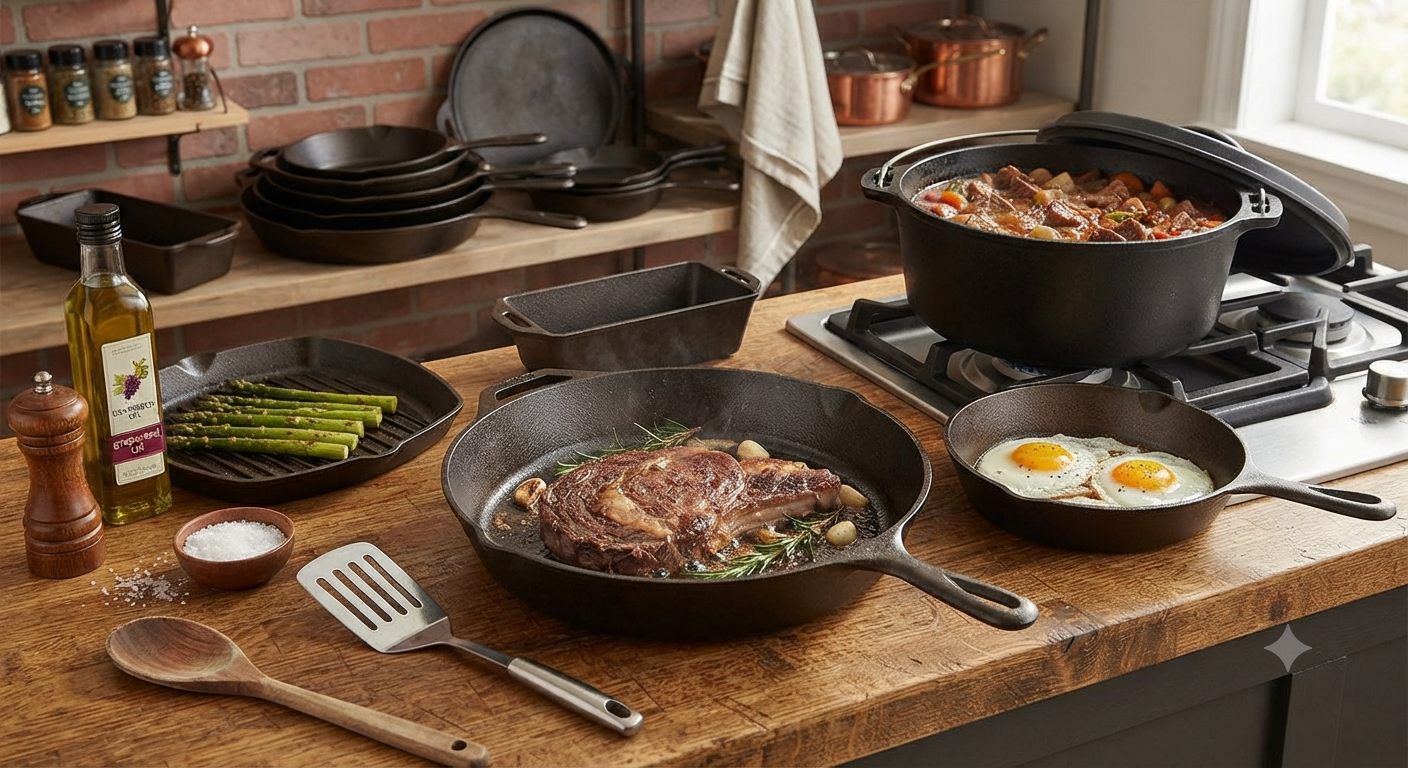
- Searing steaks and burgers
- Deep frying and shallow frying
- Oven-to-stovetop dishes
- Cornbread, pizza, and baked dishes need a crisp crust
Frequently Asked Questions
Is cast iron healthier than nonstick?
Cast iron avoids synthetic coatings entirely, which is why many people consider it the healthier long-term choice, especially at high cooking temperatures.
Does nonstick cookware wear out?
Yes. Most nonstick pans lose effectiveness within 2–5 years due to coating breakdown, even with proper care.
Can cast iron replace nonstick pans?
Mostly, yes—once well-seasoned, cast iron becomes naturally nonstick for most foods, though eggs and delicate fish still release more easily from true nonstick coatings.
Which is better for beginners?
Nonstick is easier for beginners since it requires no seasoning and forgives minor cooking mistakes.
Final Verdict
If you want low-maintenance, everyday cooking, choose nonstick. If you want a pan that improves with age, handles high heat, and lasts a lifetime, choose cast iron. Most well-equipped kitchens keep one of each.