Table of contents
Cast Iron vs Stainless Steel: Which Should You Buy?
Cast iron wins for heat retention, searing, and lifetime durability at a low price, but it’s heavy, needs seasoning, and reacts with acidic food. Stainless steel wins for versatility, quick heat response, low maintenance, and cooking acidic or delicate dishes, but it costs more and doesn’t build natural non-stick. Most well-equipped kitchens use both.
Cast iron and stainless steel are the two most recommended non-toxic cookware materials, and the “cast iron vs stainless steel” debate comes down to how you cook, not which material is objectively better. This guide covers heat performance, durability, safety, cost, and the real decisions home cooks face — with short, direct answers you can act on.
Read More: Stainless Steel vs Copper Cookware: Which Wins?
Cast Iron vs Stainless Steel: At a Glance
| Factor | Cast Iron | Stainless Steel |
| Heat retention | Excellent — stays hot long after heat is off | Moderate — cools quickly |
| Heat response | Slow to heat and cool | Fast, precise control |
| Best for | Searing, frying, stovetop-to-oven dishes | Sauces, sautéing, acidic and delicate foods |
| Non-stick surface | Builds up with seasoning over time | None — relies on preheating and oil |
| Weight | Heavy | Light to moderate |
| Maintenance | Seasoning, hand-wash, dry immediately | Dishwasher-safe, low maintenance |
| Reactivity with acidic food | Yes (bare cast iron) | No — non-reactive |
| Average lifespan | Decades, can be restored indefinitely Cast iron resists warping and can be restored endlessly | Decades with minimal upkeep stainless resists corrosion and needs less care |
| Price | Low | Moderate to high |
What Is Cast Iron Cookware?
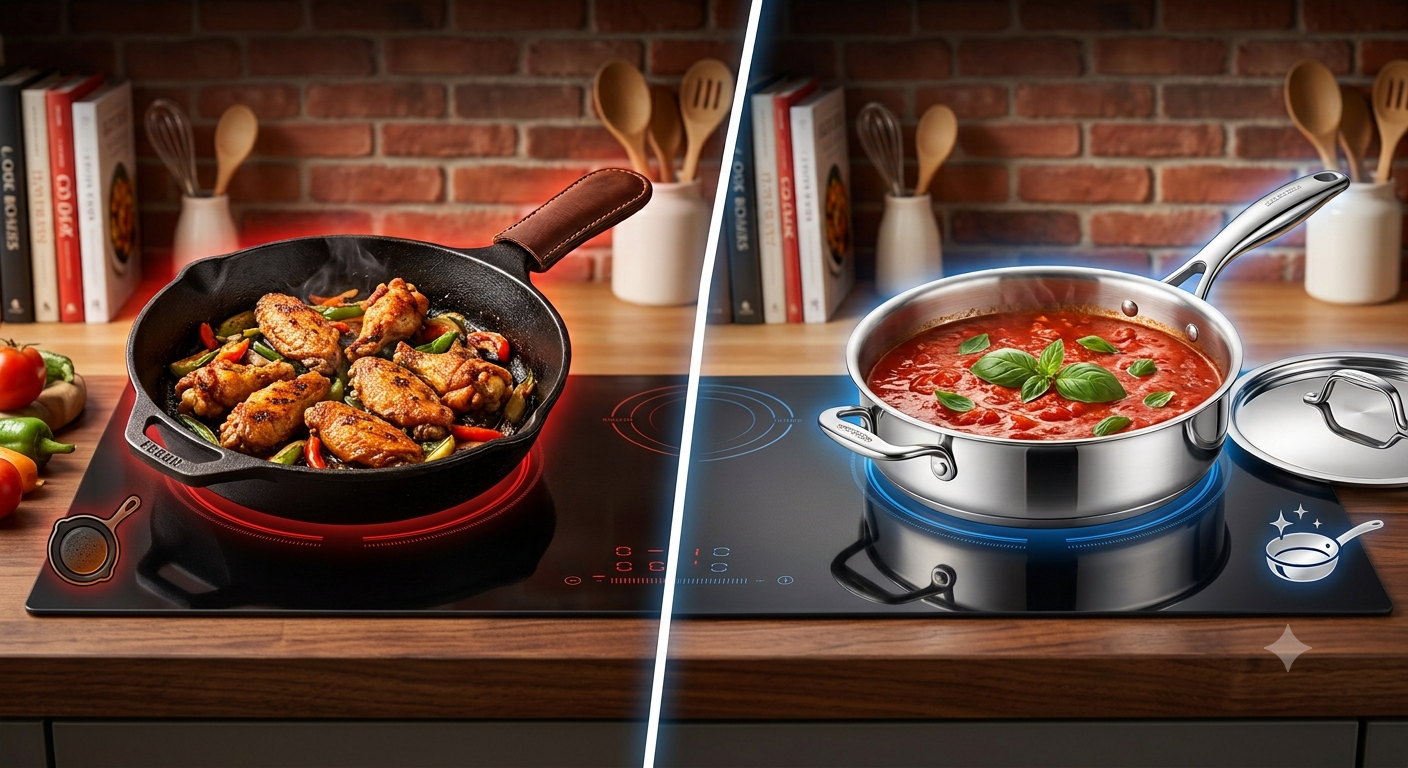
Cast iron is made by melting iron with a high carbon content, then casting it into shape. That composition gives it a dense, heavy build with a naturally rough surface. Bare cast iron needs seasoning — a layer of baked-on oil — to resist rust and release food easily.
What Is Stainless Steel Cookware?
Most stainless steel cookware is an alloy of iron, chromium, and nickel, layered with aluminum for better heat conductivity. Quality pans use a clad construction — alternating layers of stainless steel and aluminum bonded together so the aluminum core heats quickly while the stainless steel holds and evenly distributes that heat</cite>. Common grades are tri-ply (3-ply) and 5-ply.
Heat Retention & Cooking Performance
Does cast iron heat more evenly than stainless steel?
Not necessarily, cast iron doesn’t heat up uniformly and can develop hot spots that cause uneven cooking, while clad stainless steel with an aluminum core is engineered for consistent heat distribution.
Which heats up faster?
Stainless steel. Because it’s thinner and lighter, stainless steel heats up faster and also cools down more quickly than cast iron.
Which stays hot longer?
Cast iron. Because of its weight, cast iron takes longer to heat up but also holds heat significantly better once hot — useful for searing or keeping a stew at a steady simmer, risky if something starts to burn since you can’t cool it down quickly.
Durability & Lifespan
Both materials are built to outlast almost any other cookware type.
- Cast iron: Extremely thick and dense construction gives it superior strength, and a damaged surface can usually be re-seasoned or restored rather than replaced.
- Stainless steel: Chromium content forms a passive oxide layer on the surface, making it resistant to scratches and corrosion, so it holds its finish with minimal effort.
Short answer: Cast iron can be restored almost indefinitely; stainless steel resists damage in the first place and needs less restoration work.
Maintenance & Care
| Task | Cast Iron | Stainless Steel |
| Washing | Hand wash only, no soap soaking | <cite index=”2-1″>Dishwasher-safe, though hand washing is preferred</cite> |
| Drying | Dry immediately to prevent rust | No special drying needed |
| Seasoning | Required periodically | Not required |
| Storage | Keep dry, protect from scratches; may be too heavy to hang | Can be hung or stacked freely |
Health & Safety: Does Cookware Leach Metal?
Is cast iron safe to cook with?
Yes. Cast iron can add trace amounts of iron to food, which is beneficial for some people but potentially excessive for those with iron-overload conditions.
Does stainless steel leach chemicals into food?
In small amounts, yes — mainly with acidic, long-simmered dishes. A widely cited 2013 study found that after several hours of cooking tomato sauce, nickel and chromium levels rose substantially, though researchers noted the amounts stayed within recognized safe intake limits for most people (Kamerud et al., J. Agric. Food Chem.).
Who should be more careful with stainless steel?
People with a diagnosed nickel allergy or sensitivity, since stainless steel is non-reactive overall but may leach tiny amounts of nickel or chromium, particularly from acidic, long-cooked sauces.
Which is the safer choice overall?
Both are considered safe for regular cooking and are non-toxic alternatives to coated non-stick pans. Cast iron is the better pick for acid-sensitive individuals avoiding nickel; stainless steel is the better pick for anyone managing iron intake.
Cost Comparison
Cast iron is cheaper upfront; stainless steel costs more but needs less long-term upkeep. Cast iron is cheaper but heavier, while stainless is pricier but easier to maintain — both are considered a one-time purchase that lasts a lifetime.
Real Decisions: Which Pan for Which Dish?
- Searing a steak or chops: Cast iron — it holds and radiates high heat for a deep crust.
- Cooking tomato sauce, wine reductions, or citrus-based dishes: Stainless steel — its non-reactive nature means it can handle acidic ingredients without altering flavors or colors.
- Frying eggs daily: Cast iron, once well-seasoned, since it develops natural non-stick performance over repeated use.
- Building a pan sauce or fond after searing: Stainless steel — food releases cleanly, and the browned bits deglaze easily.
- Oven-to-stovetop dishes like cornbread or a braise: Either works, but cast iron is the classic choice for even, retained heat in the oven.
- Batch cooking soups or stocks: Stainless steel, for its light weight and even, responsive heating over long cook times.
Which One Should You Buy?
| If you want… | Choose |
| Maximum heat retention for searing and frying | Cast iron |
| Fast, precise temperature control | Stainless steel |
| Low-maintenance, dishwasher-friendly cookware | Stainless steel |
| The lowest upfront cost | Cast iron |
| Worry-free cooking with acidic ingredients | Stainless steel |
| A pan that improves with age and can be restored forever | Cast iron |
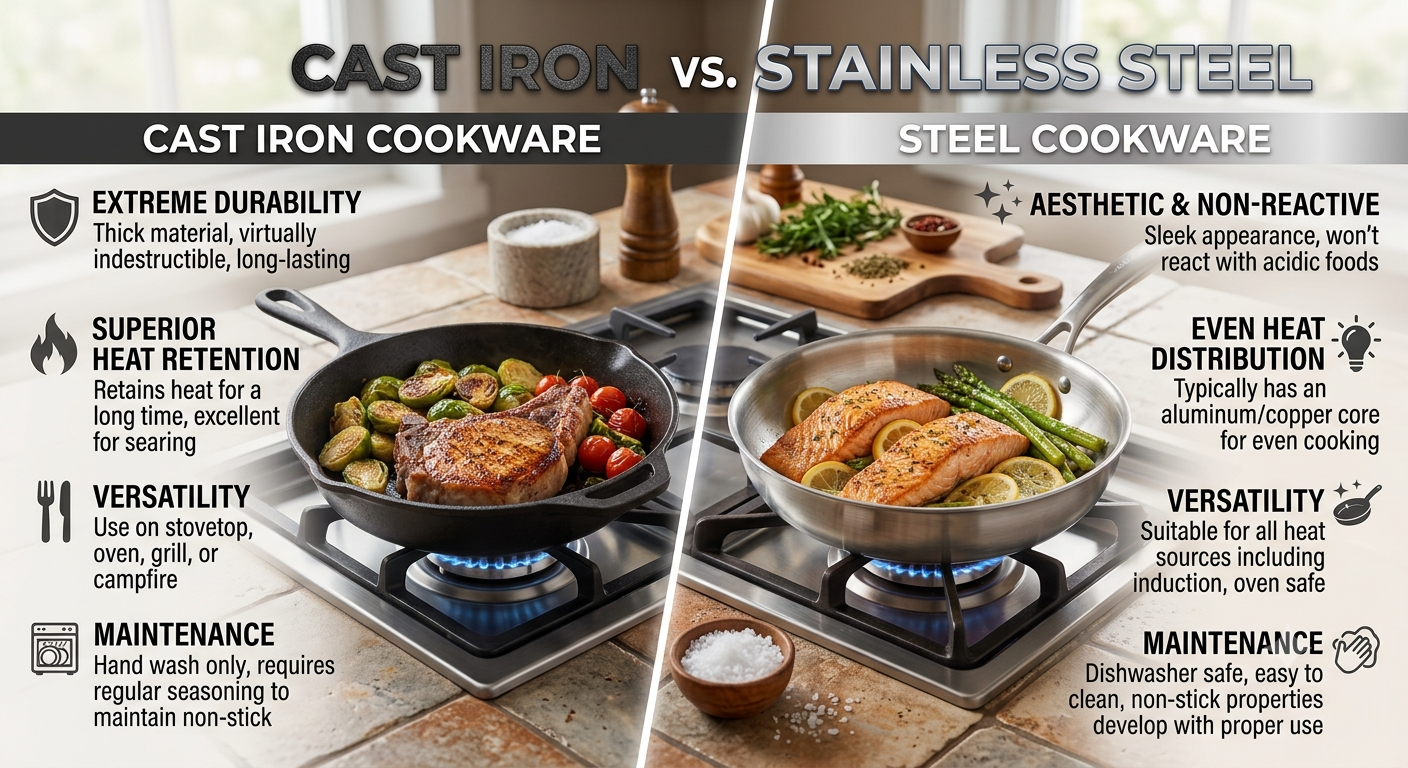
Bottom line: cast iron and stainless steel perform best in different situations, so it’s more useful to think of them as complements rather than competitors— a well-equipped kitchen typically has both a cast iron skillet and a stainless steel sauté pan.
Frequently Asked Questions
Is cast iron better than stainless steel for searing?
Yes — its heat retention gives a more consistent, deeper sear than stainless steel.
Does stainless steel cookware leach nickel?
In small amounts, mainly during long, acidic cooking, levels are generally within safe limits but matter more for people with nickel sensitivity.
Which cookware lasts longer, cast iron or stainless steel?
Both can last decades or longer. Cast iron can be restored almost indefinitely; stainless steel resists corrosion and needs less restoration.
Is cast iron or stainless steel better for eggs?
A well-seasoned cast-iron pan releases eggs more easily than bare stainless steel, which needs careful preheating and oiling.
Can you use cast iron and stainless steel in the oven?
Yes, both are oven-safe (check handle materials), making them suitable for stovetop-to-oven cooking.
Is stainless steel cookware safe for everyday cooking?
Yes, it’s considered one of the safer, non-toxic cookware options for daily use.
Conclusion
There’s no single winner in the cast iron vs stainless steel debate — only the better fit for how you cook. Choose cast iron if you want maximum heat retention, a deep sear, and a pan that gets better with age at a low upfront cost. Choose stainless steel if you want fast, precise heat control, low-maintenance care, and worry-free cooking with acidic ingredients. For most home cooks, the real answer isn’t either/or: a cast iron skillet for searing and a stainless steel sauté pan for sauces and everyday cooking covers nearly every dish you’ll make.