Table of contents
Carbon Steel vs Enameled Cast Iron: Which to Buy?
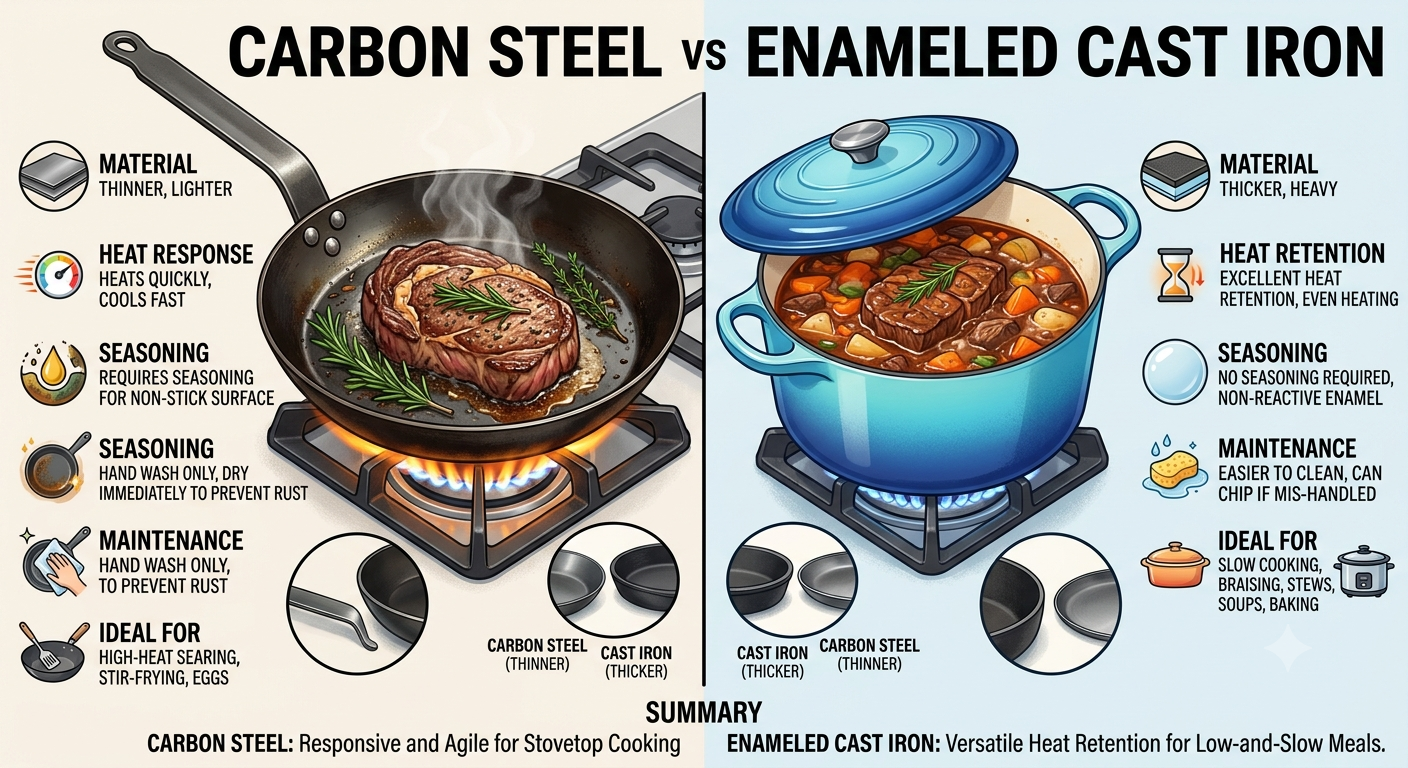
Carbon steel is light, heats fast, and builds a slick seasoned surface ideal for searing, stir-frying, and eggs. Enameled cast iron is heavier, non-reactive, and needs no seasoning — best for braises, stews, and acidic sauces. Most kitchens benefit from having one of each.
Carbon steel and enameled cast iron are both durable, non-toxic alternatives to chemical non-stick coatings, but they solve different cooking problems. This guide breaks down composition, heat behavior, maintenance, cost, and the real dish-by-dish decisions cooks face — with short, direct answers and comparison tables built for quick reference.
Read More: Cast Iron vs Stainless Steel Cookware Compared
Carbon Steel vs Enameled Cast Iron: At a Glance
| Factor | Carbon Steel | Enameled Cast Iron |
| Composition | ~99% iron, ~1% carbon | 97–98% iron, 2–3% carbon, coated in glass-based enamel |
| Weight | Light — stamped/spun into thin sheets | Heavy — cast in a mold as thick, dense metal |
| Heat response | Fast to heat, fast to cool | Slow to heat, very slow to cool |
| Heat retention | Moderate | Excellent |
| Surface | Bare metal needs seasoning | Glass enamel, no seasoning needed |
| Acidic food (tomato, wine, citrus) | Not recommended — strips seasoning | Safe — nonreactive enamel handles acidic ingredients without damage |
| Maintenance | Hand wash, dry, and oil regularly | No seasoning; wipe clean, occasional hand wash |
| Best for | Searing, stir-fry, eggs, and quick stovetop work | Braises, stews, soups, long simmers |
| Price | Moderate | Moderate to high |
What Is Carbon Steel Cookware?
Carbon steel is an alloy of iron and carbon, but with far less carbon than cast iron, roughly 99 percent iron to 1 percent carbon. It’s typically stamped into a thinner, lighter material with a smoother surface rather than cast in a mold. That smooth, thin build gives it a fast, even heat response and a nonstick-like patina once seasoned.
What Is Enameled Cast Iron?
Enameled cast iron starts as standard cast iron, about 2 to 3 percent carbon to 97 to 98 percent iron, then gets finished with several coats of smooth glass-based material, making it resistant to rust and corrosion without the need for seasoning. The enamel coating also comes in lighter modern versions that run around 50% lighter than traditional bare cast iron, though it’s still heavier than carbon steel.
Heat Performance: Speed vs. Retention
Which heats faster, carbon steel or cast iron?
Carbon steel. Carbon steel heats up faster than cast iron and cools down more quickly, too, giving you better control over what you’re cooking.
Which retains heat longer?
Enameled cast iron. Its thick, dense walls heat up more slowly but retain heat far better than thinner carbon steel, making it ideal for maintaining a steady simmer.
Does enamel change how cast iron performs?
Slightly enamel-coated cast iron pans may achieve a somewhat different level of heat retention than traditional bare cast iron pans, though the difference is minor for most home cooking.
Handling Acidic Ingredients
Can you cook tomato sauce in carbon steel?
Not recommended. Cast iron and carbon steel are both incompatible with acidic foods like tomato-based sauces — the acid breaks down the seasoning and can add a metallic taste.
Can you cook tomato sauce in enameled cast iron?
Yes. That nonreactive enamel surface is what makes enameled cast iron especially useful for tomato sauces, wine reductions, citrus braises, soups, and other long simmers that would otherwise strip a bare pan’s seasoning.
For acid-heavy cooking, choose enameled cast iron over carbon steel every time.
Maintenance & Care
| Task | Carbon Steel | Enameled Cast Iron |
| Seasoning | Required before first use and periodically | Not required — enamel is a nonporous protective layer |
| Washing | Hand wash, mild soap, no soaking | Hand wash recommended; enamel resists staining |
| Drying | Dry immediately, light oil coat after | No rust risk, but avoid thermal shock |
| Utensils | Metal utensils are generally fine once seasoned | Avoid metal utensils and abrasive scrubbers — enamel can chip |
| Rust risk | Yes, if left wet or unseasoned | None — enamel blocks rust entirely |
Durability & Lifespan
Which lasts longer?
Both are built for decades of use. Carbon steel can be re-seasoned indefinitely and resists warping, while enameled cast iron’s coating protects against corrosion but can chip or crack if handled carelessly, especially with metal utensils or abrasive cleaning tools.
Which is more fragile?
Enameled cast iron’s enamel layer is its main vulnerability — a hard knock can chip the coating, exposing the iron underneath. Carbon steel has no coating to damage, only seasoning that can be rebuilt easily.
Cost Comparison
Carbon steel typically costs less than enameled cast iron of comparable size and brand, though both are considered a one-time investment that lasts a lifetime with care.
Real Decisions: Which Pan for Which Dish?
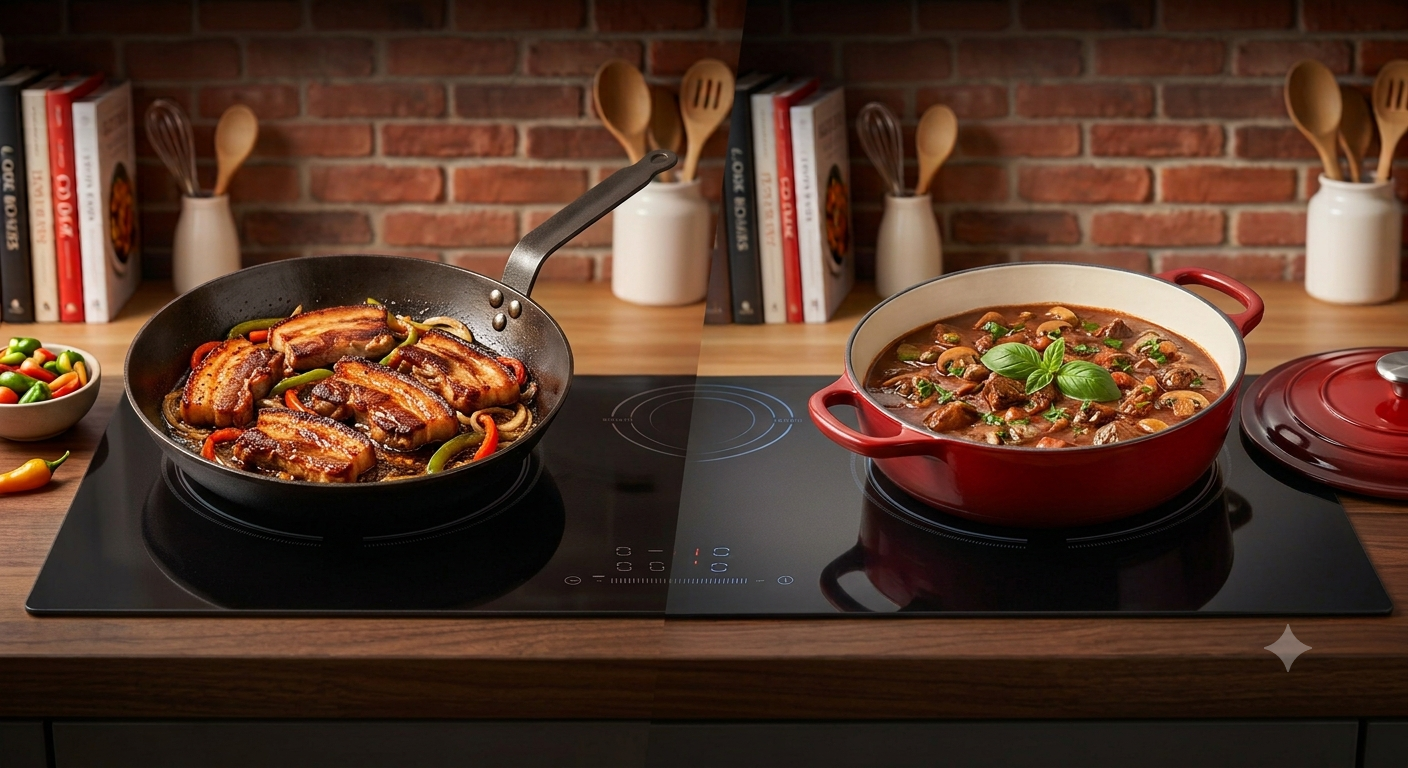
- Searing a steak or getting a hard char on vegetables: Carbon steel is ideal for stovetop searing, charring, eggs, and stir-frying thanks to its fast, responsive heat.
- Braising short ribs or making a pot roast: Enameled cast iron — its heat retention keeps a low, steady simmer for hours.
- Cooking a marinara or wine-based sauce: Enameled cast iron — the nonreactive surface won’t strip seasoning or taste metallic.
- Stir-frying or cooking an omelet: Carbon steel’s smooth cooking surface is ideal for techniques that involve moving food around, like stir-frying and omelets.
- Baking cornbread or a crusty no-knead loaf: Either works, but enameled cast iron’s steady heat gives more even results.
- Everyday eggs and fish: Carbon steel, once well-seasoned, is a gentler cooking surface than cast iron, making it better for foods that tend to stick easily, like eggs or fish.
Which One Should You Buy?
| If you want… | Choose |
| Fast, responsive heat for searing and stir-fry | Carbon steel |
| A pan that can go straight into acidic sauces | Enameled cast iron |
| No seasoning routine to maintain | Enameled cast iron |
| The lightest option between the two | Carbon steel |
| Maximum heat retention for slow braises | Enameled cast iron |
| A lower-cost entry into heavy-duty cookware | Carbon steel |
Bottom line: these materials complement rather than compete — <cite index=”28-1″>for acidic cooking, a nonreactive pan handles what carbon steel and bare cast iron can’t, while carbon steel remains the better everyday choice for searing and quick stovetop work</cite>.
Frequently Asked Questions
Is carbon steel better than enameled cast iron for searing?
Yes — it’s fast, high heat response gives a quicker, more controllable sear.
Do you need to season enameled cast iron?
No. The enamel coating is nonporous and protects the iron beneath it, so seasoning isn’t necessary.
Can enameled cast iron go in the dishwasher?
Hand washing is generally recommended to protect the enamel finish long-term, though many brands rate it dishwasher-safe.
Is carbon steel or enameled cast iron better for a Dutch oven?
Enameled cast iron — its heat retention and acid resistance suit long stews, soups, and braises better than carbon steel.
Does carbon steel rust?
Yes, if left wet or unseasoned. Regular oiling and thorough drying prevent it.
Which is lighter, carbon steel or enameled cast iron?
Carbon steel is significantly lighter, since it’s stamped from thin sheets rather than cast as a thick, dense mold.
Conclusion
Carbon steel and enameled cast iron solve different problems in the kitchen. Choose carbon steel if you want a light, fast-heating pan for searing, stir-fries, and eggs at a lower price. Choose enameled cast iron if you want maximum heat retention, zero-maintenance care, and a surface that handles acidic sauces without hesitation. For most home cooks, the strongest setup is both: a carbon steel skillet for quick stovetop work and an enameled cast iron Dutch oven for braises, soups, and stews.