A Bosch dishwasher not drying is most commonly caused by low or empty rinse aid, a cycle that doesn’t run hot enough, overcrowded loading, or normal condensation-drying behavior rather than an actual fault. Bosch dishwashers use condensation drying instead of an exposed heating element, so a few droplets here and there — especially on plastic — is often completely normal, not a sign of malfunction. Fill the rinse aid dispenser, select a hotter cycle like Sanitize or Extra Dry, and load dishes with proper spacing before assuming anything is broken. If dishes are still genuinely soaked after covering these basics, a failed vent fan, heating element, or CrystalDry component is the more likely explanation, and that typically needs a technician.
Read More: Dishwasher Buying Guide 2026: US & UK Edition
Table of contents
Why Bosch Dishwashers Dry Differently Than Other Brands
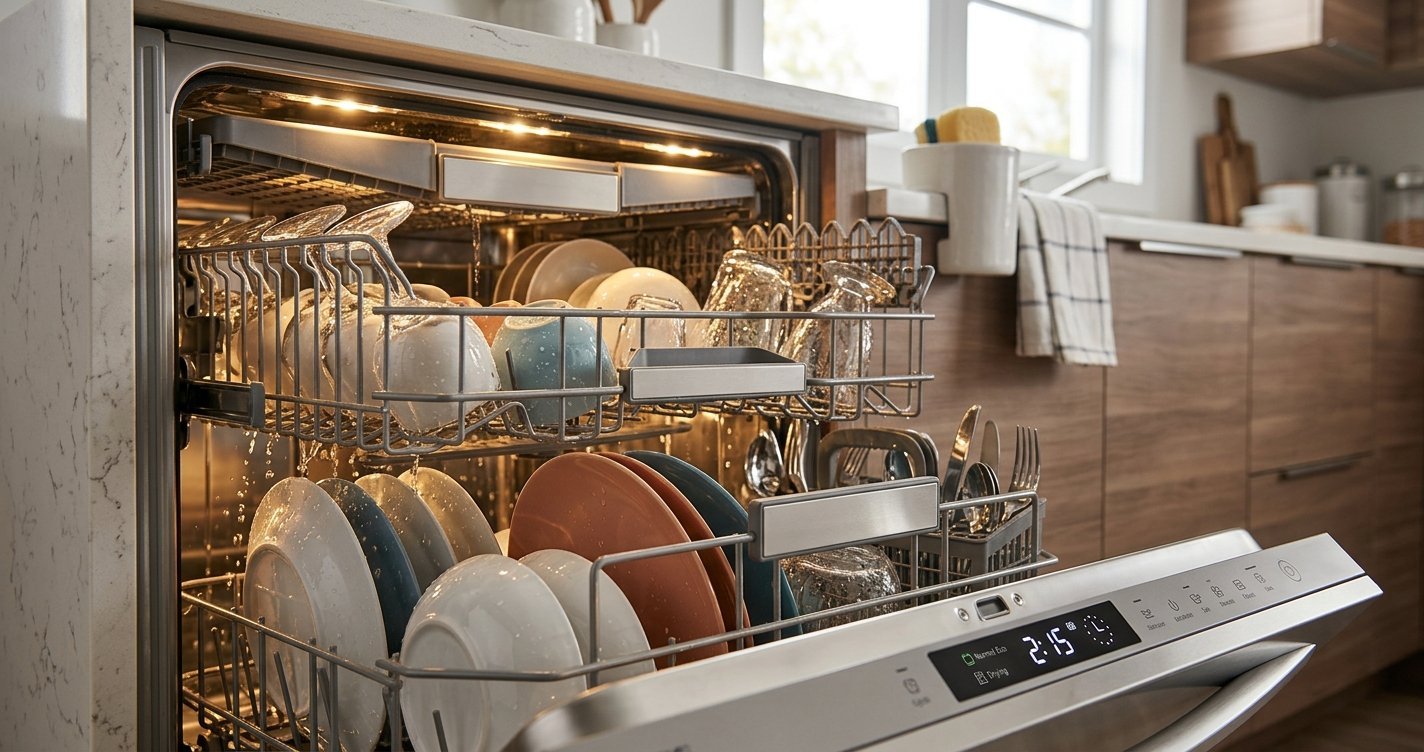
Most standard dishwashers use an exposed heating element to actively bake moisture off dishes. Bosch takes a different approach called condensation drying: during the final rinse, water is heated to a very high temperature, and when the hot dishes meet the comparatively cooler stainless steel tub walls, moisture condenses on the tub instead of remaining on the dishes, then runs down and drains away. This design depends on three things working correctly together — rinse aid, sufficient heat, and proper venting. If any one of those is missing or underperforming, dishes can come out wet even though nothing is technically broken.
This also explains a common source of confusion for anyone switching from an older, heating-element dishwasher: with condensation drying, dishes finish closer to room temperature rather than hot to the touch, and a few stray droplets are a normal part of how the system works, not necessarily a fault.
Common Causes of a Bosch Dishwasher Not Drying
1. Low or Empty Rinse Aid (Most Common Cause)
Rinse aid lowers the surface tension of water so it sheets off dishes instead of beading up. Water that sheets off drains away; water that beads up sits there and has to evaporate on its own, which condensation drying isn’t designed to force. On a Bosch, rinse aid isn’t a nice-to-have — it’s a functional part of how drying actually works.
Fix: Keep the dispenser filled at all times, and if dishes are still coming out spotty or wet with a full dispenser, increase the rinse aid dosage setting — a medium to high setting is generally recommended for optimal drying, especially in hard-water areas.
2. A Cycle That Doesn’t Run Hot Enough
Lower-temperature cycles simply don’t generate enough heat difference between the dishes and the tub walls for condensation drying to work effectively.
Fix: Select a cycle with a hotter final rinse, such as Sanitize or Extra Dry, particularly for loads that are mostly plastic.
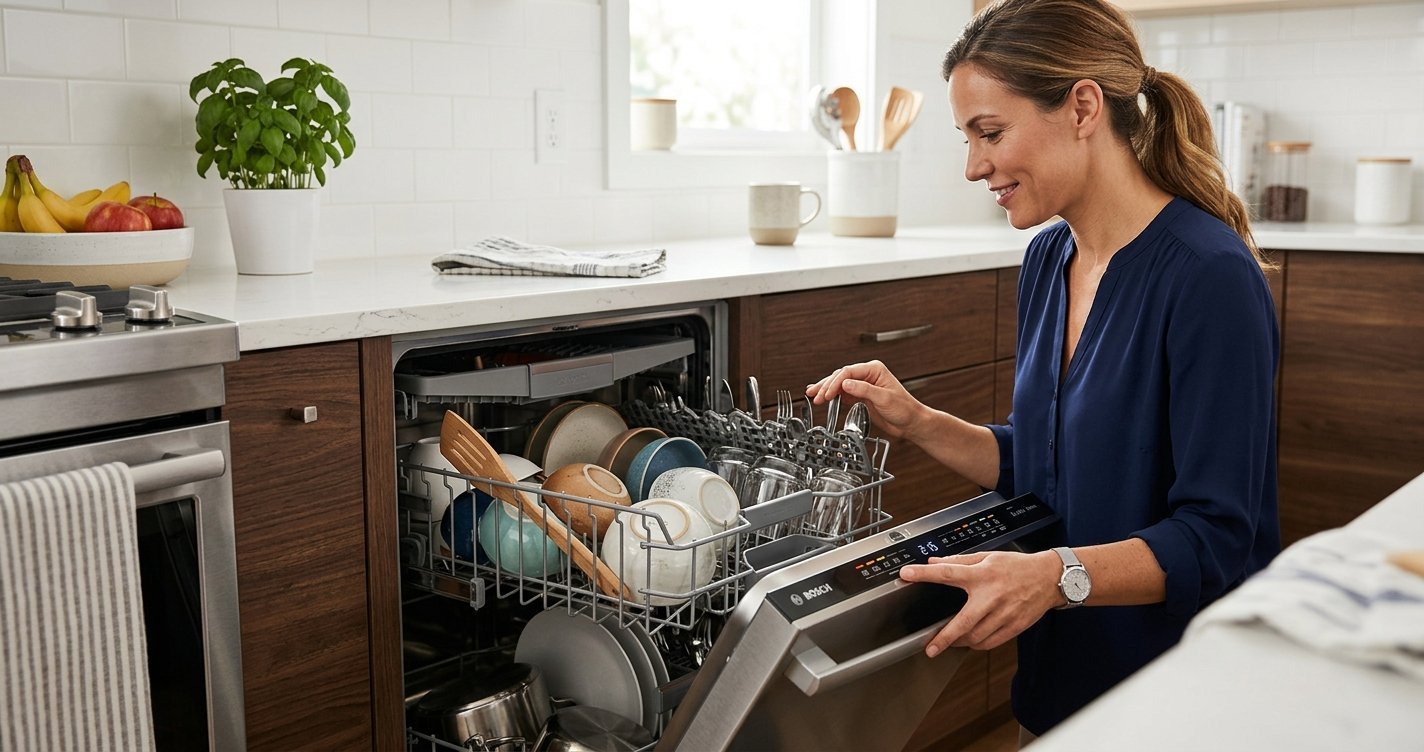
3. Overcrowded or Improper Loading
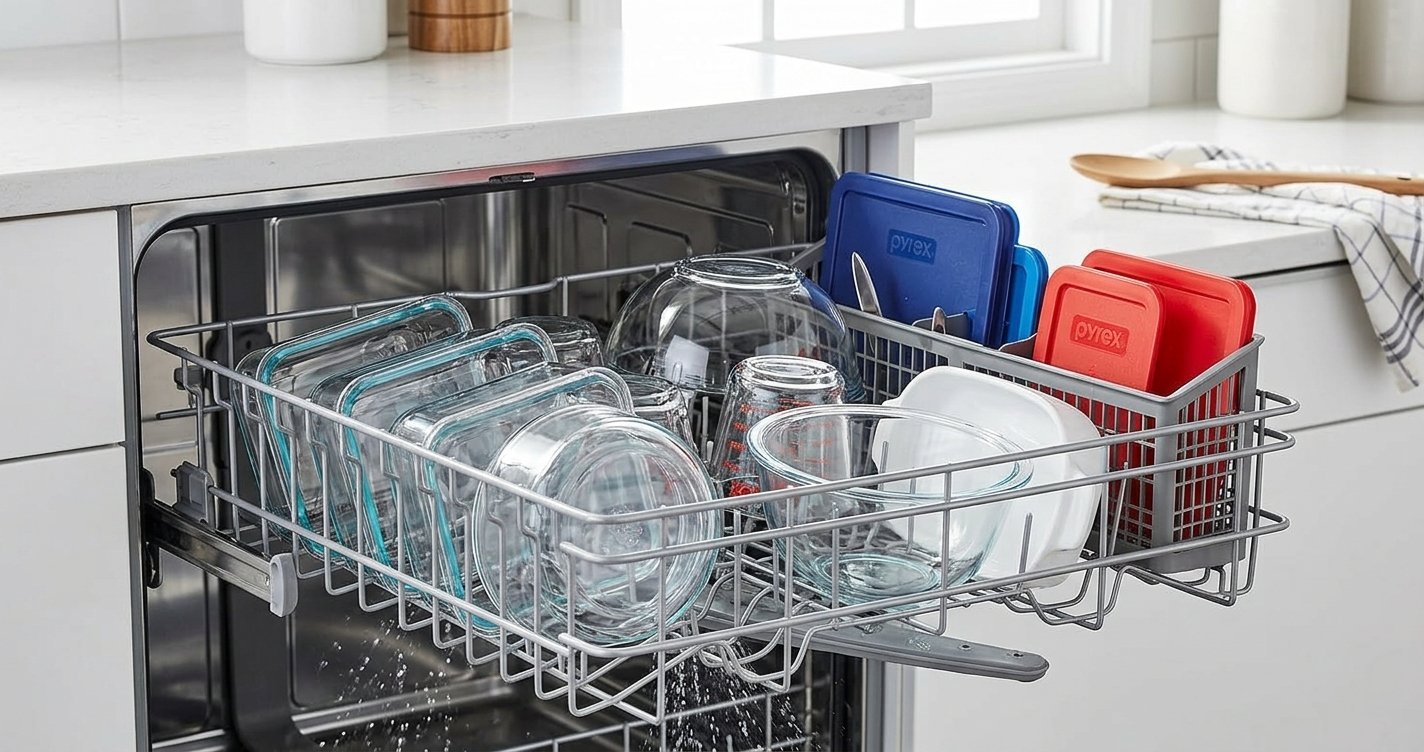
Dishes need space between them for air to circulate and water to drain off properly. Overcrowding blocks that airflow and traps moisture, especially in the corners of cups and bowls.
Fix: Space items out with adequate gaps, and angle cups and bowls downward so water can run off rather than pool inside them.
4. Plastic Items Specifically
Plastic doesn’t retain heat the way ceramic or glass does, which makes it inherently harder to dry through condensation alone — this is a known limitation of the drying method itself, not a defect.
Fix: If your model has CrystalDry (available on 800 Series and Benchmark units), make sure you’ve selected a cycle that fully utilizes it, since CrystalDry’s Zeolite-based technology is specifically built to dry plastics far better than plain condensation.
5. AutoAir or CrystalDry Not Engaging
Some 500 Series models include AutoAir, which automatically pops the door open slightly at the end of the cycle to release steam and pull in drier air. If you manually open the door before the cycle finishes, you interrupt this process.
Fix: Let the dishwasher complete its full cycle and allow the door to open on its own if your model has AutoAir. Don’t open it early.
6. Blocked Venting
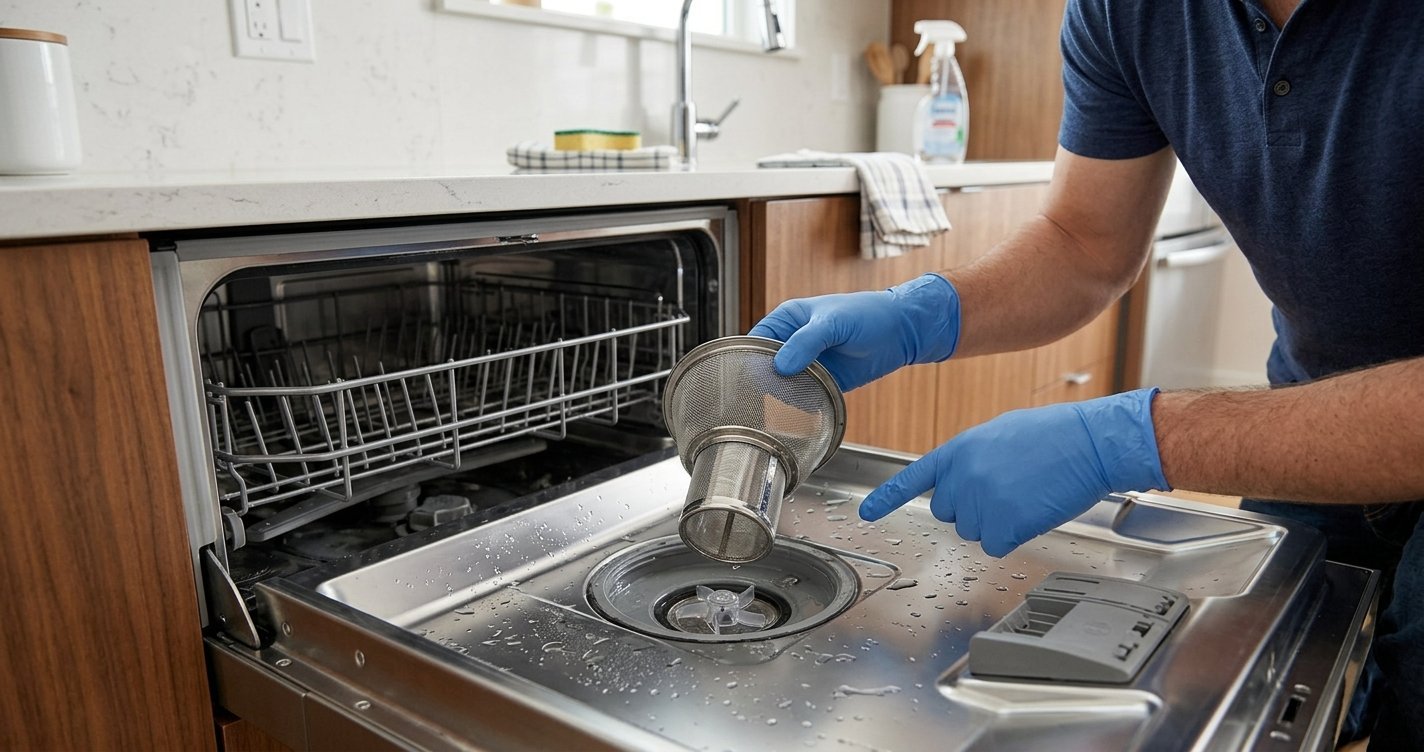
Clogged filters and spray arms don’t directly control drying, but they affect water circulation and drainage — poor drainage leaves excess moisture inside the tub, which reduces overall drying effectiveness even when rinse aid and cycle selection are correct.
Fix: Clean the filter and spray arms regularly as part of routine maintenance, since this indirectly supports drying performance alongside its main role in wash quality.
7. A Failed Heating Component (Requires a Technician)
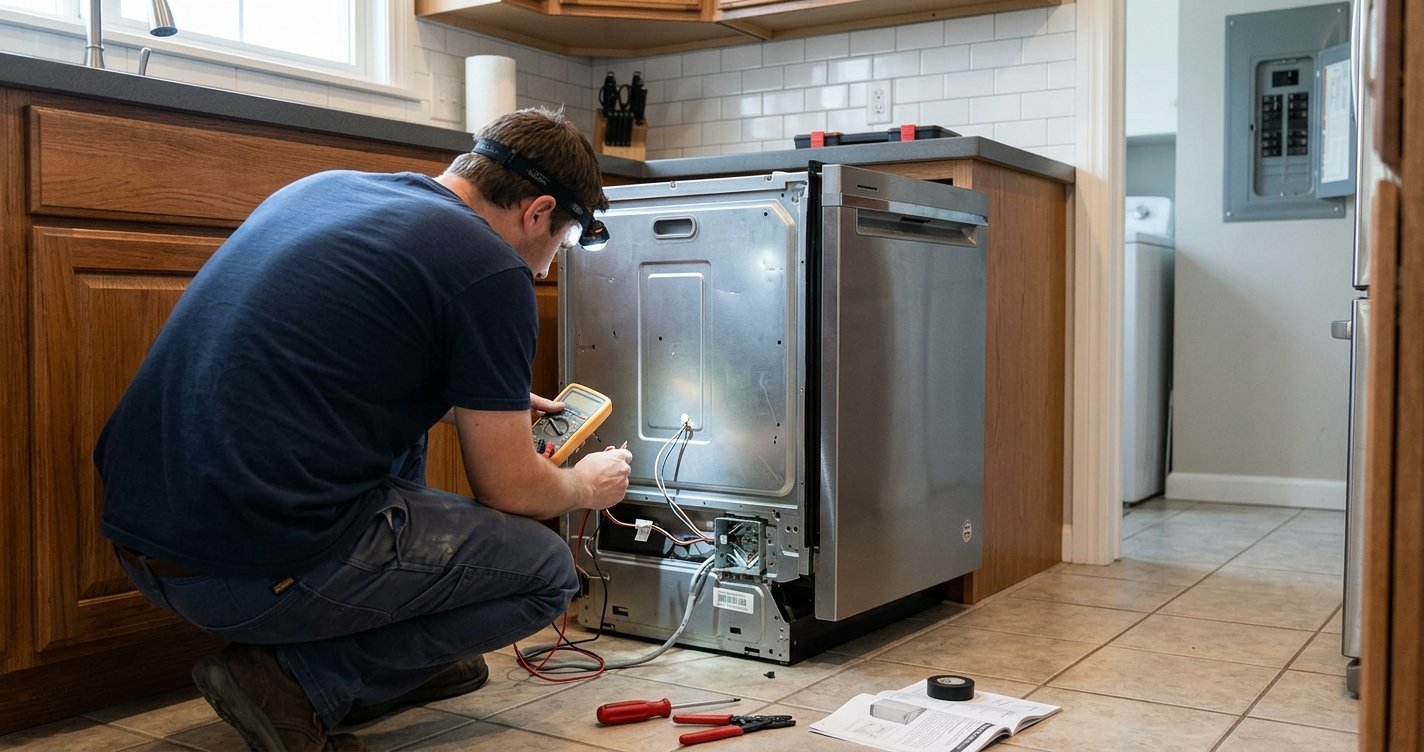
If you’ve filled the rinse aid, selected a hot cycle, loaded properly, and let the door open naturally, but dishes are still consistently soaked load after load, the issue may be a failed vent fan motor, a faulty heating element, or — on CrystalDry models — a failure in the Zeolite drying hardware itself.
Fix: This typically requires opening the appliance and testing components with a multimeter for continuity, which is a job best left to a technician, particularly for CrystalDry-related failures given the complexity of that system.
Quick Fixes to Try First
- Check and fill the rinse aid dispenser, located next to the detergent dispenser.
- Increase the rinse aid dosage if dishes are still spotty or wet with a full dispenser.
- Select Sanitize or Extra Dry instead of a lower-temperature cycle.
- Reload with proper spacing, angling cups and bowls to drain.
- Let the door open on its own if your model has AutoAir — don’t open it manually.
- Clean the filter and spray arms to rule out drainage-related moisture buildup.
When Wet Dishes Are Actually Normal
It’s worth setting realistic expectations before assuming something is broken. A few droplets on glass or ceramic items, and dishes that come out closer to room temperature rather than hot, are normal outcomes of condensation drying — not a malfunction. The behavior only crosses into a genuine problem when, despite using rinse aid, running a hot cycle with a drying option selected, and letting the door open naturally, your glass and ceramic dishes still come out genuinely soaked load after load.
When to Call a Technician
Call for professional repair if:
- You’ve covered rinse aid, cycle selection, loading, and door timing, and dishes are still consistently wet — not just slightly damp.
- You suspect a failed vent fan motor, heating element, or CrystalDry component, since testing these requires opening the appliance and using a multimeter.
- Steam remains trapped inside the dishwasher after the cycle ends, suggesting the vent isn’t opening or is blocked by debris.
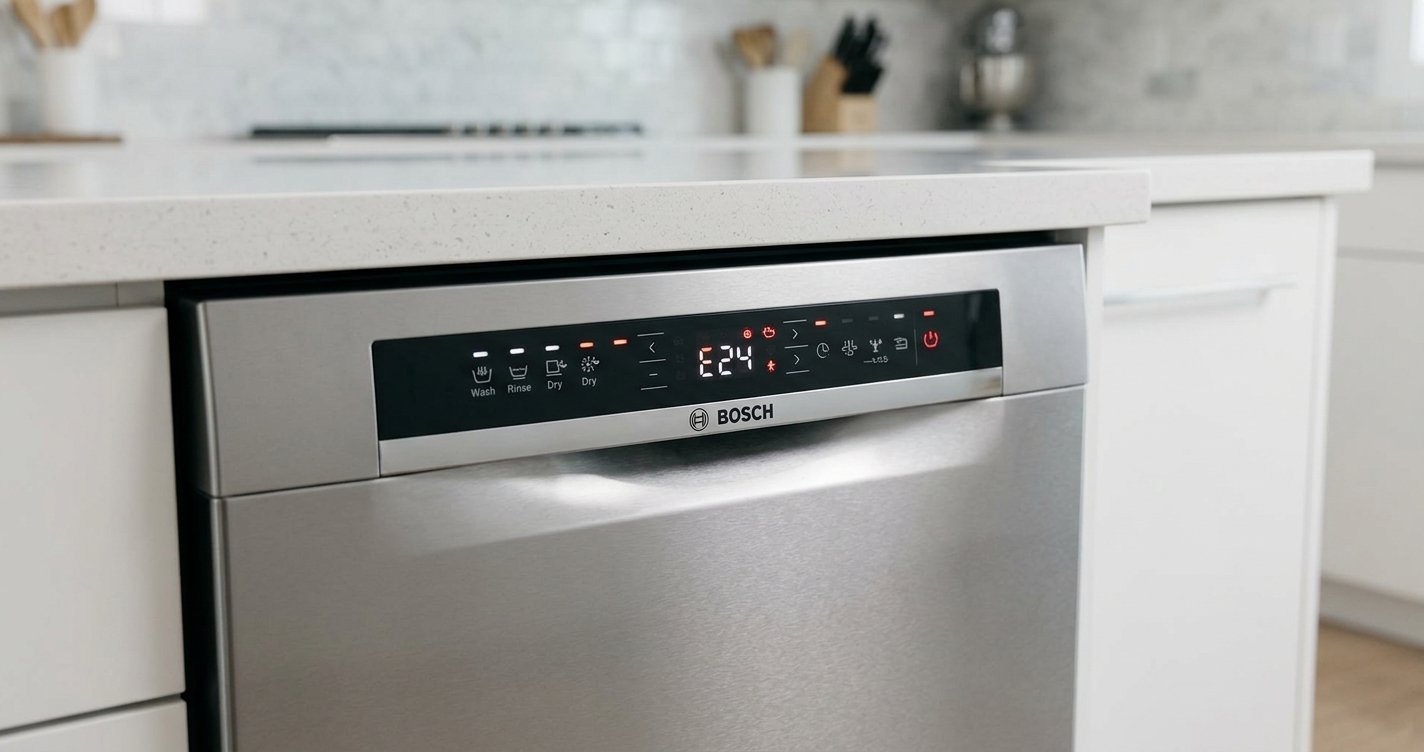
- The dishwasher displays an error code related to heating or drying that persists after basic troubleshooting.
Frequently Asked Questions
Why is my Bosch dishwasher not drying dishes?
The most common cause is low or empty rinse aid, followed by a cycle that doesn’t generate enough heat, overcrowded loading, or normal condensation-drying behavior rather than a genuine fault.
Is it normal for a Bosch dishwasher to leave dishes slightly wet?
Yes, to some degree. Bosch dishwashers use condensation drying rather than a heating element, so dishes finish closer to room temperature and a few droplets — especially on plastic — are a normal part of how the system works.
Does rinse aid really make that much difference in a Bosch dishwasher?
Yes — rinse aid isn’t optional for Bosch’s drying method. It lowers water’s surface tension so it sheets off and drains away instead of beading up and sitting on the dish, which condensation drying can’t force to evaporate on its own.
What is CrystalDry, and does it fix drying problems?
CrystalDry is Bosch’s premium drying technology, available on 800 Series and Benchmark models, using a natural Zeolite mineral that absorbs moisture and releases heat to actively dry dishes, including plastics, far better than plain condensation drying.
Why are my plastic containers always wetter than my plates after a cycle?
Plastic doesn’t retain heat the way ceramic or glass does, making it inherently harder to dry through condensation. This is a known limitation of the drying method itself rather than a sign of malfunction, unless your model has CrystalDry and still struggles.
When should I stop troubleshooting and call a technician?
Once you’ve confirmed rinse aid is full, you’re using a hot cycle with a drying option, loading is correct, and the door is opening naturally at the end of the cycle — if dishes are still consistently soaked after all of that, it’s time for a professional diagnosis.
Conclusion
A Bosch dishwasher not drying properly is, in the large majority of cases, a settings and habits issue rather than a mechanical failure — and it’s almost always traceable back to rinse aid, cycle selection, or loading technique. Understanding that Bosch relies on condensation drying rather than a heating element also resets expectations: a few droplets on plastic or glass isn’t necessarily something to fix; it’s how the system is designed to work. Cover the basics first, and only look toward the vent fan, heating element, or CrystalDry hardware — and a technician — once you’ve genuinely ruled out the simple, user-correctable causes.