According to Bosch’s own maintenance guide, keeping a Bosch dishwasher clean means addressing four areas regularly: the filter (clean monthly by twisting it out and rinsing with soap and a soft brush), the spray arms (clear blocked holes as needed), the interior and door seals (wipe down and descale a few times a year), and the drain/pump (check if standing water appears). Bosch recommends using its own dishwasher cleaner a few times a year for grease and protein buildup, and a separate descaler a few times a year for hard water and limescale — run on the hottest, longest cycle with the dishwasher empty.
Read More:Bosch 500 vs 800 Dishwasher: Which Bosch Series Should You Buy?
Table of contents
Why a “Self-Cleaning” Dishwasher Still Needs Cleaning
It’s easy to assume a dishwasher cleans itself every time it runs, but bits of food, grease, undissolved detergent, and water minerals still build up on the filter and interior walls over time. Left unaddressed, this buildup doesn’t just cause odors — it can seriously damage the filter and pump, and you’ll typically notice spots and film appearing on your glassware, dinnerware, and flatware well before the appliance itself shows obvious signs of trouble.
How to Clean the Bosch Dishwasher Filter
The filter is the single most important part to clean regularly — it protects the pump from debris, clears the wash water, and keeps food particles from resticking to your dishes.
- Remove the bottom rack and, on most models, the lower spray arm sitting directly on top of the filter.
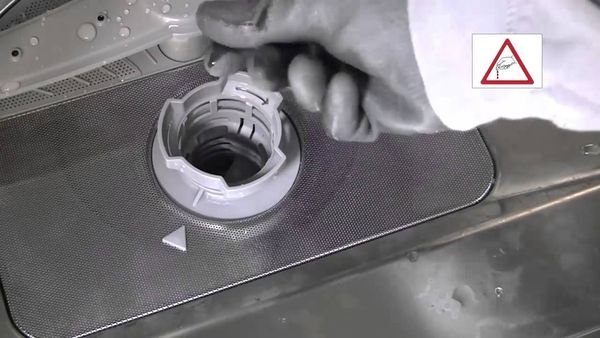
- Locate the filter at the bottom center of the tub.
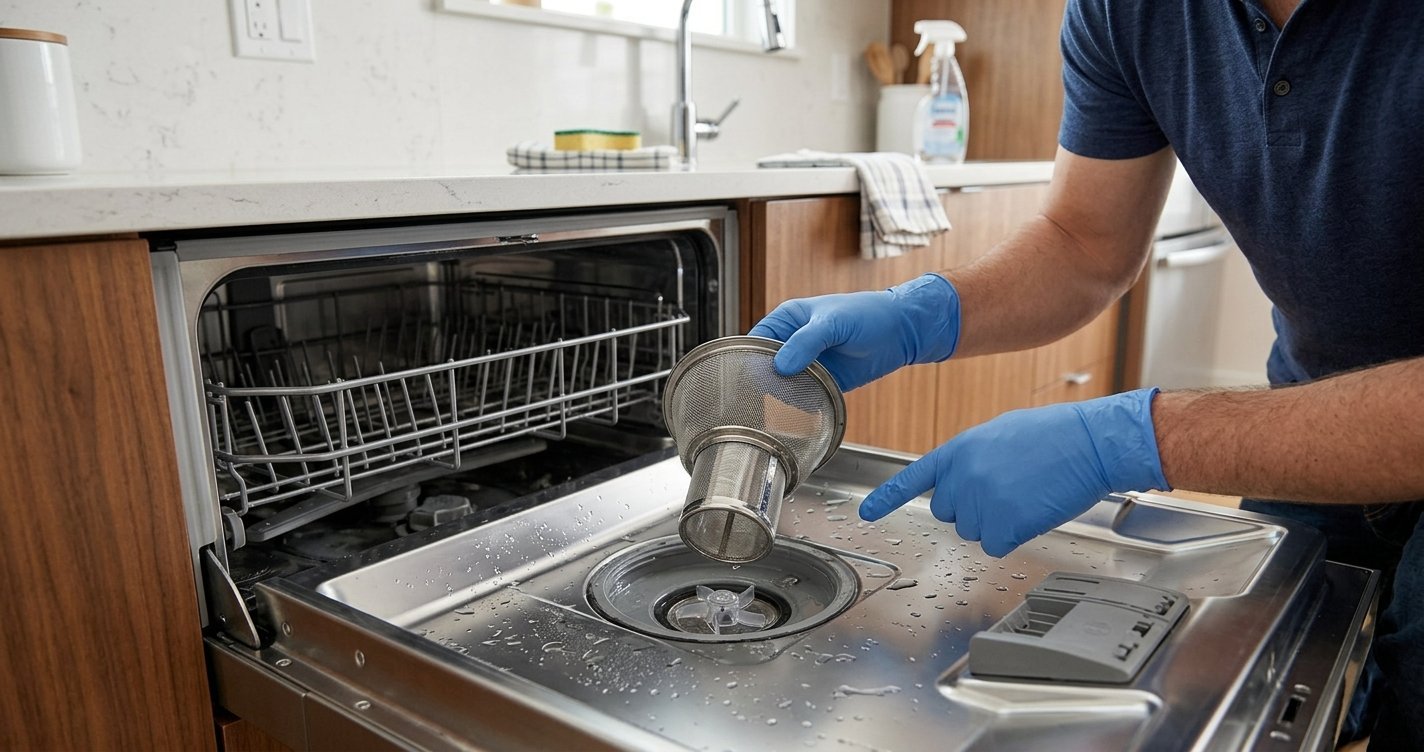
- Twist the filter knob or cap counterclockwise and lift it straight out. Bosch filters commonly separate into two or three pieces — a cylindrical screen, a fine mesh insert, and sometimes a flat screen underneath.
- Wash each piece under warm, running water with mild soap and a soft brush (an old toothbrush works well) to remove grease and trapped debris. For heavily soiled filters, let them soak first in warm, soapy water.
- Dry the pieces and reassemble them in the correct order.
- Reinstall the filter, twisting it clockwise until it locks securely, then replace the spray arm and bottom rack.
How often: Bosch and most appliance guides recommend cleaning the filter monthly, though households that don’t scrape plates before loading may need to check it more frequently.
How to Clean the Spray Arms
Food debris can lodge in the small holes spray arms use to distribute water, which reduces cleaning power even when the rest of the dishwasher is spotless.
- Remove the spray arm(s) according to your model’s manual — most detach without tools.
- Inspect the small holes for blockages and clear them with a toothpick or a soft brush.
- Rinse under lukewarm running water until the holes are fully clear.
- Reattach the spray arm securely before running a test cycle.
How to Deep Clean and Descale the Interior
This is where Bosch’s own cleaner and descaler products come in, though a vinegar-and-baking-soda approach works as a lower-cost alternative for lighter maintenance.
Using Bosch Dishwasher Cleaner (for grease, starch, and protein residue)
- Add one box of Bosch dishwasher cleaner to the bottom of the empty dishwasher.
- Run the hottest, longest cycle available.
- Use this treatment a few times a year, according to Bosch’s own guidance.
Using Bosch Descaler (for hard water and limescale)
- Start the longest, hottest wash cycle on an empty dishwasher — don’t add detergent.
- After about 30 minutes into the cycle, add one box of descaler to the bottom of the dishwasher and let the cycle continue.
- Run a second, separate wash cycle once that finishes.
- Use this a few times a year, more often in hard-water areas.
Using Vinegar and Baking Soda (budget alternative)
- Place a cup of white vinegar on the top rack, or pour it into the bottom of an empty dishwasher.
- Run a hot cycle with nothing else inside.
- Afterward, sprinkle a cup of baking soda across the bottom of the tub and run a short hot water cycle to help neutralize odors and further clean the interior.
- Once finished, let the dishwasher cool for a few minutes with the door slightly open to air out.
A caution on vinegar: it’s fine for occasional cleaning cycles but shouldn’t be used excessively, since repeated exposure can affect rubber components like the door gasket over time.
How to Clean the Door Seal, Interior Walls, and Exterior
- Door gasket/rubber seal: wipe with a damp microfiber cloth and mild soap to remove mildew, mold, or trapped debris — a common source of lingering odor if neglected.
- Interior walls and stainless steel tub: wipe down with warm water and mild soap; avoid abrasive scrubbers, which can scratch stainless steel or dull the finish.
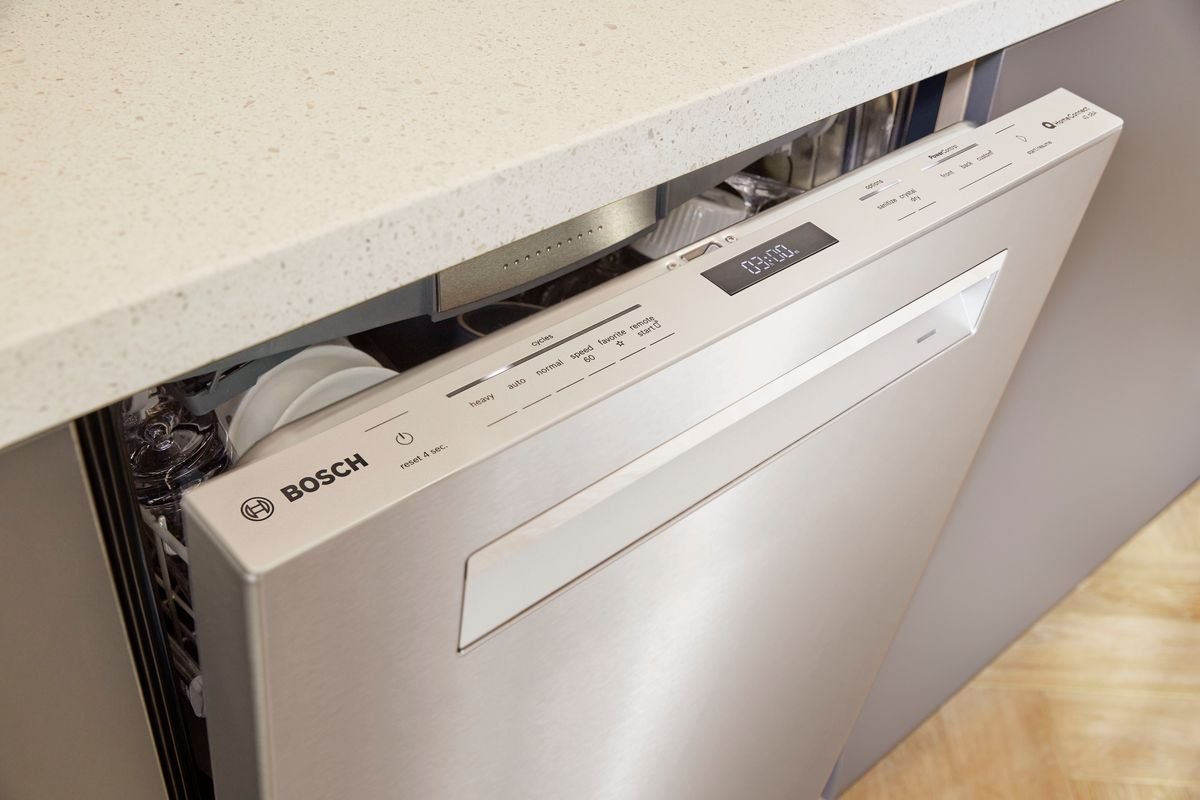
- Exterior panels and handle: use a damp cloth and mild soap, working with the grain on stainless steel to keep it looking clean without streaking.
- Control panel: wipe gently with a damp (not wet) cloth to avoid damaging touchscreens or special finishes — avoid spraying cleaner directly onto the panel.
Checking the Drain and Pump
If your dishwasher isn’t draining properly and standing water is accumulating at the bottom of the tub, the pump may need attention rather than just the filter:
- Remove and clean the filter first, using soap and a soft brush as described above.
- Remove the pump cover, located directly beneath where the filter sat.
- Carefully clear any debris and standing water from the pump area with a sponge, wearing gloves since broken glass is a common cause of clogs.
- Reassemble and run a short test cycle to confirm normal drainage.
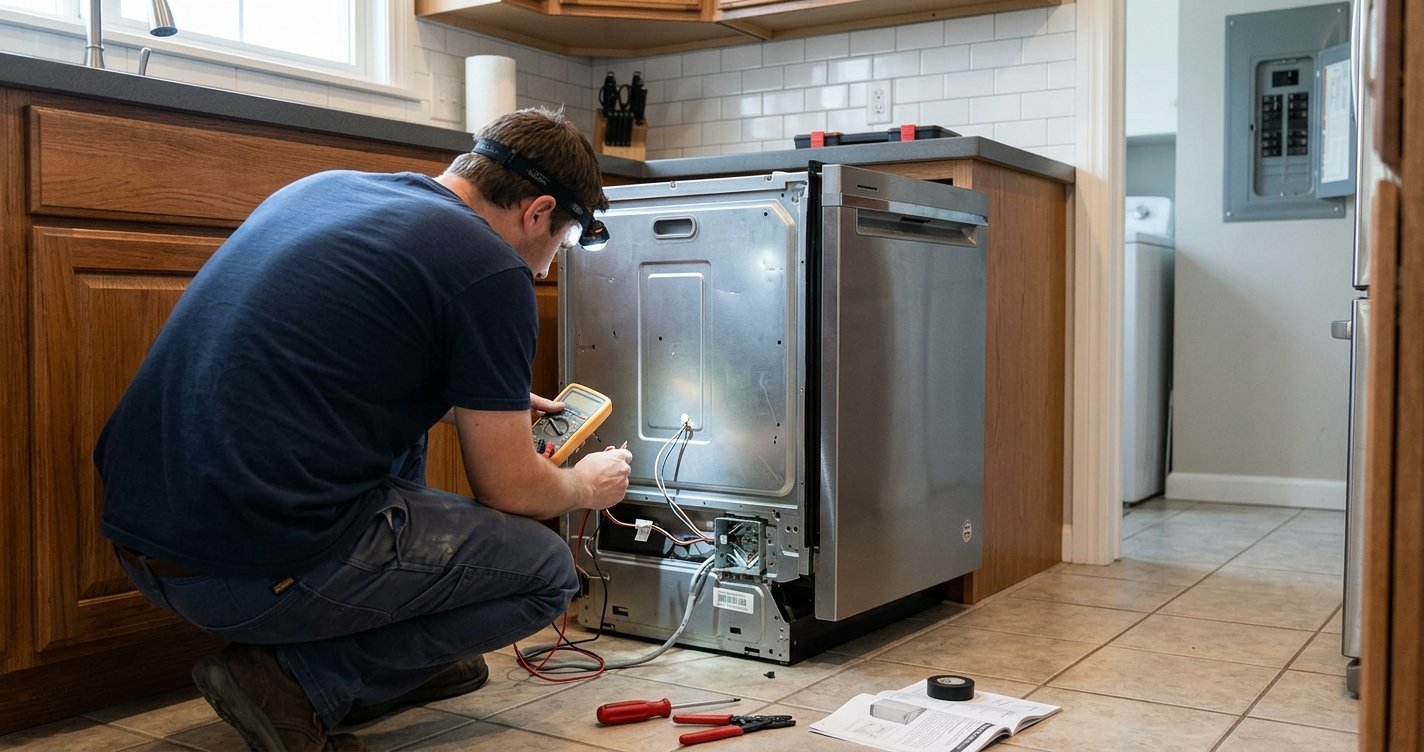
If the pump still doesn’t drain properly after cleaning, or the impeller won’t spin freely, that’s a sign to contact Bosch Support or a certified technician rather than continuing to troubleshoot.
How Often Should You Clean Each Part?
| Part | Recommended Frequency |
| Filter | Monthly |
| Spray arms | Monthly, or when you notice weak spray coverage |
| Interior wipe-down (walls, door edges) | Weekly, or whenever you notice residue |
| Door gasket/seal | Monthly |
| Deep clean/descale (cleaner or vinegar) | A few times a year, more often with hard water |
| Exterior | As needed, whenever it looks smudged or dull |
Frequently Asked Questions
How do I deep clean my Bosch dishwasher?
Run Bosch’s own dishwasher cleaner or descaler on the hottest, longest cycle with the appliance empty — or use a cup of white vinegar followed by a baking soda rinse as a budget alternative. Do this a few times a year, more frequently if you have hard water.
How often should I clean my Bosch dishwasher filter?
Monthly is the generally recommended frequency, though households that don’t scrape dishes before loading, or that run the dishwasher daily, may need to check it more often.
Is vinegar safe to use in a Bosch dishwasher?
Yes, for occasional cleaning cycles, but it shouldn’t be used excessively, since repeated exposure can affect rubber seals and gaskets over time. A dedicated Bosch descaler is a better choice for regular, frequent use.
Why does my Bosch dishwasher smell even though I clean it?
Odors are most often traced to the filter or the door gasket, both of which trap food debris and moisture that a normal wash cycle doesn’t fully clear. Cleaning both regularly and leaving the door slightly open after cycles to air dry usually resolves lingering smells.
Can I use regular dish soap to clean the filter and spray arms?
Yes, mild dish soap and warm water with a soft brush is sufficient for both the filter and spray arms — avoid harsh chemicals or abrasive scrubbers that could damage the components.
Do I need to unplug my Bosch dishwasher before cleaning it?
For surface cleaning like wiping the interior or exterior, no. But before removing the pump cover or doing any deeper internal cleaning, it’s safest to unplug the dishwasher first.
Conclusion
A Bosch dishwasher doesn’t fully clean itself, but keeping it in top shape doesn’t take much either — a monthly filter rinse, occasional spray arm check, and a deep clean with Bosch’s cleaner or descaler a few times a year covers nearly everything. Add a quick wipe of the door gasket and interior walls whenever you notice residue, and most of the common complaints — odors, cloudy dishes, and standing water — resolve before they ever become a real problem. If you’ve kept up with all of this and still notice standing water or reduced performance, that’s the point where checking the pump or calling in a Bosch technician makes more sense than continuing to clean around the issue.