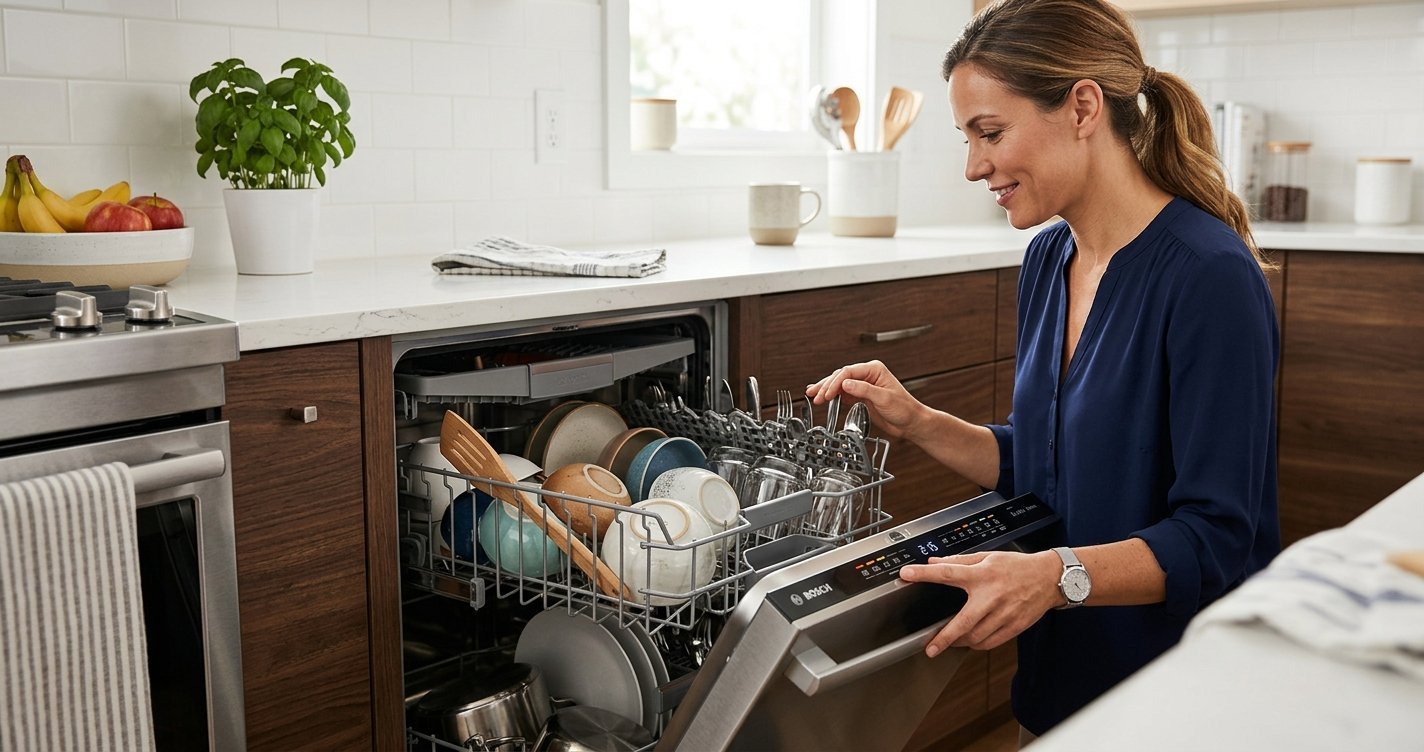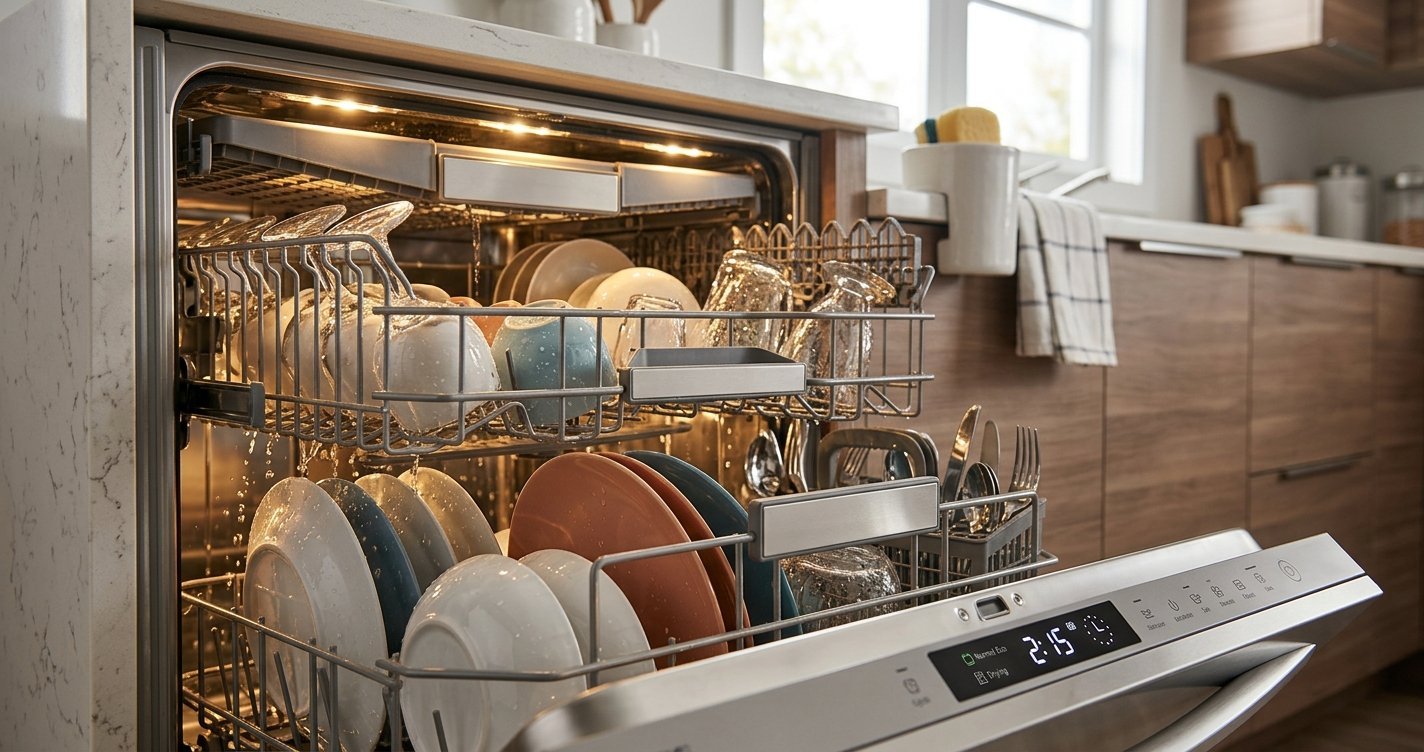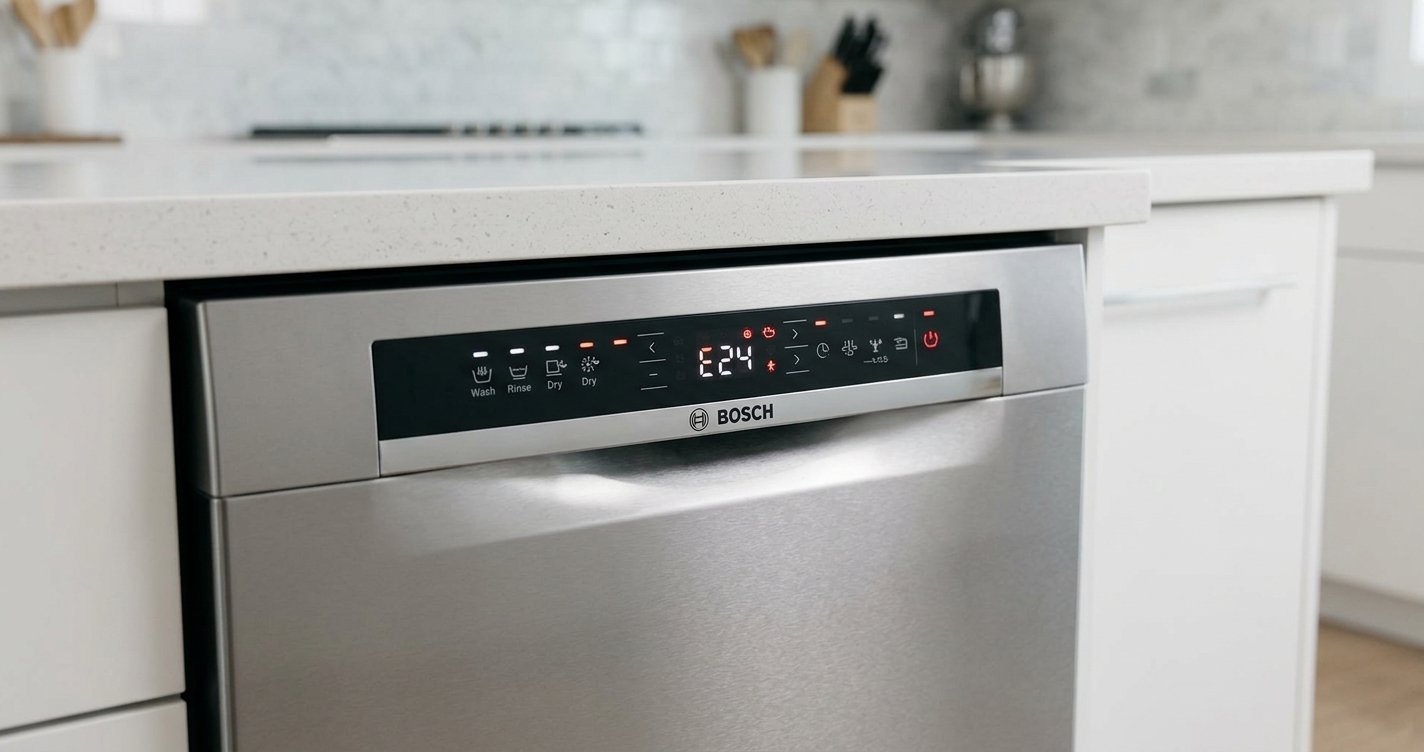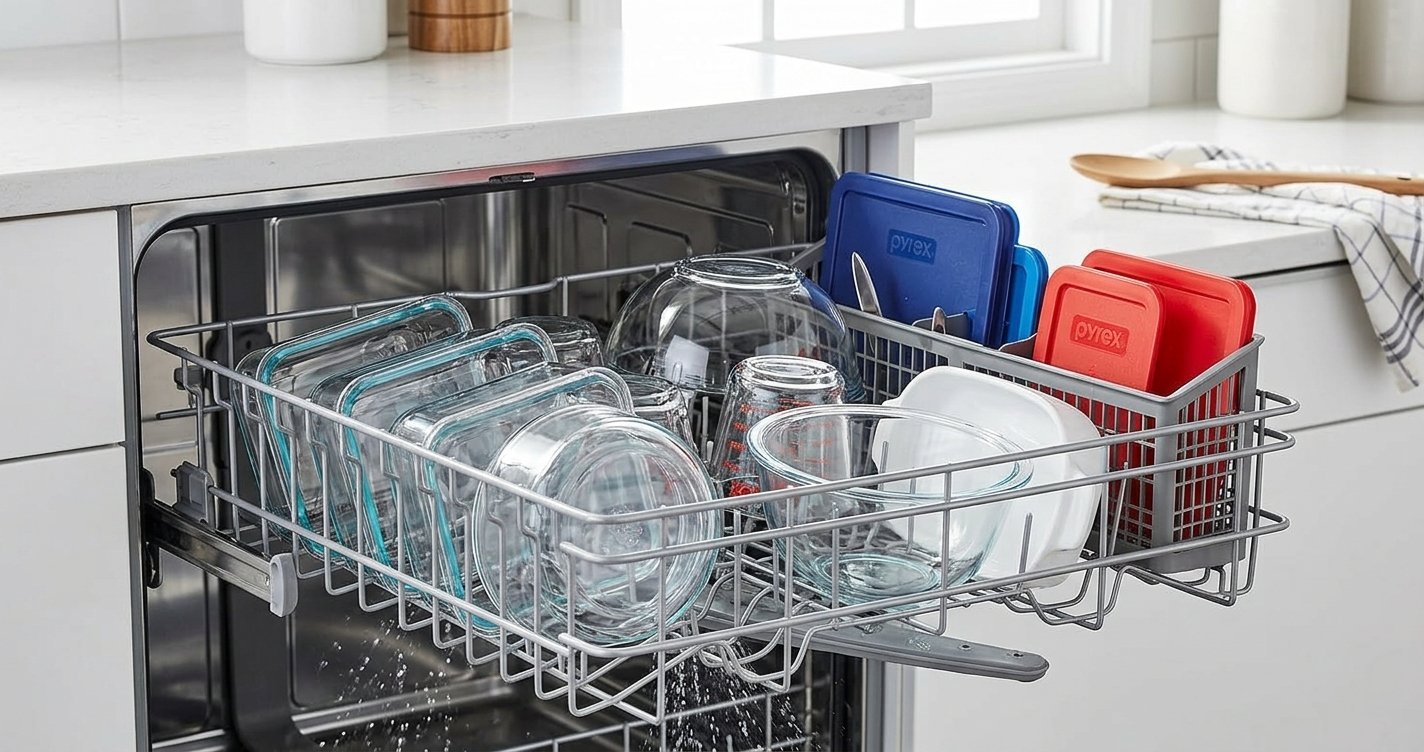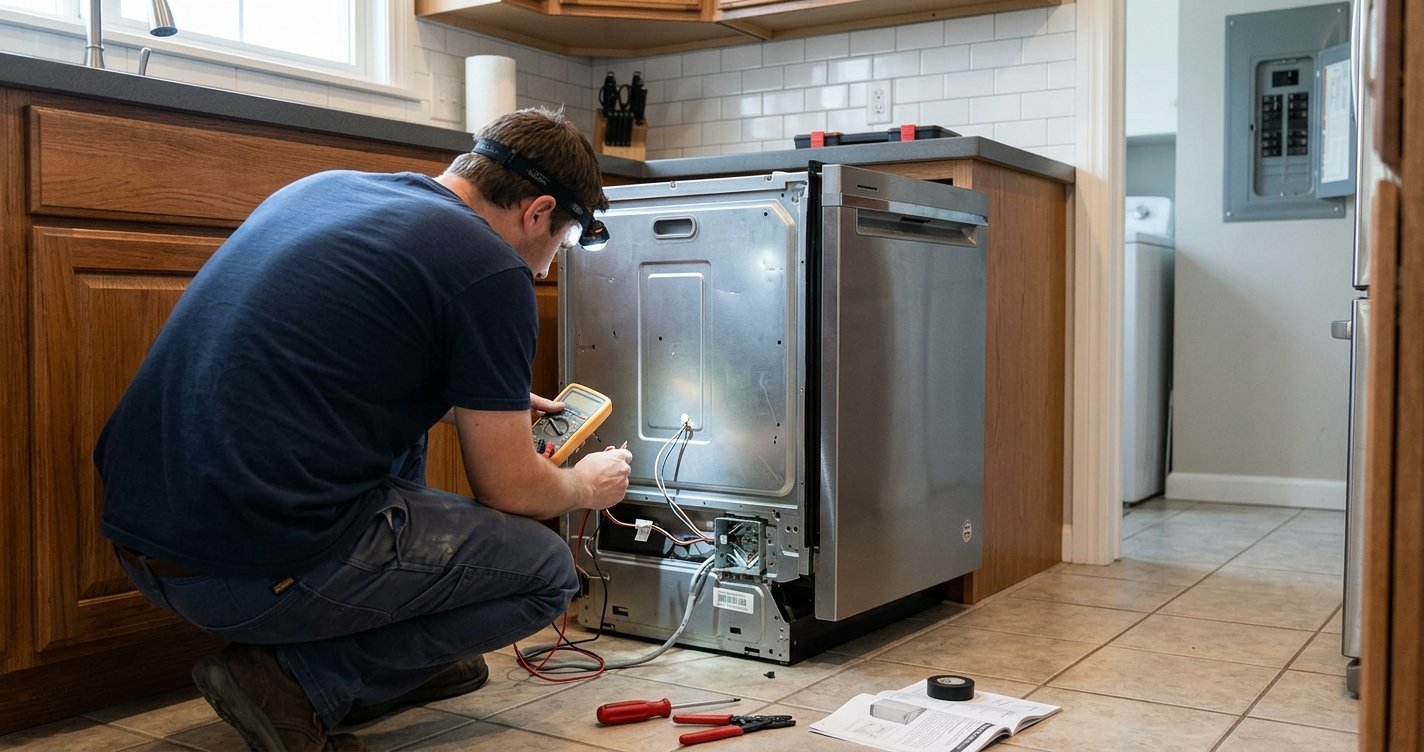
A dishwasher and garbage disposal often share the same kitchen drainage system, so a problem with one appliance can sometimes affect the other. Slow drainage, standing water, unusual odors, leaks, or a disposal that will not turn on may indicate an issue with the plumbing connection or the appliance itself.
Understanding the common causes of dishwasher disposal problems can help you identify what needs attention and determine when professional repair is appropriate.
Read More: How to Fix Indesit IDL500 Error Codes
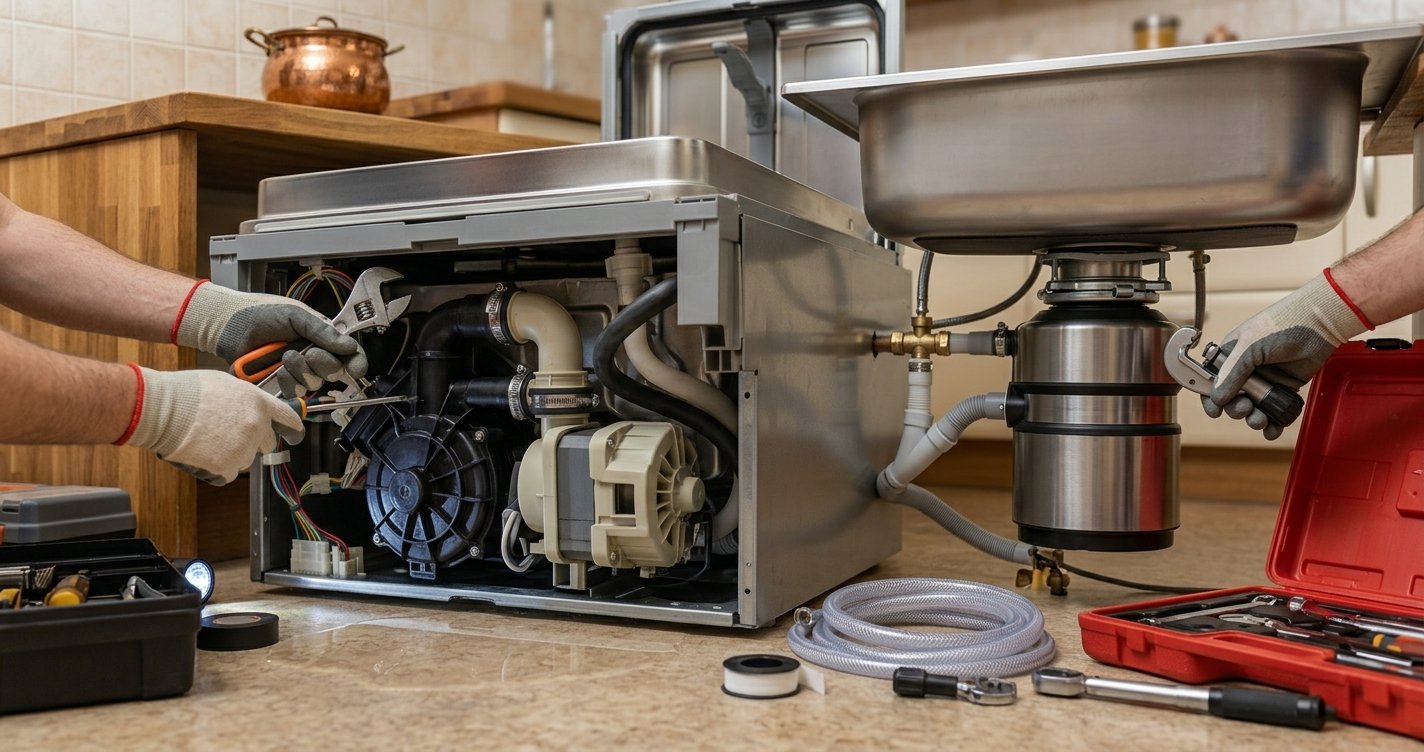
Table of contents
How the Dishwasher and Disposal Are Connected
In many kitchen plumbing systems, the dishwasher drain hose connects to the garbage disposal. When the dishwasher drains, wastewater travels through the hose and enters the disposal before flowing into the kitchen drain.
Because of this connection, a blockage or installation problem can cause symptoms in both appliances. For example, a clogged disposal may prevent the dishwasher from draining properly.
Common Dishwasher Disposal Problems
1. Dishwasher Is Not Draining
Standing water at the bottom of the dishwasher is a common warning sign. Possible causes include:
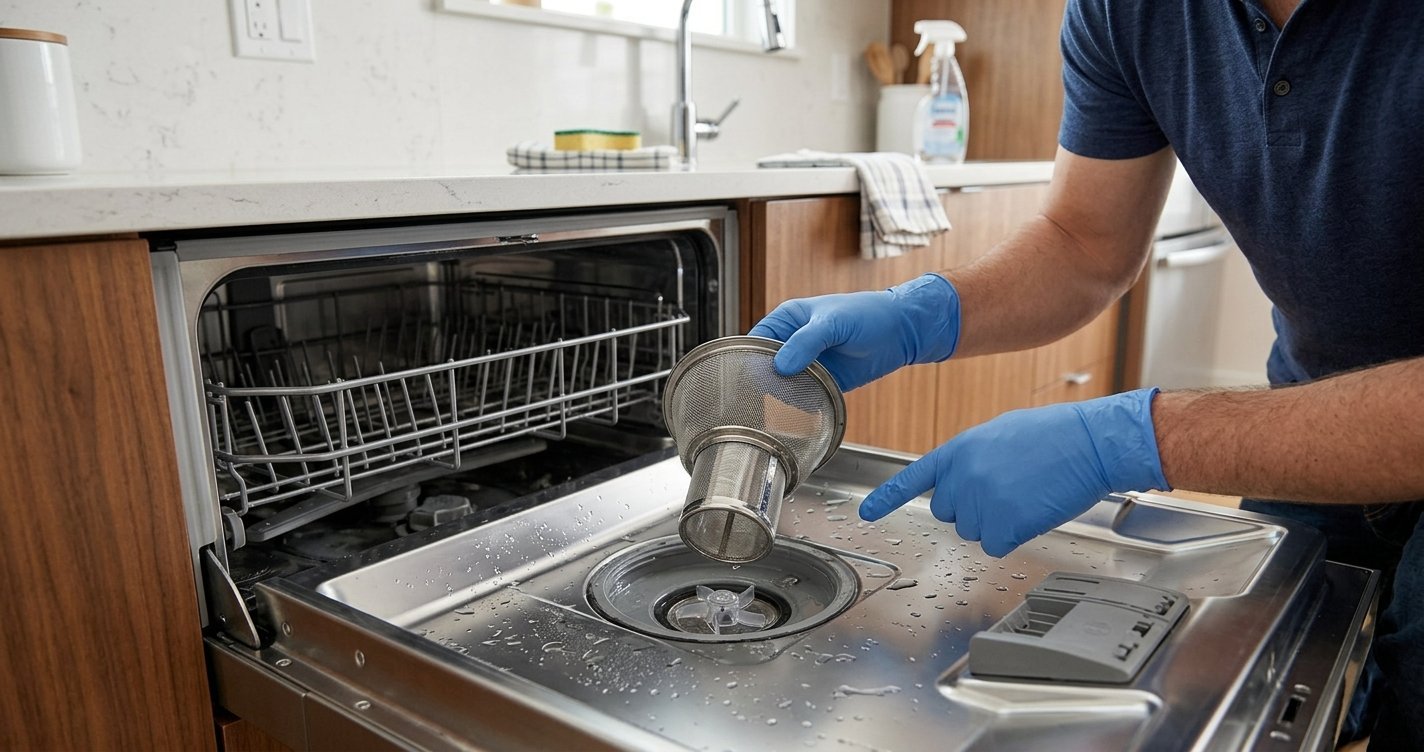
- A clogged dishwasher filter
- A blocked or kinked drain hose
- A clogged garbage disposal
- A blocked air gap, where installed
- A plumbing blockage
- A faulty drain pump
If the disposal was recently replaced, check whether its dishwasher drain inlet was properly opened during installation. A sealed inlet can prevent dishwasher wastewater from entering the disposal.
2. Garbage Disposal Is Clogged
Food particles, grease, and other debris can restrict water flow through the disposal. Since the dishwasher may drain through the disposal, this blockage can cause water to back up into the dishwasher.
Turn off power to the disposal before inspecting or cleaning it. Never put your hand inside the disposal chamber.
3. Water Leaks Around the Connection
A loose hose clamp, damaged drain hose, worn gasket, or improperly fitted connection can cause water to leak beneath the sink.
Check the area around the dishwasher drain hose and disposal connection for moisture. If the leak continues after tightening an accessible connection, the damaged component may need replacement.
4. Disposal Hums but Does Not Spin
A humming disposal may have a jammed grinding mechanism or another mechanical problem. Switch off power before attempting any inspection.
If the disposal has a manufacturer’s reset button, resetting it may restore operation after an overload. Persistent humming or repeated shutdowns can indicate a mechanical or electrical problem that requires professional attention.
5. Unpleasant Odors
Food residue inside the disposal or dishwasher drain system can produce unpleasant smells. Cleaning the dishwasher filter and disposal splash guard can help remove accumulated debris.
Avoid using harsh chemicals or placing unsuitable objects into the disposal, as these can damage components or create additional plumbing problems.
Basic Dishwasher Disposal Troubleshooting
Before arranging a repair, you can perform a few basic checks:
- Check the dishwasher filter. Remove trapped food and debris according to the appliance manufacturer’s instructions.
- Inspect the drain hose. Make sure it is not kinked or crushed.
- Check the disposal. Confirm that it turns on normally and drains water.
- Look for leaks. Inspect the hose connections beneath the sink.
- Check the disposal inlet. If the disposal was recently installed, make sure the dishwasher connection was correctly prepared.
- Reset the disposal if applicable. Follow the manufacturer’s instructions for using its reset mechanism.
Always disconnect power before working around the disposal or its electrical connections.
When to Call a Professional
Some problems are better handled by a qualified appliance repair technician or plumber. Professional help may be appropriate when:
- The dishwasher continues to retain water after basic troubleshooting.
- The disposal repeatedly jams or stops working.
- There is a persistent leak under the sink.
- The drain line appears to be blocked deeper in the plumbing system.
- Electrical components need inspection.
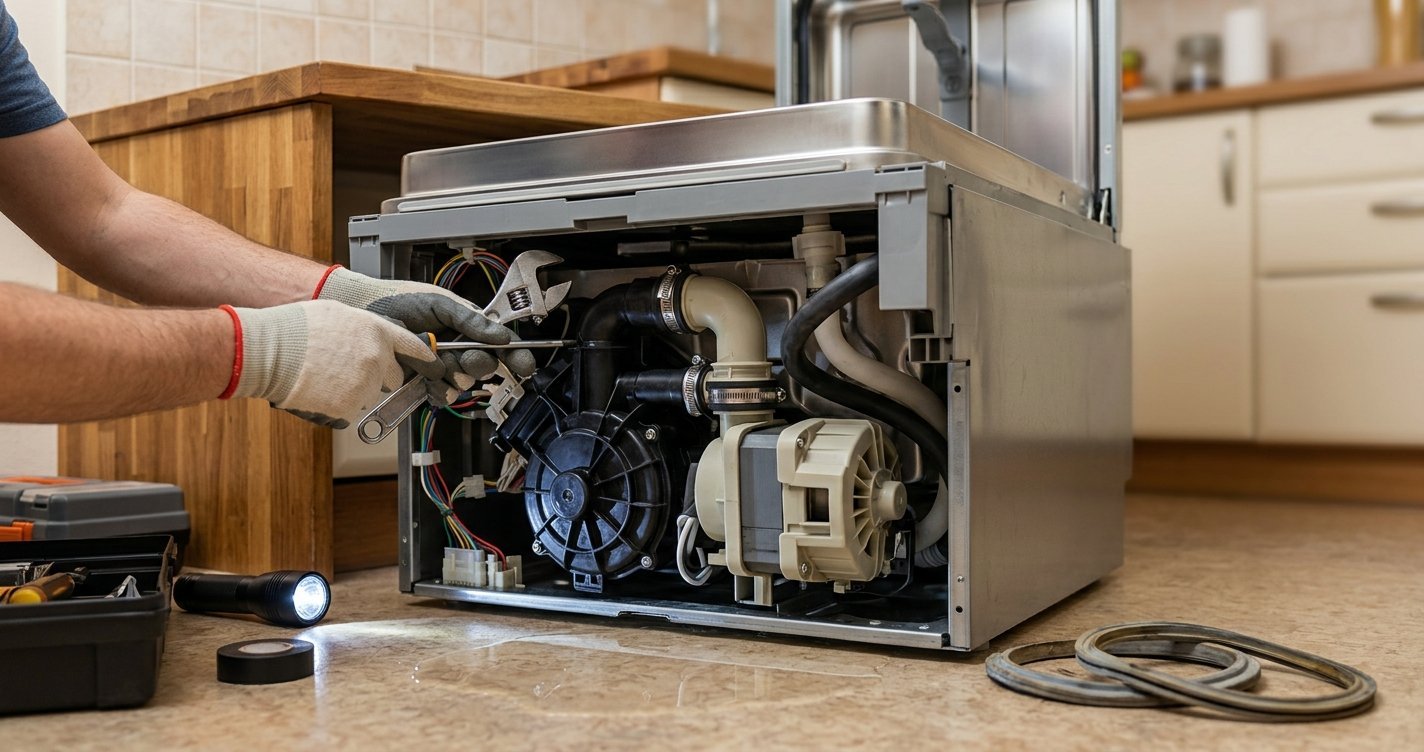
- A pump, motor, hose, or other major component needs replacement.
If water is leaking near electrical components, turn off the appropriate power source and avoid operating the appliance until it has been inspected.
How to Prevent Dishwasher Disposal Problems
Regular maintenance can reduce the likelihood of drainage and disposal issues.
- Clean the dishwasher filter regularly.
- Avoid putting grease, fibrous food waste, bones, or other unsuitable materials into the disposal.
- Run the disposal with cold water when appropriate.
- Keep the dishwasher drain hose properly positioned and free of kinks.
- Inspect visible connections for leaks.
- Follow the manufacturer’s maintenance and operating instructions.
Good maintenance helps both appliances drain efficiently and can reduce unnecessary repair calls.
Final Thoughts
Dishwasher disposal problems often involve drainage, clogs, leaks, or an improperly connected drain hose. Simple issues such as a dirty filter or kinked hose may be easy to address, while persistent drainage problems, electrical faults, and mechanical failures may require professional repair.
Identifying the symptoms and checking the basic connections can help determine whether the problem is a simple maintenance issue or something that needs expert attention.
FAQs
Can a garbage disposal cause a dishwasher not to drain?
Yes. If the dishwasher drains through the garbage disposal, a clogged disposal or blocked connection can restrict wastewater flow from the dishwasher.
Why is my dishwasher backing up into the sink?
A blockage in the shared drain system, garbage disposal, drain hose, or plumbing line can cause dishwasher wastewater to back up into the sink.
Does a new garbage disposal affect the dishwasher?
It can. When a disposal is installed, the dishwasher drain connection must be prepared correctly. An installation problem can prevent the dishwasher from draining.
How do I know if my disposal is clogged?
Slow draining, standing water, unusual odors, or a disposal that hums without grinding can indicate a blockage or mechanical problem.
Should I repair or replace my garbage disposal?
The answer depends on the cause and condition of the unit. A simple clog or reset issue may not require replacement, while significant mechanical or electrical damage may make replacement more practical.
Can I use drain cleaner in a garbage disposal?
It is generally better to follow the disposal manufacturer’s recommendations rather than using chemical drain cleaners. Some chemicals can damage plumbing or disposal components.
Why does my dishwasher smell after running the disposal?
Food residue in the disposal, dishwasher filter, drain hose, or shared drainage system can contribute to odors. Cleaning these areas according to the manufacturer’s instructions may help.
How often should I clean my dishwasher filter?
Cleaning frequency depends on the appliance and how often it is used. Check the manufacturer’s instructions and clean the filter whenever you notice visible debris or reduced drainage performance.