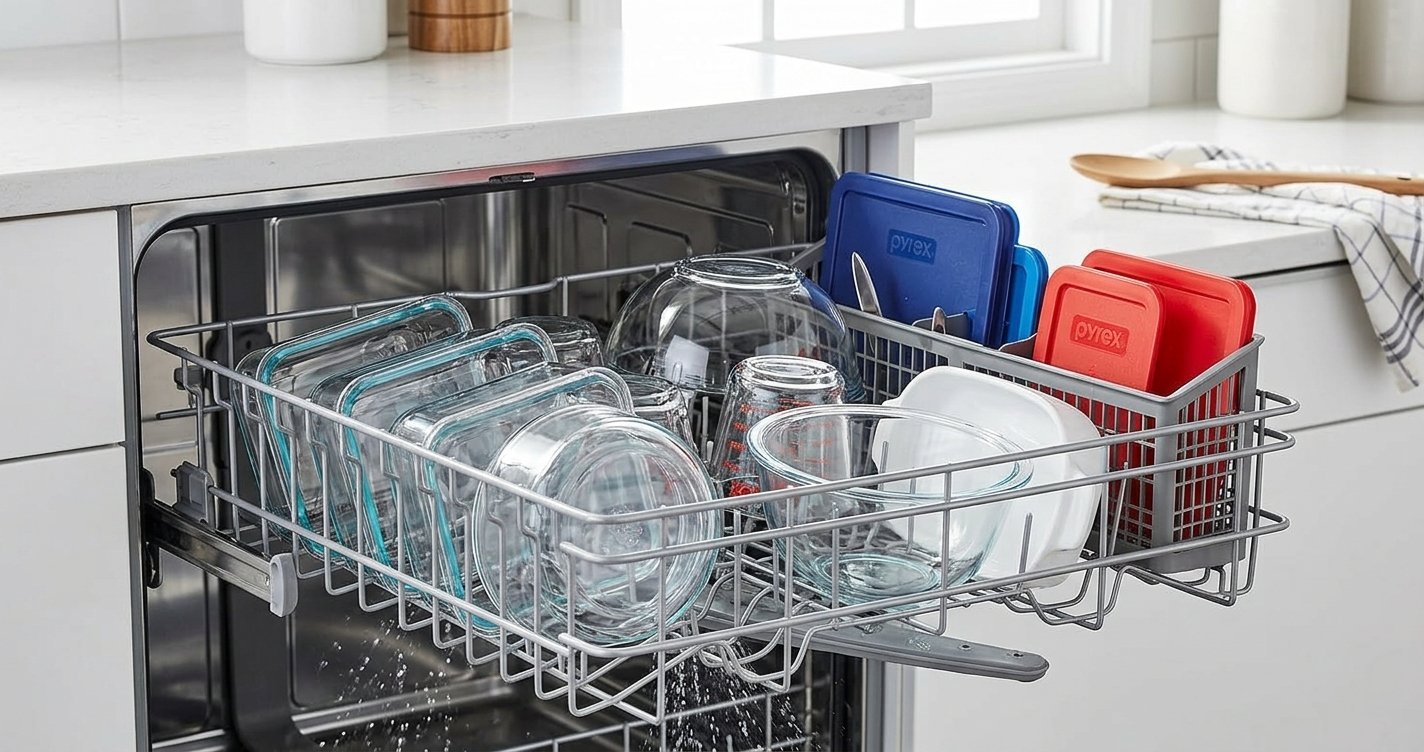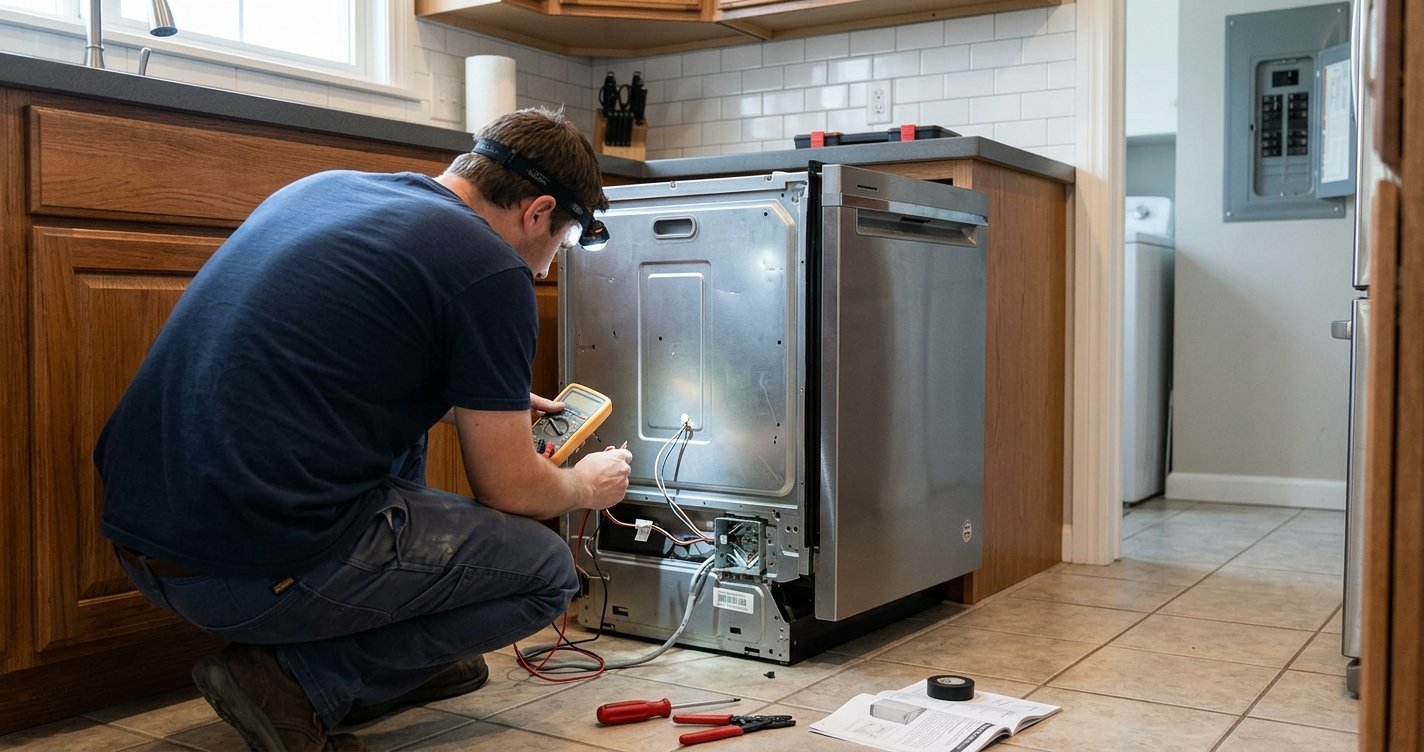
A dishwasher is supposed to leave your dishes clean and fresh, so a bad smell coming from it can be frustrating. Fortunately, most dishwasher odors are caused by trapped food, grease, standing water, or buildup inside the machine—and you can usually fix the problem with a thorough cleaning.
Here’s how to clean a smelly dishwasher and keep unpleasant odors from coming back.
Read More: HexClad vs. Caraway Cookware: Which Is Better?
Table of contents
Why Does Your Dishwasher Smell?
Before cleaning, it helps to understand where the odor may be coming from. Common causes include:
- Food particles trapped in the filter or drain
- Grease and soap residue
- Dirty or clogged spray arms
- Mold or mildew around the door seal
- Standing water in the bottom of the dishwasher
- A dirty or partially blocked drain hose
- Dishes being left inside for too long
The dishwasher filter is often the biggest culprit because it catches food debris during the wash cycle.
How to Clean a Smelly Dishwasher
1. Empty the Dishwasher
Remove all dishes, racks, utensils, and other items. Check the bottom of the dishwasher for visible food scraps, paper labels, or other debris.
If you see standing water, remove as much as possible with a sponge before continuing.
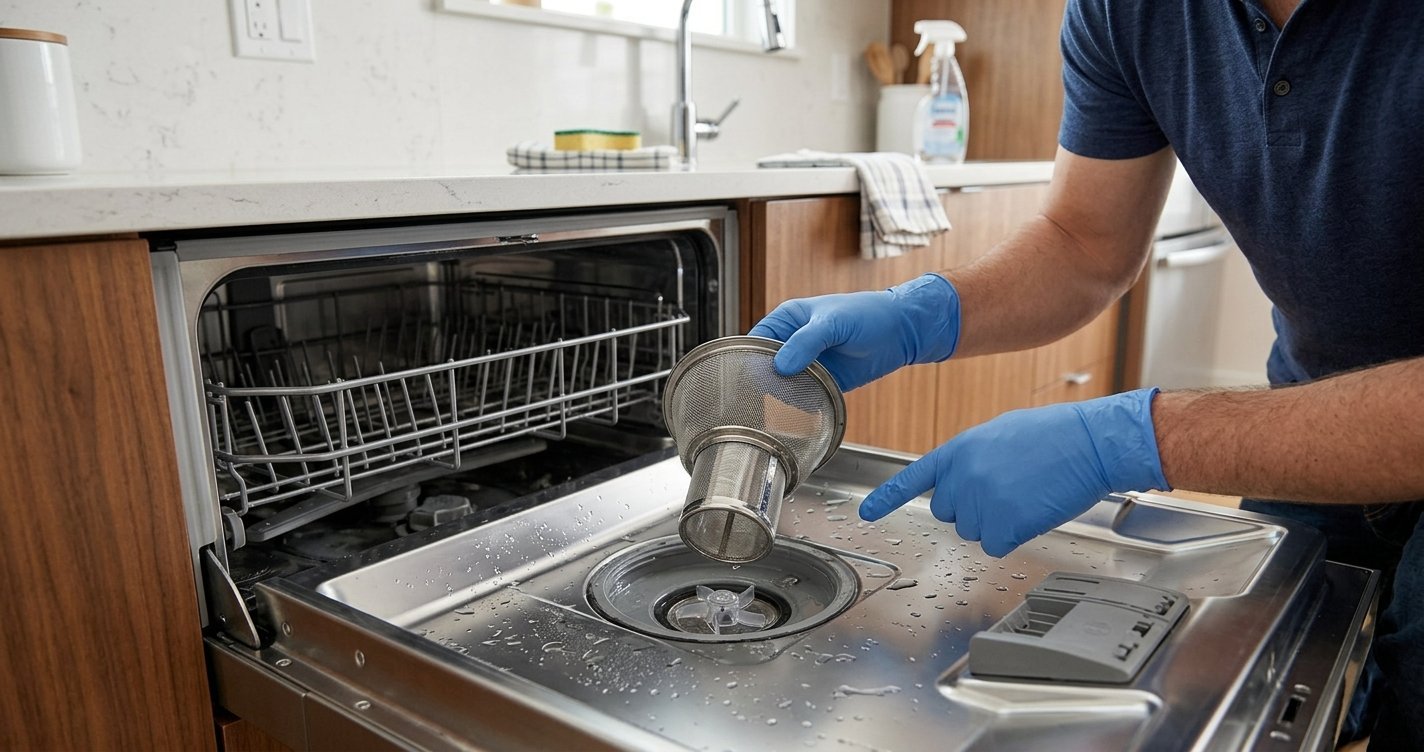
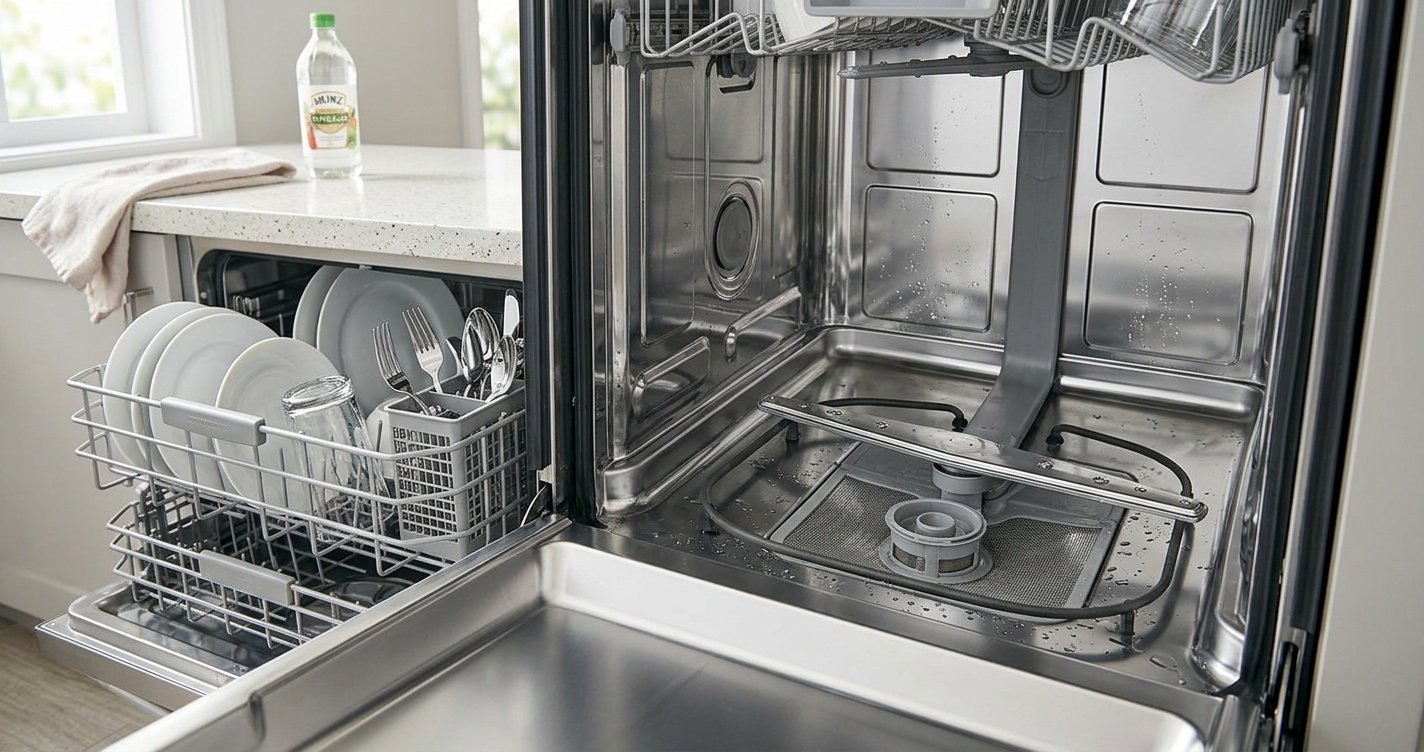
2. Clean the Dishwasher Filter
Locate the filter at the bottom of the dishwasher. Depending on your model, it may twist out or lift out.
Remove the filter and rinse it under warm running water. Use a soft brush or an old toothbrush to gently remove stuck-on food and grease.
Avoid using a harsh abrasive that could damage the filter.
If your dishwasher has a removable filter screen, clean that as well before putting everything back in place.
3. Wipe the Door and Door Seal
Food particles and grime can collect around the edges of the dishwasher door, especially underneath the rubber gasket.
Wipe the door, gasket, corners, and areas around the detergent dispenser with a damp cloth and a mild dish-soap solution. Use a soft toothbrush for narrow gaps.
Pay particular attention to the bottom edge of the door, where debris can be easy to miss.
4. Check the Drain Area
Look at the bottom of the dishwasher around the drain opening. Remove any visible debris, such as food particles or bits of paper.
Do not reach into areas you cannot safely access. If the dishwasher continues to hold standing water after cleaning, the drain system may need further attention.
5. Clean the Spray Arms
Remove the spray arms if your dishwasher manual allows it. Rinse them under warm water and check the small spray holes for food or mineral buildup.
A soft brush can help loosen debris. Make sure the holes are clear before reinstalling the arms.
Clean spray arms help water circulate properly, which can also improve washing performance.
6. Run an Empty Cleaning Cycle
Once you’ve cleaned the removable parts, run the dishwasher empty on its hottest appropriate cycle.
For the cleaning product, follow your dishwasher manufacturer’s instructions. A dishwasher-specific cleaner is a convenient option for removing grease and mineral buildup.
Important: Never mix cleaning products, particularly chlorine bleach with vinegar or other acidic cleaners. Dangerous fumes can result.
If you use vinegar or another household cleaning method, first check your dishwasher manufacturer’s instructions to make sure it is appropriate for your machine.
7. Let the Dishwasher Dry
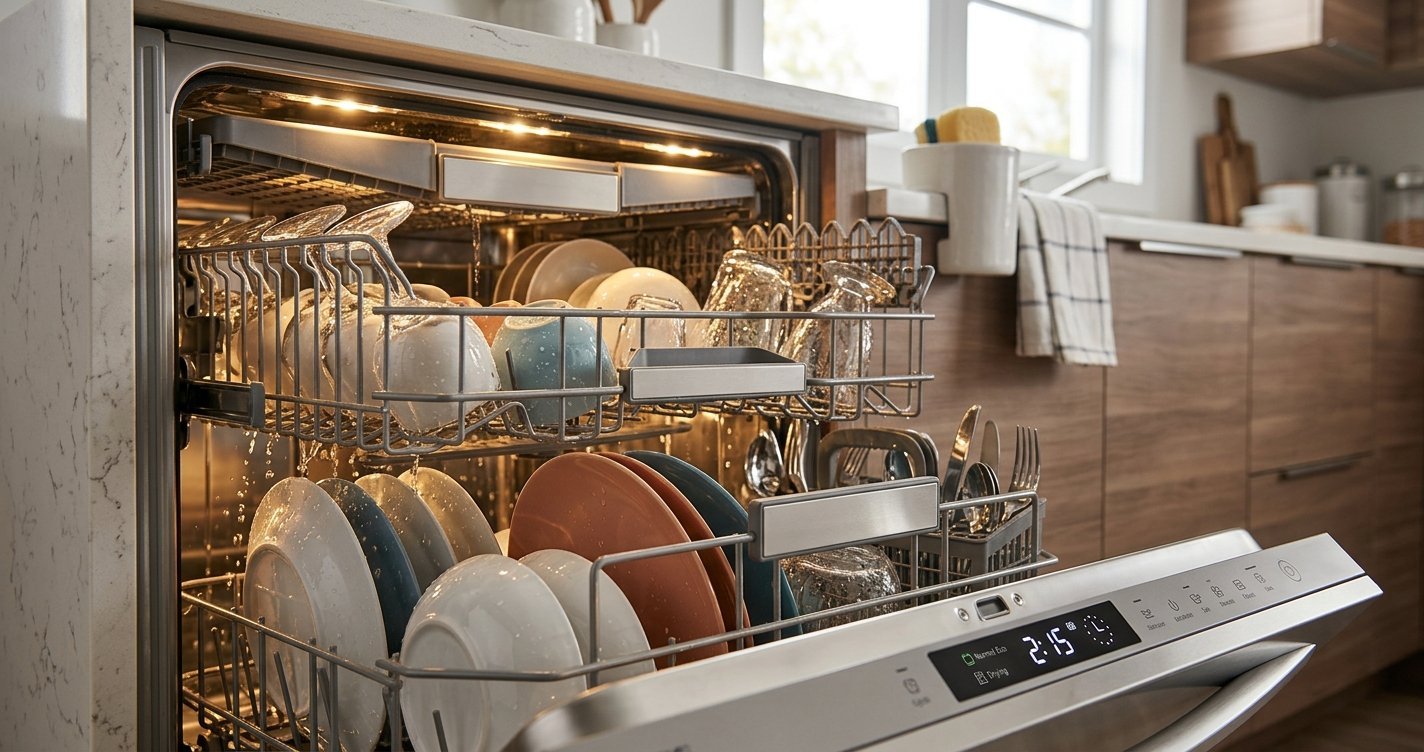
When the cycle finishes, open the door and allow the interior to air-dry completely.
If your dishwasher has a feature that automatically opens the door at the end of a cycle, make sure it can operate properly. Good ventilation helps reduce moisture and the conditions that encourage mildew and odors.
How to Prevent Dishwasher Odors
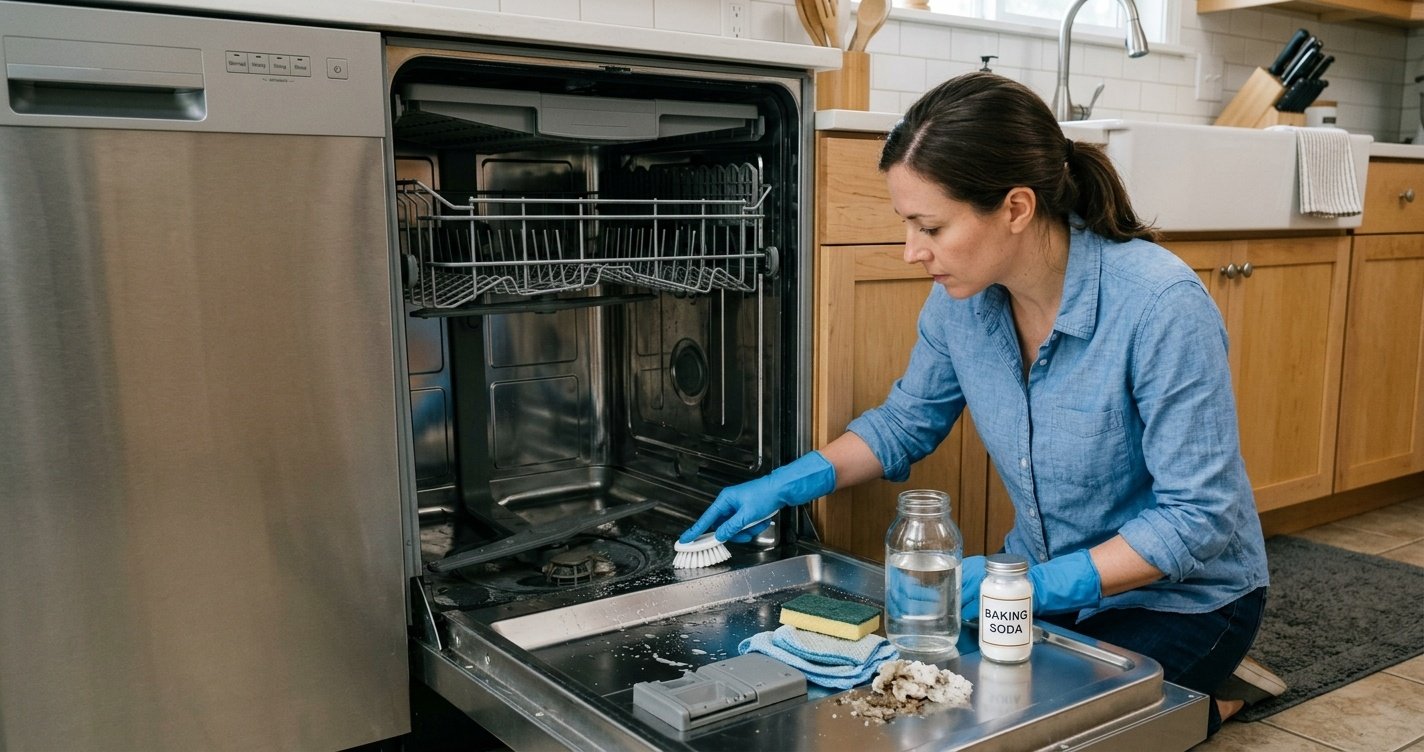
Once your dishwasher smells fresh again, a few simple habits can help keep it that way:
- Clean the filter regularly. Check it frequently and clean it whenever you notice food buildup.
- Scrape excess food from dishes. You don’t necessarily need to pre-wash them, but large food scraps should go in the trash.
- Don’t leave dirty dishes sitting for days. Run the dishwasher when practical.
- Keep the door seal clean. Wipe away grease and debris when you notice buildup.
- Allow the interior to dry. Leave the door slightly open after a cycle if your dishwasher and kitchen setup allow it.
- Clean the dishwasher periodically. Follow the maintenance recommendations in your owner’s manual.
What If the Smell Won’t Go Away?
If you’ve cleaned the filter, drain area, door seal, and interior but the smell persists, the problem may be deeper in the drainage system.
A blocked drain hose, plumbing problem, or improperly installed drain connection can cause wastewater to remain in or return to the dishwasher. Persistent standing water is a particularly good reason to investigate the drain system.
If you aren’t comfortable checking plumbing connections, contact a qualified appliance technician or plumber.
FAQs
Why does my dishwasher smell bad?
A dishwasher can smell bad because of trapped food, grease, dirty filters, standing water, mold, or buildup around the door seal and drain.
How often should I clean my dishwasher?
Clean the dishwasher filter regularly, ideally every few weeks or as recommended by the manufacturer. Give the entire dishwasher a deeper cleaning about once a month.
Can I use vinegar to clean a smelly dishwasher?
Vinegar can help remove some odors and buildup, but check your dishwasher manufacturer’s instructions first. Never mix vinegar with bleach or other cleaning products.
How do I get rid of a rotten-egg smell in my dishwasher?
Start by cleaning the filter, drain area, door gasket, and spray arms. If the smell persists or there is standing water, check for a drainage or plumbing problem.
Should I leave my dishwasher door open after cleaning?
Yes. Leaving the door slightly open when practical allows the interior to dry and can help prevent mildew and unpleasant odors.
Why does my dishwasher smell even after cleaning?
A persistent smell may indicate a clogged drain hose, plumbing issue, hidden food buildup, or wastewater flowing back into the dishwasher. A technician may be needed if basic cleaning doesn’t solve the problem.
Final Thoughts
A smelly dishwasher usually means something inside the appliance needs cleaning—not that the dishwasher itself needs replacing. Start with the filter, drain area, door seal, and spray arms, then run an appropriate cleaning cycle.
Regular filter cleaning and allowing the dishwasher to dry between cycles can go a long way toward preventing unpleaant odors from returning.