Table of contents
Copper vs Carbon Steel Cookware: Which Is Better?
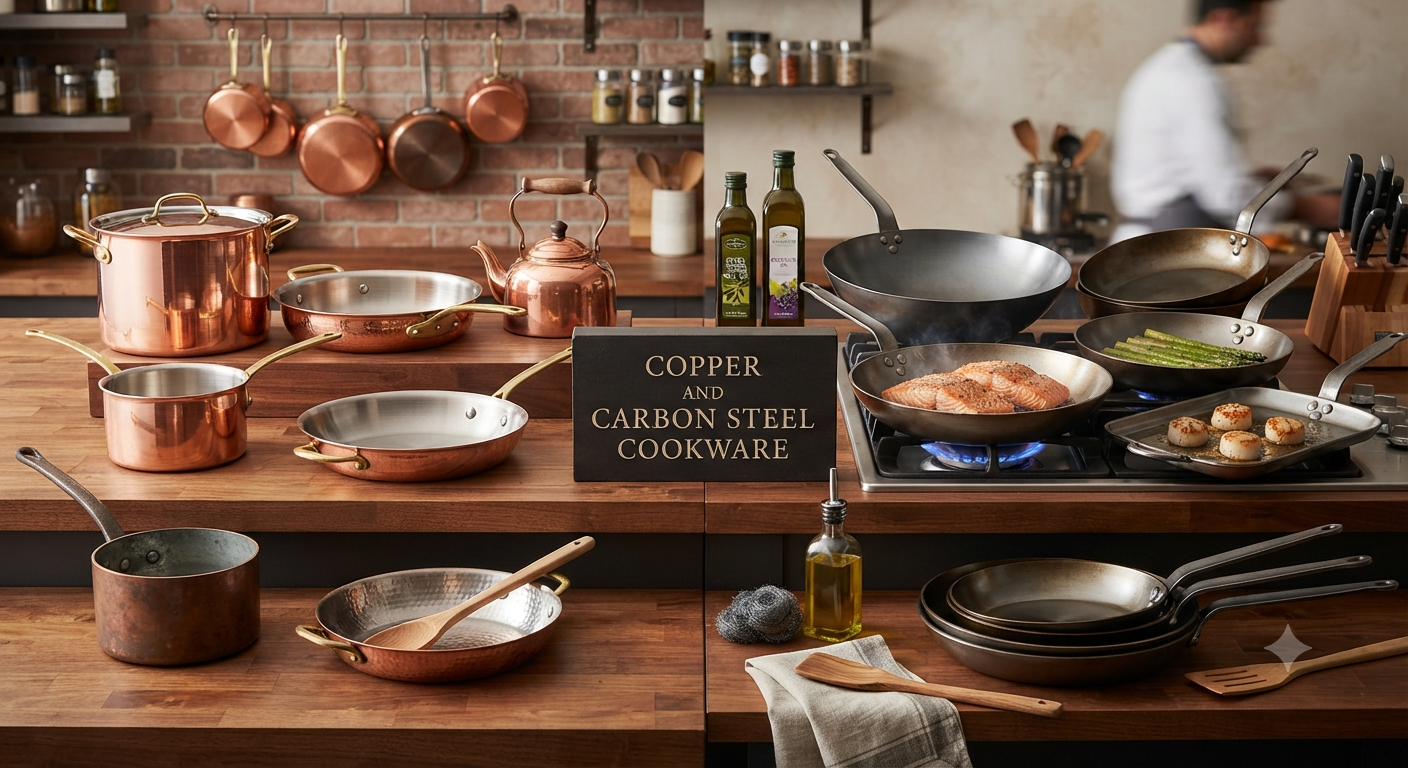
Copper cookware heats fastest and gives the most precise temperature control, making it the top choice for sauces, candy, and professional pastry work. Carbon steel is lighter, far more durable, cheaper, and better suited for high-heat searing, stir-frying, and everyday stovetop cooking. For most home cooks, carbon steel offers better value; for precision cooking and high-end kitchens, copper is the performance leader.
Read more: HexClad vs All-Clad Cookware: Which Is Better?
Quick Comparison Table
| Feature | Copper Cookware | Carbon Steel Cookware |
| Heat conductivity | Excellent (best-in-class) | Good, but slower to heat |
| Heat control (responsiveness) | Very precise | Moderate |
| Weight | Heavy | Lighter than cast iron/copper |
| Durability | Dents, needs re-tinning | Very durable, dent-resistant |
| Maintenance | High (polishing, re-tinning) | Moderate (seasoning required) |
| Reactivity with food | Reactive if uncoated (needs tin/steel lining) | Reactive when unseasoned; safe once seasoned |
| Price range | High to very high | Low to mid |
| Best for | Sauces, custards, sugar work | Searing, stir-fry, eggs, roasting |
| Induction compatible | Only with a steel/magnetic base | Yes (naturally magnetic) |
| Learning curve | Low (once lined) | Moderate (seasoning upkeep) |
What Is Copper Cookware?
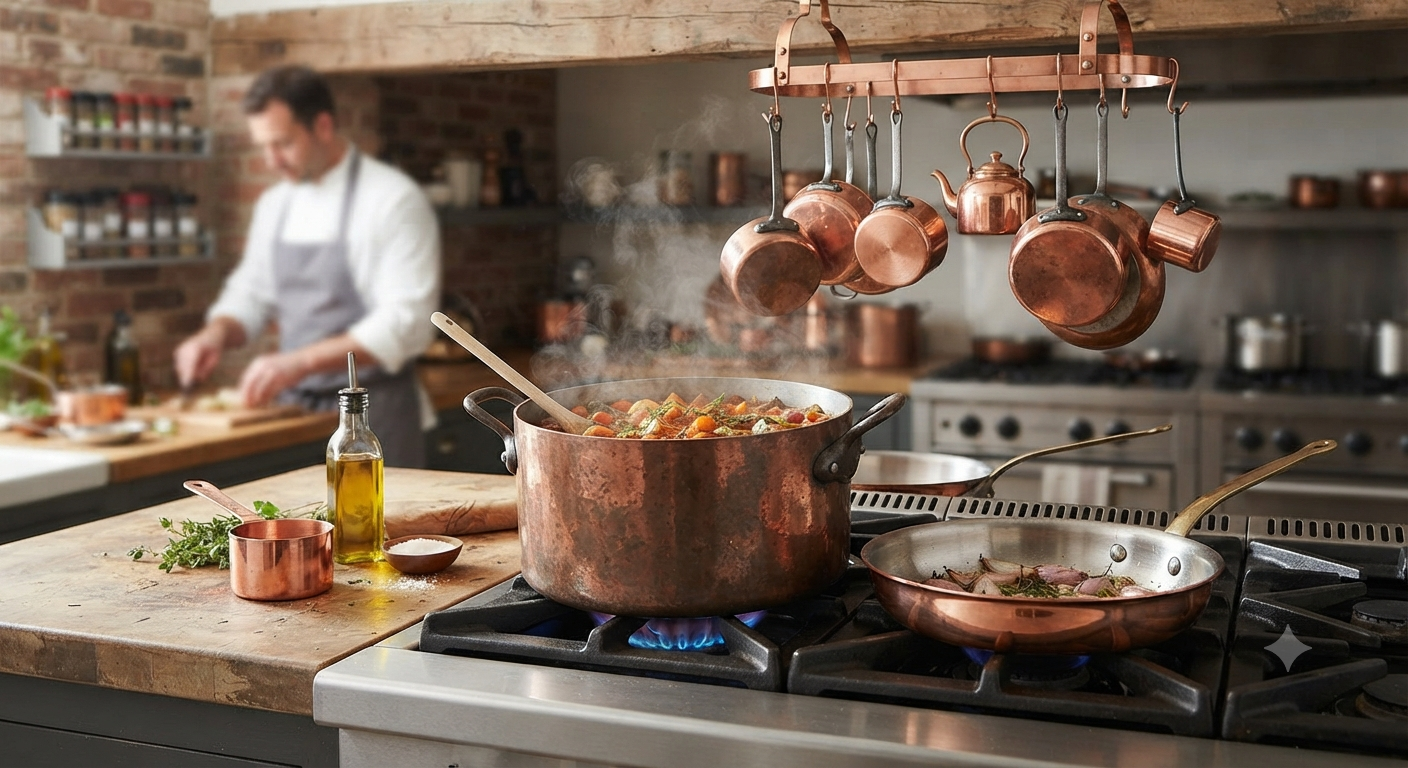
Copper cookware is prized for its exceptional thermal conductivity — it heats up and cools down faster than almost any other cookware material. Most copper pans are lined with a thin layer of tin or stainless steel, since raw copper reacts with acidic foods.
What Is Carbon Steel Cookware?
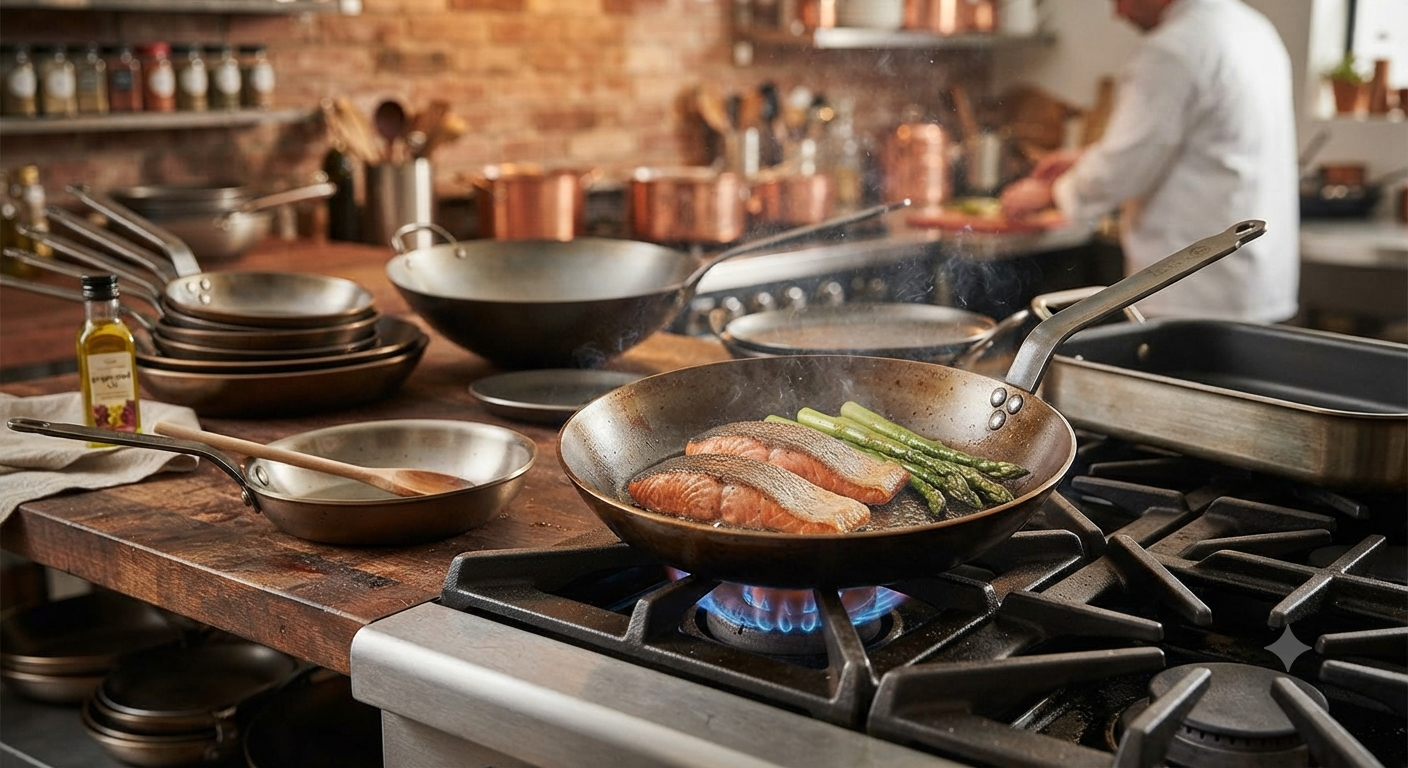
Carbon steel is an alloy of iron and carbon, similar to cast iron but thinner and lighter. It builds a natural non-stick seasoning layer over time and is widely used in professional kitchens for woks, skillets, and paella pans.
Heat Conductivity: Copper vs Carbon Steel
Copper conducts heat roughly 10x faster than steel, so it heats evenly across the entire surface and responds instantly when you adjust the burner. Carbon steel heats more slowly and unevenly at first, but retains heat well once hot — ideal for searing.
Winner: Copper, for responsiveness. Carbon steel, for sustained high-heat cooking.
Durability & Maintenance
Copper is soft and dents easily; its interior lining (tin) wears down over the years and eventually needs re-tinning, which is costly. Carbon steel is tough, resists warping, and only needs periodic reseasoning — a simple oil-and-heat process anyone can do at home.
Winner: Carbon steel.
Weight & Handling
Copper pans are notably heavy due to the thick copper walls needed for even heating. Carbon steel is lighter, making it easier to toss, flip, and maneuver — a key reason chefs prefer it for woks and sauté pans.
Winner: Carbon steel.
Reactivity & Food Safety
Bare copper reacts with acidic ingredients like tomatoes or wine, so it must be lined. Carbon steel is safe once properly seasoned, though acidic foods can strip the seasoning over time and require reseasoning.
Winner: Tie — both require care around acidic foods.
Price Comparison
Copper cookware is among the most expensive on the market due to material cost and craftsmanship. Carbon steel is one of the most affordable premium cookware options, often a fraction of copper’s price for comparable performance in searing and frying.
Winner: Carbon steel, for budget-conscious buyers.
Which Is Better For Specific Cooking Tasks?
| Task | Better Choice | Why |
| Searing steak | Carbon steel | Retains high heat, forms a strong crust |
| Making sauces or candy | Copper | Instant temperature response prevents scorching |
| Stir-frying | Carbon steel | Light, heats fast, ideal wok material |
| Cooking eggs | Carbon steel (seasoned) | Naturally non-stick once seasoned |
| Melting chocolate/sugar work | Copper | Precise, even, low-risk of hot spots |
| Everyday home cooking | Carbon steel | Durable, affordable, versatile |
| Professional pastry kitchens | Copper | Industry standard for temperature accuracy |
People Also Ask
Is copper or carbon steel better for cooking?
Neither is universally “better” — copper wins on heat precision, carbon steel wins on durability, weight, and price.
Does carbon steel heat as fast as copper?
No. Copper heats significantly faster and more evenly; carbon steel takes longer but holds heat well once hot.
Is copper cookware safe to cook in?
Yes, as long as it’s lined with tin or stainless steel — bare copper is not food-safe for acidic dishes.
Which is easier to maintain, copper or carbon steel?
Carbon steel is easier to maintain in the long term; copper requires polishing and occasional retinning.
Is carbon steel as good as copper for professional kitchens?
Carbon steel is preferred for searing and high-heat stovetop work, while copper remains the standard for precision tasks like sauces and confectionery.
Which cookware lasts longer, copper or carbon steel?
Carbon steel generally lasts longer with less specialized maintenance; copper can last decades but requires periodic professional retinning.
Final Verdict
| If you want… | Choose |
| Precise heat control for sauces, custards, and sugar work | Copper |
| Durable, affordable, high-heat everyday cookware | Carbon Steel |
| Lightweight pans for daily handling | Carbon Steel |
| A statement piece for a high-end kitchen | Copper |
| Induction-compatible cookware | Carbon Steel |
Final Tip
There’s no single “best” material — the right choice depends on how you cook. If your kitchen revolves around searing, stir-frying, and everyday durability, carbon steel is the smarter investment. If precision temperature control for sauces and confectionery matters most, copper remains unmatched. Many serious home cooks eventually own both.